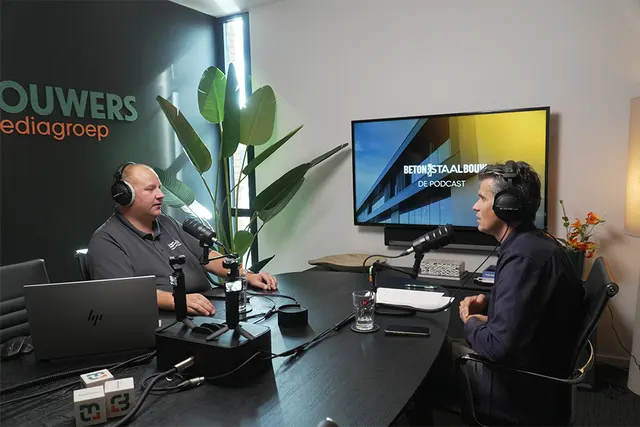
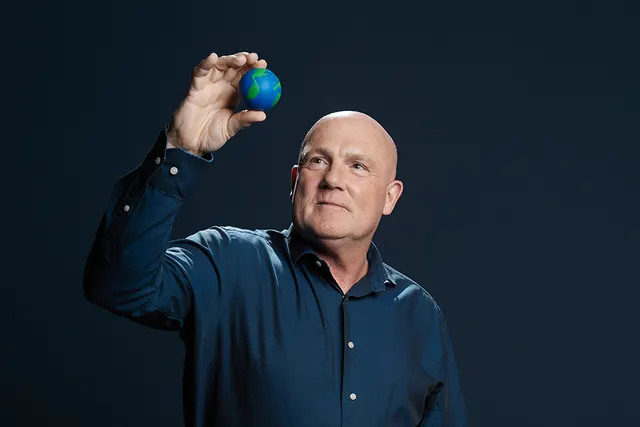
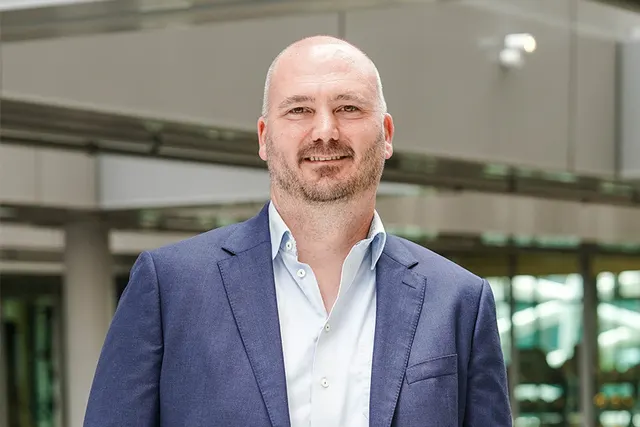
Interview with Harm Edens, presenter of BNR Duurzaam and other programmes
Tekst Jerry HelmersFotografie Dirk-Jan van Dijk
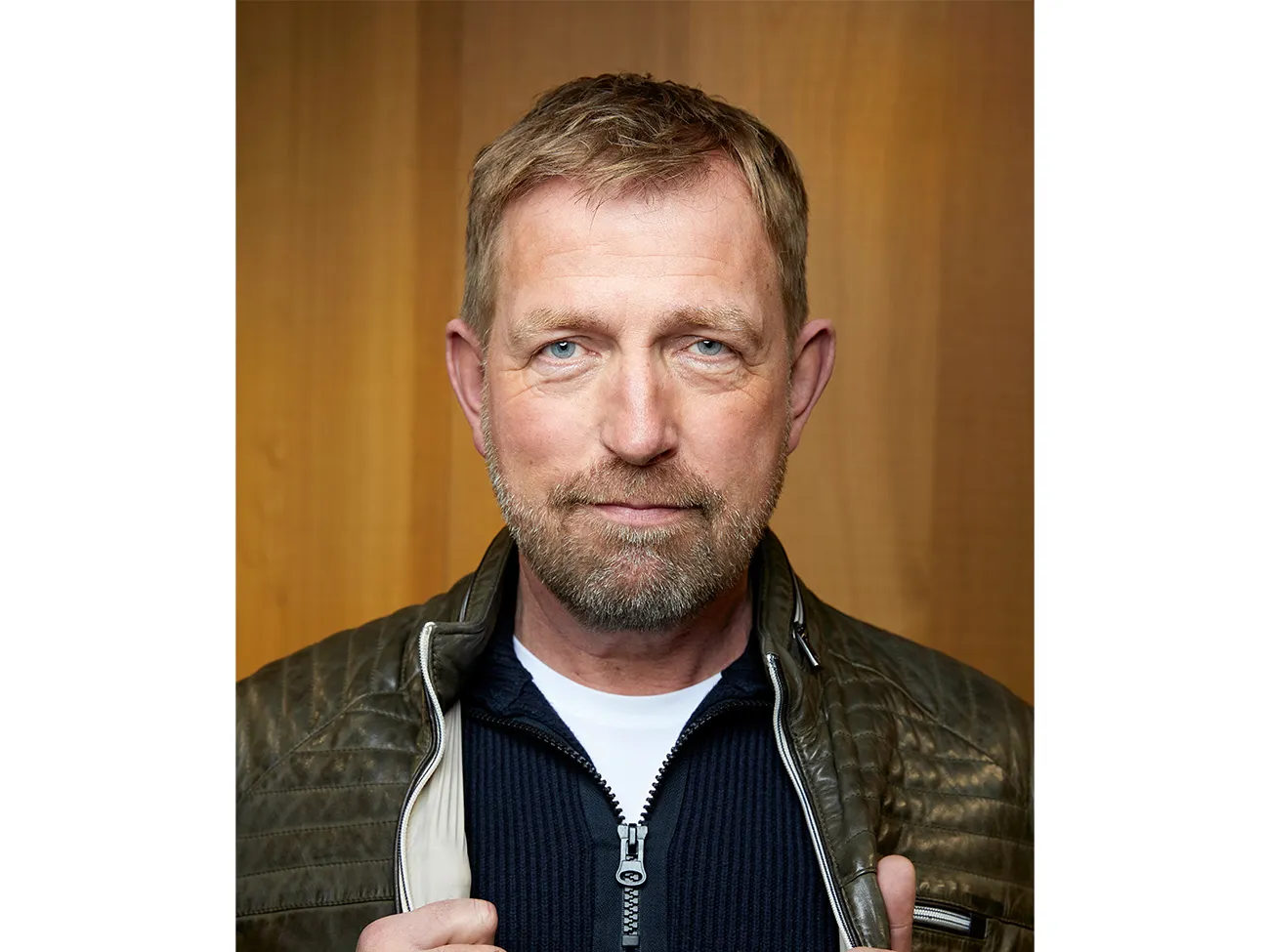
Television and radio presenter Harm Edens has plenty to say about climate, sustainability and a circular economy. But, as far as Edens is concerned, there is no point discussing the measures that need to be taken before it is truly too late: that ship has sailed. “The time for discussion and protest is over. Things have already got far too out of hand on our planet. And everyone, absolutely everyone, ‘must’ (!) get to work now. That applies to the concrete and steel construction industry too. It really is time to step outside your comfort zone.”
‘In 10 years, the concrete and steel construction industry in the Netherlands must look fundamentally different.’ (But does the industry know this?)
There is certainly no lack of clarity from Edens, who is visibly passionate, but above all concerned, and clearly feels we are moving far too slowly in tackling climate problems. How did he become so passionate and concerned? “When I was 11, I read the report by the Club of Rome. It predicted a bleak future: acid rain, the hole in the ozone layer. We all protested against these things in a big way. And all those protests and the pressure they put on society led to practical, appropriate measures.”
“But the climate change that is now demonstrably under way is on a much larger scale. None of the misery it brings can be resolved simply by making a few changes here and there. Quite the opposite. It will affect all of us. We are already suffering badly from climate change: droughts and floods, forest fires, and so on. Extreme weather. But there will also be shortages of raw materials. Even worse is the dramatic decline in biomass and biodiversity around the world. When we, as humans, disrupt ecosystems, the damage is irreversible. Our future as a species is at stake. That is why I have had enough of people turning a blind eye or denying the problem. It will affect society as a whole. And, sure, it’s great that people are trying to make a difference on their own small scale, but industry has to step up.”
Thinking about competition?
However, Edens says there are still too many vested interests. “It’s about taking responsibility. Start within the industry by tackling the low-hanging fruit. Look at the 20% worst things you do. Stop doing those things to begin with. Then build on that change. Dare to look the monster in the eye. By that, I mean that the people in charge of the industry need to give the whole supply chain a jolt. So take a broader view. Dare to think bigger. Look for different priorities. Pursue close collaboration. But yes… this is difficult: you don’t just let your competitor look over your shoulder, do you?”
That, says Edens, is exactly where the problem lies. “Narrow thinking is built into our management culture. We are too focused on making a profit, on short-term thinking, on reaching compromises in the old economy, which is worn out and finished. Yet if you don’t hurry up and work together to create a better world, in a few years you’ll have nothing left to compete over. By then it will be too late for our planet. At least… the Earth will carry on, but it will have shaken off humanity. And that will happen much faster than we dare to believe.”
Systemic solutions
Edens says the concrete and steel construction industry will be unable to sustain itself in its current form in just 10 years’ time. “Something has to change. But I don’t hear any vision. And if there is one, you need to make it public. We need courage and examples of success. Stop doing childish little things. If you want to find a systemic solution… and you do… you can’t do it alone. The concrete and steel construction industry needs to involve the entire supply chain. And sometimes you need to go even wider. Collaborate, share and get moving. Introduce realistic carbon pricing and take an honest look at your impact. The concrete and steel construction industry has a major responsibility to change the way it operates because it is an industry that has a major influence on many others. You need to take a leading role.”
Edens concludes: “We have no time to lose. If we act now, we may just be able to turn the tide. So stop denying the problem and turning a blind eye. Stop thinking in boxes about your own competitive position. Take responsibility for the whole supply chain. And bring it along with you. It’s now or never. And the great thing is: changing on your own is scary, and it doesn’t work. Changing together is fun!”
Vraag over dit verhaal? Stel je vraag
Blijf dit volgen
Bij een nieuw verhaal krijg je een e-mail. Geen account nodig.
- OnderwerpGeneral