TNO develops new approach to more sustainable concrete
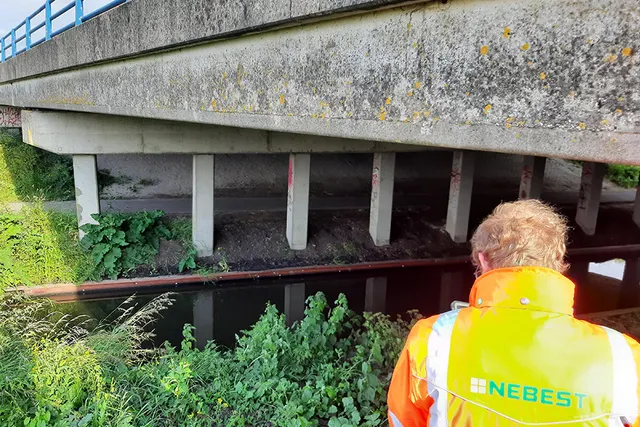
The Netherlands faces a major challenge: drastically reducing CO2 emissions while addressing material shortages. The construction sector has an important role to play in achieving climate targets. The sector consumes half of all raw materials in the country, accounts for 40 per cent of energy use and is responsible for a third of total CO2 emissions. Since half of all construction materials are concrete, making it more sustainable offers considerable scope for improvement. TNO has developed a new approach and tool for this purpose, focusing in particular on the use of more sustainable types of concrete and the reuse of secondary raw materials. These materials are not yet used on a large scale, primarily because their application in concrete structures is complex. On the one hand, the concrete we have always known is changing; on the other, requirements are multiplying. A structure must not only be safe and affordable, but also sustainable and circular.
Resource-based engineering with MIMO
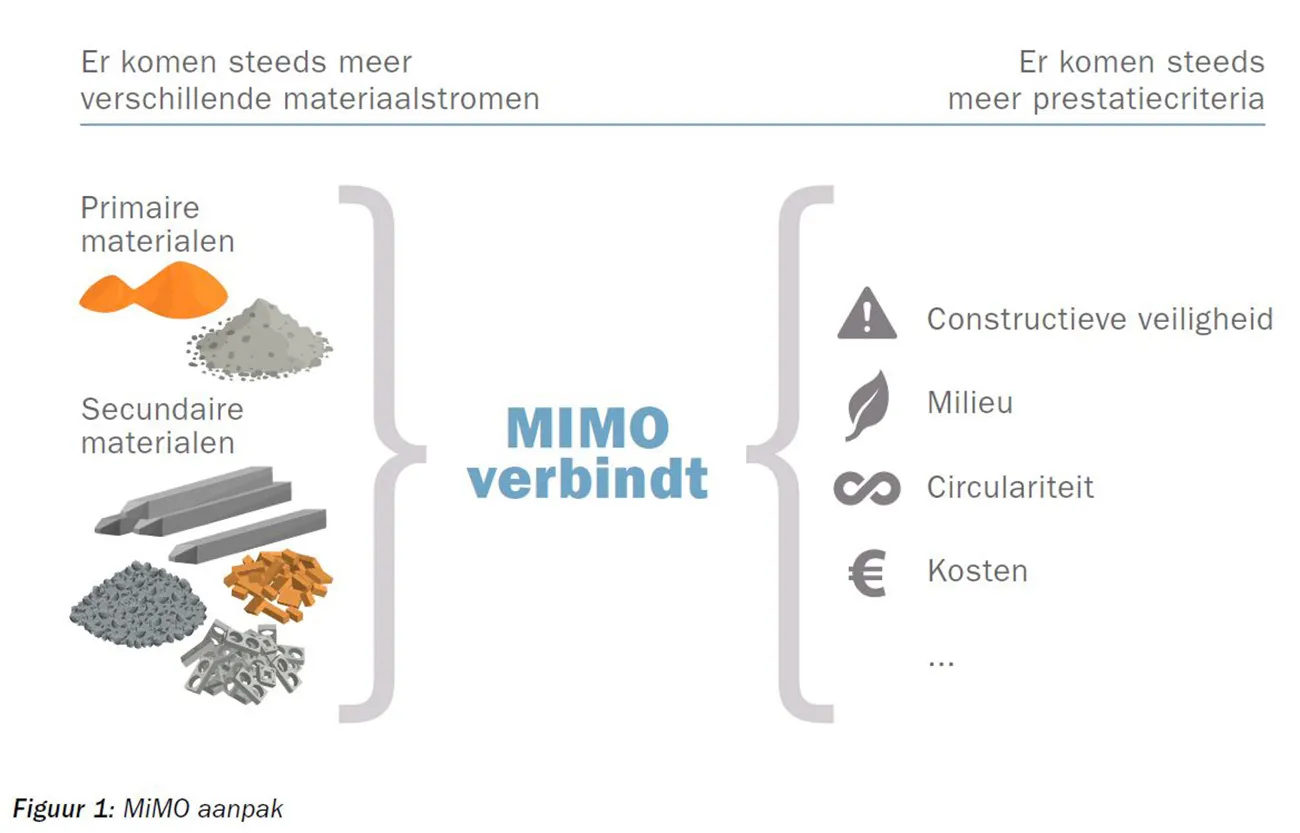
The new approach, whose full name is Material-driven Multi-criteria Design Optimisation (MIMO), is a design approach for more sustainable concrete that helps make the best choices for the various stakeholders involved: clients, construction companies, contractors, demolition companies and recycling companies. The MIMO approach brings together data, models and intelligent optimisation software. Information about locally available raw materials is central to the process: this is ‘resource-based engineering’. For example, the material properties of elements or granules from concrete rubble are determined and recorded as data. At the same time, all requirements are taken into account, such as minimising environmental impact and costs, while also maximising safety: after all, we want safe concrete structures. MIMO then processes the data using calculation models to produce design scenarios that optimally and measurably meet the different requirements at the same time. Users can then easily assess which scenario best suits their needs and schedule.
Significant CO2 reductions through optimal use of secondary materials
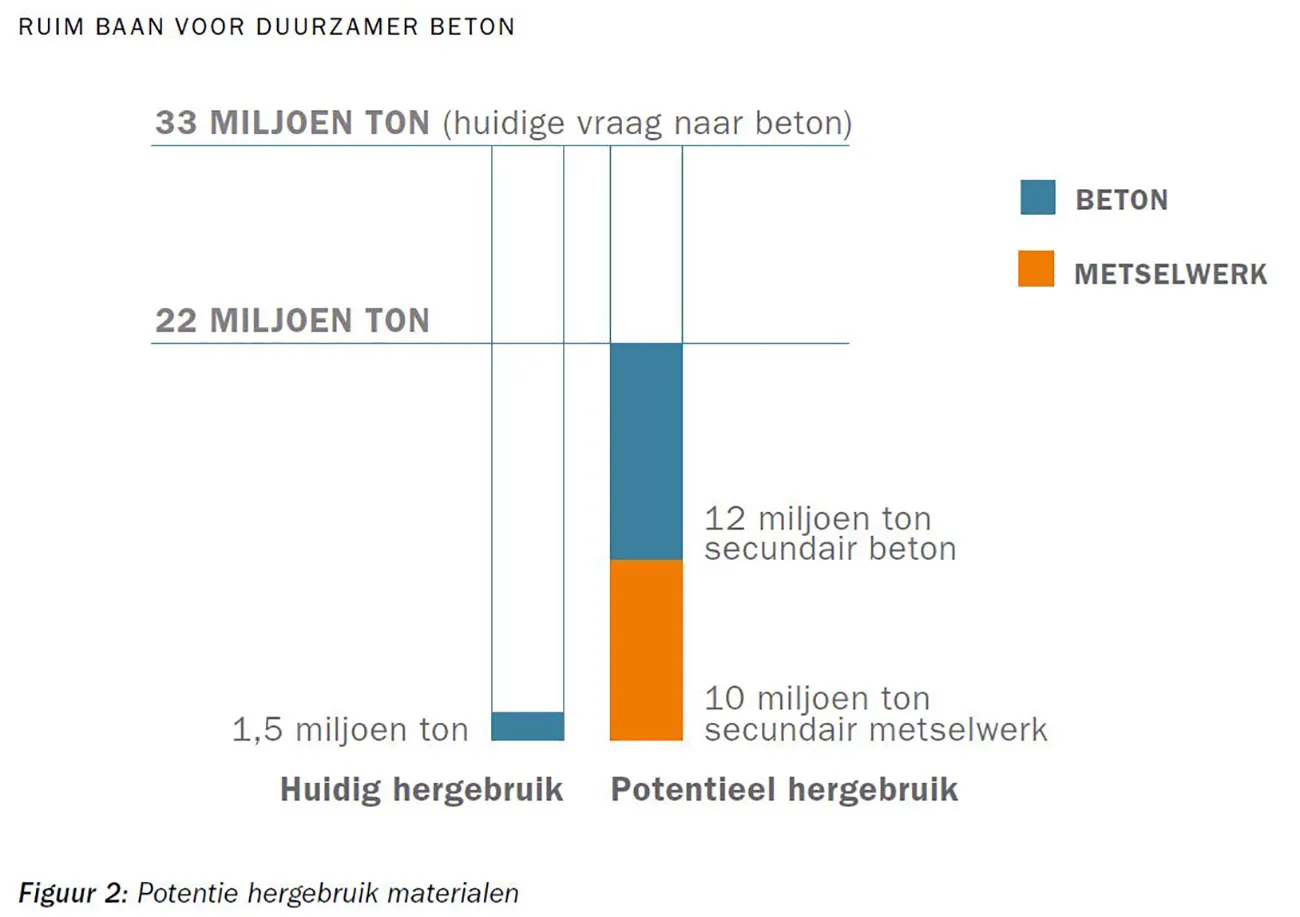
Each year, demolition generates around 22 million tonnes of mineral construction waste. At present, only 2 million tonnes are reused, even though we produce 33 million tonnes of new concrete annually. TNO estimates that MIMO can help assess and optimise the reuse and recycling of construction and demolition waste. ‘This stream accounts for more than half of current concrete production!’ says Siska Valcke of TNO, an expert in circular concrete. ‘When optimising reuse, including for CO2 reduction, MIMO quickly brings two key strategies into view: fully reusing elements from existing concrete structures and using ground masonry rubble could, it is estimated, reduce CO2 emissions by 0.75 to as much as 1.25 million tonnes per year,’ Valcke explains.
Making more information work for the sector
MIMO aligns with initiatives already being developed by the sector, such as new types of concrete with less cement, designing slimmer structures and building for disassembly. Stakeholders can weigh up different strategies for sustainability and circularity and combine them optimally. The new approach is now being tested as a tool on a limited scale. This is showing the benefits it offers stakeholders when used at different stages of decision-making and design. At an early stage, structural engineers can draw on the options and data provided by suppliers, demolition companies and recyclers in their designs to find an optimal solution. Clients gain insight into solutions that measurably meet their requirements and can be compared transparently. Contractors and demolition companies gain measurable insight into the costs and benefits of careful disassembly and materials storage.
Foundations laid
MIMO has been designed to allow new design questions, requirements, data and models to be added and linked, enabling its use to be expanded step by step. Siska Valcke says: ‘Our approach will deliver the greatest value as collaboration across the concrete sector grows, bringing together companies, public authorities and knowledge institutions. MIMO can then act as an enabler in the value chain-wide transition to more sustainable concrete. The foundations have been laid, and from here we can work with the sector to make the transition to large-scale resource-based engineering and more sustainable concrete.’
TNO will present the approach at Betondag on 14 June 2022.
Vraag over dit verhaal? Stel je vraag
Blijf dit volgen
Bij een nieuw verhaal krijg je een e-mail. Geen account nodig.
- ThemaMinder CO2 in beton en staal
- OnderwerpSustainability & circularity