Watertight, self-healing concrete for Paleis Het Loo
Tekst Lieke van ZuilekomBeeld BudoBouw BV
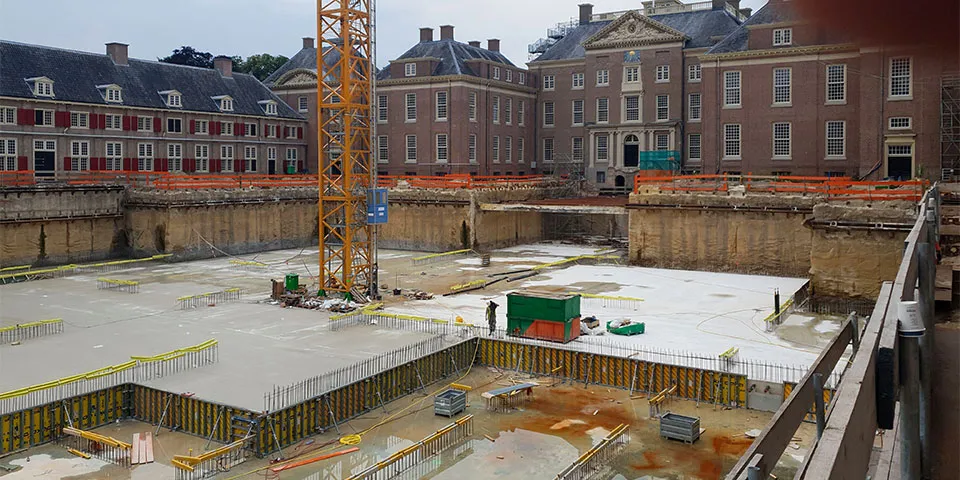
The major renovation and refurbishment of Paleis Het Loo in Apeldoorn brings considerable challenges, including when it comes to the concrete work. For example, how can the watertightness of the more than 8-metre-high underground extension be guaranteed? How should the limited space available be dealt with? And what is the best way to withstand the enormous loads on the formwork? These challenges are right up the street of Budobouw BV from Zwolle, which is carrying out all the concrete work for plot 2 on behalf of, and in close collaboration with, BAM Bouw en Techniek, Regio Oost. The work ranges from constructing the new underground foyer and pavilions to the concrete work for the refurbished East and West Wings, and includes the concrete floor and roof of the office and energy building.
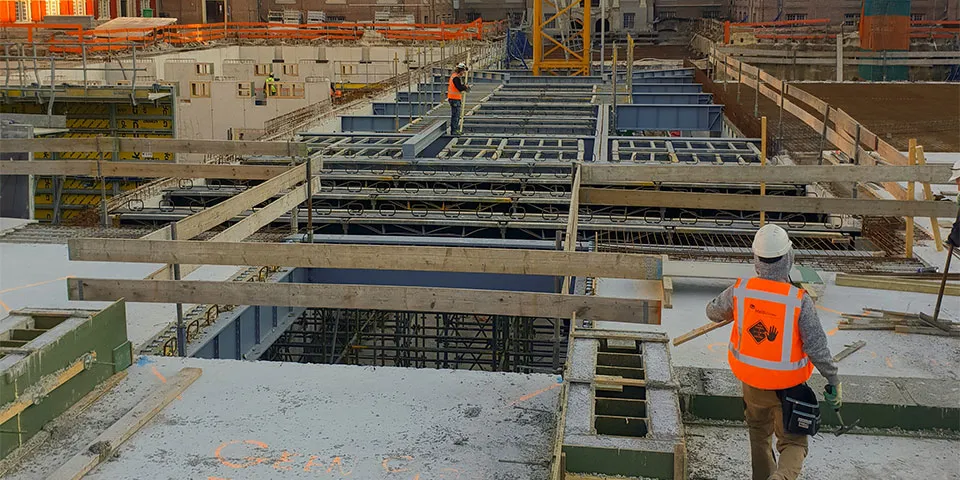
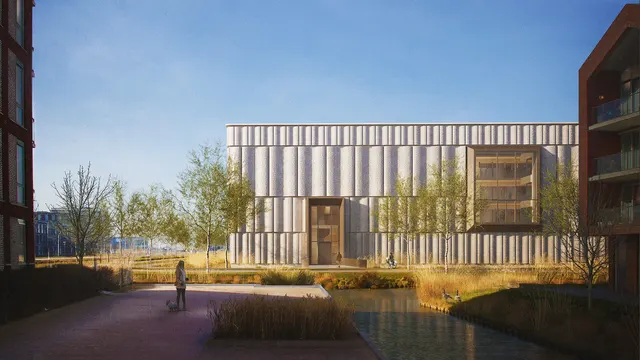
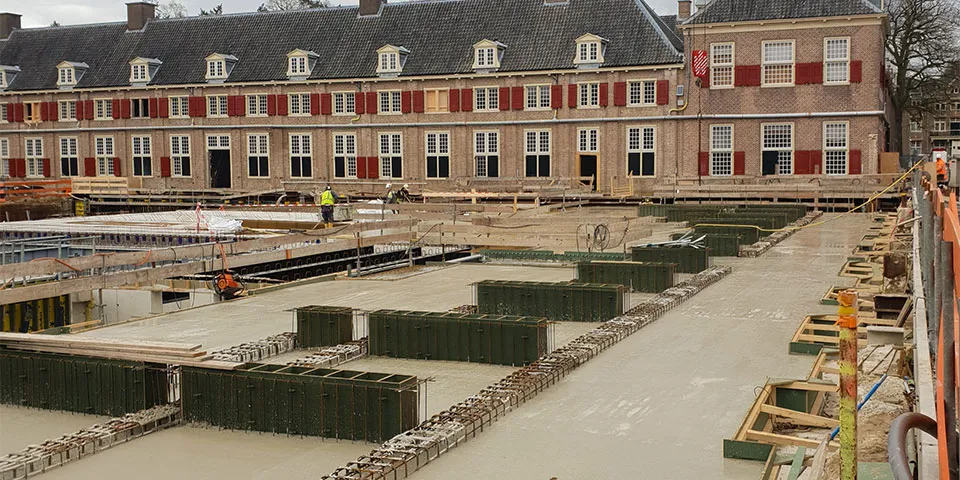
For the extension beneath the Bassecour (the forecourt), BudoBouw BV was able to use a temporary cofferdam made of underwater concrete and grout walls. “A levelling and insulation layer of cellular concrete was laid in the cofferdam, and we poured the concrete floor on top,” say Denis van Wijk, director, and Jeroen van Ostaijen, operations manager at BudoBouw BV. “Both double-sided formwork walls (with a setting-out form and closing form) and single-sided walls were built on this concrete floor, and the concrete was then poured here too.” A Self-Healing Agent additive was added to the concrete for the basement floor and walls. “This additive consists of granules containing spores, an activator and nutrients. If groundwater enters the concrete structure through unexpected hairline cracks, the spores develop autonomously into bacteria that consume the available nutrients. This releases limestone, sealing the crack and preventing leaks. When no more water enters, the bacteria automatically revert to spores, so the healing process can start again if new cracks form.”
High forces
A great solution, but one that also brings challenges. “This watertight, self-healing concrete exerts greater forces on the 8-metre-high formwork,” says Van Ostaijen. “That is why BAM Bouw en Techniek, Regio Oost brought us in during the design phase, so we could determine the most suitable formwork, working methods and pouring sequence for the project.” In consultation with formwork specialist Doka, BudoBouw BV decided to install more props and large steel yokes to transfer the additional forces to the floor. For the ground floor of the extension, a combination of wide slabs and hollow-core slabs with steel beams was selected, enabling long spans. “The roof of the underground extension will feature a distinctive curved brickwork structure. To create this so-called vault, we had a custom plastic mould made, which is positioned on site. The concrete floor is then poured over it.”
Refurbishment and strengthening
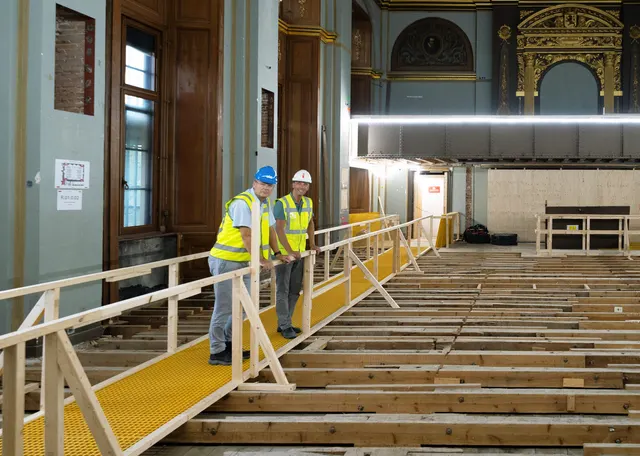
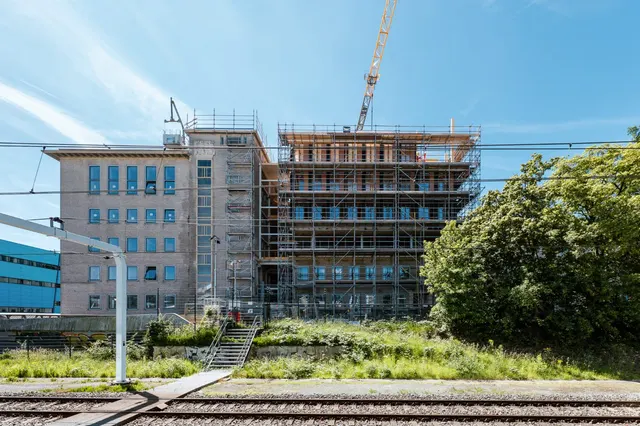
For the refurbishment of the East Wing, BudoBouw BV has partially renewed and strengthened the existing structure to accommodate higher imposed loads. The concrete specialist from Zwolle is carrying out work here including the concrete bases, lift pits and floors, and replacing the existing masonry. The contract for the West Wing is expected to be awarded shortly.
Een zakelijke vraag aan Doka Nederland B.V.? Neem contact op
Wie eraan werkte
Museum Paleis Het Loo in Apeldoorn, renovatie
- architectKAAN Architecten
- bekistingsspecialist
 Doka
Blijf dit volgen
Bij een nieuw verhaal krijg je een e-mail. Geen account nodig.
- ProjectMuseum Paleis Het Loo
- OnderwerpProjects
- BedrijfDoka Nederland B.V.
- BedrijfBudobouw