Platform on concrete and steel in construction
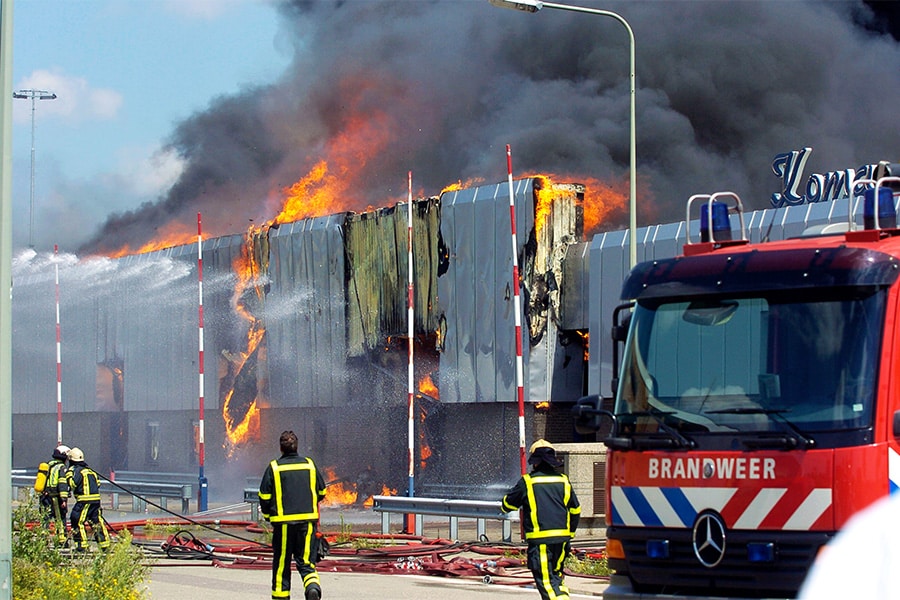
Anyone building in concrete or steel thinks first of stability, material strength, durability and execution technology. But one aspect remains remarkably often underexposed, according to fire safety expert Johan Bijvank (Fire Prevention Academy): passive fire safety. “It's the part of a building you never see,” says Bijvank. “But when things go wrong, it is precisely that hidden layer that saves lives.” According to him, the biggest misunderstandings exist on two fronts: new construction and existing construction.
In new construction projects, structural fire prevention often receives insufficient attention because it does not add a directly visible or ‘usable’ quality such as comfort, aesthetics or energy efficiency. “The owner does pay for fire safety,” says Bijvank, “but usually never uses it during its lifetime. As a result, it is too often seen as a prerequisite, rather than an essential component.”
In existing buildings this is even more problematic. The reasoning ‘it's been there for twenty years, so it must be right’, according to him, is not only wrong, but even dangerous. As soon as functions change - an office building becomes a school or a warehouse is expanded - a new reality of use arises. “The original fire safety is often not adapted to that,” he says.”
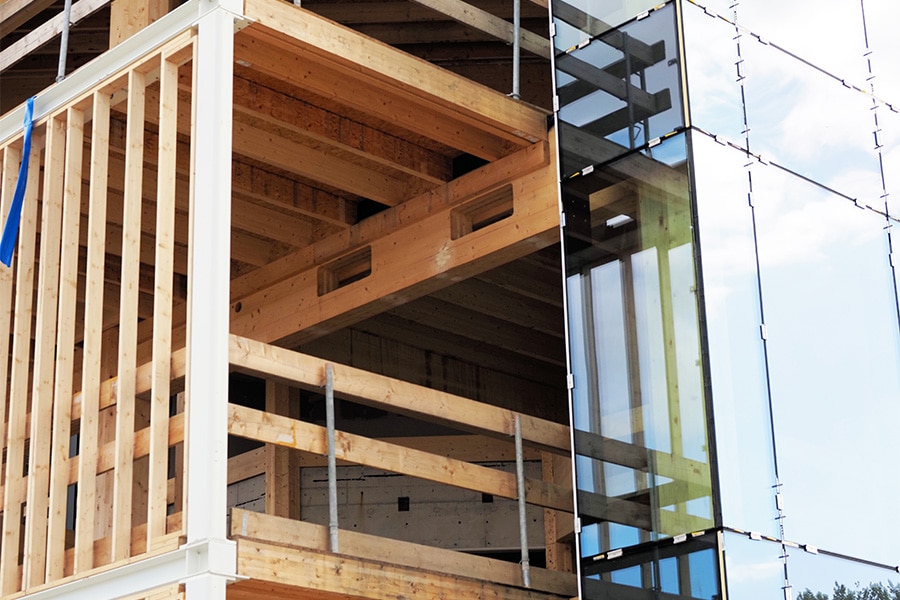
Remarkably, the greatest risk is not in the execution, but in the design phase. “If the design is wrong, it becomes extremely expensive later to rectify it,” Bijvank emphasizes. “And sometimes it is only discovered after completion that a compartment is inadequate or that smoke partitions are missing. And then that costs money, not infrequently a lot of money.”
The message is clear: Fire safety should be an integral part of the structural design from day one, especially in concrete and steel, where details around penetrations, connections and linings are complex.
One of the most radical evolutions in the Netherlands is the introduction of more stringent requirements regarding resistance to smoke passage (WRD), in accordance with NEN 6075. After all, smoke is the biggest threat in a fire. It spreads faster than fire, makes escape routes unusable and causes the majority of casualties. In the past, smoke resistance was simply calculated as a derivative of fire resistance. Today, smoke is treated separately, with separate requirements for cold smoke (Ra) and hot smoke (R200). Bijvank gives a clear example: “A door in an escape route must first stop cold smoke. Only around 140-150 degrees does the intumescent strip that seals the seam activate. Until then, a rubber frame profile provides the smoke barrier. That kind of detail makes the difference in practice between safe and unsafe.”
BIM and digital building models can be a structural breakthrough, according to Bijvank. In a BIM model, fire safety consultant and door manufacturer can add metadata as early as the design phase: fire resistance, smoke class, product type, maintenance info, etc. Errors are thus resolved before the first shovel goes into the ground. He also sees an acceleration in terms of management: “Installers are constantly adding pipes and cables. Repairs are often done ad hoc. With a good database, you can follow up and maintain those fire-resistant penetrations - not just during a fire, but every day.”
Construction is evolving rapidly, and Bijvank says prefabricated components, standardized details and faster assembly processes will create a paradox in the coming years: construction will become more efficient, but fire safety control will become more complex. He also sees new challenges in the use of biobased materials such as wood, flax and cellulose insulation. Sustainable, light and smart - but fire safety standards are still lagging behind. “Construction is ahead of fire safety,” he warns. “We are building high with wood, but the full knowledge base is still lacking.”