Platform on concrete and steel in construction
Ecocem has opened a new research and innovation center in Chilly-Mazarin, just outside Paris. Here, the company is working on solutions to further reduce CO2 emissions from cement and concrete. At the center, which functions as a mini practical-scale factory, an international research team is developing the next generation of binders. With this investment, Ecocem is accelerating the sustainability of the cement industry. For 25 years, the company has been a pioneer in low-CO2 cement.
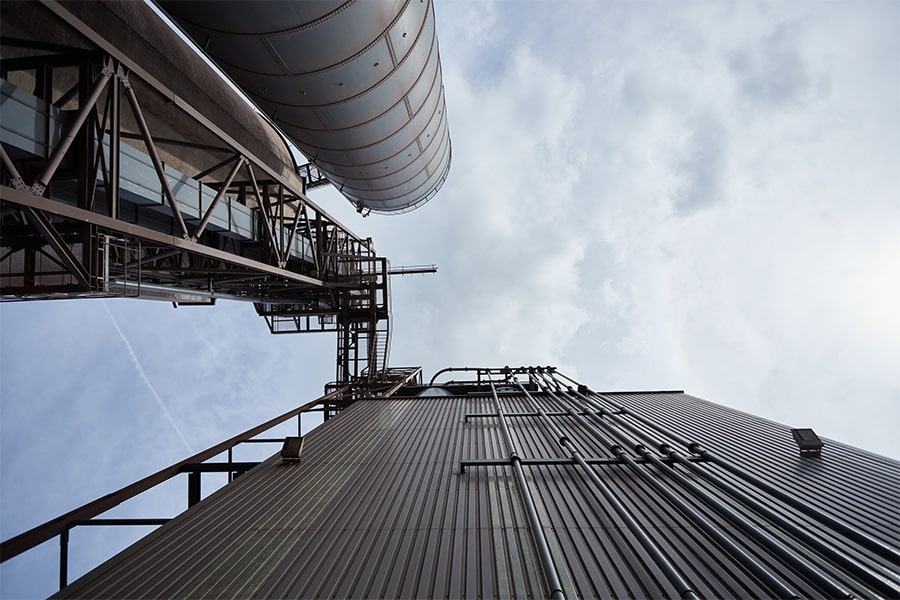
The research center covers 3,300 m2 and has its own milling and mixing plant, seven storage silos and a test capacity of up to one ton per batch. This allows Ecocem to develop new binders and test them directly under practical conditions.
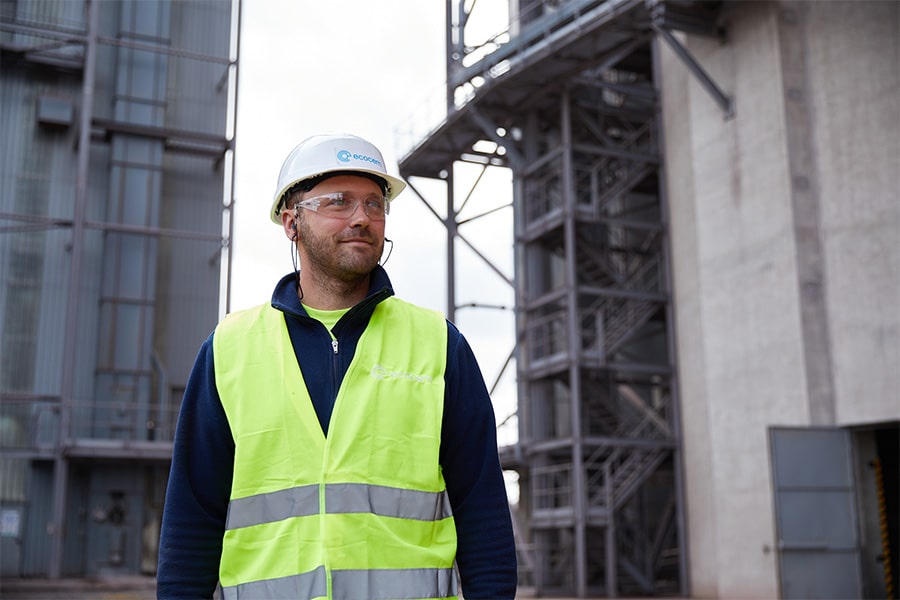
What makes the center unique is that it focuses entirely on alternative cementitious materials (SCMs) that replace CO2-intensive clinker. Blast furnace slag was for many years the main raw material for Ecocem's low-CO2 cements, but its availability is declining as the steel industry itself becomes more sustainable. At the new center, Ecocem develops binders based on natural and recycled materials. In this way, the sustainability of cement and concrete remains future-proof. Led by Dr. Roberta Alfani, twelve doctoral students, five postdocs and dozens of technicians work daily on breakthroughs in composition, process and performance. “We have recreated the entire concrete chain in miniature,” says Jeroen Langenberg, commercial director of Ecocem Benelux. “We see exactly where we can make gains: technically, economically and in terms of CO2 emissions.” This creates a direct link between fundamental research and practical applications in the concrete industry worldwide.
Ecocem's innovations come together in Accelerated Cement Technology (ACT). This patented approach dramatically reduces the clinker content of cement without loss of strength or technical service life. ACT has been individually tested in more than 40 projects and can reduce the carbon footprint of traditional cement by up to seventy percent. “The beauty of ACT is that it is directly applicable,” says Langenberg. “We don't have to build new plants. Existing concrete plants can work with it tomorrow, often just by adjusting the recipe slightly.” With that, he succinctly sums up Ecocem's mantra: feasible, scalable and affordable.
Ecocem's ACT is at the heart of its innovative approach to making cement more sustainable. ACT combines alternative raw materials such as limestone flour, blast furnace slag and/or pozzolans into a binder with an up to seventy percent lower carbon footprint. In practice, ACT not only reduces CO2 emissions but also provides consistent quality and performance. Developed in collaboration with universities and industry partners, the technology is fully compatible with existing concrete plants. This allows the industry to switch over immediately without large investments or process modifications. Ecocem, meanwhile, holds European certification and is preparing for commercial rollout in 2027. The goal: to make cement that is technically and economically competitive and ready for the future.
Ecocem has been investing in research and development for years. The opening of the research and innovation center is the most tangible result of this and part of a broader European program that accelerates innovation. The European Commission supports an important part of that research. Ecocem has been selected for a subsidized assignment on low CO2 binders and scaling up to industrial application.
Ecocem is working with leading industry partners such as Saint-Gobain, ArcelorMittal and the international climate fund Breakthrough Energy Ventures. “That support confirms that we are on the right track,” says Langenberg. “But we're not doing it for the investors. Ultimately, it's about the social impact: helping the cement industry to really change.”
The Netherlands plays a key role within the Ecocem group. The Moerdijk plant was the first production site and is still considered a testing ground for new applications. “The Netherlands and Belgium lead the way in sustainable concrete,” Langenberg explains. “If the rest of the world would make concrete the way we do here, our industry would have less of a CO2 problem.” Ecocem Benelux also works intensively with several international universities including TU Delft and TU Eindhoven. In practice, there is also intensive cooperation with industry. Dutch practical experiences go directly to the lab in Paris and help develop the next generation of binders. “The Netherlands is a leader when it comes to standards and environmental requirements. If it works here, it works everywhere.”
Recently, Ecocem obtained a European Technical Assessment (ETA), making the technology European-certified as a building material. “We now have the passport,” says Langenberg. “The national stamps will follow.”
An important area of application is the Dutch precast industry. This sector wants to make great strides in CO2 reduction. “Precast (precast) concrete requires rapidly hardening mixtures, in which traditional Portland cement excels. Our binder initially reacted more slowly,” says Langenberg. “That made it difficult for producers working in short cycles. Thanks to breakthroughs at the research center, we can now match that reaction speed. The benefits remain: a much lower carbon footprint, without major changes to the process.” Ecocem sees an opportunity in this sector to accelerate the transition. “The precast industry is ideally suited to quickly scale up new technology. There we can immediately show that low-CO2 construction is also economically attractive.”
Ecocem's ambitions extend beyond Europe. In Los Angeles, construction of a new production site, the first in North America, will start soon. The message remains the same: The cement industry can become more sustainable faster than thought. “If it is up to us, we will be working with low clinker cement as the standard in ten years,” says Langenberg. “The technology is there, the knowledge is there. Now we need the will and regulations that make it possible.”
Regulation, he says, is still the biggest barrier. “The industry runs faster than regulations. Permits, standards, infrastructure: that's where it's still stalling. But we shouldn't wait for someone else to solve it. Just start. Even if you solve sixty percent of the problem, we will help you with the rest.”
Ecocem is working in the coming years to scale up its technology so that sustainable cement products become available worldwide. The emphasis is on industrialization: large-scale production while maintaining quality and low CO2 emissions. At the same time, the company shares knowledge with partners throughout the construction chain. With the new research and innovation center, Ecocem proves that innovation and scalable technology go hand in hand. Making cement sustainable is no longer a plan, but a process in full swing. Or as Langenberg sums it up, “low-CO2 cement can be used in existing concrete plants as early as tomorrow.”
Neem dan rechtstreeks contact op met Ecocem.
 Contact opnemen
Ecocem Benelux B.V., founded in 2001 to develop and produce an environmentally friendly cementitious binder, is a subsidiary of the Irish company Ecocem Materials Limited. In Moerdijk we grind a by-product of the steel industry, granulated blast furnace slag into a high-quality cementitious binder (eco₂cem) for use in high-performance concrete. The concrete and mortar industry has immediate sustainable access [...]
Bekijk Bedrijfsprofiel