Platform on concrete and steel in construction
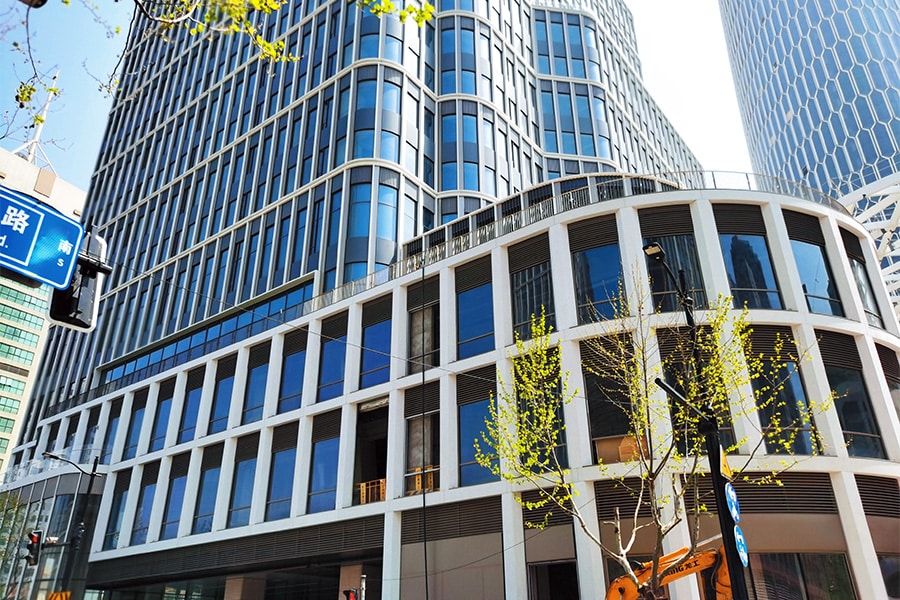
In 2019, ground was broken in downtown Shanghai for the impressive CPIC Xintiandi Commercial Center. A large-scale, mixed-use development that harmoniously combines work, shopping, culture, and heritage. The project, covering some 390,000 m², is a collaboration between Kohn Pedersen Fox (KPF), Kokai Studios, East China Architectural Design & Research Institute (ECADI), and WSP. The designers have managed to interweave contemporary functions with the rich historical context of the area, resulting in an urban space that combines modern vibrancy with historical depth.
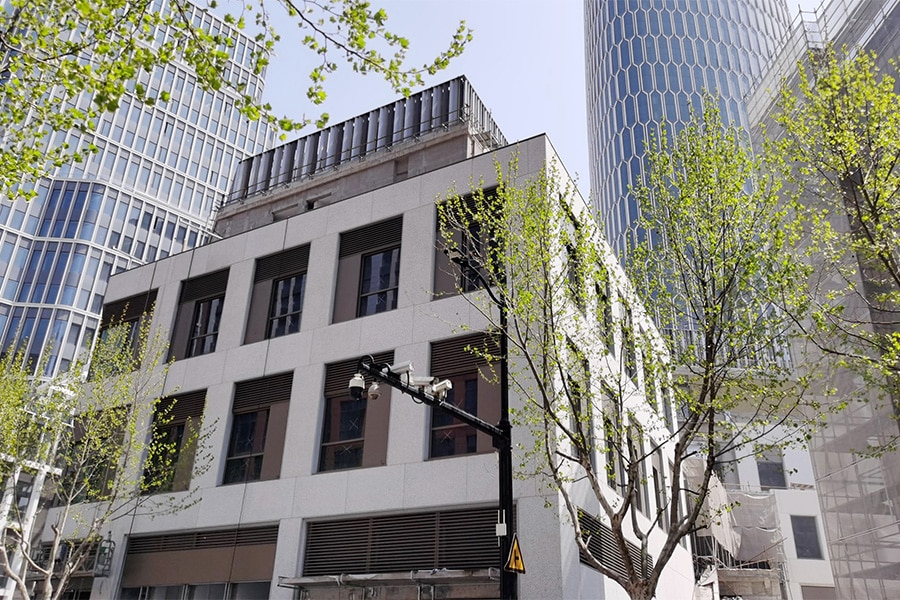
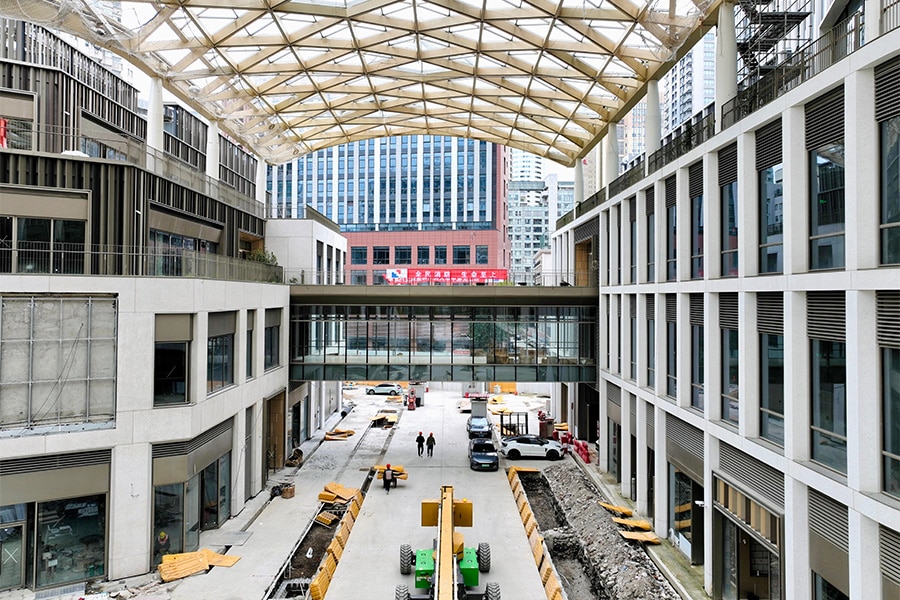
The CPIC Xintiandi complex is located on the east side of Taiping Qiao Park and is built around a pedestrian-friendly structure with a 250-meter-high office tower as its centerpiece. The designers drew inspiration from the former Dongtai Road antique market, which had a vibrant atmosphere of trade and craftsmanship. This feeling is revived in covered shopping streets with three- to four-story buildings, connected via elevated walkways and directly linked to the metro network.
Materialization plays a key role in the experience of the area. The architects opted for expressive use of architectural concrete to add texture and depth to the urban fabric. The tower, with its flowing lines, blends seamlessly into the park-like surroundings and reflects the careful alignment with context and culture.
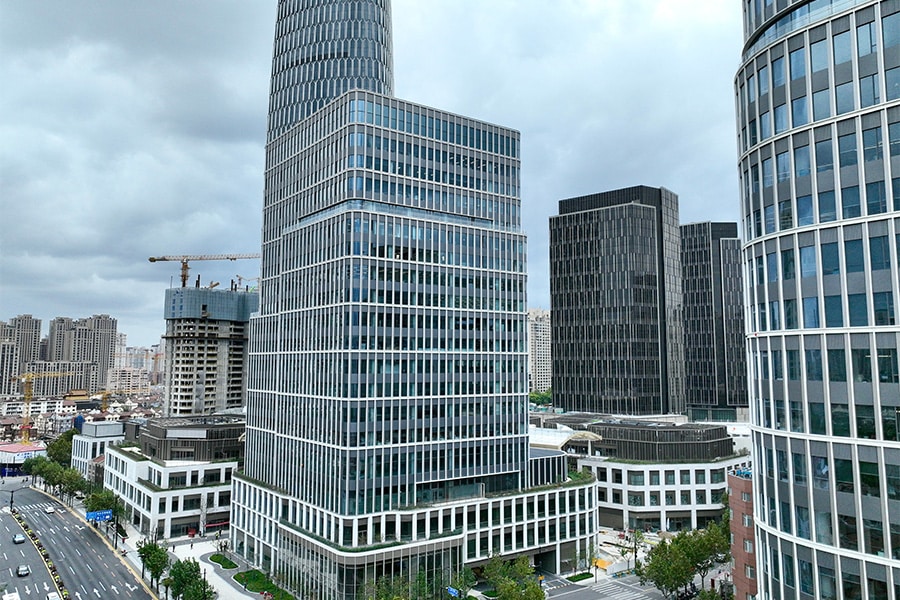
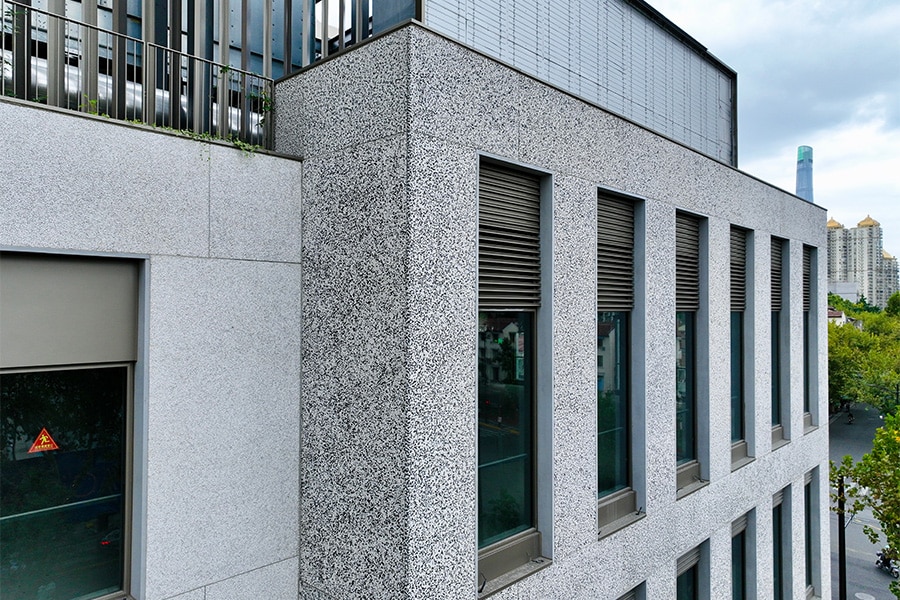
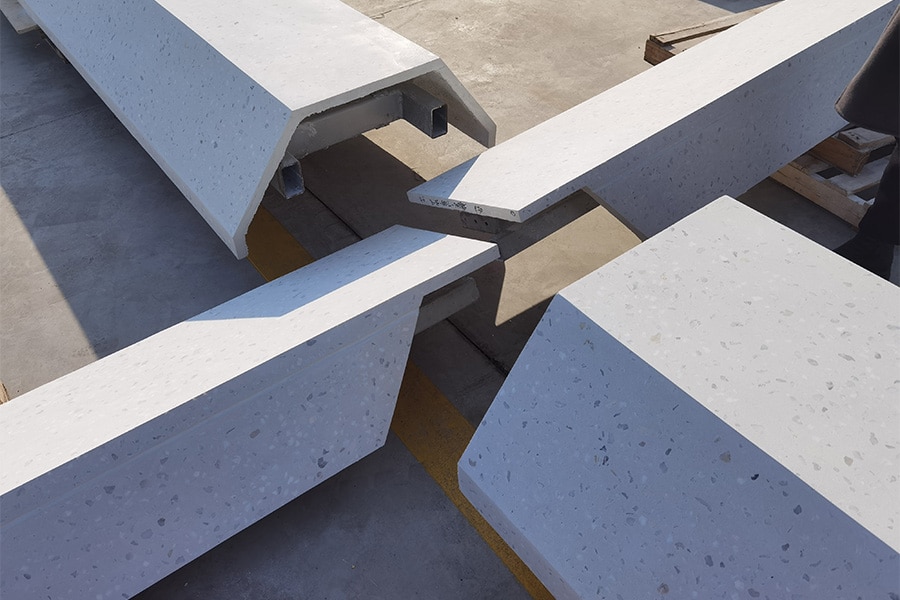
One of the most striking parts of the project is the Xintiandi Galleria, the shopping podium that was completed in 2023. The façade is clad with 11,000 m² of decorative GRC panels, produced by Jiangsu Huiquan New Materials in collaboration with Aalborg White Cement. The panels, up to six meters long, come in six different finishes: matte white terrazzo, matte gray sandblasted concrete, and four shades with visible aggregate (pure white, beige, gray, and dark gray). This varied finish creates a dynamic façade in which flat, folded, and curved panels alternate. A striking element is the so-called ‘Haipai’ texture, a robust, natural stone texture that contrasts with the smooth glass surfaces. This is offset by the polished terrazzo, which adds a marble-like sheen and refinement. A subtle interplay between a raw feel and modern elegance.
GRC (Glassfiber Reinforced Concrete) guarantees long-lasting color fastness and subtle tonal variations. Thanks to these properties, the architects were able to freely experiment with combinations of color and texture, resulting in a facade that is both expressive and harmonious.
According to Zhang Deli, general manager of Jiangsu Huiquan New Materials, the façade system was a key part of the design. “We managed to combine terrazzo and visible aggregate material within a single panel. This innovation earned the project a nomination for the Polaris Architecture Award,” he explains. The development process was characterized by intensive collaboration between designers and manufacturers. Precision and quality were worked on during various technical workshops and factory visits. A major challenge was achieving consistency in color and texture across the different panel types. To this end, Huiquan opted for the extremely pure Aalborg White CEM I 52.5, which guarantees consistent performance and brightness. “The high whiteness and uniformity of this cement enabled us to precisely control tone and texture,” explains Deli. “From the sharp terrazzo edges to the even distribution of the aggregate: every detail has been carefully executed.”
For years, the Xintiandi area has been regarded as a symbol of Shanghai's rich history and modern ambitions. The CPIC Xintiandi Commercial Center continues this story: the essence of traditional Shikumen architecture is preserved, but given a contemporary interpretation. The complex is a model of urban renewal, in which heritage and innovation reinforce each other and GRC technology plays a key role in shaping a new, expressive identity for the city.
Neem dan rechtstreeks contact op met Aalborg Portland Belgium.
 Contact opnemen
AALBORG WHITE cement-based products have great undiscovered potential that offers opportunities to challenge the familiar and push the boundaries in terms of aesthetics. They are the building materials of the future. Plastically moldable properties, the true colors of the rainbow or the smooth white surface that allows the play of light [...]
Bekijk Bedrijfsprofiel