Platform on concrete and steel in construction
Sustainable use of materials and building with concrete, can they go together? Hendriks and NXT Building show that it can, with circular concrete that emits 57% less CO2 than the most ambitious value defined for frontrunners by the Concrete Accord for 2026. A giant step forward in making concrete more sustainable. The performance of NXT Concrete has been independently tested and the circular concrete was recently included in the National Environmental Database (NMD) with a Category 1 environmental statement. This makes the environmental performance not only transparent and verifiable, but also directly applicable in MPG calculations.
With NXT Concrete, Hendriks and NXT Building show that circular concrete is not only technically and economically feasible, but also demonstrably contributes to reducing the environmental impact of buildings. The two companies found each other in their ambition to make the construction sector more sustainable. Hendriks as inventor, builder and manager of sustainable buildings and NXT Building as producer of circular and biobased building materials. “What one creates is actually applied in projects by the other, and so together we ensure rapid upscaling,“ says director Vincent Hendriks. Director of Construction Carl Dolmans adds: “At Hendriks, circular concrete is now the standard, always, in every project.”
NXT Building's circular concrete has been on the market since 2023. Since October 2025, an environmental product declaration is available for NXT Concrete, which provides insight into the polluting effect on the environment (human, soil, air and water). The accompanying life cycle analysis (LCA), mandatory for a spot in the highest category of the National Environmental Database, shows impressive figures. Especially when compared to regular concrete. For example, the CO2 emissions of NXT Concrete are only one-fifth of those of regular concrete (54.84 CO2-eq versus 271.71). With a Material Circularity Index (MCI) of 86%, the proportion of recycled and future reusable raw materials in NXT Concrete is almost twice that of traditional concrete (48%).
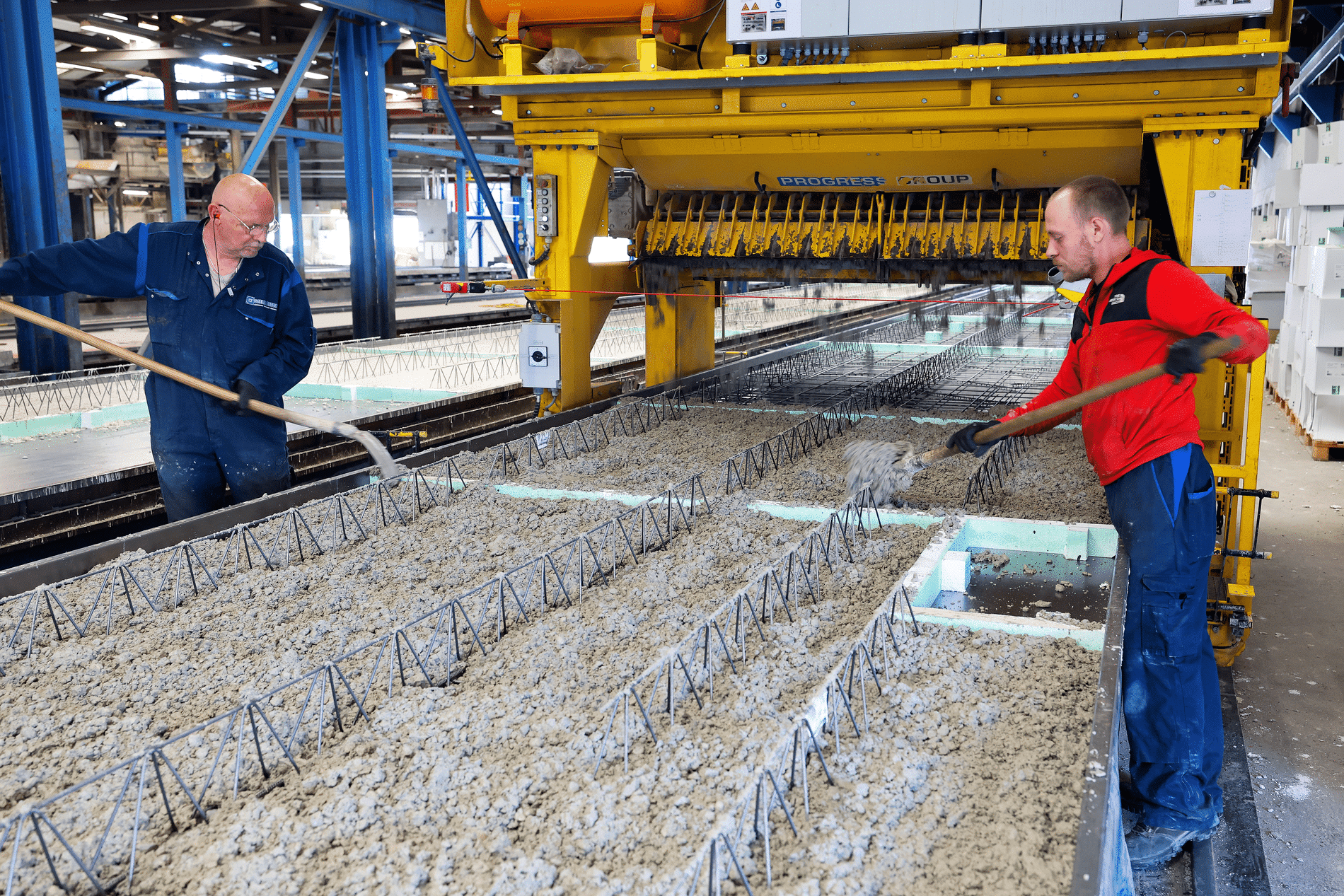
The Environmental Cost Indicator (EQI), the price to ’pay back’ the negative impact on the environment, is 69% lower than for regular concrete (€7.15 per m3 versus €22.72). Laying this along the MKI reduction agreements from the Concrete Accord for 2026, NXT Concrete scores almost half as low* as the leader value, the most ambitious target value agreed upon by the concrete industry and government. This puts Hendriks and NXT Building well ahead of the benchmark numbers for best performing products.
“Concrete will continue to be an important building material in the future,” Dolmans notes. “Think about foundations. There is no easy alternative for that. Then you'd better make sure the concrete is as sustainable as possible. A lot of mass is involved anyway, so the impact you make with circular concrete is significant.” The figures from the National Environmental Database translate directly to a lower MPG score. NXT Concrete has an MPG contribution of 0.1, compared to 0.3 for traditional concrete. With this, circular concrete makes a substantial contribution to meeting the MPG requirements, which will be tightened in mid-2026 for various building types.
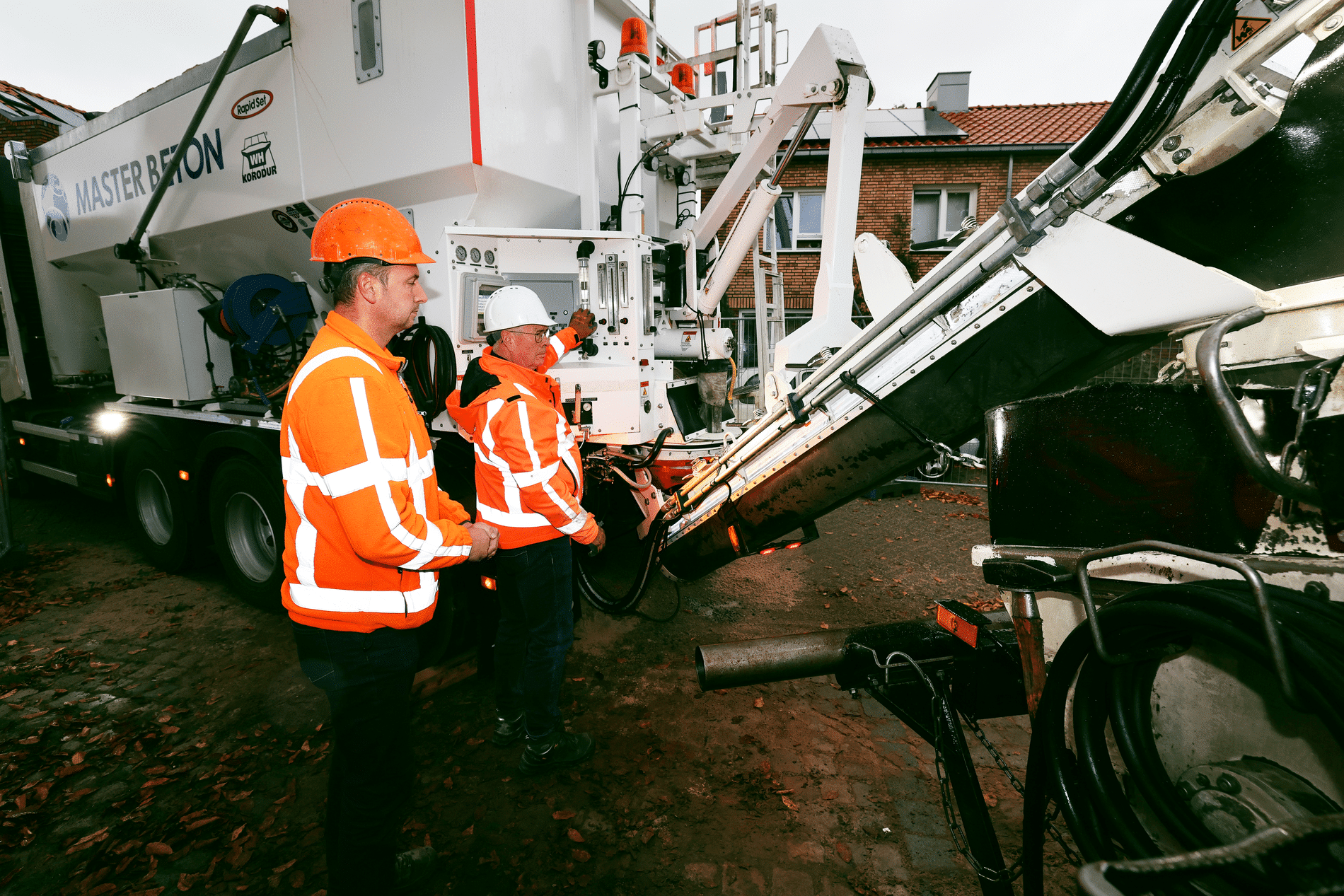
How do Hendriks and Dolmans view the future of circular concrete? “We expect more and more builders to adopt it, because it is a very affordable way to lower the MPG,” Hendriks said. “NXT Concrete is no more expensive than traditional concrete. Economies of scale will further tip the price differences in favor of circular concrete. Of course, we also continue to explore product improvements to further lower the MKI. Then you can think, for example, of reducing the proportion of cement by using filler extracted from concrete rubble and alternative binders.”
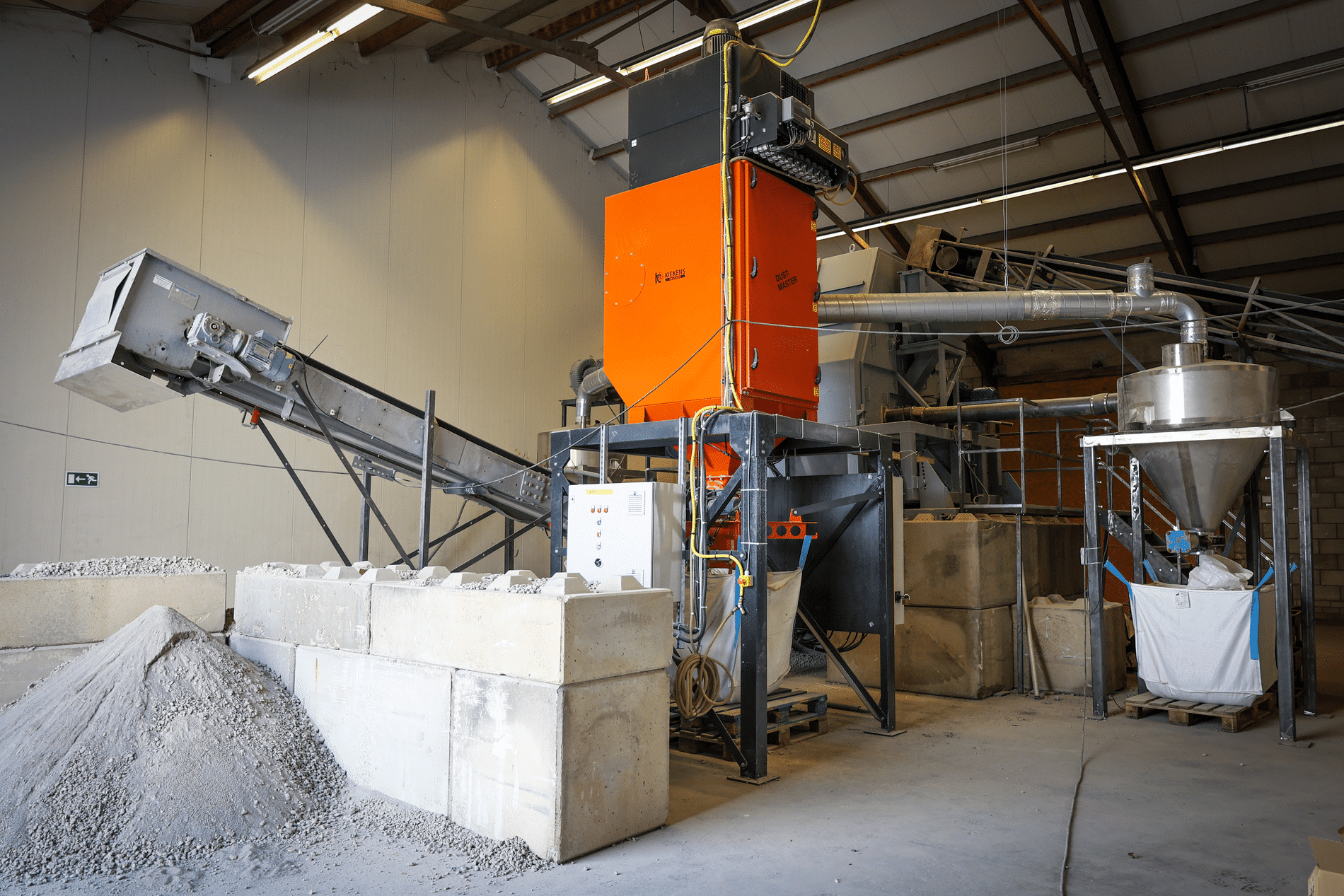
If the construction industry switches en masse to circular concrete, will there be enough concrete rubble available? Hendriks is not so afraid of that. “Our storage sites are well stocked. I also see more and more municipalities that steer towards high-quality reuse of primary raw materials and lay this down in policy frameworks. For example, the municipalities of Oss and Nijmegen are doing well in this respect. Of course, we also set a good example ourselves. At Hendriks we always demolish our own projects in a circular way. With these kinds of initiatives, the availability of concrete rubble destined for upcycling into circular concrete will continue to grow.”
*The Concrete Agreement calculates an MKI excluding transportation and processing. NXT Concrete's MKI for production is €3.69 per m3. The headline value in 2026 is €7.10.