Platform on concrete and steel in construction
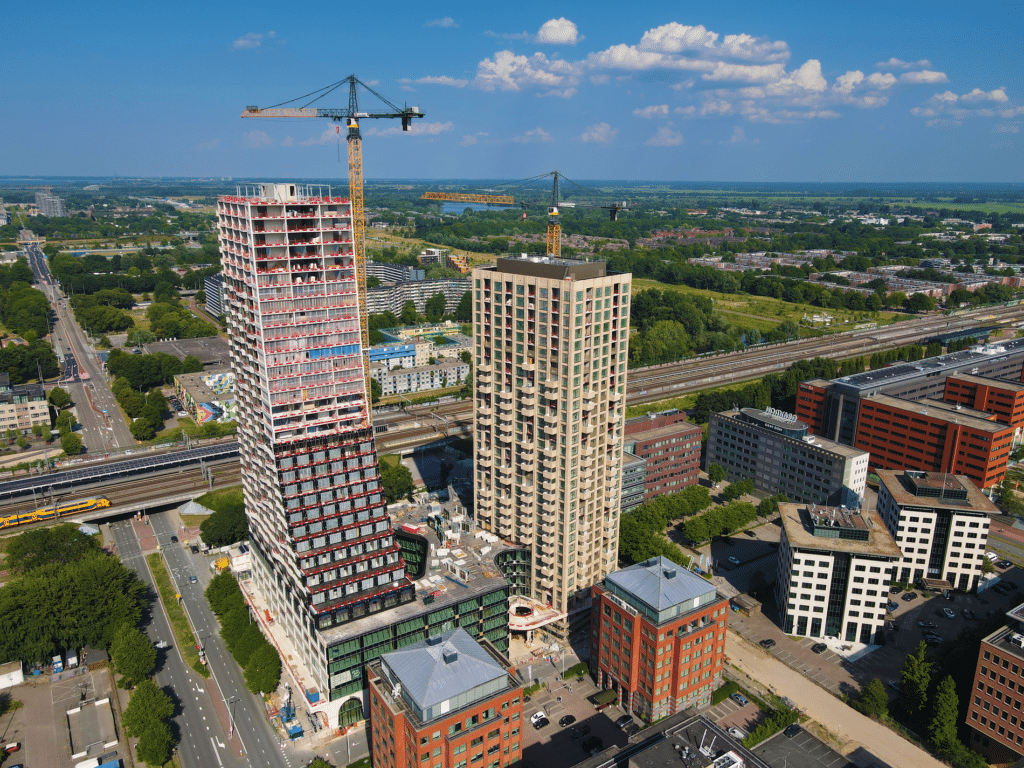
Two towers, one structural logic
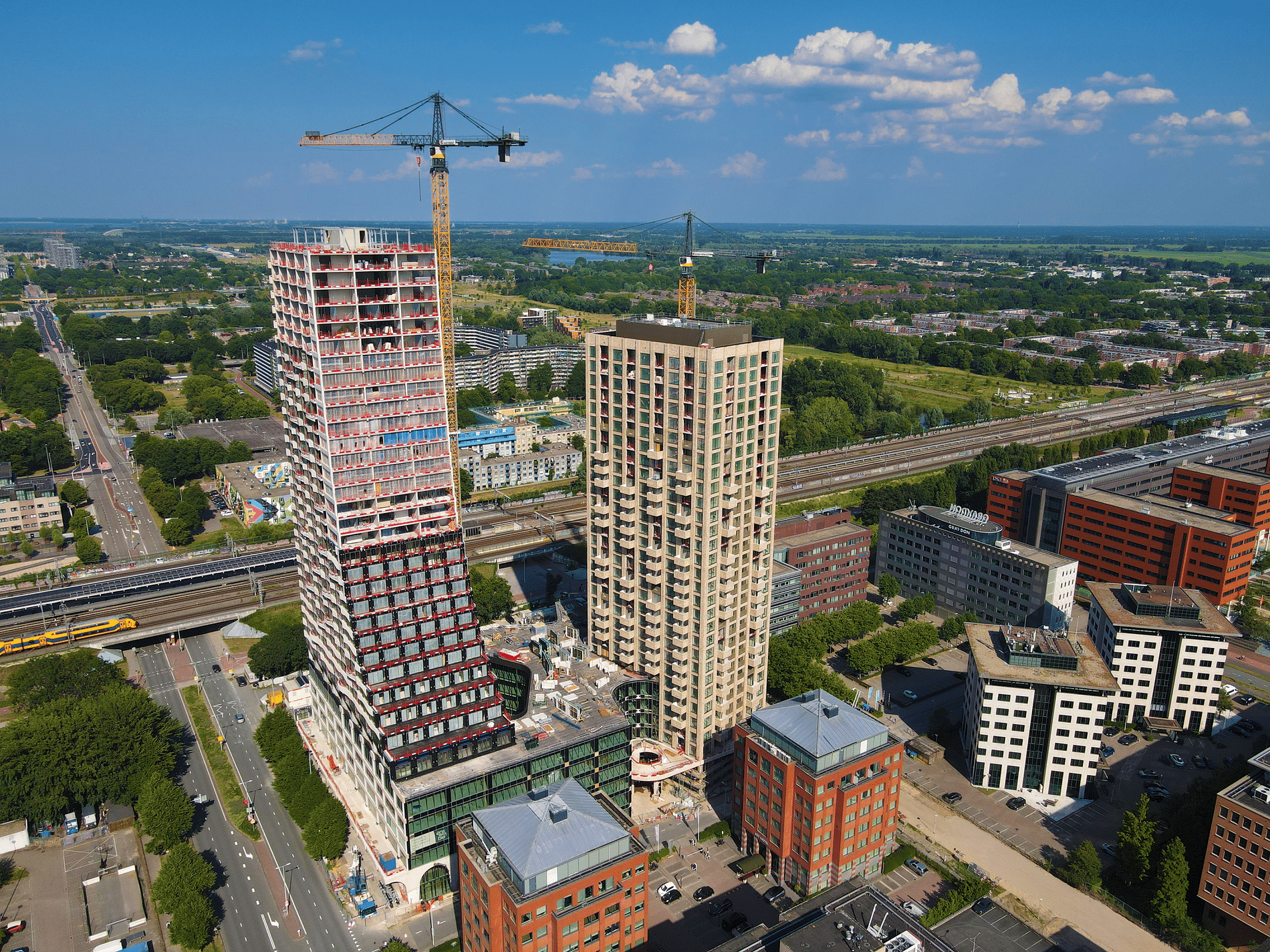
On Karspeldreef in Amsterdam-Zuidoost, The Ensemble marks the urban profile with two towers of approximately 115 and 98 meters high. The project is part of the large-scale densification of the area, where living, working and facilities are combined in high density. Behind the distinct architecture, however, is a structural story in which material choice and detailing determine performance in terms of stability, comfort and durability.
Central to that story is a sophisticated steel-concrete combination: concrete forms the structural backbone, steel acts as a precision instrument for coupling and assembly. That division of roles is not purely pragmatic, but follows from the physical properties of both materials.
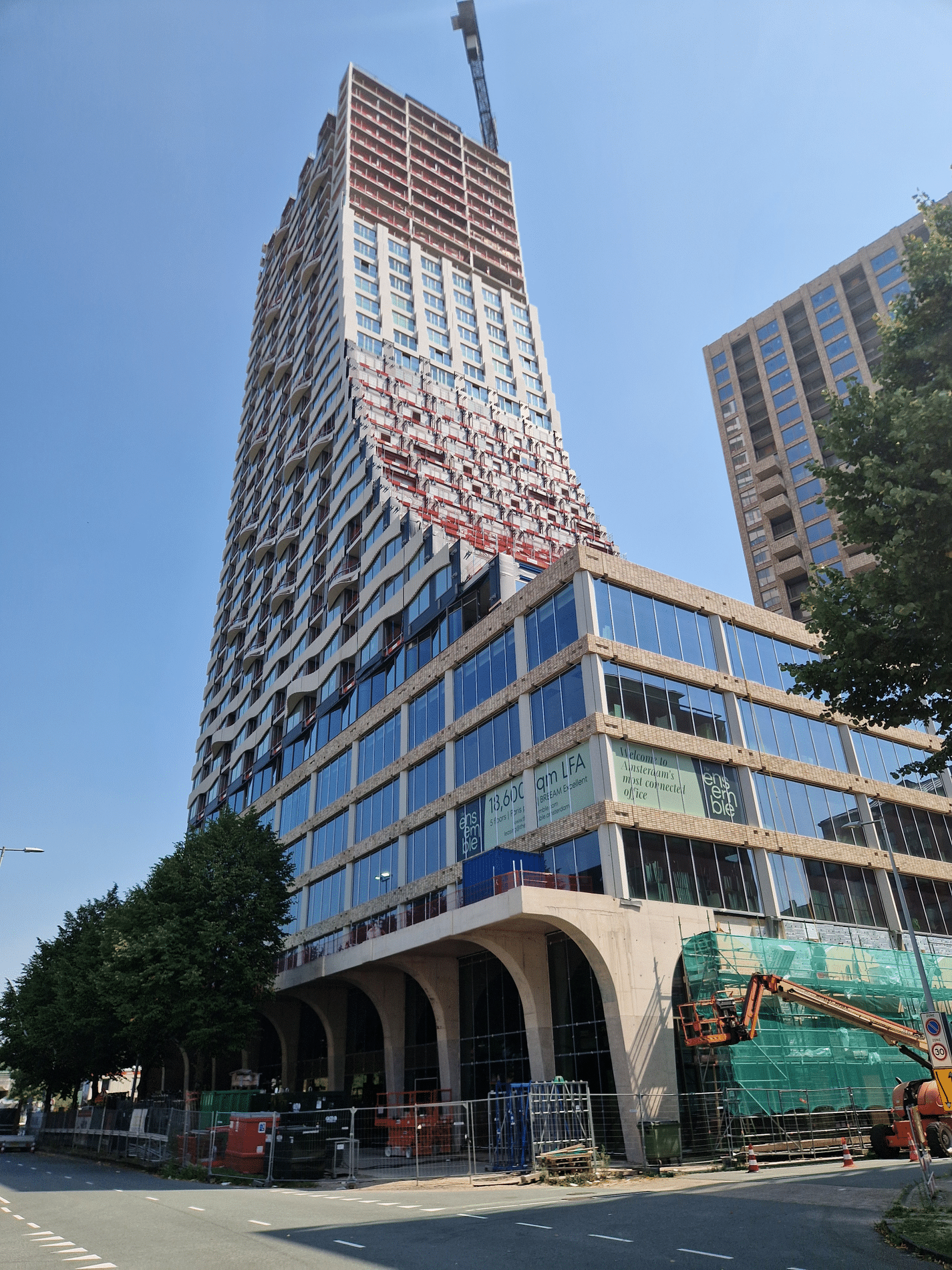
Constructively, a concrete main load-bearing structure was chosen with concrete side walls that contribute to overall stability via disc action. In high-rise buildings, horizontal rigidity is especially crucial. Wind loads and dynamic effects translate directly into user comfort and façade performance. Here, concrete provides mass, damping and fire resistance in one integral system. The choice of concrete also means that stability and compartmentalization come together in one robust core. This reduces the need for additional fire-resistant cladding or complex steel reinforcements. At the same time, a heavy shell requires careful foundation coordination and logistical planning, especially in an urban context with limited building space.
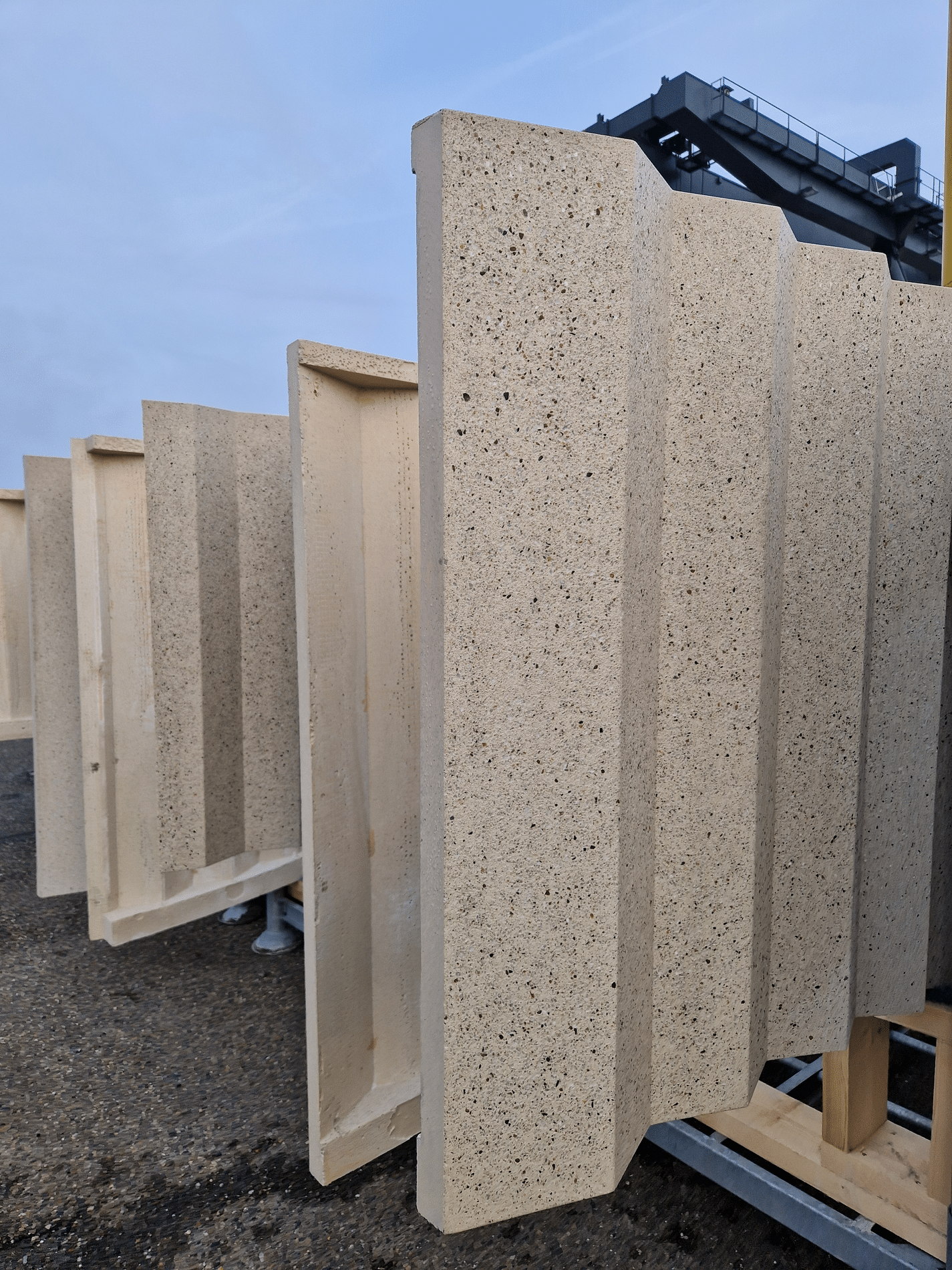
For (one of) the towers, a departure was made from traditional sandwich facades. Instead, a hybrid structure was used with wood frame construction as the rear structure and slender, prefabricated concrete elements as the outer shell. That choice required a different approach to detailing, tolerances and fastening. The façade elements, supplied by mbX, are made of fiberglass-reinforced high-strength concrete. This material allows significantly thinner panels while maintaining tensile and flexural strength. This reduces their own weight without compromising durability or freedom of form.
The panels are produced in three finishes, smooth, polished and sandblasted, so the concrete surface actively contributes to the architectural expression. Concrete here is not a neutral support, but visible and tactile façade material.
The balconies, supplied by Microbeton, are filled with recycled EPS. As a result, approximately 70% less concrete was used, reducing weight and improving environmental performance (LCA). Less mass also means less load on the shell and more efficient transportation. In addition, Microbeton developed a balcony variant filled with elephant grass (miscanthus), which can even be CO2-negative. That sounds promising, but the actual impact depends on scalability, availability of biogenic raw materials and how end-of-life is organized.
White cement from Aalborg White was used for both the façade panels and balconies. According to Leon Kolster, director of Microbeton/Ferrocem, this results in a stable color and consistent mixture. In high-rise buildings, where repetition and light fall dominate the facade image, color stability is not an aesthetic detail but a prerequisite for long-term image quality.
The hybrid façade is connected to the concrete shell via a steel suspension system with consoles in U-profile, supplied by PohlCon Benelux Construction Support. The elements are hooked in, resulting in a rational, adjustable mounting system with attention to redundancy and safety.
Steel allows for slim, dry and demountable connections. Components are hot-dip galvanized and coated to ensure corrosion resistance. Thus, steel does not act as a primary support material, but as an essential assembly and adjustment tool within the hybrid assembly.
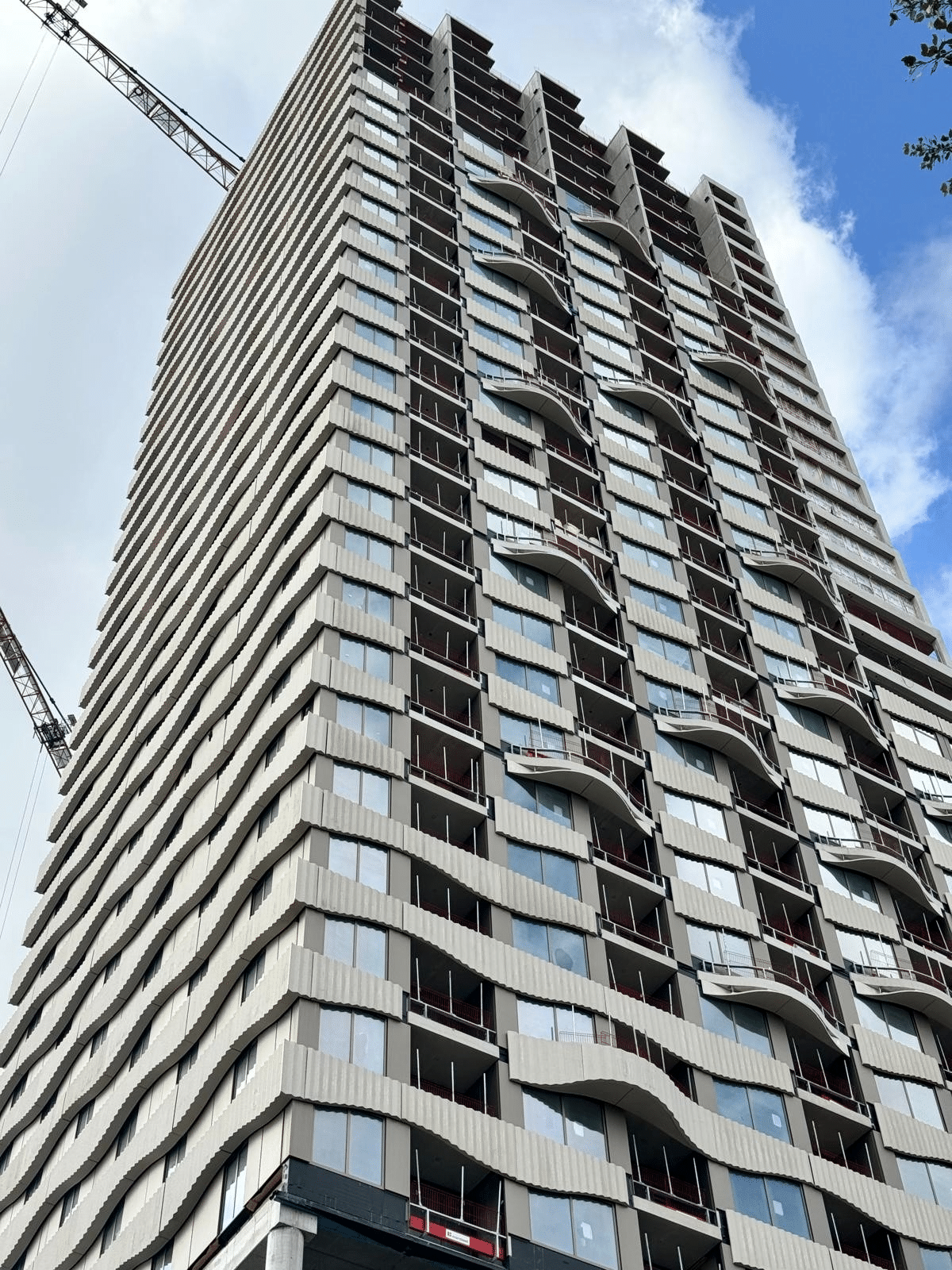
The Ensemble shows how concrete and steel can reinforce each other in high-rise buildings. Concrete provides stability, mass and plastic quality, while steel facilitates flexibility, precision and disassembly. In Amsterdam-Zuidoost, concrete forms the unmistakable foundation of The Ensemble. Constructively and aesthetically, but not without critical considerations to move the sector forward.
Neem dan rechtstreeks contact op met Aalborg Portland Belgium.
 Contact opnemen
AALBORG WHITE cement-based products have great undiscovered potential that offers opportunities to challenge the familiar and push the boundaries in terms of aesthetics. They are the building materials of the future. Plastically moldable properties, the true colors of the rainbow or the smooth white surface that allows the play of light [...]
Bekijk Bedrijfsprofiel