Platform on concrete and steel in construction
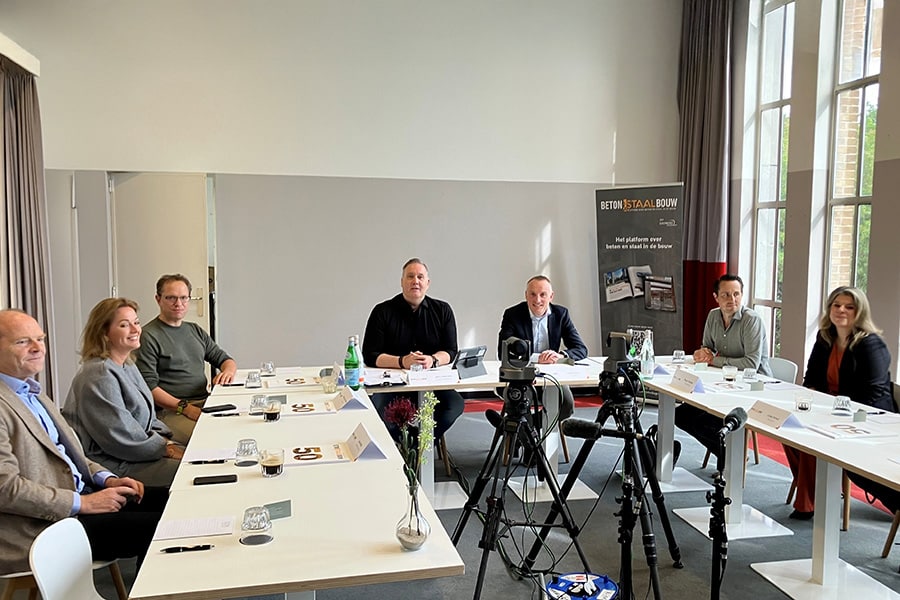
Concrete is the foundation of our society. Roads, bridges, buildings ... they all rest on this ancient building material. But concrete also contributes significantly to global CO2 emissions. During a roundtable discussion led by Paul Roos, general manager of Ecocem Benelux, experts from the sector discussed an urgent question: how green is concrete really? And more importantly: what is needed to really scale up its sustainability?
The experts in no particular order: Jack Amesz (municipality of The Hague), Brechtje van den Beuken (Bosch Beton), Niki Loonen (TBI), Paul Roos (Ecocem), Thijs Huijsmans (Heij-mans), Lukas Arnout (Resourcefull) and Penny Pipilikaki (Rijkswaterstaat).
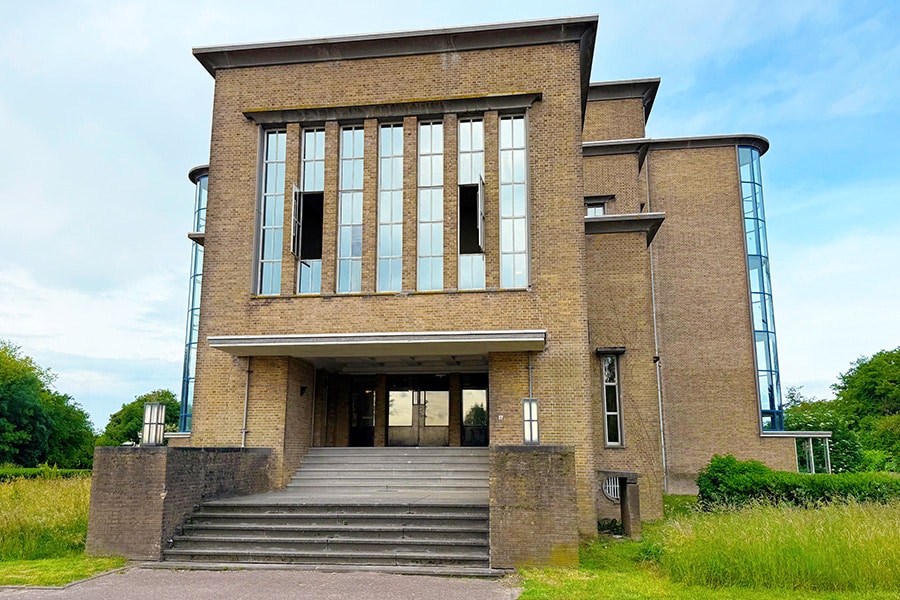
Roos kicked off the conversation with a clear vision. According to him, concrete is ‘the finest building product mankind has ever produced. It has brought us infrastructure, progress and safety, but the future of concrete is under pressure due to the large CO2 impact of cement, the main component of concrete. At Ecocem, the focus is therefore on developing technologies that make cement more sustainable and scalable, affordable and deployable within the existing infrastructure of the concrete industry. ’We want future generations to continue to be able to use this product, but within the limits of our planet.“
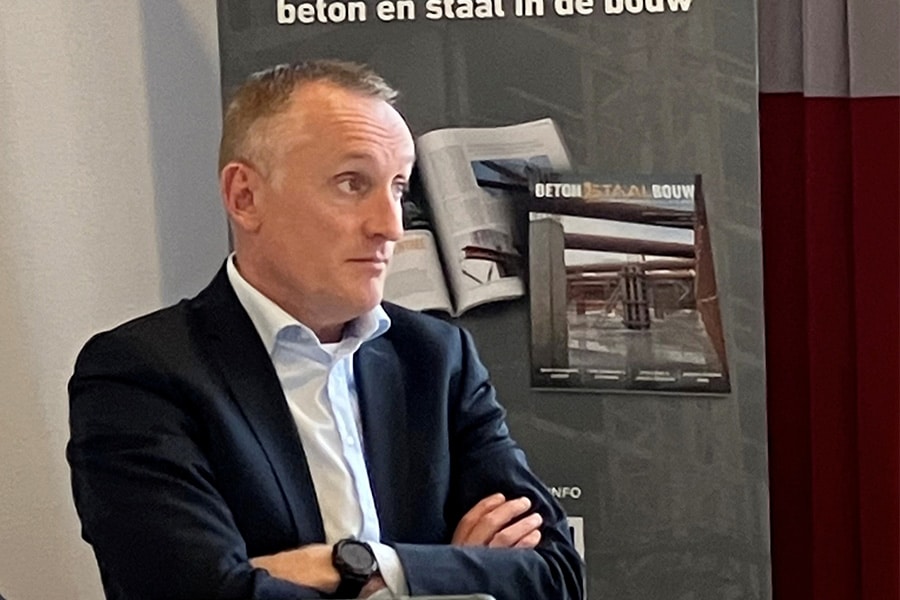
The experts go straight in with a straight leg and observe, “If we're honest, the concrete we're making now is just really bad. There's really a lot of room for improvement.” Or how about: “We need to move away from the kilocaller, but instead look at how we can offer the most added value per kilogram of material. That requires a completely different revenue model.” Much of the concrete sector, even the people ín the factories, are unaware of environmental damage or the existence of sustainable alternatives, according to the experts. “When it becomes visible that there are indeed sustainable solutions and that others are already applying them, then movement is created. It's about overcoming cold feet. As long as clients do not direct this sufficiently, the decline will remain limited.”
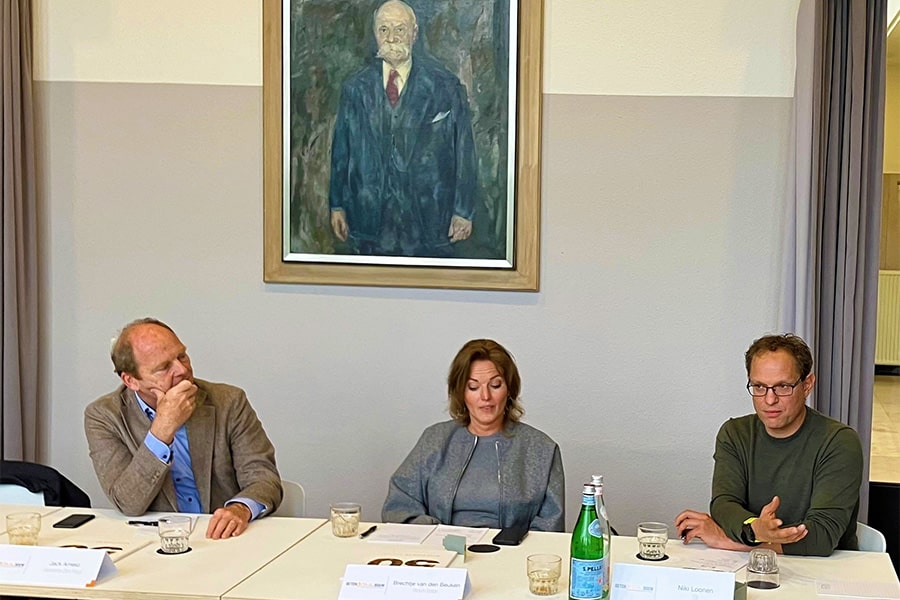
According to the experts, the construction industry and actually society as a whole has no idea of how big a problem concrete really is. A major concern, therefore, is the possible legal restrictions on concrete production in the long run. “We talk little about a CO2 lockdown, but if cement plants soon lose their permits because of environmental damage, we will be at a standstill.” The comparison to the nitrogen and PFAS crisis was drawn. The construction industry may again be hit by environmental regulations that are ahead of their time. This emphasizes the urgency of accelerating.
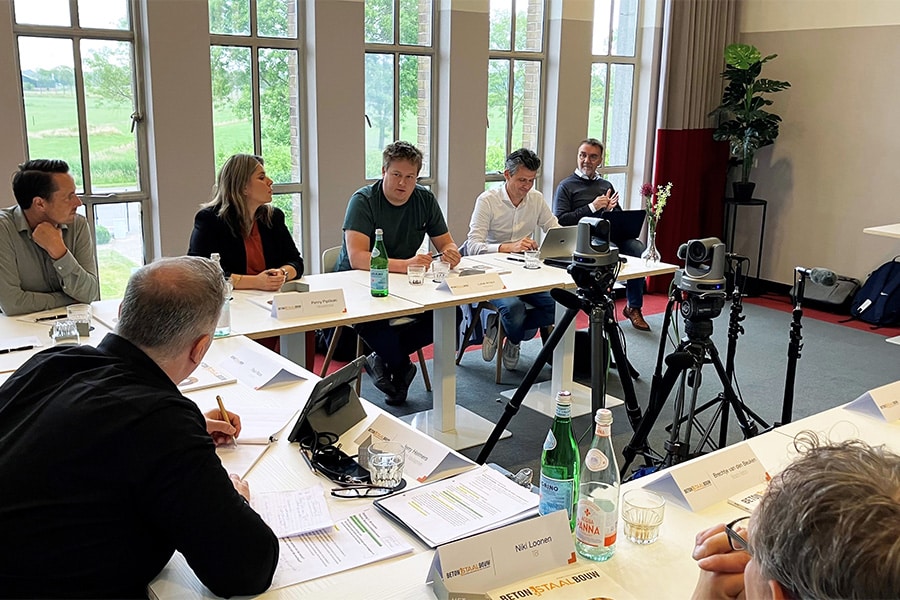
While concrete sustainability has taken off, real scale-up is not happening. Public commissioners can play a crucial role in mobilizing demand for more sustainable concrete, according to the participants. If governments actively prescribe sustainable concrete or encourage it through EQI scores, then volumes are created with which manufacturers can invest.
A striking metaphor came along: “There is a huge discrepancy between what is possible in the market and what we are doing.” What does it mean if the market wants to become more sustainable, but is insufficiently facilitated in doing so? And what if sustainability promises are barely checked? Concrete suggestion? Include the agreed CO2 values as a contract condition and oblige market parties to provide proof. After all, monitoring is super important and market parties really do want to take responsibility.
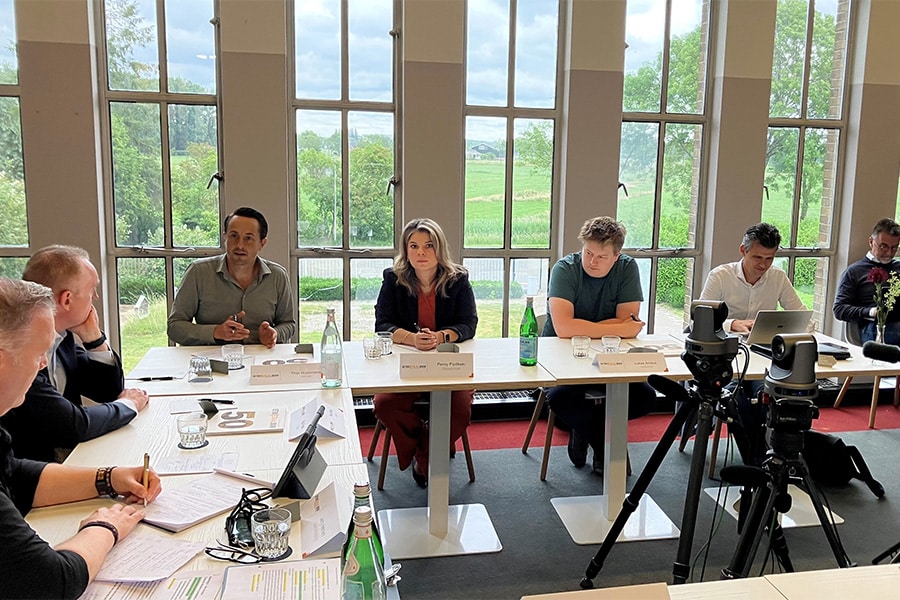
The EQI is also not fully mature, there is too much room for interpretation and different calculation methods. There is an insufficient ‘fair playing field,’ according to the experts. What would help is for the client to specify exactly how it wants it calculated, as ProRail does. At least then it would be clear to suppliers and you would have maximum incentive to make your operations more sustainable. Moreover, set a ceiling value, it is suggested at the table. “If all clients were to immediately require that concrete products are no longer allowed to enter the market above a certain environmental cost limit, this would immediately lead to a CO2 reduction of at least 20 percent. We need to make sure Ecocem sells out. Everyone can use low-CO2 concrete today. It is incomprehensible that we allow the low-hanging fruit that falls from the trees to rot. And that no one stands up and says ‘we're going to do things differently’. A precast pile made of Portland cement, we can stop that tomorrow.”
The experts also point to the need for European regulations, such as the Carbon Border Adjustment Mechanism (CBAM). “The greenest cement and the newest steel furnaces are in China, which are supplied with a very low MKI because transportation distances are not part of the MKI. CBAM regulates that and prevents concrete from countries like China or Vietnam from flooding the market. Without such a correction, sustainable European concrete is unfairly competed.” Striving for the lowest EQI can also lead to using materials that are not easily recyclable or have a shorter lifespan, according to the experts. “You don't want to build something that will be broken in 30 years or can't be reused.” So look beyond just the environmental pressure of the first use and include circularity structurally in the assessment. So one suggestion is: link CO2 impact to lifespan and reward circularity.
And who should pull the cart when it comes to innovation and scaling up low-carbon concrete? Is it the government or the market? The conclusion: both. Although the experts believe that we should not rely on the Dutch government alone, the frameworks are determined much more at the European level. CBAM is an example of this, as is the CSRD at the organizational level. The market then has the task and responsibility to innovate and deliver within these frameworks. EQI, circularity and EPDs should not just be buzz words in tender texts, but concrete instruments that actually contribute to a sustainable, future-proof construction sector that has to operate much more CO2-driven than solely euro-driven.
There is enough knowledge, technology and willingness, but now we really have to start doing it. More cooperation in the chain, clear frameworks from clients, making successful applications visible and investing in awareness are crucial keys. The path to truly sustainable concrete is known. Now we have to walk it. As a professional in the construction chain, ask yourself ‘what contribution am I making to making concrete sustainable?’. Take action and make sure we don't have a CO2 lockdown.
About Ecocem
Ecocem has been developing sustainable cement-like binders for the production of high-quality concrete since 2001. And it continues to lead the way in this field. Its solutions provide a revolutionary reduction in CO2 emissions and a significantly lower carbon footprint than Portland cement. Ecocem's ultimate goal is to enable the global concrete industry to reduce their CO2 emissions by 50% by 2035.
Neem dan rechtstreeks contact op met Ecocem.
 Contact opnemen
Ecocem Benelux B.V., founded in 2001 to develop and produce an environmentally friendly cementitious binder, is a subsidiary of the Irish company Ecocem Materials Limited. In Moerdijk we grind a by-product of the steel industry, granulated blast furnace slag into a high-quality cementitious binder (eco₂cem) for use in high-performance concrete. The concrete and mortar industry has immediate sustainable access [...]
Bekijk Bedrijfsprofiel