Platform on concrete and steel in construction
The sustainability of construction is increasingly determined by material choices. Concrete and precast, in particular, reveal what is possible in projects and what is needed to permanently apply those solutions at scale.
The sustainability of the construction industry is increasingly shifting to materials and raw materials. Concrete, steel, sand and gravel determine much of the environmental impact of buildings. With that comes the question of how we build, with what materials, and especially how choices at the project level can contribute to structural change in the sector.
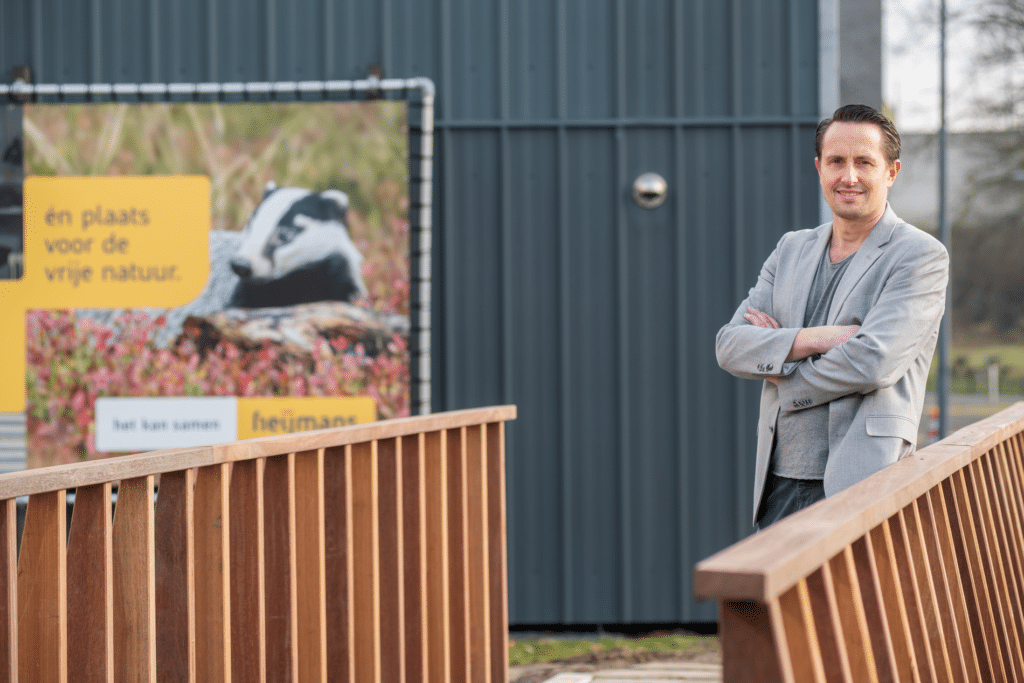
At Heijmans, that question is felt daily in practice. Thijs Huijsmans, sustainability program manager at Heijmans Utiliteit, sees use of materials as the most important lever. “About sixty percent of our CO2 impact comes from materials,” he says. “Then you can't keep optimizing at the edges.”
Heijmans is working toward 2030 with goals on CO2, water and biodiversity. For Huijsmans, this mainly means organizing change. Not just making policy, but ensuring that designers, buyers and project teams actually make different choices. There is an increasing emphasis on material choices. For example, by introducing CO2 ceiling values for concrete. The intention is that concrete mixtures above these will no longer be used.
That steering requires focus. Huijsmans emphasizes that sustainability cannot be achieved everywhere at once. “Every project is different. Sometimes the biggest gains are in concrete, sometimes in reuse, sometimes in extending the life of what is already there. If you want to do everything at once, often nothing really gets done right.” That project-oriented approach is realistic, he says, because the contractor does not always have complete design freedom. “Sometimes we step in when the design is already largely fixed. Then you can still make adjustments, but not change everything. That is precisely why it is important to steer sharply on materials and execution.”
A next step is to create demand for secondary raw materials. Circularity doesn't happen by itself, Huijsmans notes. “You can only build circularly if there is a real demand for circular materials.” Heijmans projects therefore increasingly explicitly ask for circular concrete or reused elements. That area of tension is also recognized by Thies van der Wal, affiliated with Consolis-VBI. From the production side, he sees how decisive the demand side is. “Without structural demand, circularity remains stuck in pilots,” he says. “Then it's interesting, but not scalable.”
At Heijmans, that question is now having concrete consequences. “We demolish differently,” Huijsmans explains. “Concrete is no longer automatically disposed of low-grade, but carefully cleared so that it can serve as a raw material again.” That requires extra effort, but makes reuse possible. “Without that demand from projects, it simply doesn't work.”
Heijmans is also working on modular housing products and building concepts that can be used across projects. Whereas Huijsmans starts from projects and concept development, Van der Wal looks emphatically at systems. He is critical of sustainability being reinvented for each project. “Project level is necessary to learn,” he says, “but if it stays at that level, nothing structural will change.”
For this, Van der Wal likes to use the image of Lego bricks. “A lego brick is both industrial and flexible. It is always the same, but you can vary endlessly with it. In construction, we often do the opposite: we remake every brick.” According to him, therein lies a fundamental problem. “As long as sustainability is solved on a project-by-project basis, it remains customized. And customization does not scale.” For Van der Wal, that is exactly where the crux of the issue lies. According to him, as long as sustainability is solved on a project-by-project basis, it remains customized. Only when solutions become repeatable across multiple projects does room to really scale them up.
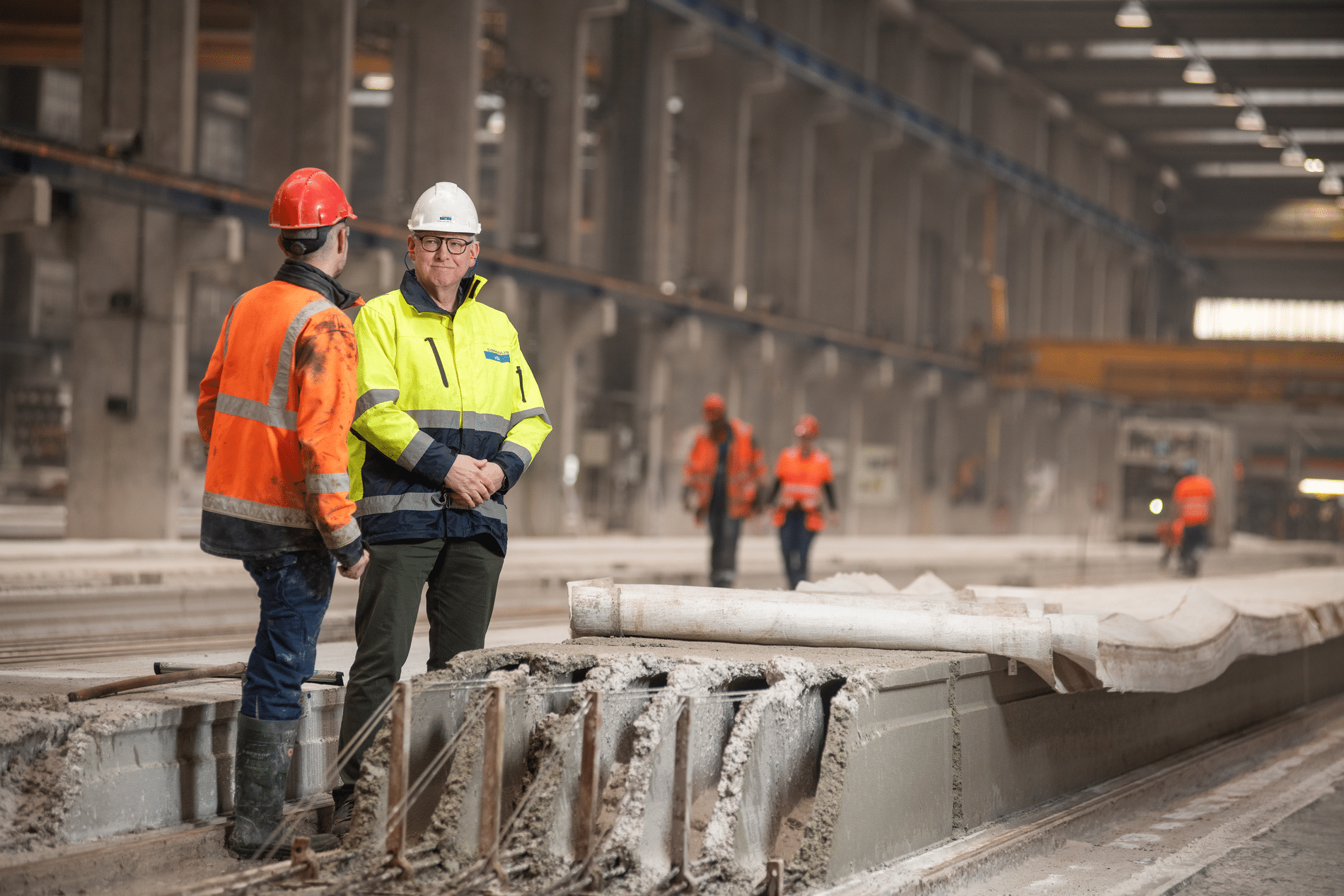
Van der Wal sees that repeatability especially in prefab and industrialization. For him, prefab is not just about speed, but about predictability. You can control quality in a factory. You reduce the chance of mistakes, and therefore waste and failure costs. He still sees too often that buildings are literally ‘glued together’ on site. “Then you design something that was never meant to be detached, whereas a system built from standardized elements is adaptable.” Huijsmans recognizes that advantage. “Predictability helps tremendously in projects,” he says. “When processes are manageable, it creates room to make more sustainable choices without derailing the project.”
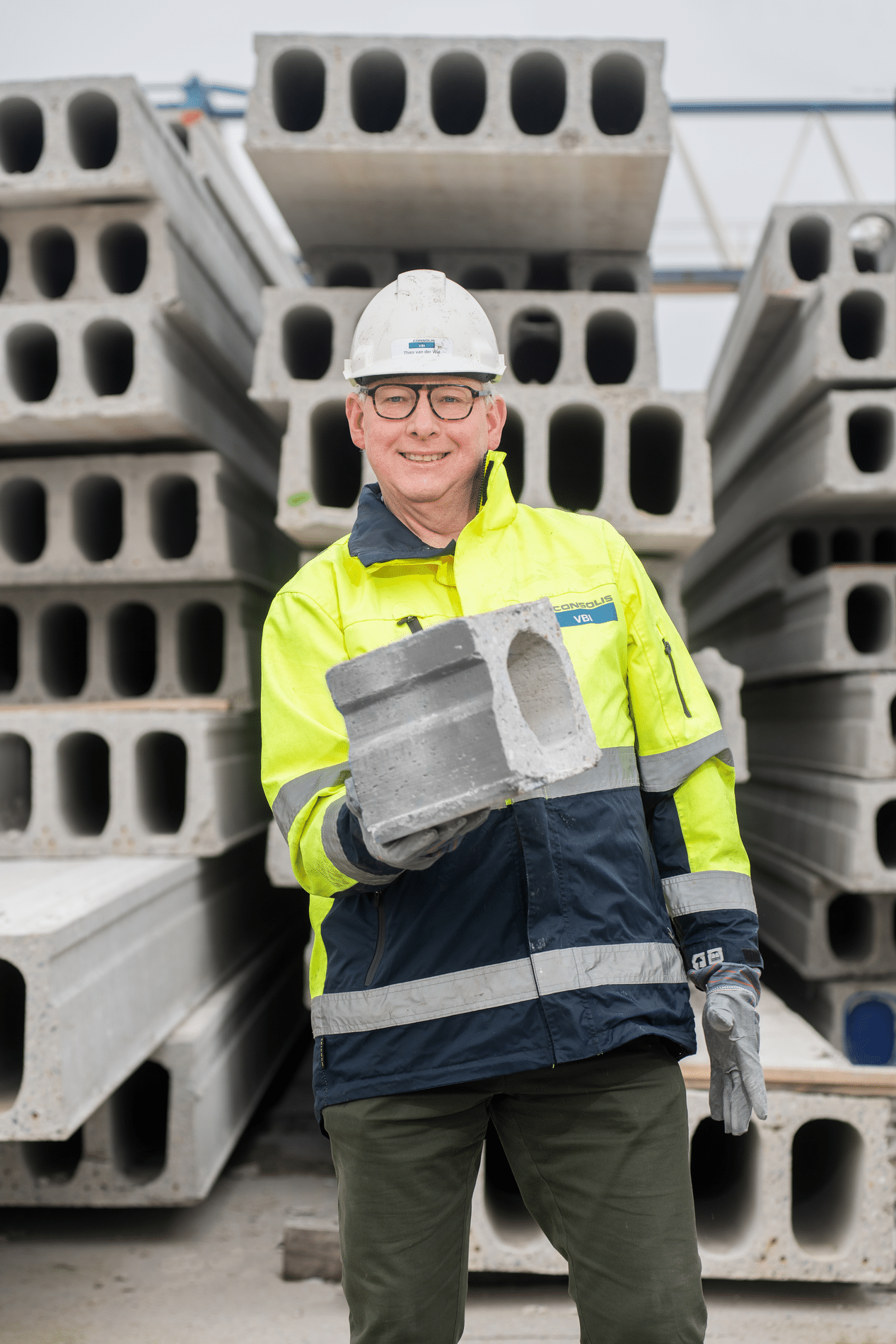
When it comes to circularity, Huijsmans and Van der Wal place different emphases. For Heijmans, circularity is an important part of the resource transition needed to reduce CO2 impact. “We have to use materials longer and use them smarter to meet our climate goals,” Huijsmans said. For Van der Wal, circularity is primarily a resource strategy. “If you use circularity only to reduce CO2, you run the risk of sticking band-aids. The real question is how we organize raw materials so that they remain reusable.” He warns against romanticized reuse. “Reuse without organization becomes more expensive than new. Then it doesn't work.” Circularity, he says, requires the same discipline as linear production: planning, standardization and scale.
The perspectives on detachability also differ somewhat. Huijsmans sees (de)remountable construction as a means, not an end in itself. “Not every building needs to be completely detachable. Some buildings stand for a hundred years. Then you have to ask yourself what makes sense.” Van der Wal again looks from the system. Adaptive construction, he says, is more important than fully demountable construction. Buildings should be able to change without large-scale demolition. This is where the Lego brick principle helps again: systems that are clickable, but not necessarily meant to be taken apart all the time.
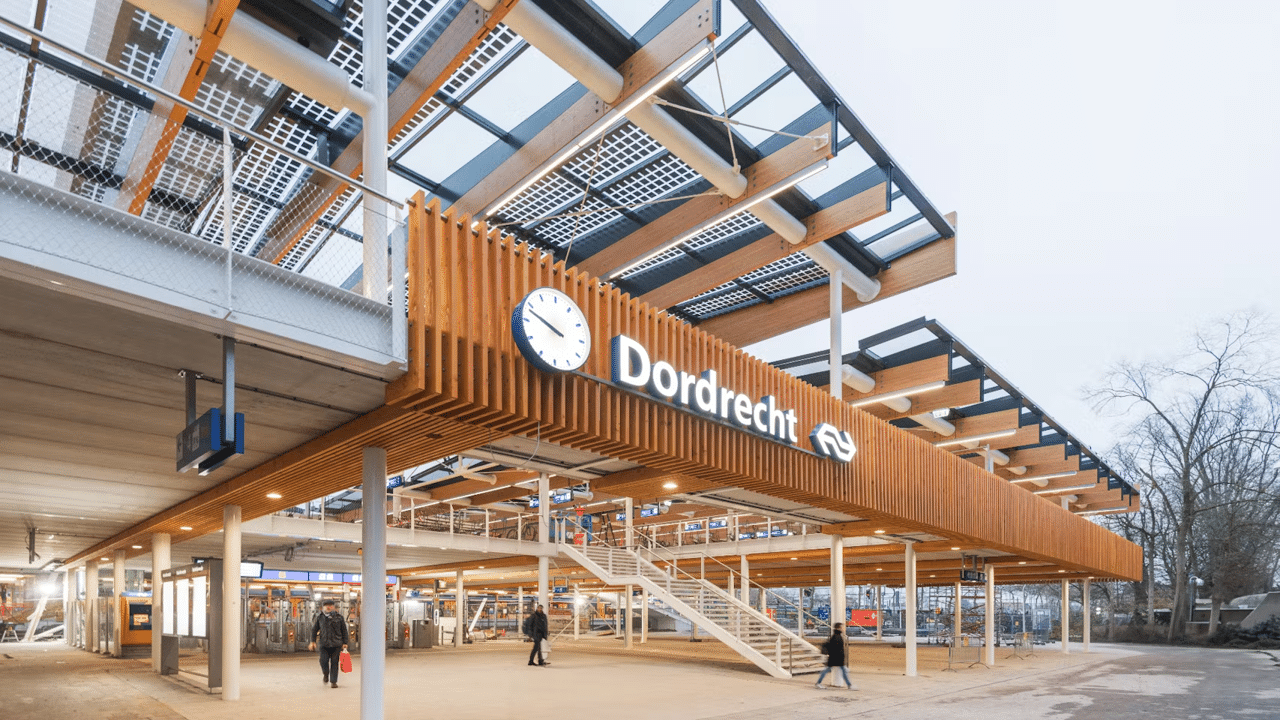
Van der Wal also emphatically places the responsibility on producers. “As a market leader, you have to show what is possible and be consistent about it. Not as a gimmick, but as a fixed part of what you deliver.” What works should not be reinvented over and over again, but repeated and scaled up. Projects play a crucial role in this: they show what can be done and create demand for more sustainable building products and materials. At the same time, standardization is needed to make those solutions repeatable and affordable. This interaction between project practice and industrial scale creates room to structurally embed sustainability. In this way, sustainability becomes a permanent part of design, production and construction.
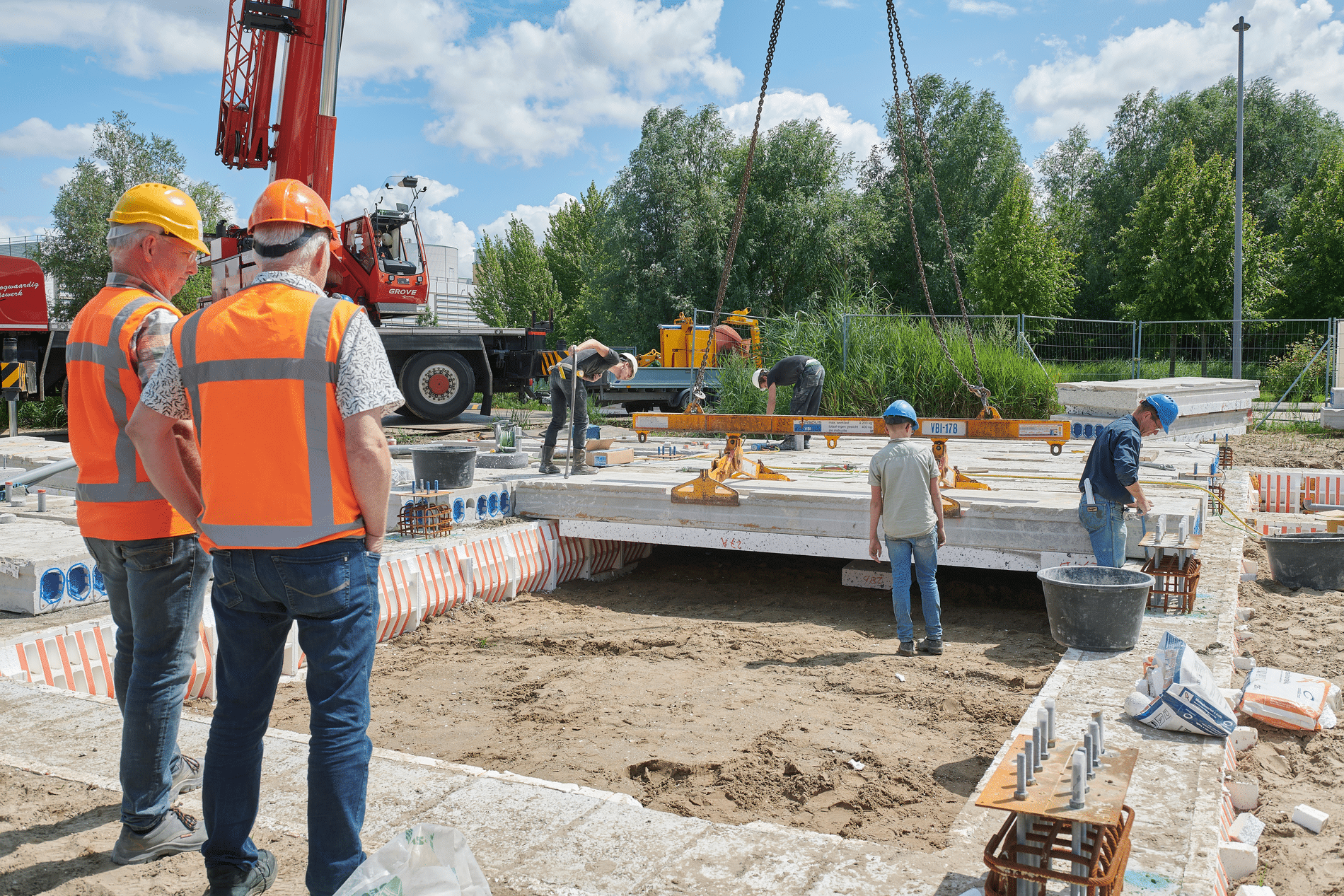
Both Huijsmans and Van der Wal agree that technology is not the limiting factor here. The solutions for more sustainable construction already exist, whether they involve low-carbon materials, reuse or prefab systems. The challenge lies in organization, behavior and the ability to retain choices. Huijsmans sees at Heijmans that this movement is increasingly coming from within. “Where sustainability used to be mainly something of a small group, we now see project teams and experienced professionals actively asking for it.” Making success visible helps with this. “Start small, show that it works and build on that.”
Neem dan rechtstreeks contact op met Ecocem.
 Contact opnemen
Ecocem Benelux B.V., founded in 2001 to develop and produce an environmentally friendly cementitious binder, is a subsidiary of the Irish company Ecocem Materials Limited. In Moerdijk we grind a by-product of the steel industry, granulated blast furnace slag into a high-quality cementitious binder (eco₂cem) for use in high-performance concrete. The concrete and mortar industry has immediate sustainable access [...]
Bekijk Bedrijfsprofiel