Platform on concrete and steel in construction
Fereb is the Belgian Federation of specialists in concrete repair, concrete reinforcement, and concrete protection. Together with its members, contractors, manufacturers, and service providers, it strives for sustainable concrete repair.
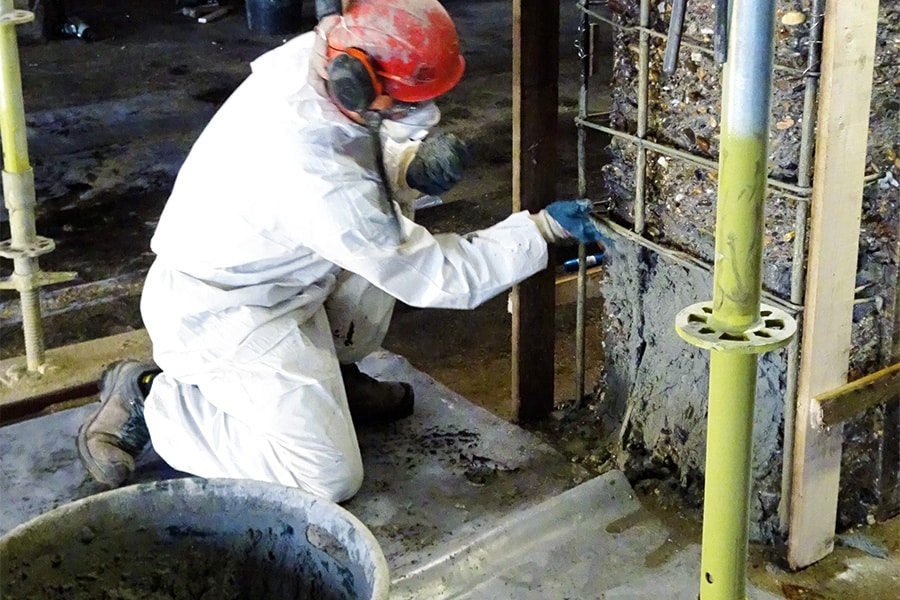
Concrete damage can have various causes. In reinforced concrete, the damage is often caused by the rusting of the reinforcement. The reinforcement expands and the concrete cover begins to crack and split. In most cases, carbonation is the cause of concrete damage. This is a natural process whereby CO2 penetrates the concrete. Once the carbonation front reaches the reinforcement, it begins to rust, resulting in cracks and fissures. This type of concrete damage usually occurs in older concrete structures.
Another common problem is chlorides. This occurs particularly often due to de-icing salts and in environments where there is a lot of salt, such as on the coast. The chlorides penetrate the concrete, causing the reinforcement to rust. In the past, chlorides were sometimes mixed into the concrete mortar to enable faster working in cold temperatures.
Other causes of concrete damage include water seepage, cracking due to mechanical influences such as vibrations caused by heavy traffic, and chemical influences in industry. Design and construction errors can also lead to premature damage. Finally, there is ASR (Alkali Silica Reaction), which leads to leaching of the concrete itself.
When it comes to concrete damage, a distinction can be made between aesthetic damage and structural damage. Fereb has developed a step-by-step plan together with its members to ensure sustainable concrete repair.

The basis of any sustainable concrete repair is the diagnosis or preliminary investigation. This diagnosis always precedes the repair and must be carried out by a specialized architect or engineering firm. They have the necessary equipment to take measurements and thus determine the cause and extent of the damage. In some cases, an in-depth investigation, obtained by performing a core drilling, and an analysis by a specialized laboratory are necessary. Based on the preliminary investigation, a specification and price estimate can then be drawn up.
The choice of contractor is very important. Choose an experienced contractor who is a member of Fereb, has the necessary expertise, and preferably employs Benor-certified workers.
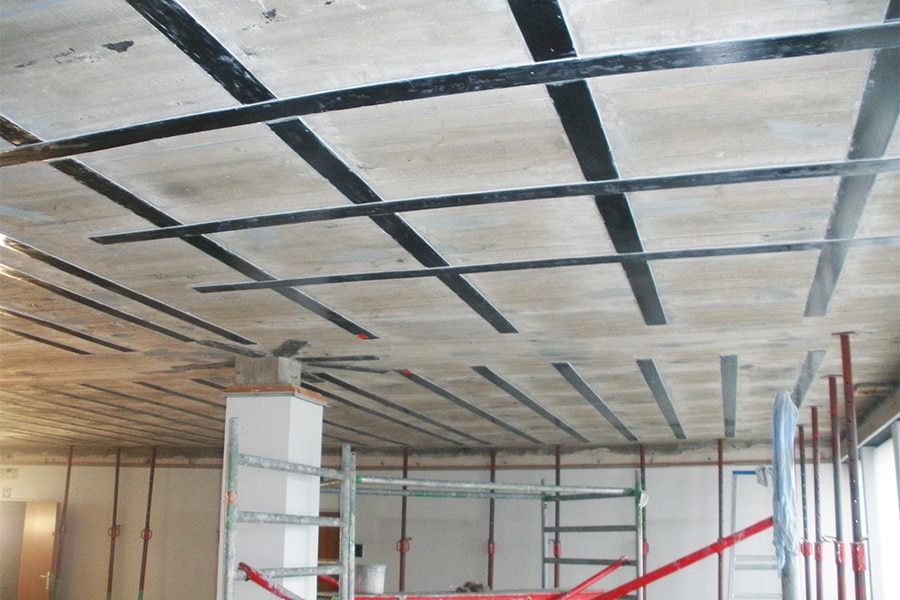
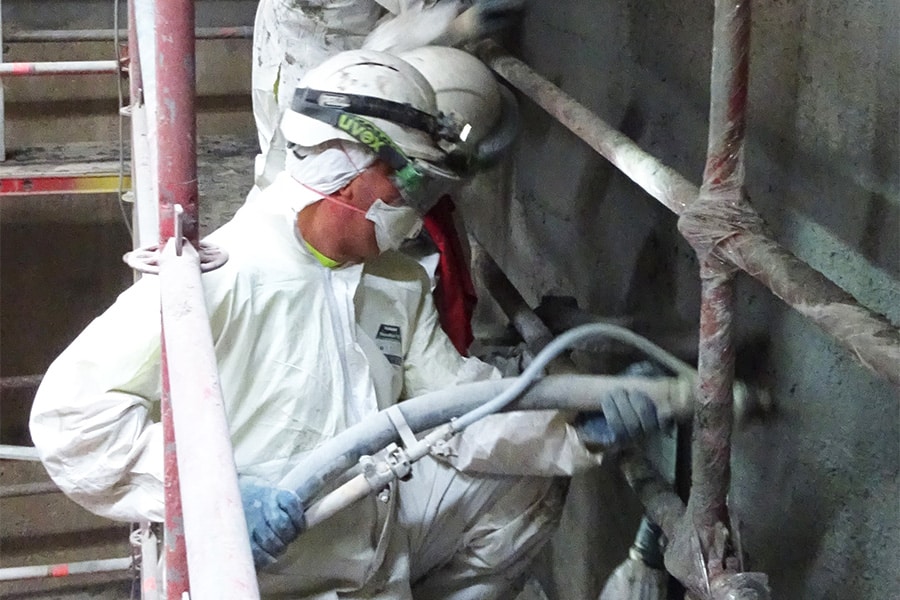
The choice of products must also be made carefully. After all, there are different types of repair mortars: mortars for manual application, spray mortars, and mortars for repairing structural or aesthetic damage. Repair mortars must carry the CE label and preferably also be Benor certified. In some cases, new products and techniques can repair or prevent concrete damage.
One of the most important elements in carrying out concrete repairs is inspection. During the execution of the works, the contractor will carry out a number of inspections himself. For example, he will carefully note down all the badge numbers of the product and the conditions under which it was applied. Adhesion tests are also carried out on a regular basis. For Benor-certified contractors, an inspection can be carried out by BCCA during and after the works.
To extend the service life of concrete structures, it is best to protect them after repairs have been carried out. Depending on the situation, waterproofing products, carbonation-inhibiting coatings, chemically resistant coatings, or cathodic protection are used for this purpose.
Neem dan rechtstreeks contact op met FEREB asbl.
 Contact opnemen
FEREB is the leading association of specialists in concrete repair, protection and reinforcement in Belgium. Together with the governing body and members, we promote sustainable concrete repair of infrastructure and buildings. Sustainable concrete repair contributes to a better environment and the achievement of climate goals.
Bekijk Bedrijfsprofiel