Interview with NVAF Director Jaap Estié
Tekst Jerry HelmersBeeld NVAF
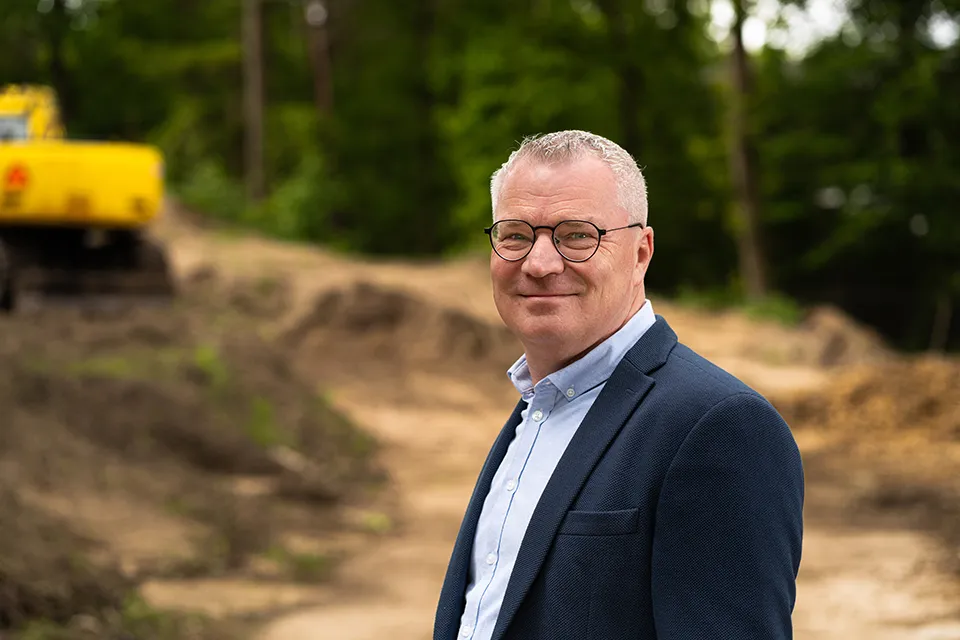
‘The future of the foundation sector calls for vigilance and constant action’
The Nederlandse Vereniging Aannemers Funderingswerken (NVAF) plays a crucial role in further professionalising the foundation sector. Jaap Estié, director of the NVAF, says legislation and sustainability will remain key issues with a fundamental impact on the sector. “We are seeing increasingly extensive legislation and regulation, particularly on sustainability. This includes stricter requirements for cleaner foundation equipment and the question of how we can use it sustainably. But these requirements also create new challenges for our members.”
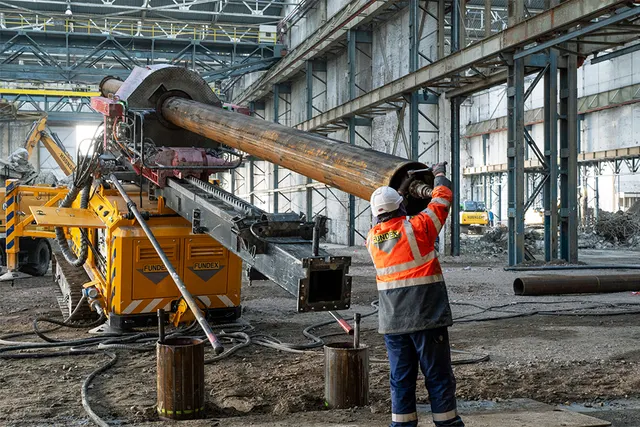
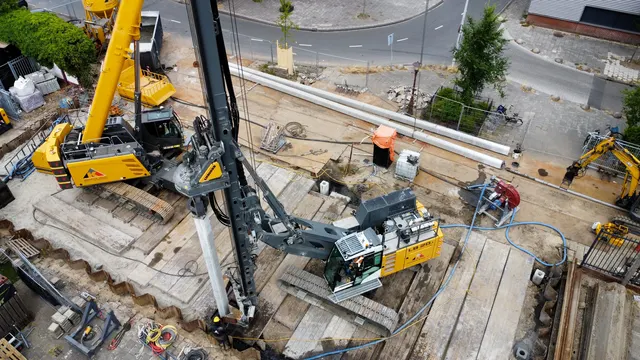
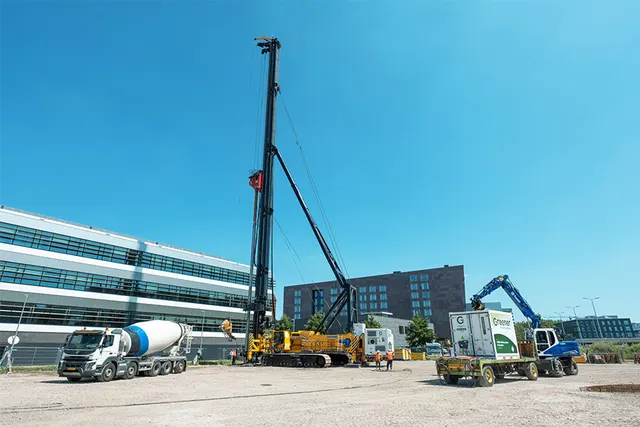
Rapid technological development does not always keep pace with how quickly companies can respond. Foundation equipment is often used for decades, but increasingly stringent environmental requirements mean it has to become cleaner. Yet how far ahead can an entrepreneur making an investment really look? “That is indeed extremely difficult, but it is a crucial issue,” says Estié. “We see the electrification of this equipment as a major trend. Great! But it does mean having access to a reliable electricity grid on site. Can that be provided? Or will you be forced to fall back on the alternative, a diesel generator? Your guess is as good as mine. There is a degree of uncertainty when it comes to the investments that need to be made.”
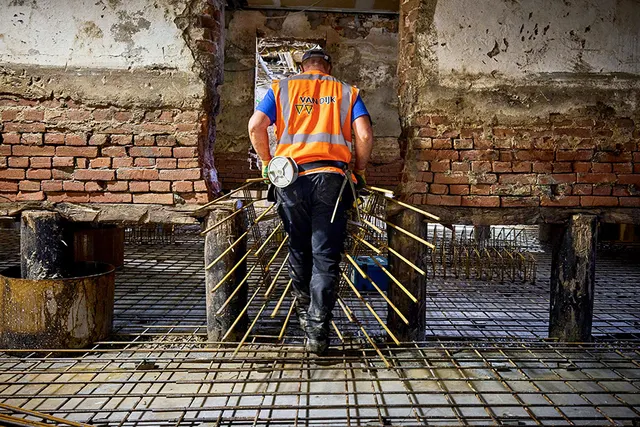
The foundation sector is also facing a tight labour market. Estié stresses the importance of well-trained professionals: “We also expect much more from people entering our trade, for example when it comes to safety. To support this, we work closely with the Funderingsvakschool and our own Training Working Group.” Foundation repair is also attracting increasing attention, including from politicians. Foundations could serve more purposes than simply providing load-bearing capacity. “A foundation could also act as a retaining structure or even as a heat exchanger,” Estié explains. “Yes, you could call this Foundation Plus. These exciting, innovative developments offer plenty of opportunities for the sector!”
Sustainability reporting and overregulation
Another key issue is, unsurprisingly, sustainability. In line with European legislation, the NVAF has developed a so-called ‘Golden Template’ for sustainability reporting (CSRD). This template helps companies document their sustainability initiatives clearly, making it easier for them to demonstrate compliance with European standards. “The advantage is that smaller companies in the supply chain, which often supply the big players, no longer have to fill in dozens of questionnaires themselves. We aim to work together as a sector and create a standard,” Estié explains. “Our template will then provide the basis.”
Overregulation in the sector remains a major concern, however. “Yes, our country is overregulated,” says Estié. “Take safety: of course it is important. But we must not forget that requirements also need to be practical for companies to implement.” As for the Schoof cabinet, Estié is cautiously optimistic. “There seems to be a positive mood when it comes to construction projects, but we will have to wait and see whether this actually leads to action. The delays to measures aimed at tackling nitrogen emissions offer some hope that we will be able to build again, and build more, but we are still dealing with the consequences of years of policy. A new captain will never manage to turn the supertanker around straight away. It is always a gradual process.”
Continuity and professionalisation in 2025
Although the NVAF has not set specific targets for 2025, the organisation continues to work towards professionalising the sector. Estié says: “We will continue to communicate our stories and share our knowledge, both nationally and internationally. Through our European sister organisations, we have worked together on innovative tools such as a CO2 calculator for foundation projects. It helps companies measure the sustainability of their projects and looks set to provide a solid basis for the future. In fact, it is already a tool that is widely appreciated.” The NVAF is also continuing to review various guidelines and is working on a minimum quality standard for foundation repair. “We want to keep improving the sector, with a focus on professionalisation and collaboration. That is our mission for 2025 and beyond,” Estié concludes. “But it is not as though we have set an end date. This is, after all, an ongoing process. The future simply calls for vigilance and, ultimately, constant action.”
Vraag over dit verhaal? Stel je vraag
Blijf dit volgen
Bij een nieuw verhaal krijg je een e-mail. Geen account nodig.
- ThemaMinder CO2 in beton en staal
- OnderwerpFoundation techniques