Platform on concrete and steel in construction
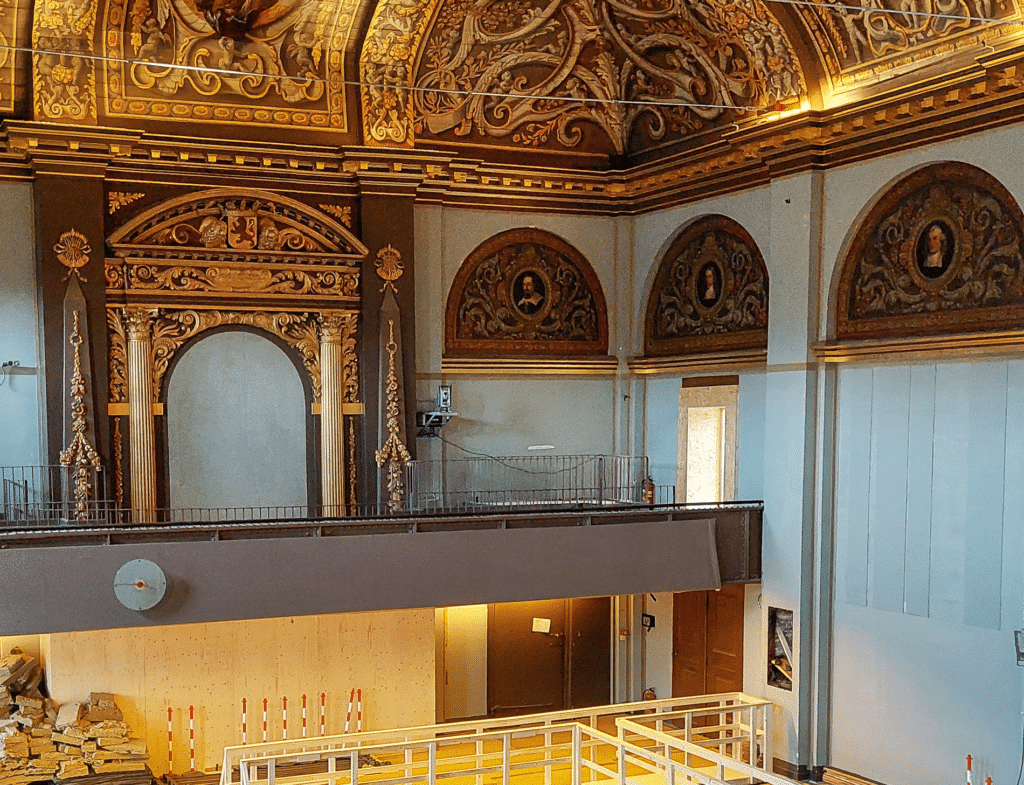
In this sixth installment of our series on the renovation of the Binnenhof, we take a closer look at a common thread in the construction process: monitoring. Due to the great complexity of this enormous renovation project, the monumental status and age of the buildings and the connection between all construction activities, monitoring in all its forms is not an afterthought, but a complex-transcending component within the big story.
The Binnenhof is a collection of historic buildings, each with its own project organization and general contractor. Bianca Derkzen, cross-complex project manager for the renovation at the Rijksvastgoedbedrijf (RVB), has been coordinating the joint process for five years now. “My job is to ensure that everything fits together well, from design to implementation,” she says. “Because of the great importance of monitoring, this discipline falls under my responsibility. Together with the various structural and building engineers and Fides Expertise, we ensure that the entire construction process runs as smoothly as possible.”
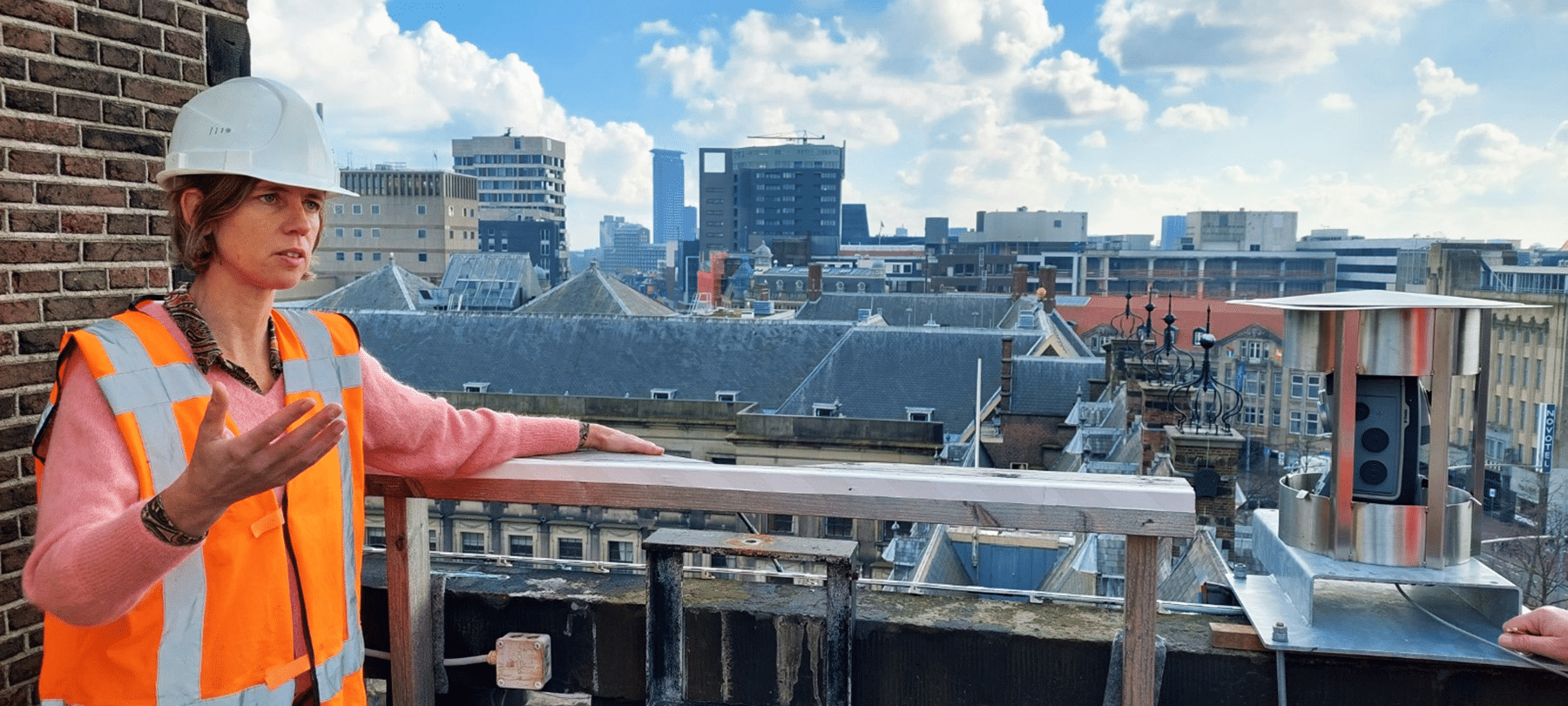
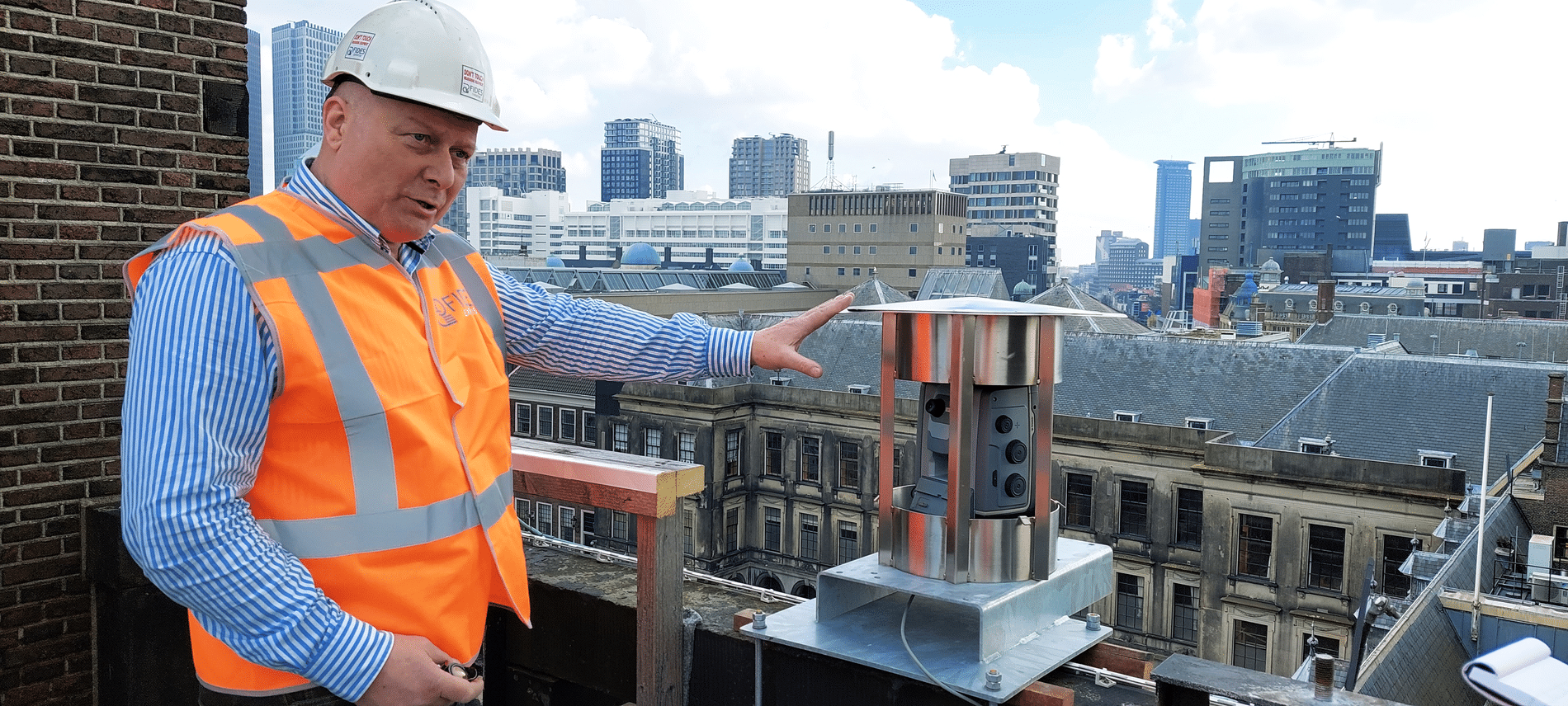
Monitoring at the Binnenhof is broad and deep. It started early on. “We have been doing periodic measurements of the roof structure of the plenary hall since 2017, well before the start of the renovation,” explains Fred Pannekoek of Fides Expertise. “In 2019, structural preliminaries were done for the entire complex. Additionally, foundation inspections were performed. In these foundation inspections, we spent eight months digging in and around the buildings to determine the depth and type of foundation. This preliminary investigation was incorporated into a basic monitoring plan and into partial monitoring plans for the various components. Together with the relevant structural engineers and superintendents, all plans were further developed.” The need for monitoring usually stems from what is going to happen to a building or building section. “At the same time, the connection is looked at: if you are going to make a sub-basement, that can affect several components.”
Complex-transcending is also groundwater. Pannekoek: “Spread across the site and in the surrounding area, 75 loggers monitor groundwater levels. Arcadis, responsible for the overall drainage plan, has developed a model for groundwater control, so that effects on the existing buildings and surroundings can be understood. We do not measure flow velocities directly, but based on differences, Arcadis calculates the theoretical velocity.”
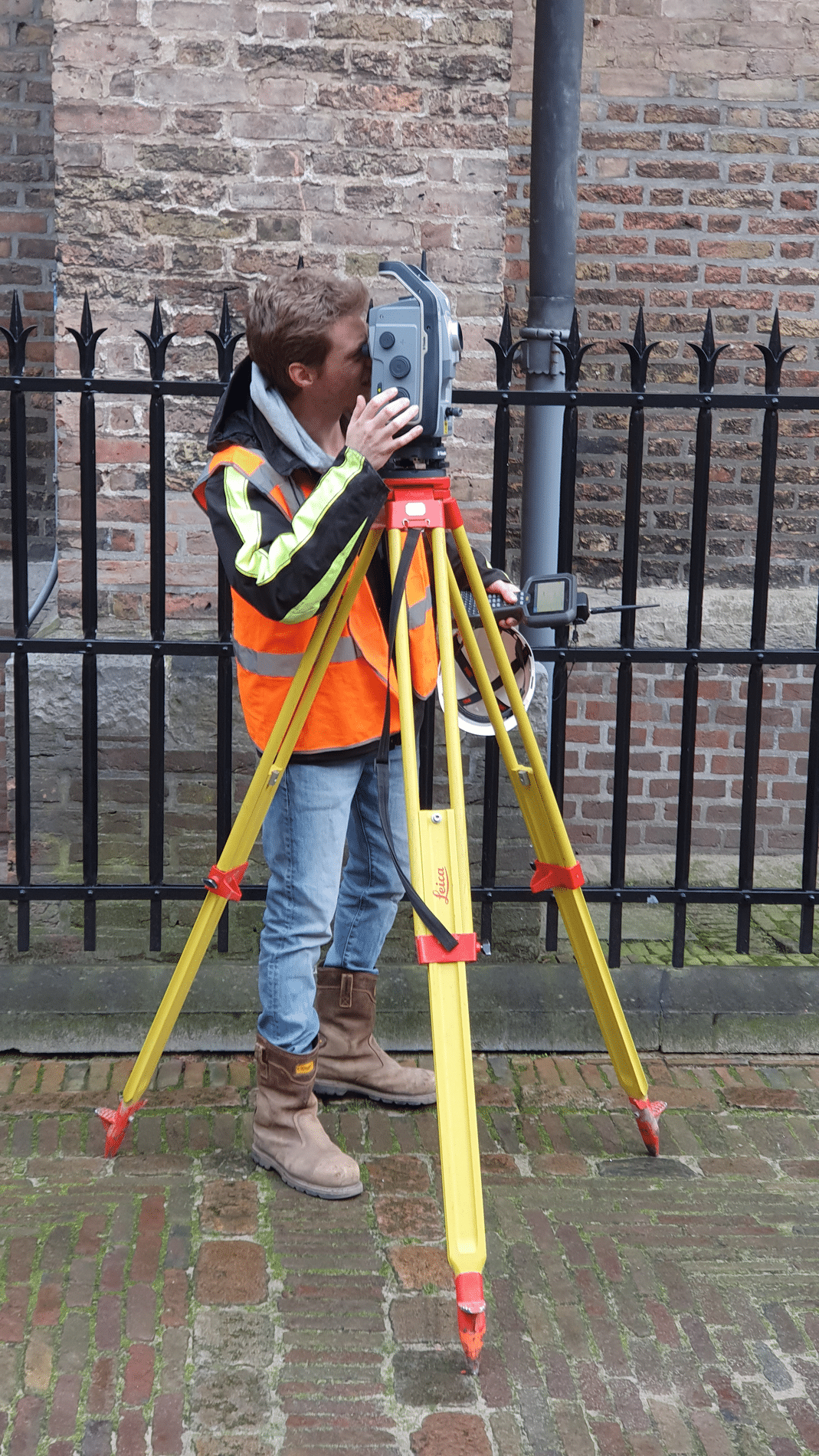
Another basic monitoring is done with measuring bolts. “Every building is fitted with these every five meters, including in the basements,” Pannekoek states. “Before we started, it was agreed with Monumentenzorg (National Trust) that we could install measuring bolts everywhere in the joint. That way we avoid having to consult with each building separately. Plates are glued to natural stone to prevent damage. The measuring bolts form the backbone of the monitoring. With a digital leveling instrument and barcode staff, these bolts are measured periodically. For objects that require more active monitoring or increased construction activity, monitoring is intensified with fully automated systems.”
The Opperhof, the square in front of the Knights“ Hall and the colonnades of the Senate and House of Representatives, is one such intensively measured spot. ”Around the Opperhof alone there are 360 prisms that we measure from different angles with six Total Stations,“ Pannekoek said. ‘These prisms are placed in strategic locations, often double at different heights on the facades, so that a line of sight is always possible. Even with obstacles such as scaffolding or machinery. The whole area itself is a settlement area. Therefore, with two stations placed high up, we bring in fixed points from outside via control points. This allows us to monitor with great accuracy, down to tenths of millimeters. If a control point is temporarily unavailable due to construction activities, it is ’locked” and transferred to a new point so that accuracy is maintained."
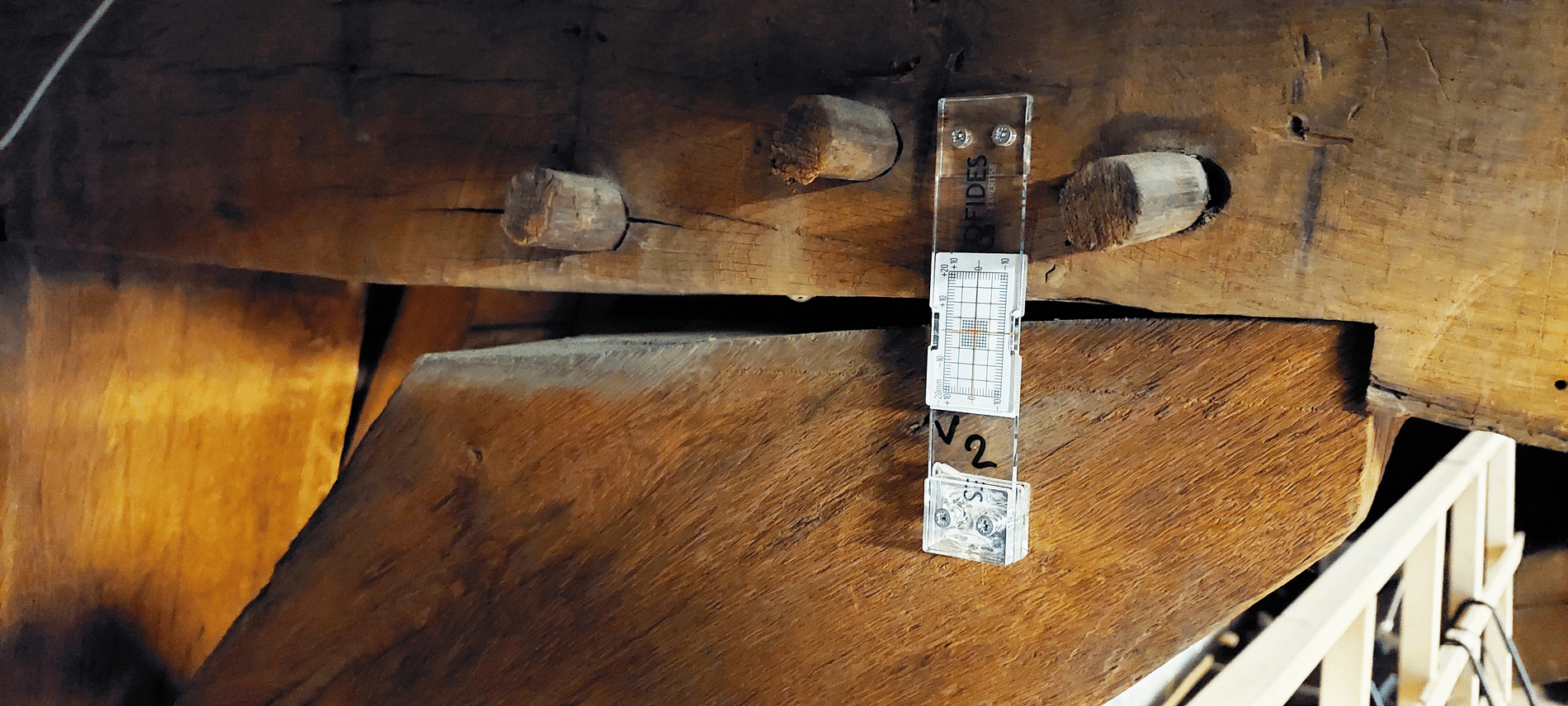
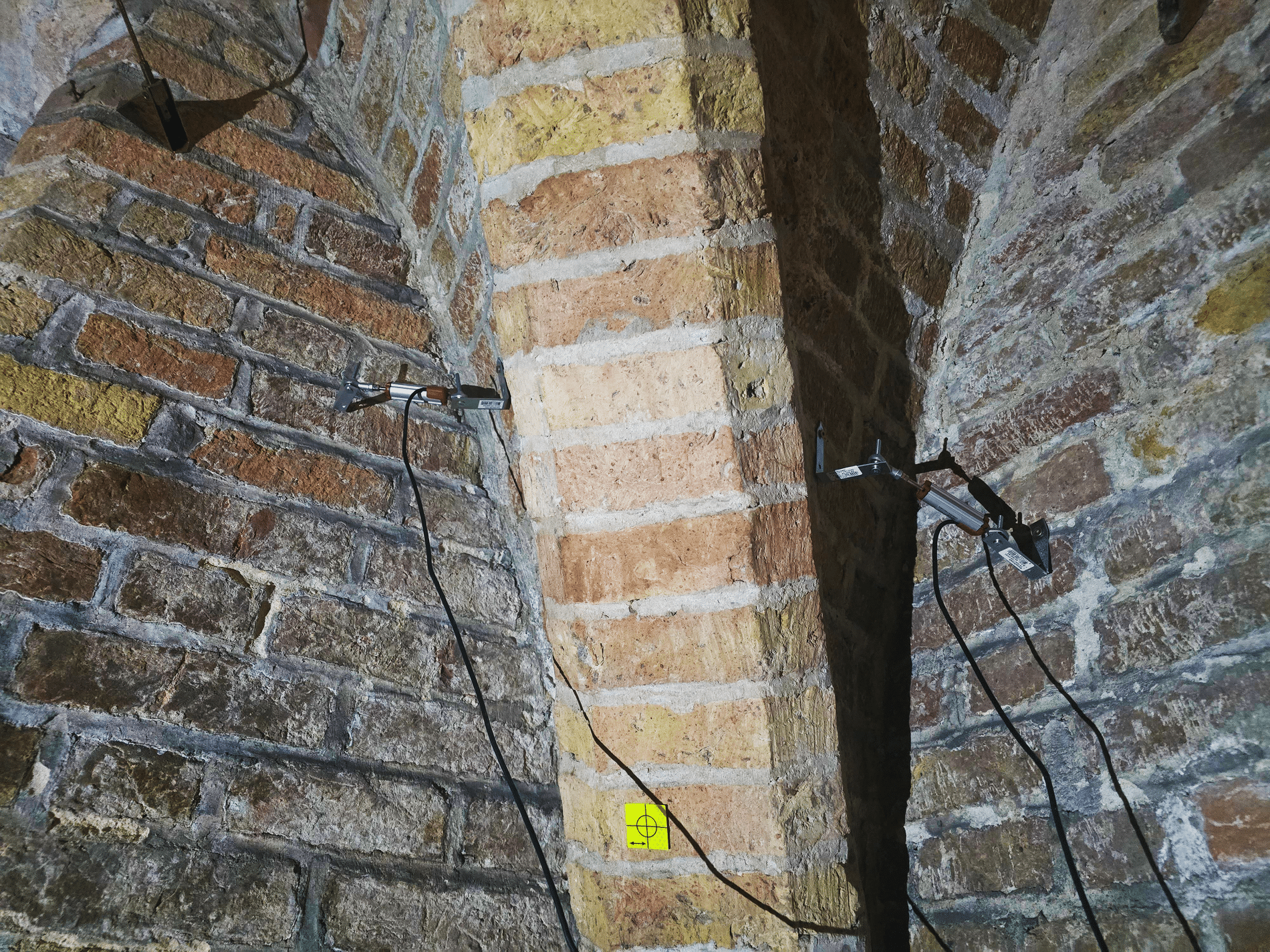
The Knights“ Hall itself, which stands in the middle of the area where work is being done, has also been put in measuring bolts and prism all around and fitted with digital crack meters in vulnerable areas. ”Tilt sensors with laser distance measurement have been placed in the trusses of the Knights“ Hall, allowing movements between the trusses to be tracked down to the millimeter,” Pannekoek continued. "The idea is that if subsidence occurs at the front, it will lead to tensile stresses and possibly cracking at the top. With these sensors, we can detect that immediately. To monitor the indoor climate, sensors that measure temperature and humidity have been installed in the tombs, general affairs and First Chamber. These are linked to an automatic alarm system so that immediate action can be taken in case of anomalies. Doors can be open and the weather has a direct influence. So if a lot of rain is expected, for example, the contractor can anticipate the rising humidity with temperature control or fans."
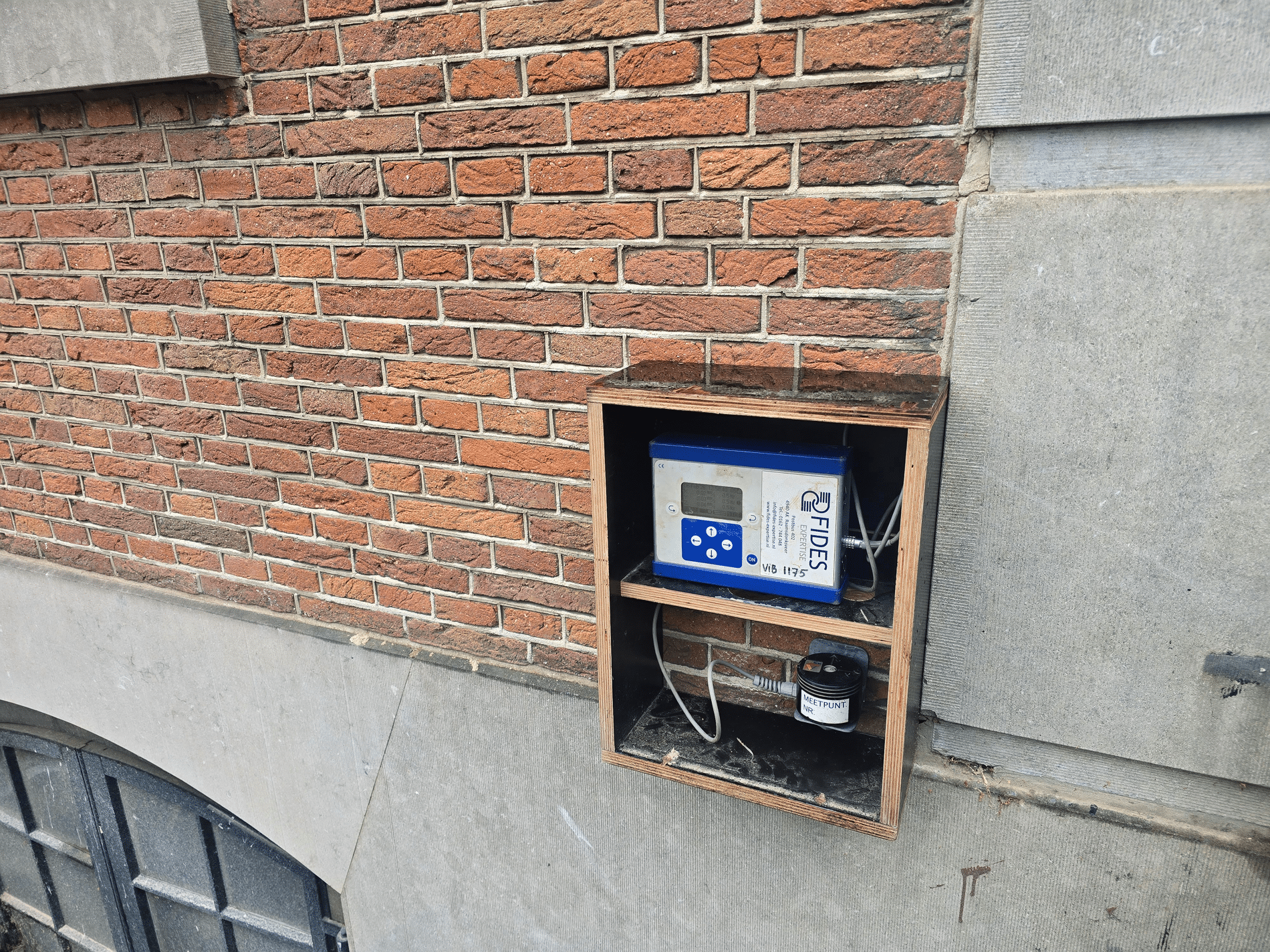
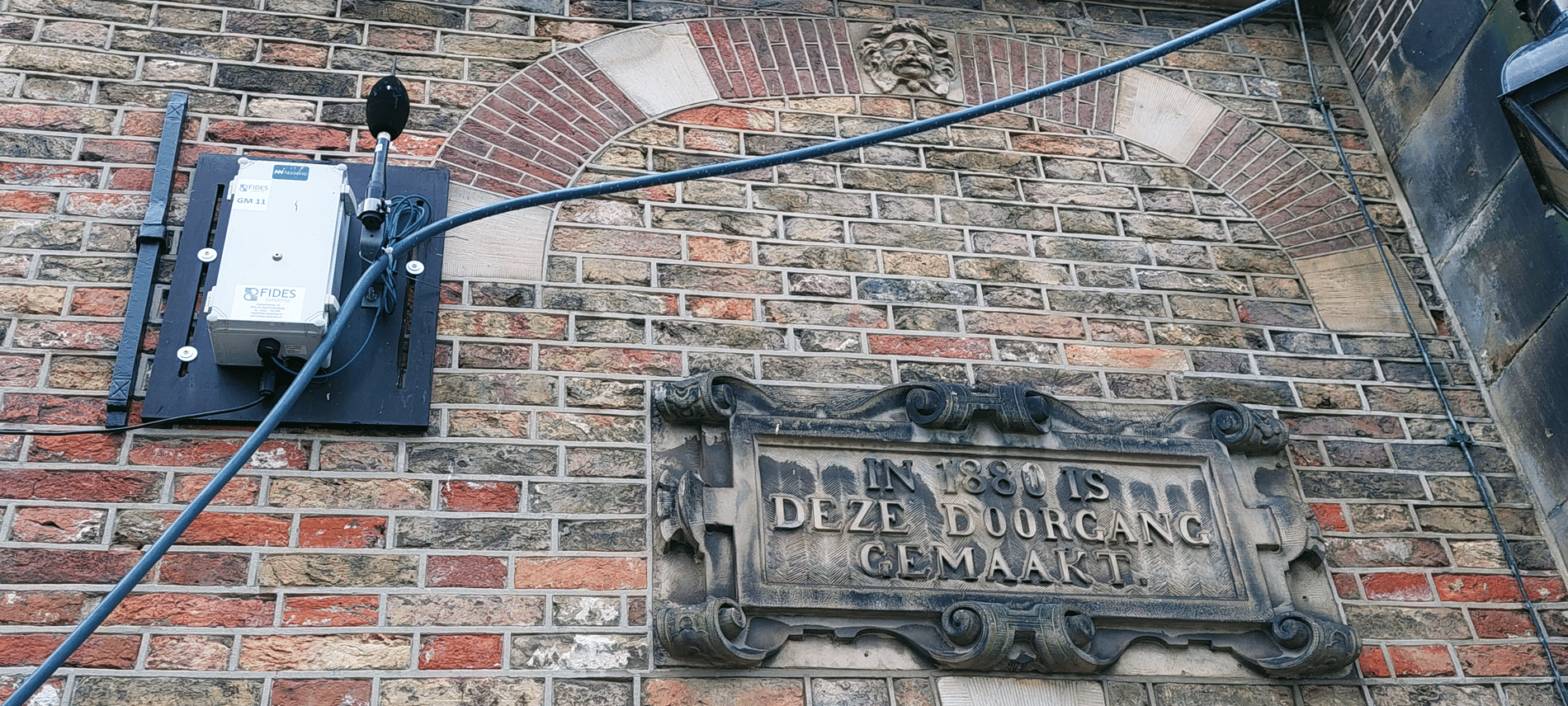
Construction causes a lot of vibrations. Pannekoek: “That is why vibration meters are everywhere, especially now that floors are being demolished in abundance. Currently there are about eighty active ones, distributed over the buildings, the grounds and for example also in the Mauritshuis. The SBR-A guideline is the starting point, but because much of the work is done indoors, contact vibrations are measured in particular. If these are exceeded, working methods are adjusted. A good example is the concrete base of the fountain in the Opperhof. After five minutes, the demolition of the fountain with a rotary hammer was halted because the vibration meters indicated exceedances. Then they started sawing and that did fall within the vibration standards.”
The large amount of monitoring of all kinds produces a constant stream of data, and with that comes a caveat. Derkzen: “We work with the most sophisticated equipment, but data alone is not everything. You have to know what it means. Machines are constantly driving around and there are many other vibration sources that give noise. Or if a structure gets damp, that can trigger an alarm. A subcontractor can interrupt a measurement with scaffolding or machinery. If you don't know what's going on, you constantly get wrong signals, and that noise can lead to disruptions in the monitoring system and for construction delays. To organize that properly throughout the construction process is one of the biggest challenges.”
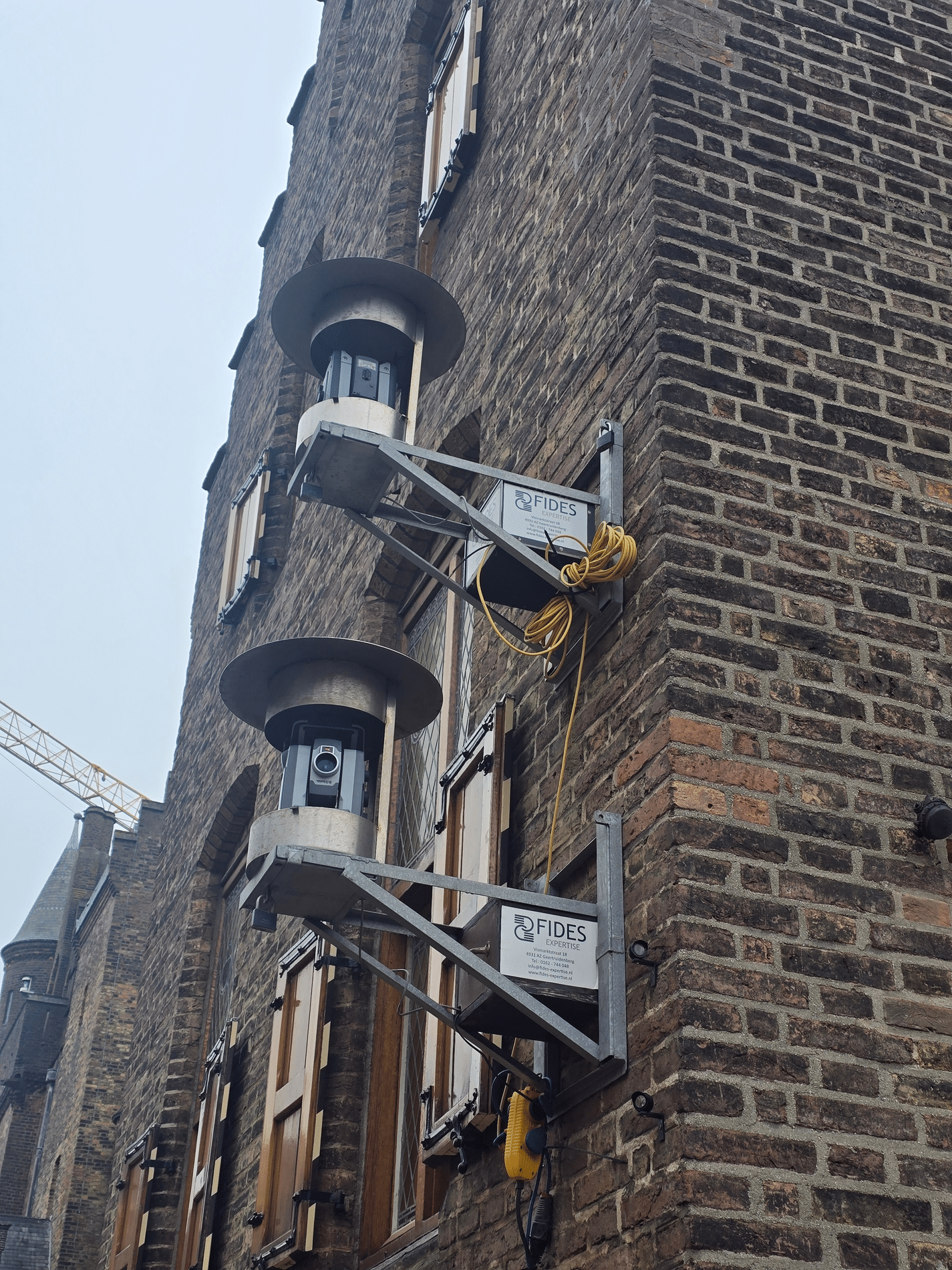
What monitoring is ultimately about is control of the construction process. Pannekoek: “We are dealing with an extremely complex renovation project with buildings that we are very careful about. In order for this to proceed smoothly, safely and without damage, it is necessary to steer on relevant signals from the monitoring. This is done by communicating clearly, quickly and easily with structural engineers, superintendents and supervisors, including through informal daily updates in app groups. If serious violations occur, we take the formal route and technical consultations follow immediately. In this way we keep the process manageable and create peace of mind, despite the complexity and the large number of parties involved. Another pleasant side effect of monitoring: based on measurements before the start of the project, we can demonstrate that movements of buildings or of water levels in the area are not due to a construction activity.”
“In the end, it's people work, much more than in an ordinary construction project,” Derkzen concludes. “Good communication is also important for a complex and extensive project like the Binnenhof. That also determines which parties are suitable to participate.”