Platform on concrete and steel in construction
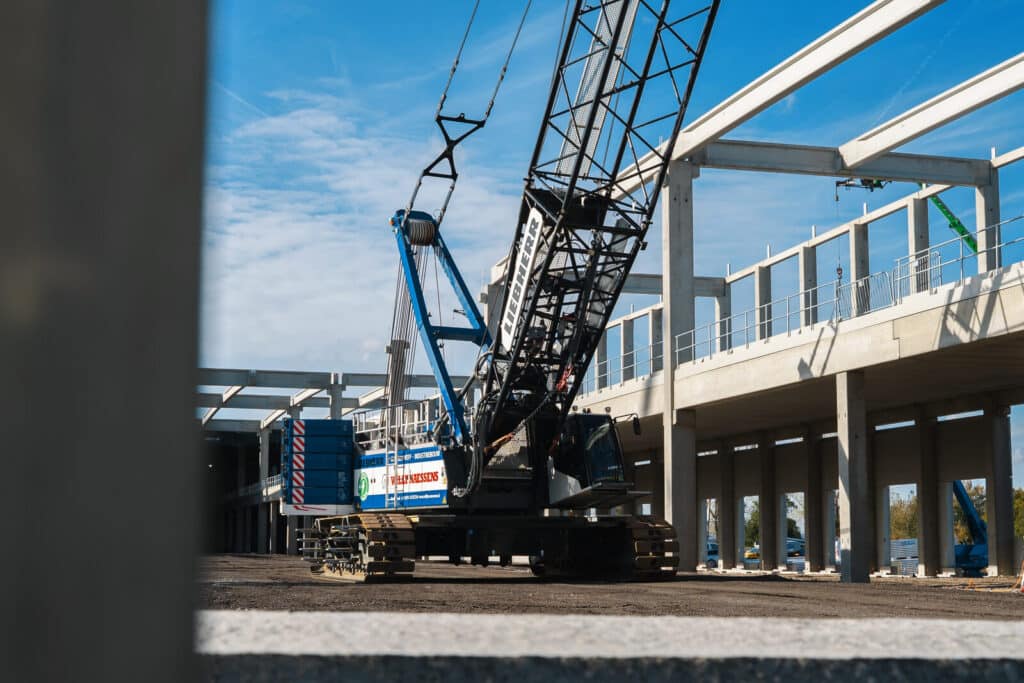
Following the launch of The Circle®, the innovative, circular construction method for industrial real estate, Willy Naessens Nederland is taking the next step toward making its prefab construction model more sustainable. By optimizing concrete mixes and maintaining extensive in-house control over engineering, production, transportation, and assembly, the CO2 impact of industrial construction projects is being structurally reduced.
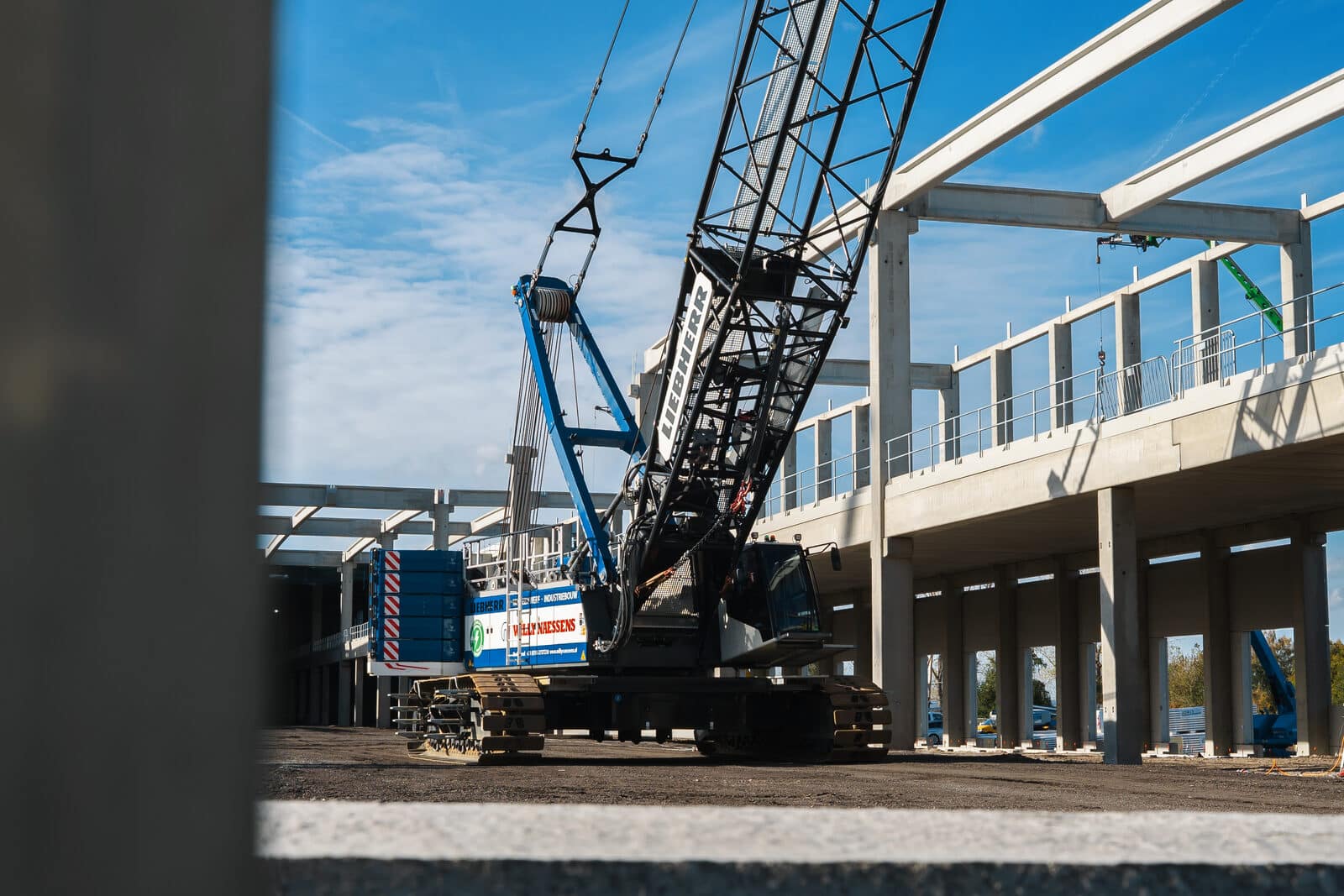
Within the integrated construction model, precast concrete elements are used to construct industrial buildings quickly, flexibly, and in a modular fashion. A key development lies in the composition of the concrete used for the standard facade elements. According to the Willy Naessens Group, this achieves a CO2 reduction of up to 30 percent. At the group level, this translates to an annual reduction of approximately 5,000 metric tons of CO2 for these facade elements.
The benefit, therefore, does not lie in a single isolated measure, but in further optimizing a construction system that is already heavily geared toward prefabrication. Precisely because design and construction are closely aligned, decisions regarding material use can be incorporated early in the process. This makes it possible to consider not only construction speed and manufacturability, but also the environmental impact of the chosen solution.
A second pillar of this approach is extensive vertical integration. Engineering, prefabrication, transportation, and assembly are coordinated within the organization and carried out in-house. This approach provides greater control over the various stages of the construction process. Transportation movements are minimized, material losses are reduced, and work on the construction site is organized more efficiently. For industrial construction projects, this approach aligns naturally with precast concrete. The various process steps are coordinated in advance, making execution less dependent on individual stages at the construction site. The sustainability benefits are thus linked to process control: less waste and a more efficient organization of transportation and assembly go hand in hand with a lower carbon footprint.
Furthermore, because the same organization is responsible for multiple steps in the chain, improvements can be considered across the entire process rather than on a discipline-by-discipline basis. This is relevant to sustainability efforts, because the choice of materials can have implications for production, logistics, and assembly. The integrated approach makes it possible to take these interdependencies into account early on and then consistently implement the resulting decisions.
The rationale behind material choices is also given greater emphasis in the process. To this end, Willy Naessens Nederland uses in-house life cycle assessments (LCA). These calculate the environmental impact of products and materials over their entire lifecycle: from raw materials and production to transportation and recycling. This gives clients insight into the CO2 impact of various choices as early as the design phase.
This data-driven approach is intended to prevent sustainability from being assessed only at the end of a project. By making environmental performance visible earlier on, it becomes part of the technical and economic considerations made during the design phase.

Making the prefabricated construction model even more sustainable aligns with the circular construction method introduced earlier. “This way, we continue to think about how we can achieve a more sustainable future. That’s why we’re investing in innovative, circular construction methods, such as The Circle®,” says Erik Koremans, Chief Commercial and Sustainability Officer (CCSO) at Willy Naessens Netherlands.