Platform on concrete and steel in construction
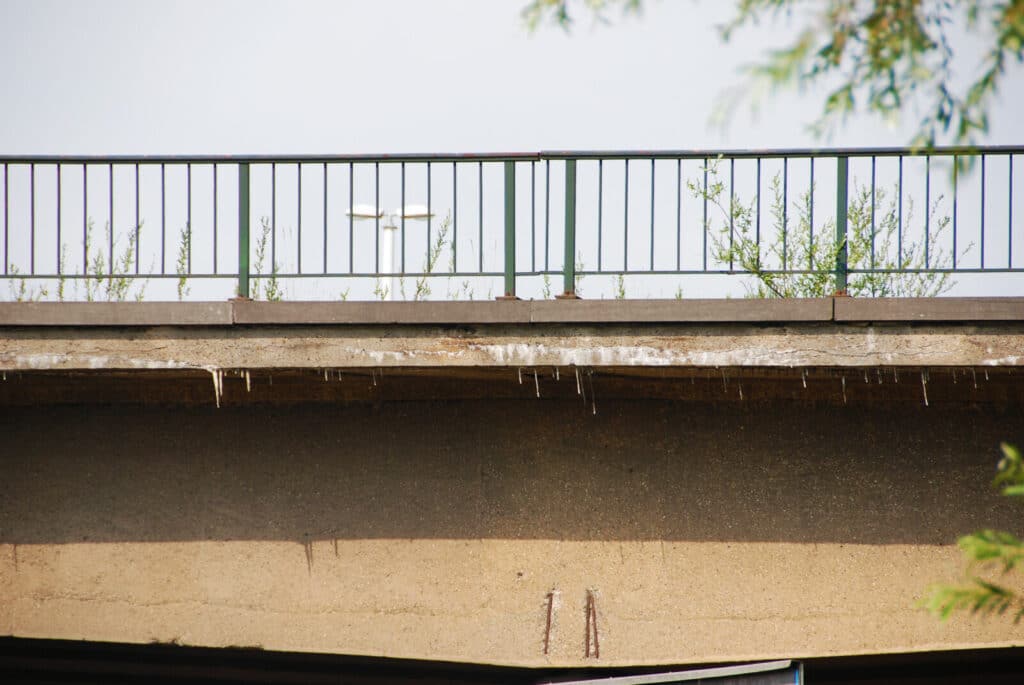
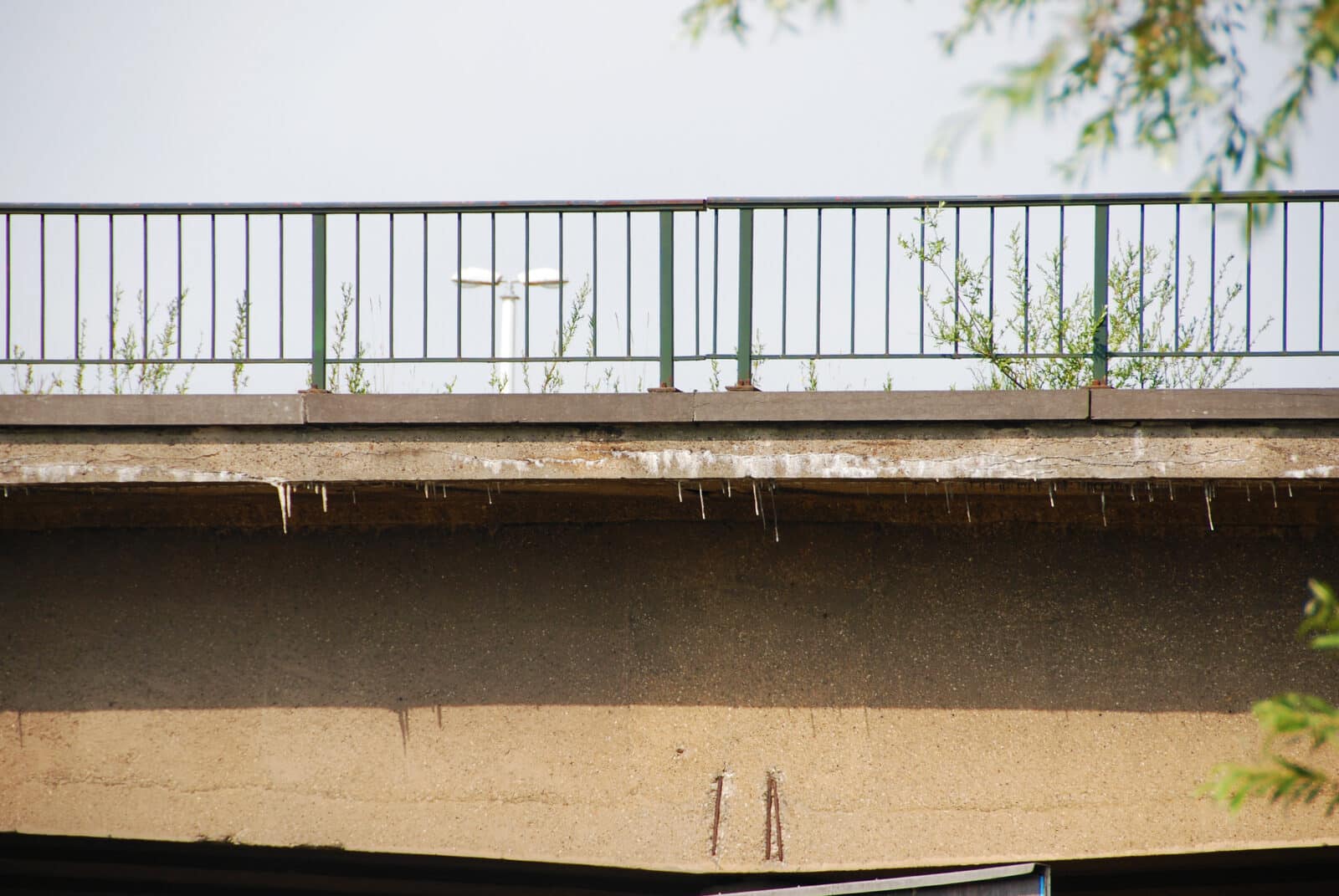
Starting in the 1960s and 1970s, concrete became the go-to building material for bridges, tunnels, quay walls, and buildings. It offered architects new creative freedoms, enabled engineering firms to design tall towers and large spans, and allowed contractors to build quickly and efficiently. But despite its reputation as a durable material, concrete also ages. Today, we are seeing damage to both engineering structures and buildings with increasing frequency, making concrete repair necessary.
However, studies show that many repairs fail again within ten years. This is remarkable, given that the knowledge needed to carry out durable repairs is widely available. That is why FEREB and its members are joining forces to actively promote durable concrete repair.
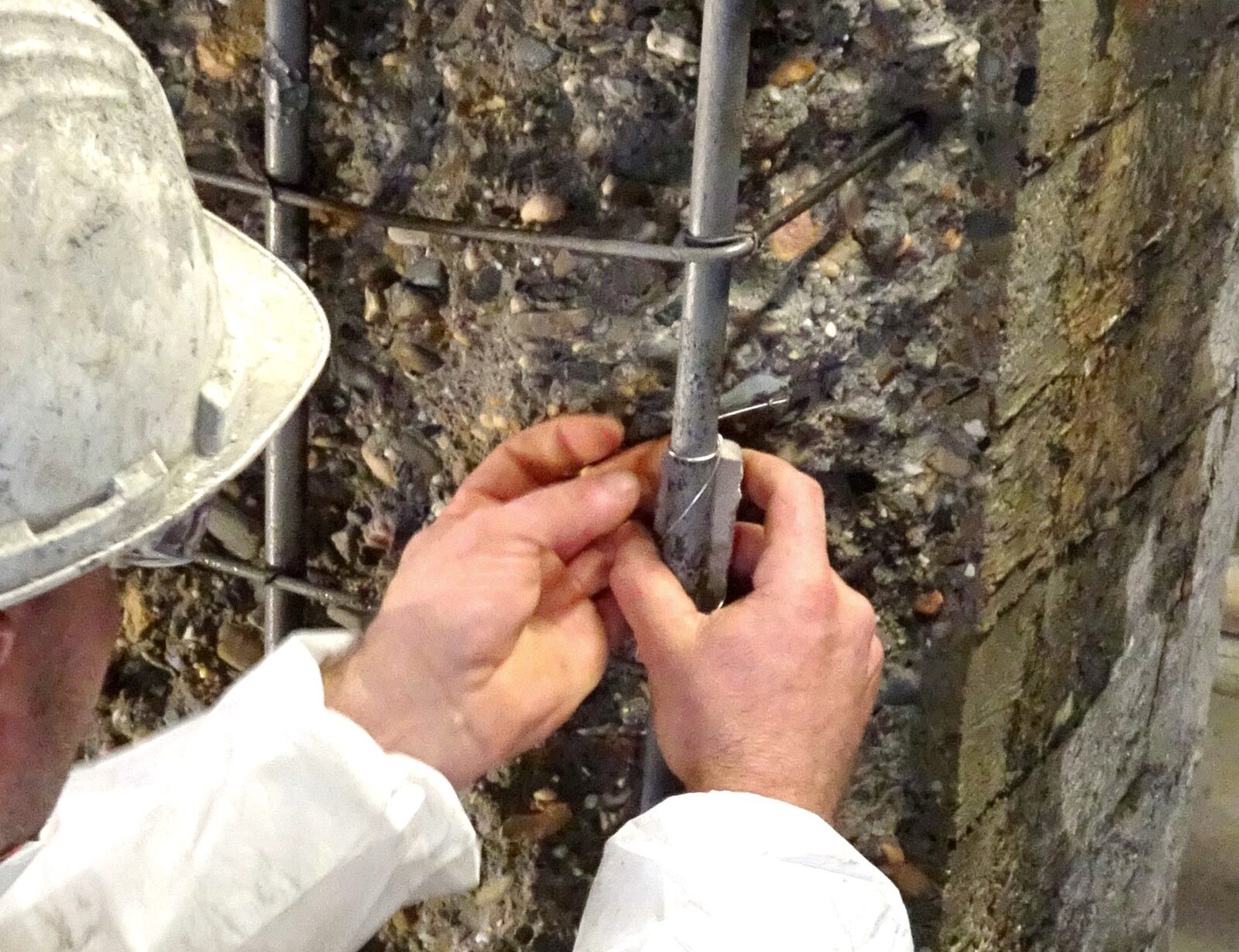
Concrete damage is caused by a wide range of factors. Sometimes the design life has simply been exceeded, but design or construction errors are often a contributing factor. External influences such as chemical corrosion, frost, lack of maintenance, or the well-known rusting of reinforcing bars due to carbonation and chlorides are also major culprits. In addition, there are less common damage processes such as the alkali-silica reaction (ASR) and ettringite formation. Although these are more complex, they do not necessarily mean that a structure is beyond repair. With a timely diagnosis and a carefully executed repair, the service life can be significantly extended.
An accurate diagnosis is crucial. A preliminary assessment by a specialized engineering firm or architect determines not only the cause and extent of the damage, but also whether a repair is technically and economically feasible. The basic assessment includes, among other things:
• Visual inspection
• Detection of hollow areas and delaminations
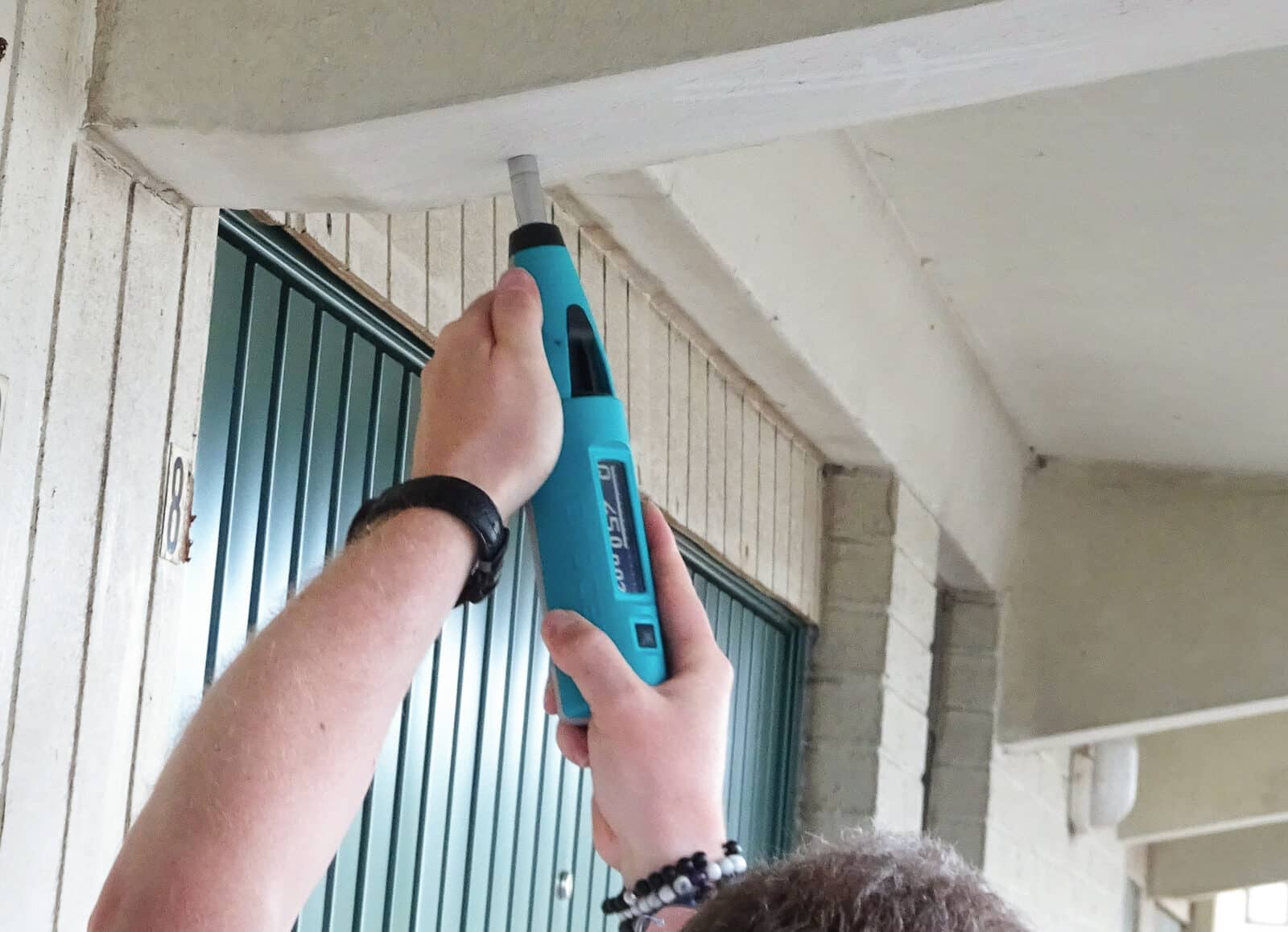
• Measurement of surface hardness
• Locating reinforcement and determining concrete cover
• Measurement of carbonation depth
• Analysis of chloride content
• Identification of exposure to chemicals or weather conditions
If necessary, additional tests are conducted in a specialized laboratory. Based on this diagnosis, the repair method is chosen and the appropriate products are selected.
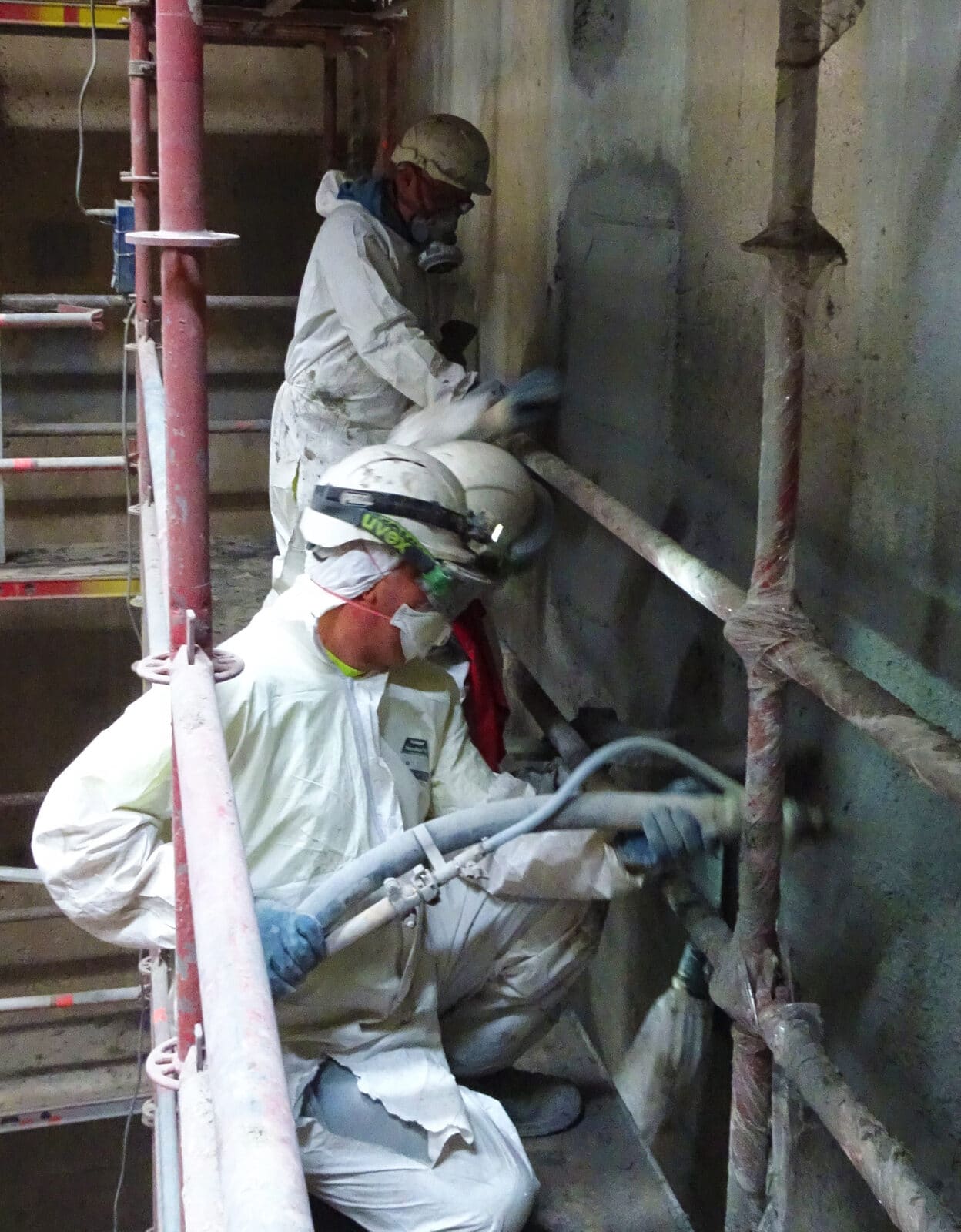
Sustainable concrete repair rests on three pillars: an accurate diagnosis, the right products, and an experienced contractor. That is why we prefer to work with BENOR-certified contractors (members of FEREB) and concrete repair products. The repair process usually involves several steps:
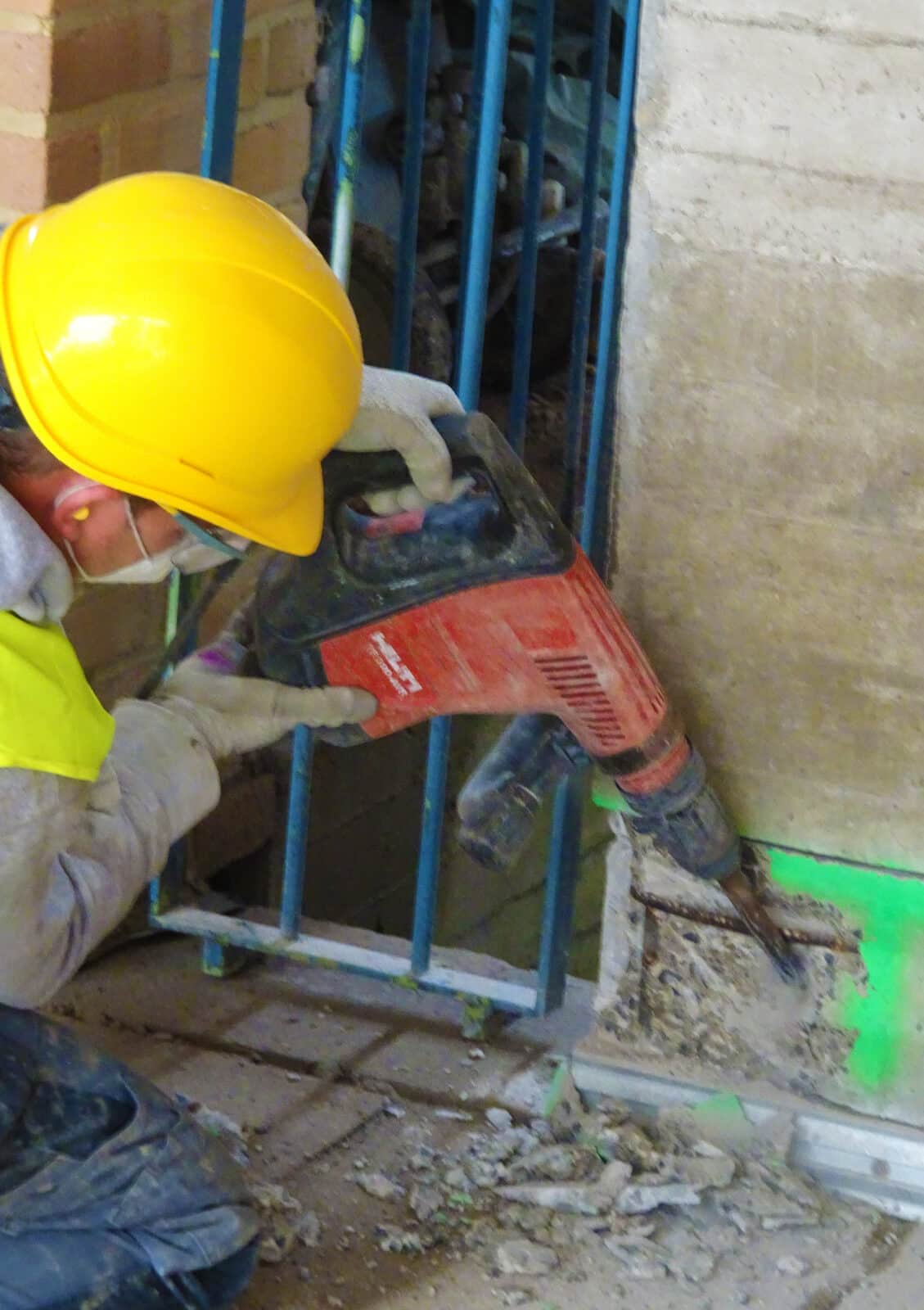
• Removal of damaged concrete using mechanical methods or hydrodemolition
• Testing for carbonation using phenolphthalein
• Cleaning and, if necessary, replacing the reinforcement
• Applying protective coatings to the reinforcement
• Preparing the surface by thoroughly cleaning it
• Application of repair mortar, applied manually or by mechanical spraying
• Finishing for a smooth and aesthetically pleasing result
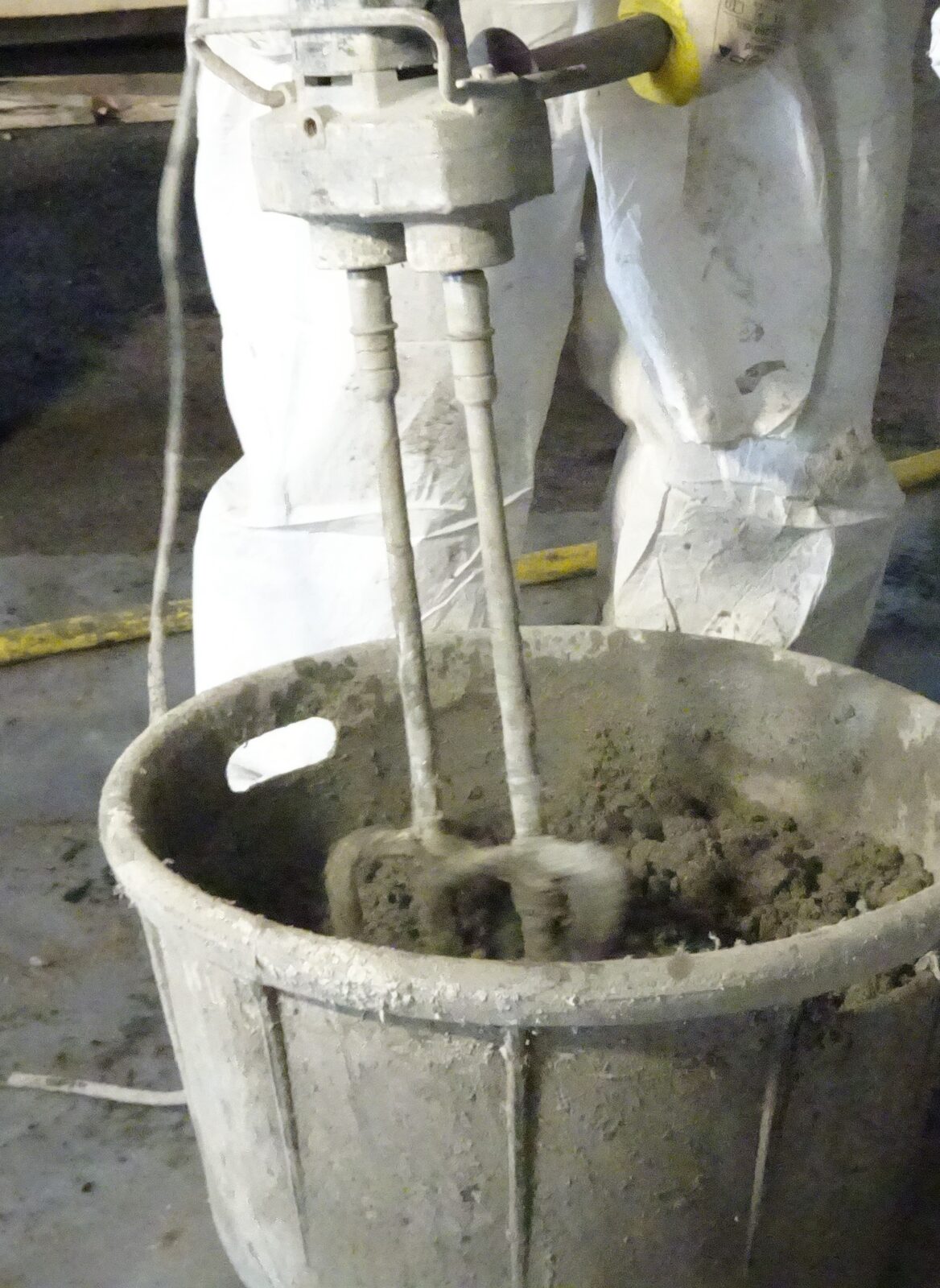
Repair mortars must comply with NBN EN 1504 and, preferably, be BENOR-certified. The mixing process is essential: proper water dosage and mixing time determine the homogeneity and workability.
To ensure that repairs are durable, additional protective layers are often applied. Depending on the situation, these may include:
• Cathodic protection
• Waterproofing
• Carbonation-inhibiting coatings
• Wear-resistant or chemical-resistant coatings
• Fire-resistant protection
Quality control during and after the work is essential. Adhesion tests and other tests are conducted in accordance with a predetermined inspection plan and any requirements set by insurers.
A repair is not the end of the process. Periodic maintenance and monitoring are necessary to prevent further damage. The owner or manager monitors the aging of the structure and, where necessary, protects it against the elements, water infiltration, chemical corrosion, mechanical stress, and fire.
In partnership with FEREB, insurance companies now offer 10-year warranty insurance for concrete repairs. When all requirements are met, the building owner gains certainty about his investment, and financing becomes easier.
Concrete is strong and durable, but it is not indestructible. Damage can result from the passage of time, environmental factors, and sometimes human error. Nevertheless, a durable repair is entirely possible. If you opt for a thorough assessment, experienced BENOR-certified contractors, and high-quality products, you’ll get a result that will last for decades to come.
Sustainable concrete repair gives owners and users peace of mind, extends the service life of structures, and increases the value of every project.
Neem dan rechtstreeks contact op met FEREB asbl.
 Contact opnemen
FEREB is the leading association of specialists in concrete repair, protection and reinforcement in Belgium. Together with the governing body and members, we promote sustainable concrete repair of infrastructure and buildings. Sustainable concrete repair contributes to a better environment and the achievement of climate goals.
Bekijk Bedrijfsprofiel