Circular foundations
Tekst Roel van GilsFotografie PNL
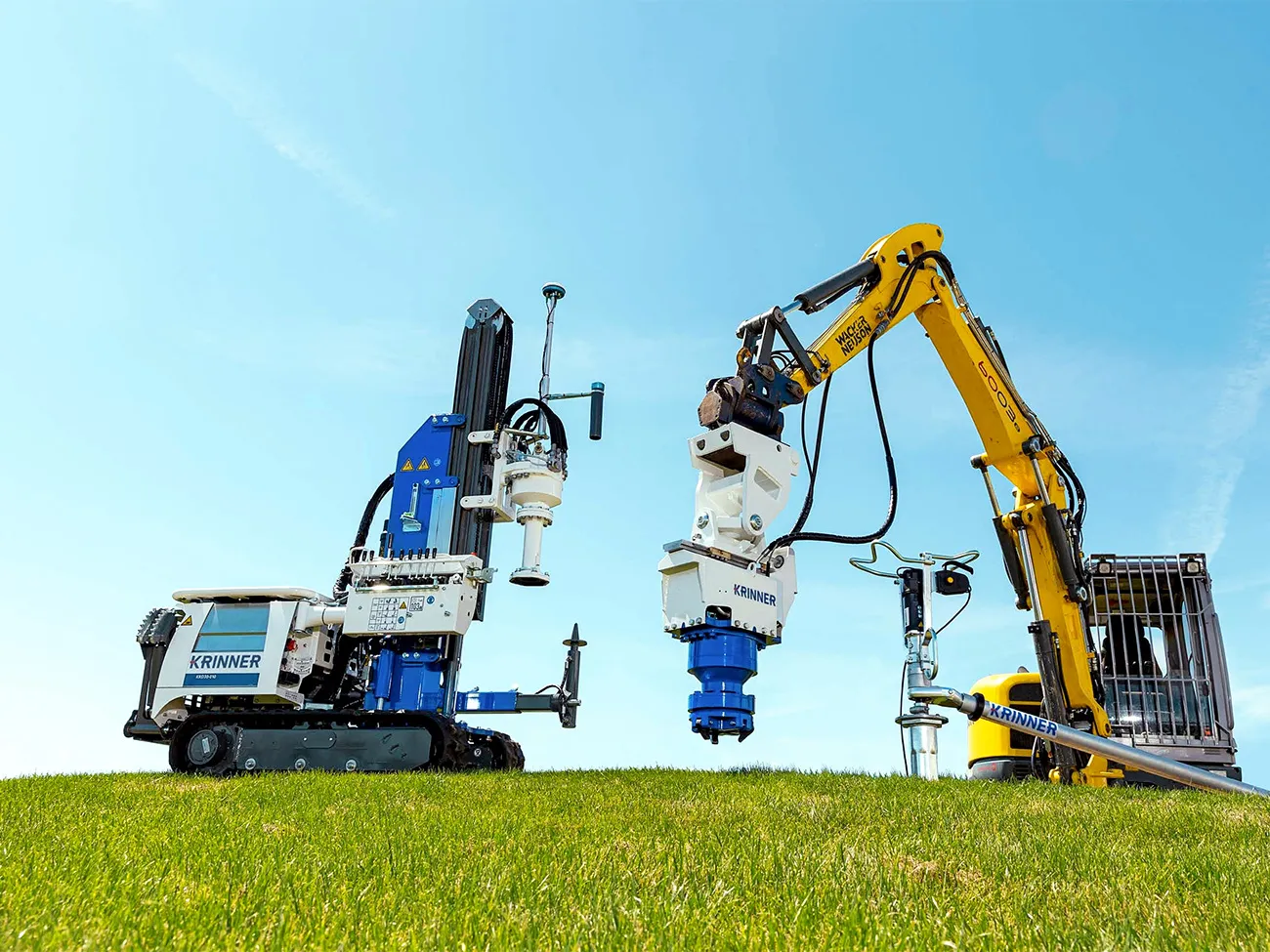
PNL presents the Krinner screw foundations as the alternative to traditional concrete foundations in the infrastructure sector. This circular technology is based on the tried-and-tested principle of pile foundations, which has been used for thousands of years. We speak to Emiel Pijnenburg, the third generation of the family-owned business PNL, about the many benefits of this circular foundation technology.
According to Pijnenburg, Krinner Schraubfundamente is regarded as the inventor of the screw foundation. “Back in 1994, long before sustainability became an issue, founder Klaus Krinner introduced the screw foundation as a sustainable, environmentally friendly alternative to traditional concrete foundations. The principle has remained unchanged over the years and is now known worldwide. Since 2008, we have continued to specialise in this field and have been the official representative of Krinner products in the Netherlands.”
Ready to bear loads immediately
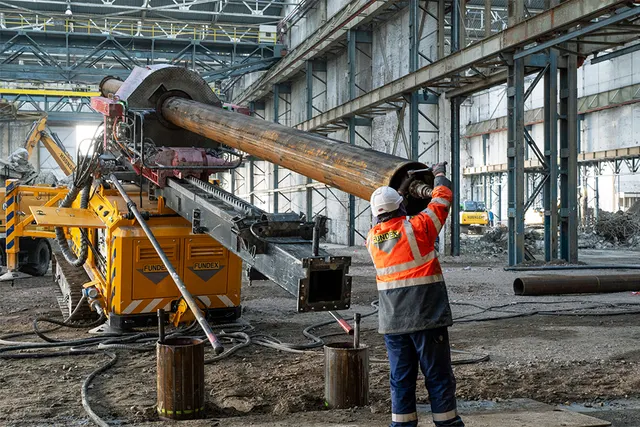
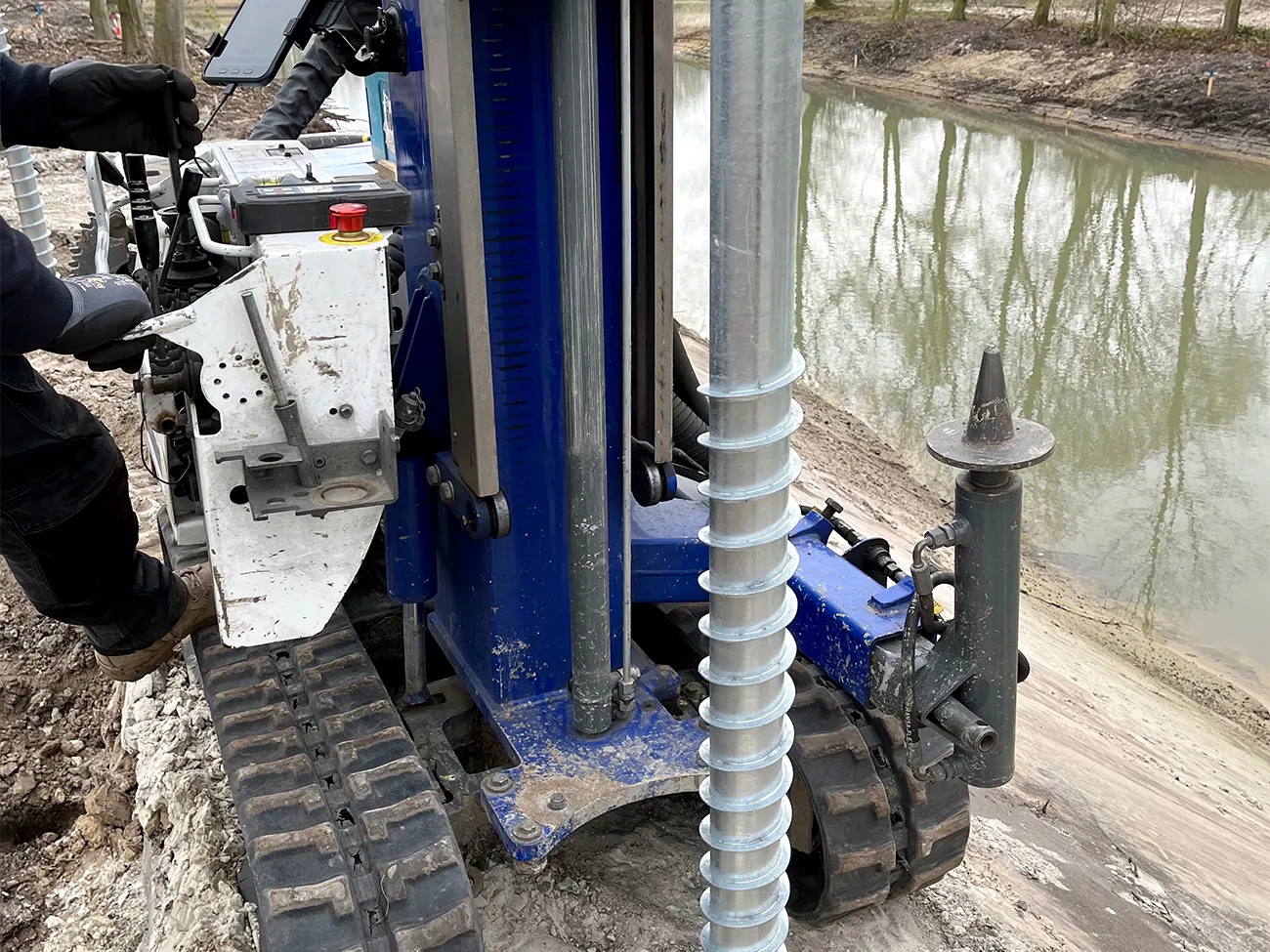
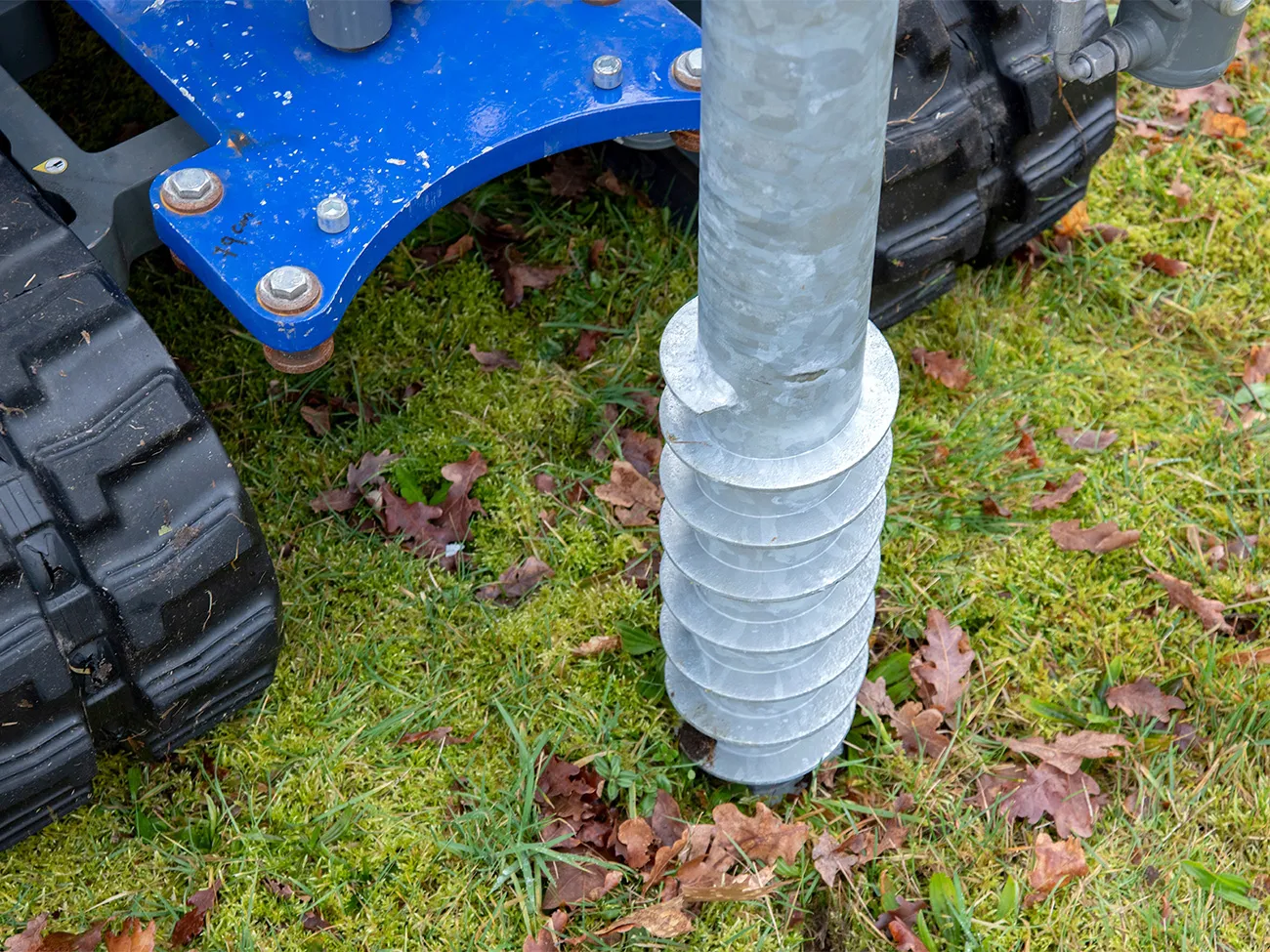
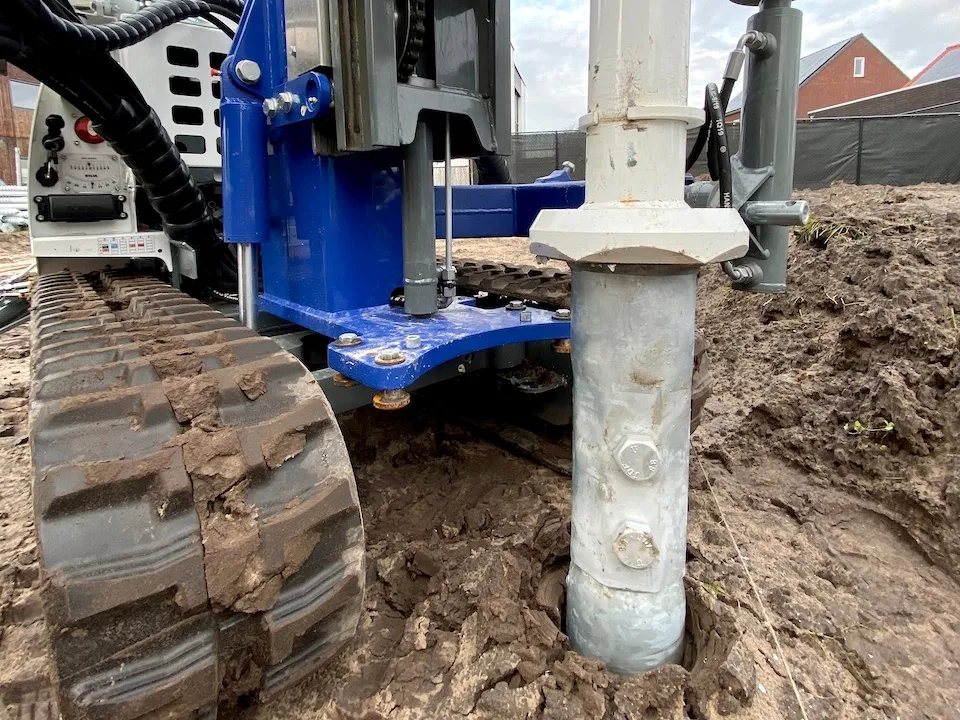
A screw foundation consists of a galvanised steel tube with a welded-on screw thread, designed to transfer horizontal and vertical loads into the ground. “The tube is screwed into the ground using special machinery, which gives it load-bearing capacity straight away,” explains Pijnenburg. “Its load-bearing capacity is certainly no less than that of a concrete foundation. In fact, screw foundations offer nothing but benefits. There is no need for excavation, installation is quick and the foundation can bear loads immediately. At the end of its service life, the screw foundation can also be easily removed and reused elsewhere. There is no lasting damage to the soil, which recovers to its natural state.”
An economical alternative
Screw foundations can be used as both shallow and deep foundations. Pijnenburg says: “Whether for structures on slopes, narrow and hard-to-access construction sites or temporary building projects, the wide range of options means Krinner screw foundations offer an economical solution in almost any situation. Where the load-bearing soil is at considerable depth, extendable screw foundations from the V series can be used to create a safe, stable deep foundation quickly and cost-effectively. The V series has been fully analysed and calculated and can be extended to a maximum length of 18 metres. Krinner screw foundations are made primarily from recycled European steel, hot-dip galvanised inside and out to a thickness of 100 um.”
Infrastructure and rail
Pijnenburg sees great potential for Krinner screw foundations in Dutch infrastructure. “They are already widely used abroad, for example as foundations for traffic lights, road signs along motorways, noise barriers, lighting columns, smaller bridges and jetties. Disruption is kept to a minimum because the foundation can bear loads immediately. The potential is enormous.” The Krinner system is also used to support cycle paths and prevent subsidence, as well as in rail infrastructure around the world. “In the United States, Canada and Germany, local equivalents of ProRail have approved the use of Krinner screw foundations for noise barriers along railway lines. Once again, fast installation, immediate load-bearing capacity and minimal disruption are decisive factors.”
Foundation design and installation sequence
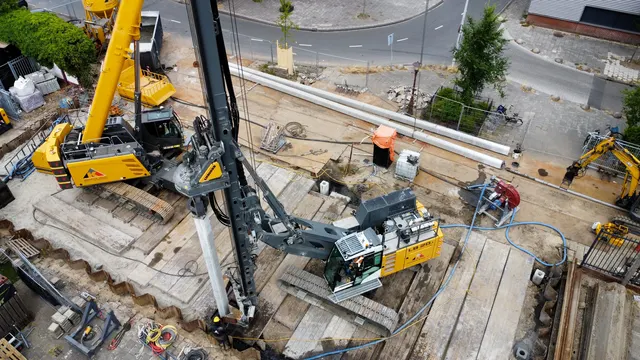
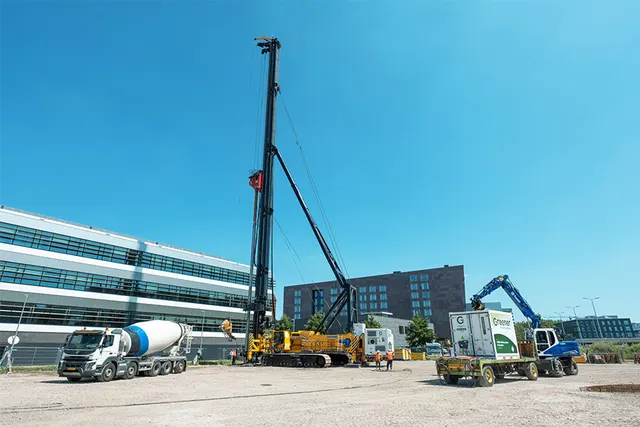
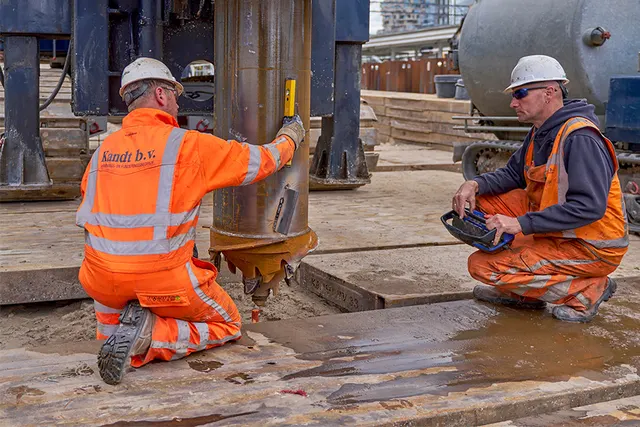
PNL selects the right screw foundation diameter based on the loads the foundation needs to support. Krinner offers a wide range of screw foundations in various diameters. The length depends on the soil conditions, which must be determined by a cone penetration test. “Based on these factors, we provide suitable advice and prepare a foundation design. A load test is carried out to check and confirm the assumptions in the design in practice. Installation parameters, such as the minimum installation torque, are also determined. Once the load test has been approved, we proceed with installation. The positions of the screw foundations are marked out, after which we screw them into the ground using electric or hydraulic machinery. The installation torque is measured and recorded as they are installed. Once the work is complete, we give the client a report containing all the data.”
Krinner screw foundations are the foundation for the future, Pijnenburg concludes. “They are sustainable, innovative and exceptionally environmentally friendly, and ultimately save costs. Our product may initially be more expensive, but the fast installation process and immediate load-bearing capacity ultimately reduce costs.” With representatives in several regions of the Netherlands, PNL can supply circular foundations quickly and efficiently throughout the country. “Our website’s CO2 calculator shows the savings immediately, which can be as high as 80%!”
Vraag over dit verhaal? Stel je vraag
Blijf dit volgen
Bij een nieuw verhaal krijg je een e-mail. Geen account nodig.
- ThemaMinder CO2 in beton en staal
- OnderwerpFoundation techniques