Platform on concrete and steel in construction
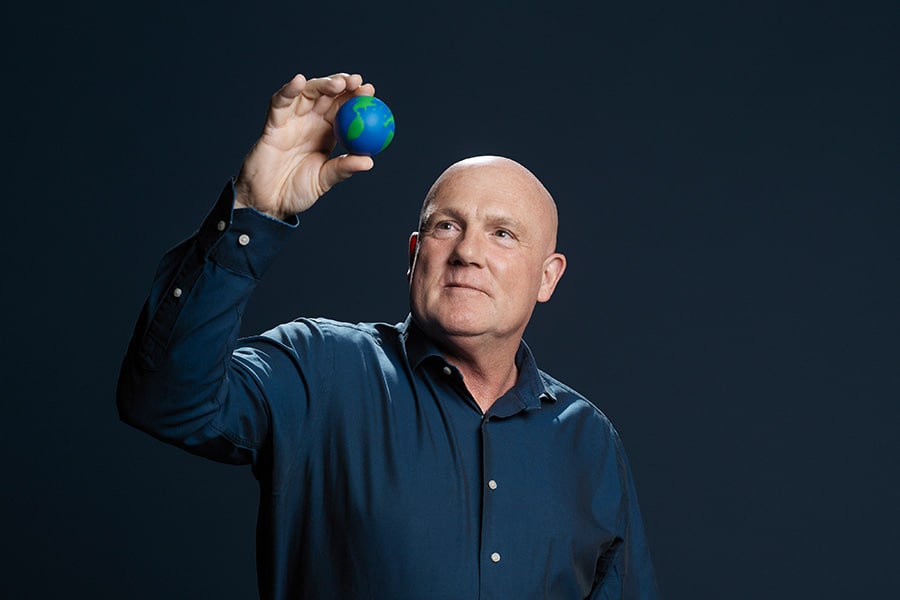
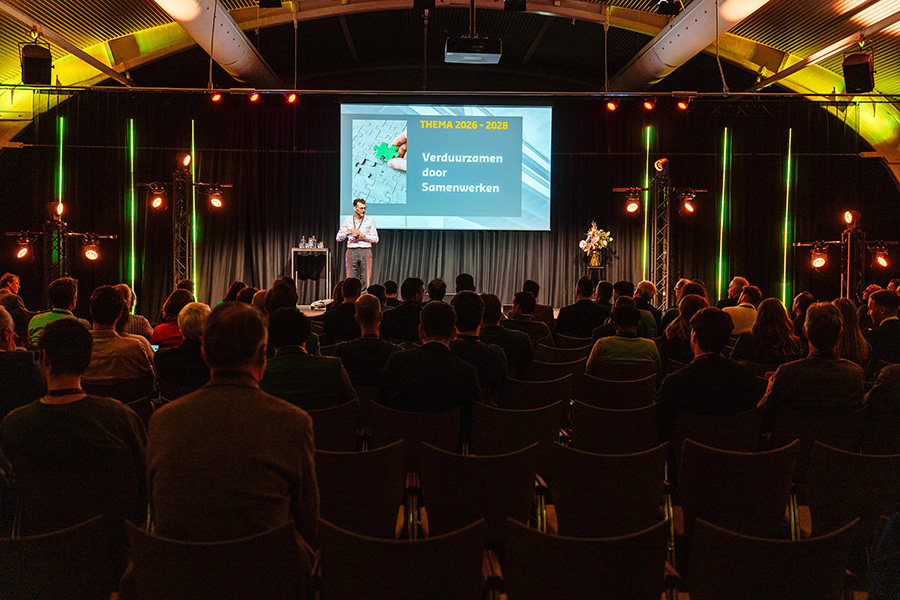
The concrete industry faces a major challenge. It needs to become more sustainable. But how? Effective collaboration is the motto, but what does that mean? According to astronaut André Kuipers, who will deliver the opening keynote on Thursday, November 19, at the Beton Event 2026 at the 1931 Convention Center in ’s-Hertogenbosch, ‘Sustainability through Collaboration’ is not just a lofty goal but an absolute necessity. Just like in space. “Good collaboration starts with recognizing that you need each other.”
It’s an important lesson that Kuipers learned during his two space missions. “If you look at what’s happening in the world right now, you see a lot of conflicts. Yet Americans and Russians still work well together on the International Space Station (ISS). They know they can’t do without each other. In space, you have to work together. It’s that simple. If you want to achieve something, you have to do everything in your power to reach that goal.”
This mutual dependence ties directly into the new theme of the Beton Event for the next three years. Making the concrete sector more sustainable also requires collaboration among parties with different backgrounds, areas of expertise, and interests. No single organization can tackle this challenge alone. According to Kuipers, it starts with a clear goal. “You have to set a clear goal and really dare to commit to it.”
For him, the promise made by U.S. President John F. Kennedy serves as an inspiring example. In the 1960s, Kennedy promised that America would put a man on the moon—not because it was easy, but precisely because it was difficult. That goal was achieved within eight years. “Something that seemed impossible turned out to be possible after all. Why shouldn’t the concrete industry be able to do the same in its own field?”
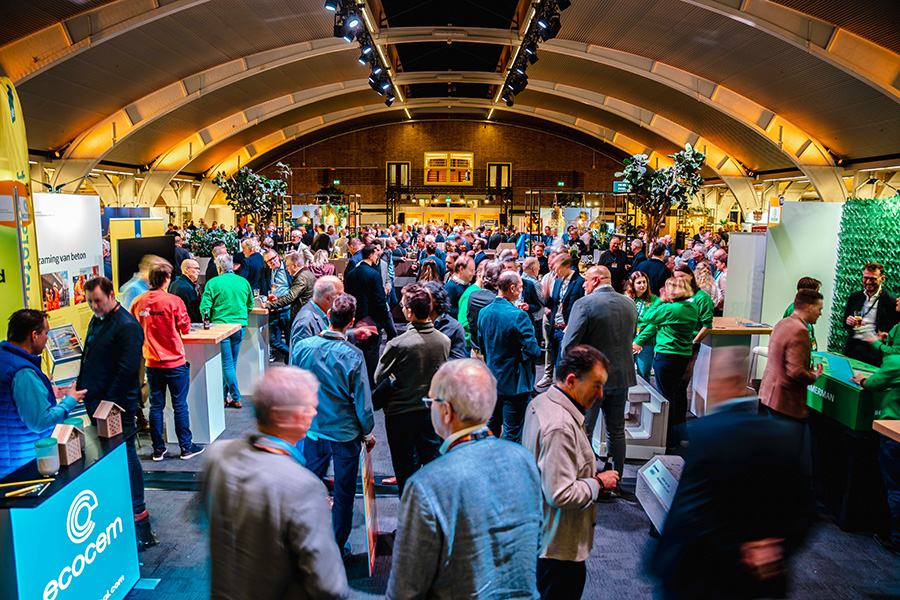
Concrete Event 2026
When: Thursday, November 19
Where: 1931 Den Bosch Convention Center
Topic: Promoting Sustainability Through Collaboration
Opening: Keynote by André Kuipers
Includes: award ceremony for the Concrete Prize in
six categories plus the People's Choice Award
For more information, visit betonevent.nl
Kuipers says you have to dare to be a visionary. “A true visionary often doesn’t fit in well during his own time. It’s only later that people realize where the courage lay. A visionary can inspire others and get them moving.” He adds that an organization doesn’t have to completely set aside its own interests. “You can maintain your own interests while recognizing that you’ll get further by drawing on the expertise of other companies and organizations.” For the concrete sector, this means that stakeholders must look beyond their own part of the construction process. A new material only makes it into practice when clients, designers, structural engineers, manufacturers, and contractors work together. Leadership also plays a role in this. A leader must set the direction, convince people of the shared goal, and at the same time make room for the knowledge of others. That requires trust and a willingness to share responsibilities.
In practice, this can mean that a client not only sets requirements but also invites market participants to contribute their ideas. Manufacturers must share their knowledge about materials and possibilities. Designers and builders must collaborate early on so that sustainable choices are actually feasible. According to Kuipers, it is precisely by bringing together different responsibilities and areas of expertise that better solutions emerge.
Collaboration and innovation also mean that not every idea succeeds right away. “You have to be willing to make mistakes and let projects fail. Innovation isn’t possible without taking risks.” Kuipers refers here to the development of commercial spaceflight. During his second space mission, he used a robotic arm to dock SpaceX’s first cargo spacecraft with the ISS. “That was truly special. I also saw then that commercial companies can organize spaceflight activities well and efficiently.”
New players, different approaches, and experiments can help accelerate progress. However, organizations must accept that not every experiment will immediately yield the desired result. This lesson also applies to the concrete industry. New binders, circular designs, and the reuse of concrete components require research, field trials, and collaboration. Stakeholders must allow room for innovation and share the knowledge they have gained with one another.
Kuipers acknowledges that his perspective on Earth changed when he saw it literally from a distance. “The limitations of our planet really hit home for me. From space, you can see that the atmosphere forms a very thin and fragile shell.” From the ISS, he saw Earth surrounded by a dark and hostile expanse of space. “I realized that humanity can’t just move to another planet. That’s why we have to take good care of Earth.” According to him, that perspective makes it clear that we must treat our environment and natural resources with care. “The construction and concrete sectors use a lot of raw materials and energy, but they can also contribute to solutions. Think of extending the lifespan of structures, reusing materials, reducing emissions, and smart designs that allow for future adaptations.”
Kuipers doesn’t offer a ‘kick in the pants’ during his opening remarks. “But I do want to convincingly demonstrate that working together is essential. I want to show visitors that collaboration is possible—if you know it’s necessary.” He hopes that visitors will realize that big goals are achievable, but only when people recognize that they need one another. “I hope that after hearing my story, those in attendance will look at Earth through the eyes of an astronaut and appreciate our beautiful but fragile planet.”
The Beton Event marks the kickoff of a three-year program focused on enhancing sustainability through collaboration. In the coming years, we will explore how collaboration leads to concrete results, which stakeholders are needed to achieve them, how risks and responsibilities can be shared, and how successful solutions can be applied more widely. Because the same principle applies to making the concrete sector more sustainable: we can achieve a great deal, but not on our own.