Platform on concrete and steel in construction
Bridges and viaducts may seem indestructible, but many structures in the Netherlands are nearing the end of their technical service life. They are in urgent need of maintenance. At the same time, budgets and capacity are limited. Using smart sensors and innovative measurement methods, Civiele technieken deBoer provides insight into how bridges and viaducts behave. By continuously monitoring the actual condition of the structures, maintenance can be better planned and, in some cases, even postponed without compromising safety. Anton Gorter of Civiele technieken deBoer takes us through three recent projects and demonstrates how this approach works in practice.
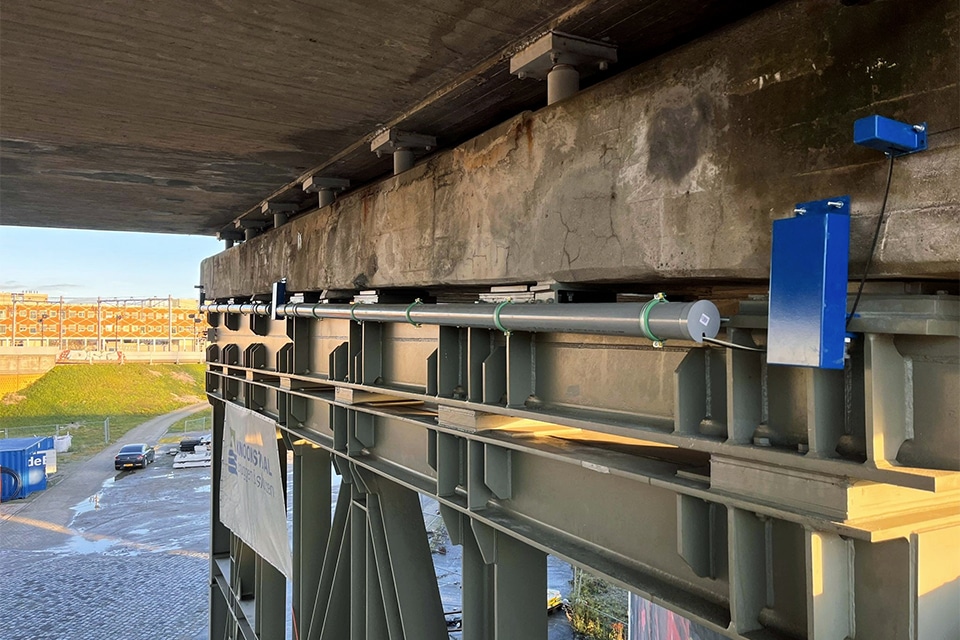
“For a structure in Dordrecht, the monitoring issue relates to the well-known problem surrounding the tooth-and-ridge construction,” Gorter begins. “A permanent support structure has been installed beneath the bridge. This structure has now been activated and is taking over part of the load. This raised an important question for Rijkswaterstaat: how do you know when the original structure is no longer functioning and the load is being fully transferred to the new structure?”
To provide insight into this, highly accurate displacement sensors were installed at the bearings. “These sensors were calibrated using test loads, in which a 40-metric-ton truck was positioned at specific locations on the bridge,” Gorter explains. “By measuring the deflection of the bearings, we were able to establish a reliable reference frame. The monitoring system was then configured to trigger an alarm when the bridge deck rests entirely on the support structure. In this way, the system functions as a continuous monitoring system. An additional challenge here was that the structure is already partially bearing the load. This makes distinguishing between ‘bearing’ and ‘not bearing’ the load complex. Through smart data processing and the combination of measurements—including temperature readings from the bridge deck—external influences are filtered out, resulting in a reliable picture.”
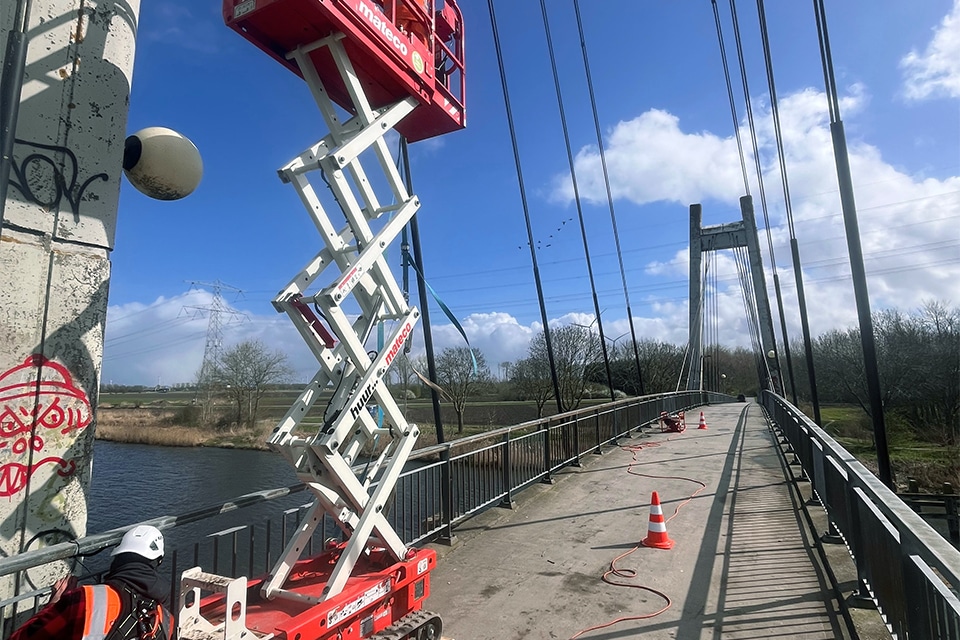
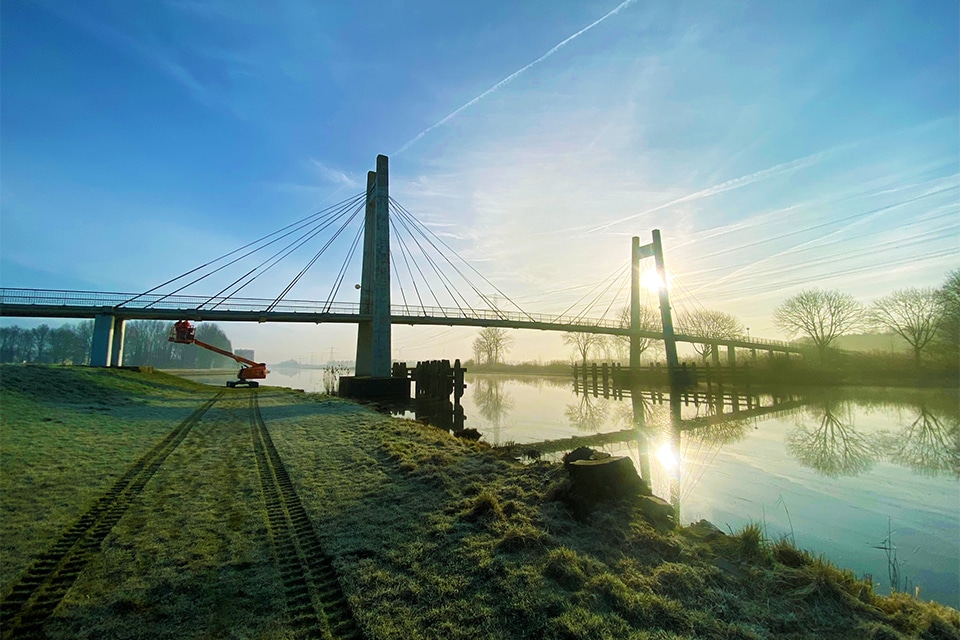
For the municipality of Almere, Civiele technieken deBoer developed a measurement setup for a cable-stayed bicycle bridge. “The bridge is on the verge of a major maintenance project, and the client wants to know exactly what condition the structure is in,” says Gorter. “Following a visual inspection of, among other things, the cables, bearings, and connections, we opted for an in-depth analysis: measuring the cable forces. For this, we’re using the so-called taut string method. This involves installing fiber-optic sensors that can measure the vibration of the cables with great precision. The initial measurements have now been completed and translated into the exact loads present on each cable. This information forms an important basis for the bridge’s future maintenance.”
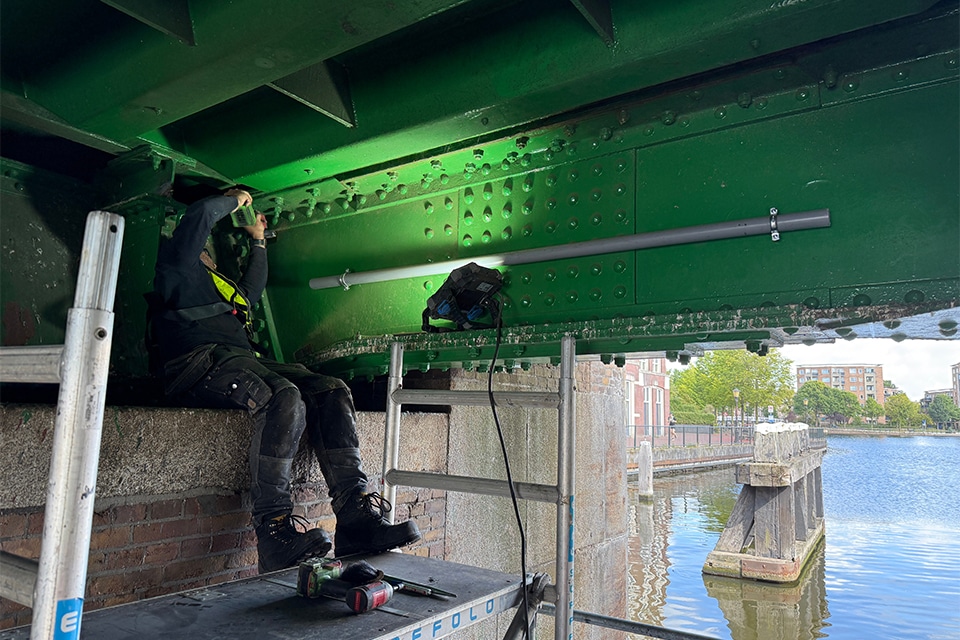
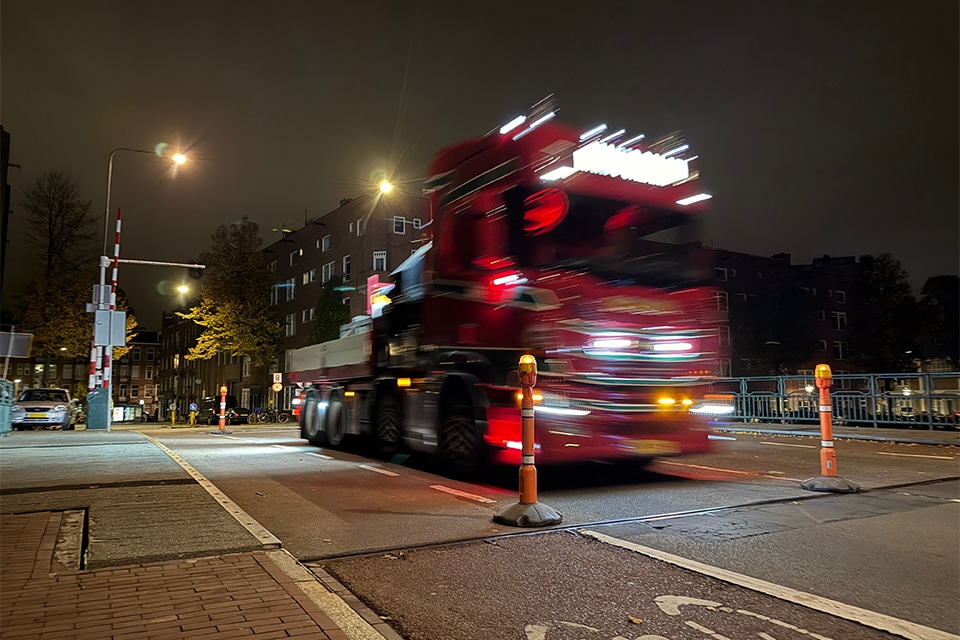
In addition to these individual projects, Civiele technieken deBoer also provides a wide range of services under large-scale maintenance contracts: from inspections and reports to coordinating minor and major maintenance. From painting handrails to replacing bearings or installing steel reinforcements. “We always assess whether the work can be carried out in-house or whether collaboration with external parties is necessary,” says Gorter, who concludes by mentioning the Sublime project in Amsterdam. “Here, we’re working on a digital twin of the Van Hal Bridge. Using fiber-optic strain sensors and temperature measurements, the bridge’s behavior is closely monitored. Here, too, a load test—in which a calibrated truck is driven at various positions and speeds—is used to measure the impact on the steel deck. The data is linked to advanced 3D computational models to make predictions about the bridge’s remaining service life. The system being developed here serves as a blueprint for other bridges and even for entire bridge families.”