Platform on concrete and steel in construction
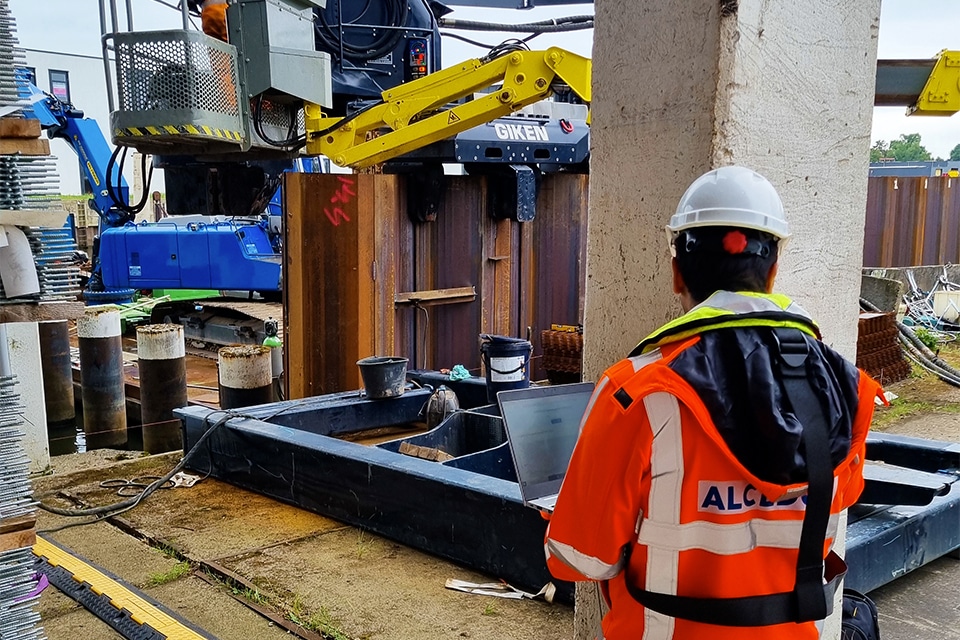
Thousands of bridges and viaducts in the Netherlands are approaching or have already exceeded their original design life. At the same time, more and more construction projects are being carried out adjacent to vulnerable existing structures. In both cases, continuous insight into structural behavior is essential. Alcedo B.V., which has long been active in environmental monitoring, has evolved into a Structural Health Monitoring (SHM) partner that provides real-time insights during construction and long-term condition assessments for infrastructure managers.
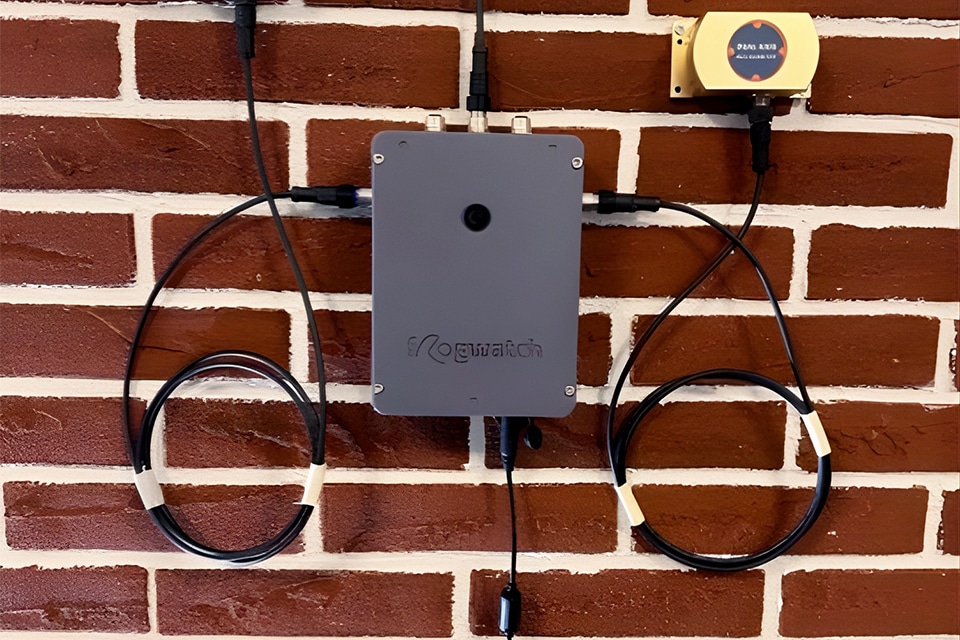
With the Frogwatch system, Alcedo has proven itself for many years as a specialist in vibration monitoring in accordance with the SBR-A and SBR-B guidelines. The Frogwatch V2 is used for standard construction monitoring, while the Frogwatch Pro, a highly accurate accelerometer for structural dynamics, enables advanced vibration and frequency analysis.
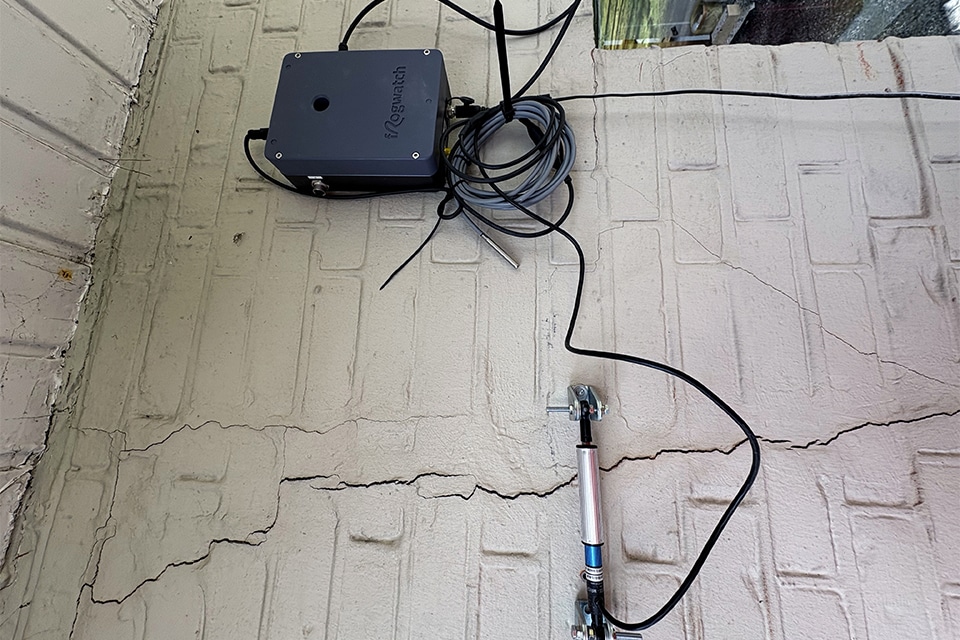
For complex construction projects—such as a deep excavation next to an existing viaduct or pile driving near a historic building—you need a broader perspective. Is the structure moving? Are cracks forming? How are the internal forces changing? To answer these questions, Alcedo deploys various types of sensors: Fiber Bragg Grating (FBG) strain gauges for precise strain measurement, inclination sensors to detect rotation or settlement, displacement sensors to track existing cracks at the submillimeter level, and integrated temperature sensors. These temperature sensors fulfill a crucial analytical function: temperature variations cause daily and seasonal deformations that, without correction, could be mistakenly interpreted as structural damage.
During construction, demolition, or pile driving, neighboring structures may be exposed to vibrations, ground settlement, and deformation. Conventional construction monitoring often focuses on vibration input: the SBR guidelines assess how much vibration reaches a building, but not how the structure itself responds. Alcedo’s SHM approach goes a step further by combining vibration data with real-time strain, tilt, and crack measurements on the structure itself, giving engineers immediate insight into the actual structural response. In practice, this enables project teams to distinguish between acceptable structural behavior and deviations that require intervention.
For infrastructure managers responsible for aging bridges, viaducts, and civil engineering structures, SHM offers continuous condition monitoring to supplement periodic inspections. Sensors continuously monitor structural behavior and detect gradual changes in stiffness, load distribution, or natural frequencies that may indicate degradation, long before visible damage occurs. This helps infrastructure managers allocate inspection and maintenance budgets where they are most needed.
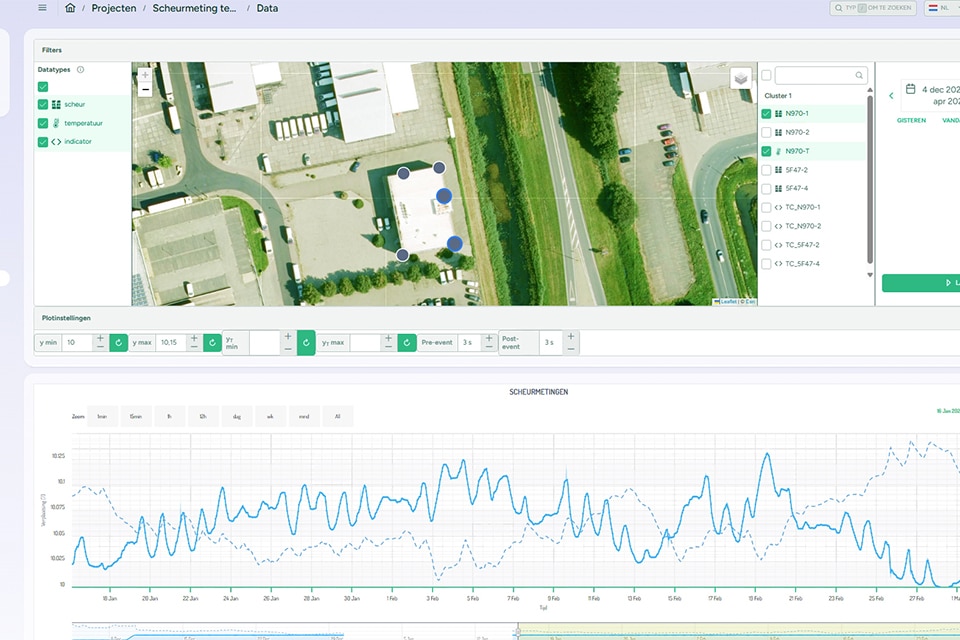
The monitoring system combines sensor data, advanced analysis, and the Frogwatch Cloud Portal. Field data is transmitted via secure connections to a central environment, where signals are calibrated, filtered, and corrected for environmental influences using EOV analysis (Environmental and Operational Variability). Operational modal analysis tracks shifts in a structure’s natural frequencies as an early indicator of stiffness loss. In addition, anomaly detection algorithms identify patterns that may indicate incipient damage. Results are visualized in real-time dashboards with multi-level alerts and automated reporting. Whether it involves construction monitoring or long-term asset management, Alcedo collaborates with contractors, engineering firms, and infrastructure managers who value data-driven decision-making.
Alcedo B.V. is based in Holten and provides monitoring and SHM services throughout the Netherlands.