Platform on concrete and steel in construction
For a large-scale expansion project at a major bank in Amsterdam, Willems Anker, in collaboration with Staalbouw Bakhuizen, supplied more than 220 heavy wind bracing systems. According to commercial manager Marcel van der Wielen, the project stands out not only because of its scale, but above all because of the combination of exceptionally heavy loads, complex logistics, and ongoing engineering adjustments during construction.
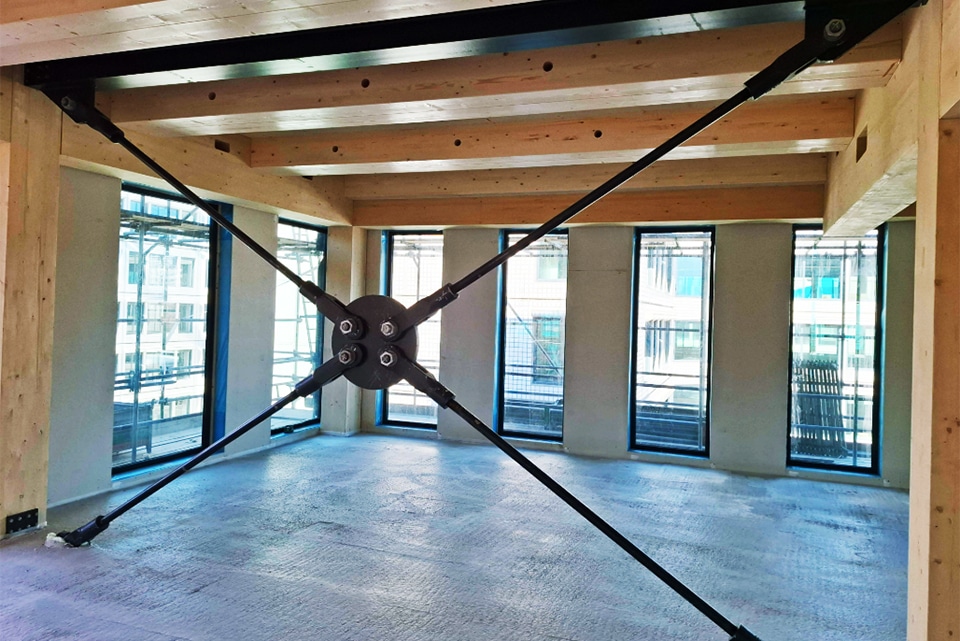
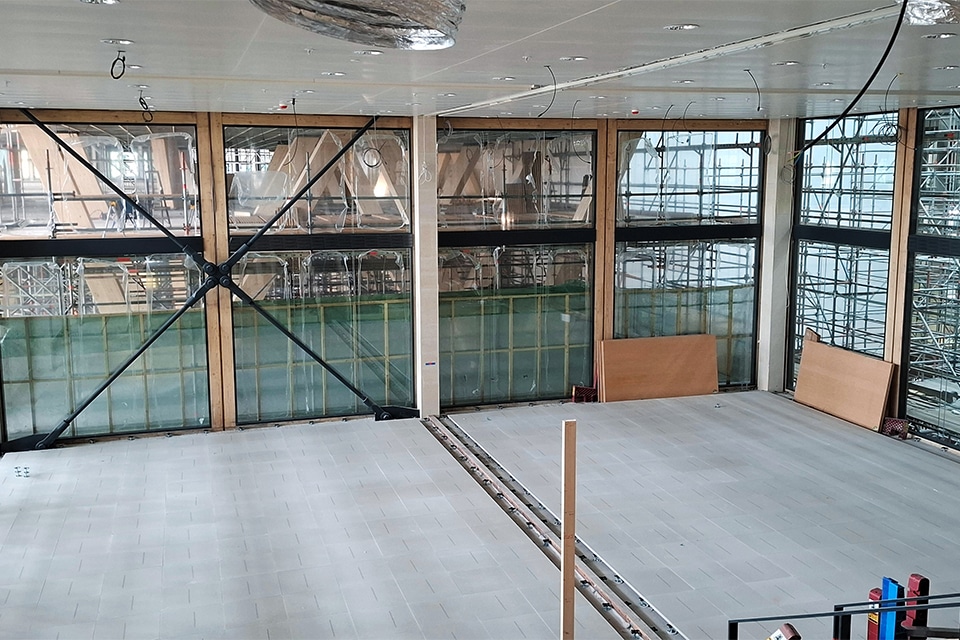
Anyone who sees the enormous dimensions of the tie rods used will immediately understand that this is no ordinary steel structure. For the expansion in the heart of Amsterdam, the building’s stability had to be guaranteed under all circumstances. “Significant forces act on this structure, which made heavy wind bracing necessary,” explains Van der Wielen. “That’s why we opted for tie rods with diameters of M60 and M80.”
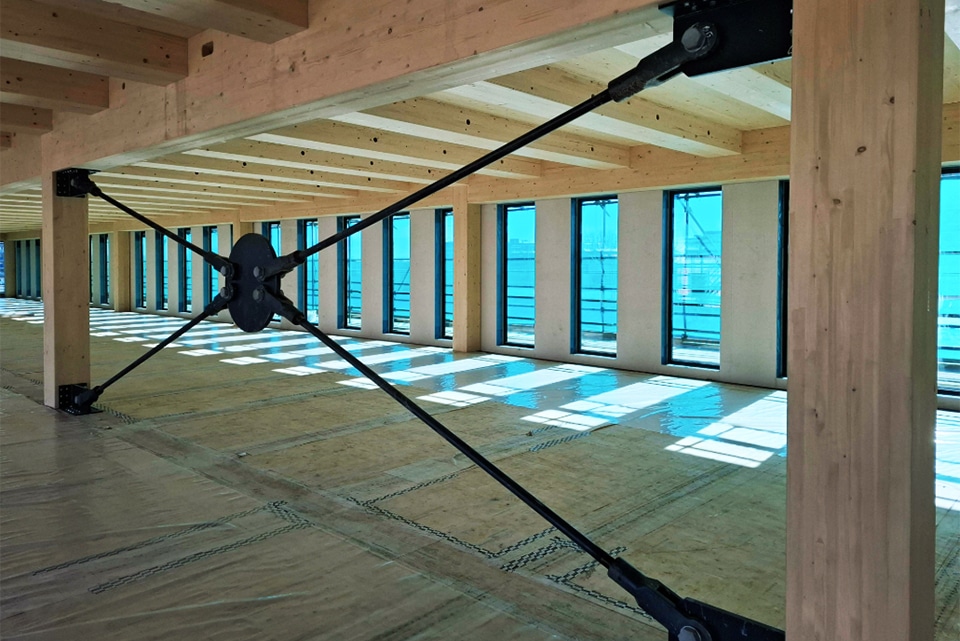
Although wind bracing is a common application in steel construction projects, Van der Wielen notes that this project is on an exceptional scale. “We regularly supply the smaller diameters, but you don’t often come across these large sizes. The sheer number of over 220 pieces in M60 and M80 alone makes this project special. And the heaviest version in this project can withstand loads of over 211 metric tons.”
The large tie rods also presented technical challenges during production. “Some tie rods weigh about 200 kilograms on their own. That naturally calls for a completely different approach to production and handling.” In addition, Willems Anker not only used standard center discs but also developed exclusive, custom designs specifically for this project. “Our standard center plates weren’t suitable for every application. That’s why we also developed larger plates specifically for this project, up to dimensions of 60 by 90 centimeters.” All components were finished in RAL 7016, a request from the client due to the structural integrity of the design. “This also gives the entire structure an exclusive look.”
An important aspect of the project was its phased implementation. Between mid-September 2024 and mid-May 2025, the wind bracing systems were delivered and installed in nine phases. According to Van der Wielen, this required constant coordination among all parties involved. “With projects like this, you start with a general design. Then everything is further engineered, and new dimensions and additional information keep coming in. As a result, we had to constantly recalculate, manufacture, and deliver.” Logistical planning played a crucial role in this process. “The materials weren’t ready weeks in advance. It was truly a continuous process of adapting, refining, and delivering just-in-time for installation.” Flexibility remained essential even during the execution phase. “We were in close contact with the site supervisor. Even at the last minute, there were still changes and adjustments. That requires the team to adapt very quickly.”

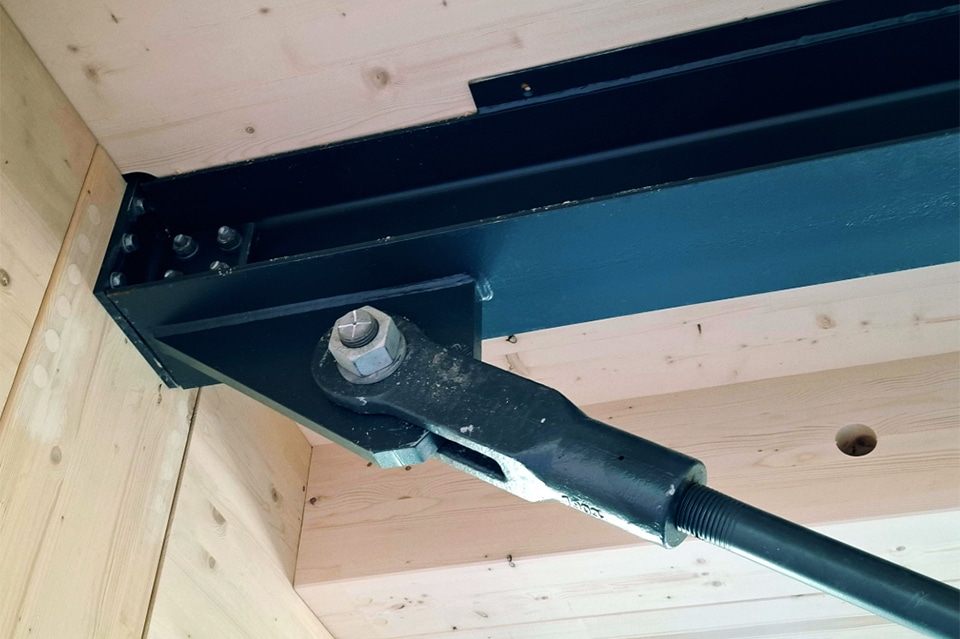
Due to the structural function, strict quality requirements applied to all components. “All materials were supplied with 3.1 material certificates and manufactured in accordance with the requirements of EN 1090 in execution class EXC2.”
According to Van der Wielen, the project’s strength lay primarily in the collaboration. “We have close communication with our client, Staalbouw Bakhuizen, which allows us to respond quickly. Especially with these large diameters, we had to constantly work together to determine what was technically feasible and how quickly we could deliver.” He is particularly proud of the end result and the precision of the entire process. “We received the dimensions based on drawings, and in the end, everything fit almost perfectly. That’s something we’re truly proud of as a team.” According to him, the project also clearly demonstrates what Willems Anker stands for. “This project brings all our disciplines together: applications of our anchors in steel, concrete, and wood. That, too, makes it a special showcase project for us.”