Platform on concrete and steel in construction
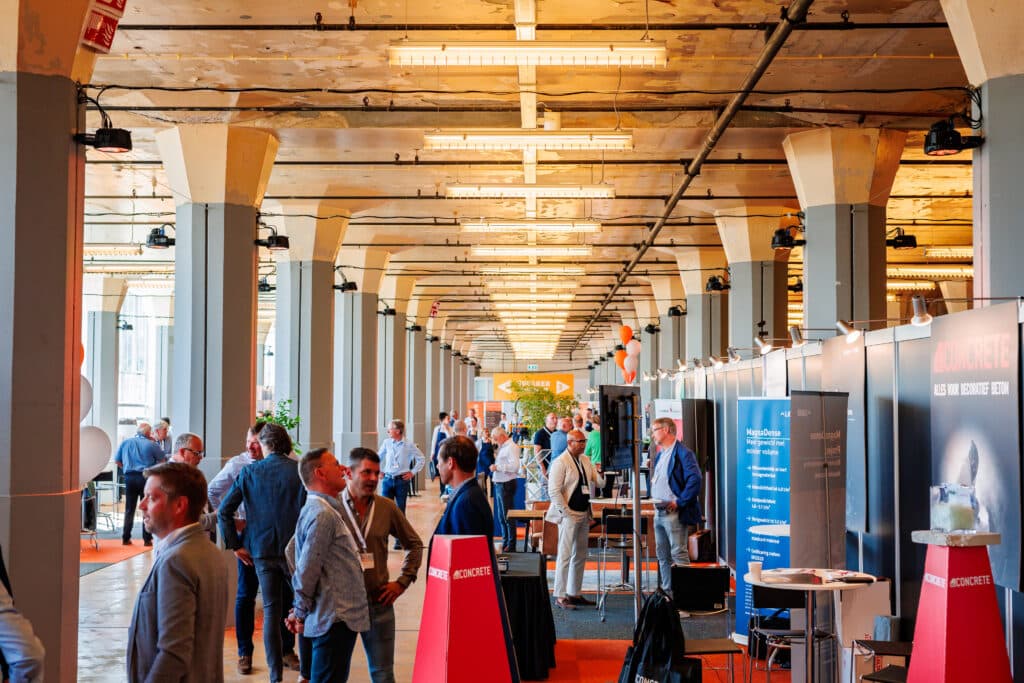
Sustainability isn’t something you achieve alone. This realization is deeply ingrained among the five main sponsors of the Beton Event 2026: GROENR-Beton, Ecocem, Heidelberg Materials, Renewi, and Cugla. The Beton Event’s new multi-year theme, “Sustainability Through Collaboration,” captures exactly what they experience in practice every day: real progress only happens when parties in the supply chain connect with one another early on.
For BAM's GROENR-Beton, becoming the main sponsor feels like a logical step.
‘As a buyer of concrete products, we see collaboration as essential,’ says Erik Mangert, head of the materials technology department at BAM Infraconsult and program manager for Sustainable Concrete. ‘You can certainly point out what needs to be improved, but ultimately, you only make progress when you sit down together and develop solutions collaboratively.’
This collaboration takes place not only at the executive level, but also—and just as importantly—on a substantive level between technologists and product specialists. ‘We first engage with each other on a technical level: Is there something interesting here? Can we reinforce each other’s innovations? The rest follows from there.’
This leads to concrete partnerships. For example, GROENR-Beton collaborates with concrete suppliers, precast companies, and admixture suppliers, among others. Concrete ties have also already been established with other main sponsors.
‘With Cugla, we’ve developed an admixture that works well with GROENR-Beton. And with Ecocem, we’re exploring how their ACT technology can be combined with our applications.’
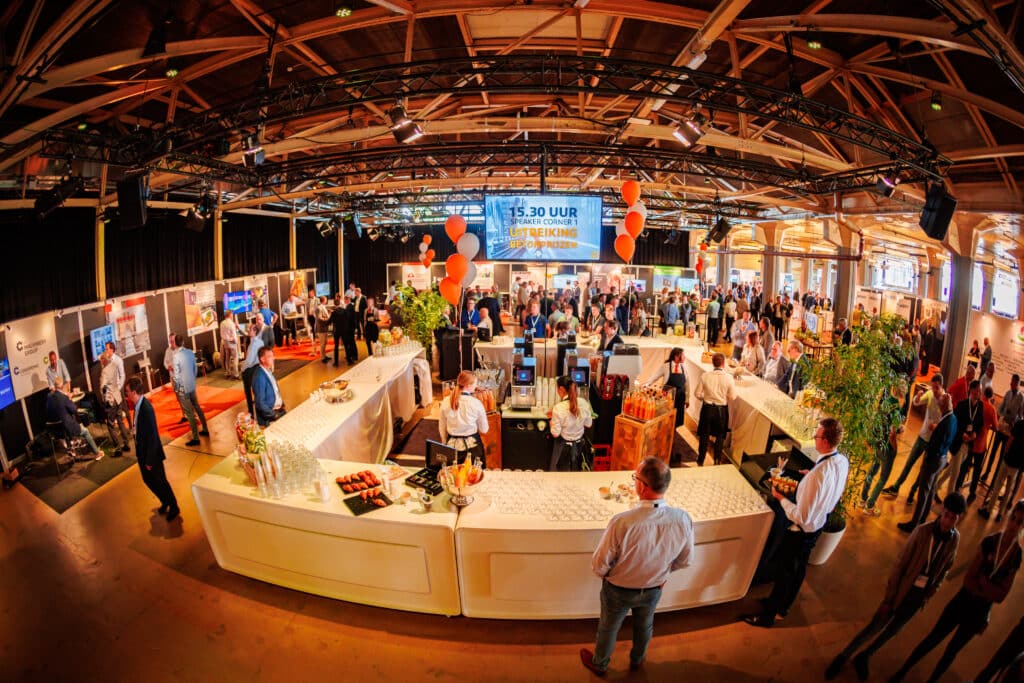
For Ecocem, too, the new theme aligns seamlessly with its mission. The company develops technologies that enable cement mixtures to emit less CO2.
‘Sustainability is in our DNA, and we’ve actually been collaborating since day one,’ says Commercial Director Jeroen Langenberg. ‘Just as our products serve as sustainable binders, we also play a unifying role in the market. Our solutions are part of the puzzle we’re putting together with our customers.’
According to Langenberg, over the past 25 years, Ecocem has learned how important it is to get stakeholders moving within a traditionally minded market.
‘When we started out, we were seen as pioneers. Seeing is believing. Now we’re proving that you don’t have to wait for futuristic solutions. With practical steps, you can already make things much more sustainable today.’
That does take some courage. ‘I see companies that are very actively working toward sustainability, while other companies aren’t quite sure yet what’s possible. For some, it still feels like a big step. Our message is: it’s already possible—let’s do it together.’
Heidelberg Materials is sending a similar message. Managing Director Bas Pije sees on a daily basis how many opportunities are lost because suppliers are not involved until late in the construction process.
‘The sooner you collaborate as a supply chain, the greater the sustainability gains you can achieve,’ he says. ‘Currently, decisions are often made early in the process that make sustainable alternatives impossible later on.’
According to Pije, the challenge lies not only in technology, but above all in methodology and timing. ‘We’ve been building the same way for thousands of years. If you want to change processes, it requires everyone in the chain to step outside their comfort zone.’
Heidelberg Materials is therefore collaborating with Rijkswaterstaat, contractors, recyclers, and other partners on pilot projects involving circular materials, new types of cement, and recycled raw materials.
‘In projects around the Afsluitdijk and the A9, we’re testing new applications of recycled aggregates and cements with a lower carbon footprint. These aren’t just theoretical ideas anymore—they’re already happening.’
According to Pije, the next step is for these pilot projects to become standard practice. ‘That means you’ll also have to change the way you design, plan, and issue requests for proposals. That’s still a major challenge.’
Renewi also views collaboration as the key to true circularity. The company supplies circular construction materials derived from, among other things, construction and demolition waste, tar-containing asphalt granulate, and soil.
‘You can’t successfully use circular raw materials without supply chain collaboration,’ says Piter Brandenburg, commercial director of ATM and CFS—part of Renewi. ‘Everyone needs to be on board: producers, clients, certifying bodies, and regulators.’
According to him, current practices often still clash with existing standards and customs. ‘The certification world has historically been based on primary raw materials. As soon as you want to work with recycled materials, the entire supply chain has to reevaluate this.’
That is why Renewi believes it is important, especially now, to maintain a visible presence as the main sponsor of the Beton Event. ‘We are demonstrating that circular construction materials have already proven their value in practice and that we are no longer in an experimental phase. We now have excellent examples of this—solutions that are both reliable and sustainable.’
Cugla also works daily with concrete producers, suppliers, and research institutions to develop more sustainable concrete mixes.
‘The parties want to become more sustainable, but performance and safety must remain intact,’ says Managing Director Arnold van Wetten. ‘In that case, admixtures can actually serve as a bridge between using less cement and maintaining the same performance.’
According to Arnold, this requires not only collaboration among companies, but also regulatory flexibility. ‘We still often focus on regulations, when we should actually be focusing much more on performance. If a more sustainable solution delivers the same performance, there should definitely be room for it.’
Cugla actively seeks out such partnerships. For example, the company collaborates with suppliers and various other parties to develop additives for more sustainable concrete mixes and is exploring applications for secondary raw materials.
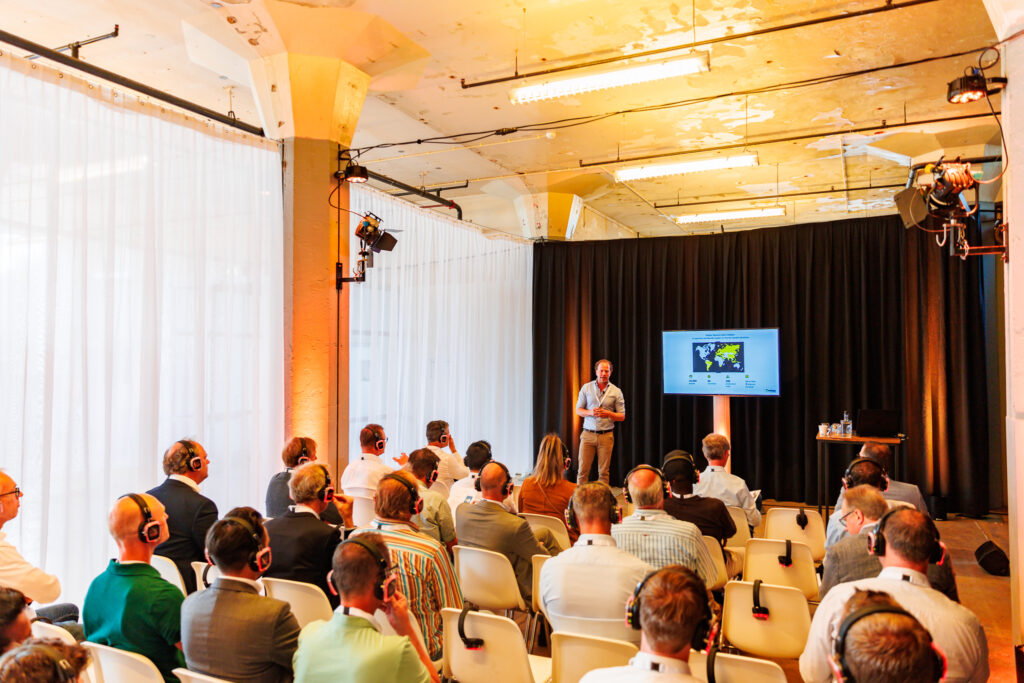
Ultimately, the main sponsors share the same conviction: sustainability can only be achieved if the parties involved reach out to one another more often and sooner.
Not only within their own supply chain, but especially between companies that used to view each other primarily as suppliers, clients, or competitors.
This also involves engaging new generations. Cugla sees the results of this every year at the Experience Plaza at the Beton Event, where young professionals are introduced to research and innovation in concrete.
‘We have several colleagues here who first came into contact with us through the Beton Event,’ says Arnold van Wetten. ‘One of them even works in our Research & Innovation department now, where she’s conducting research—together with organizations like Renewi—on the use of secondary raw materials in concrete.’
‘The fact that we’re now engaging with each other on a substantive level as title sponsors really says it all,’ concludes Erik Mangert. ‘It’s by building connections and sharing knowledge that real progress is made.’
Want to learn more about the Concrete Event? Click here
Neem dan rechtstreeks contact op met Concrete Association.
 Contact opnemen
The Concrete Association, founded jointly by government and industry in 1927, is the platform for individuals and organizations, who wish to share knowledge about the material concrete. It forms, through the composition of its members, a knowledge infrastructure for the acquisition of knowledge, the joint recognition of knowledge questions and the promotion of the development of new [...].
Bekijk Bedrijfsprofiel