Platform on concrete and steel in construction
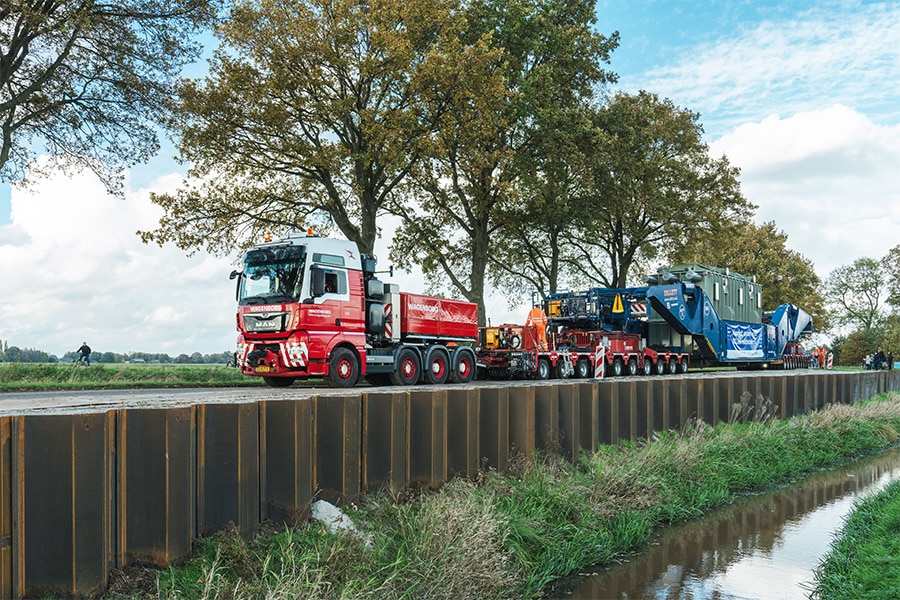
There was no shortage of public interest, a very special transport in Groningen proved recently. Between Oct. 12 and Nov. 16, Sundays were used to move six enormous transformers from Veendam to the new high-voltage substation in Ter Apelkanaal. A road trip of almost 35 kilometers that led via Onstwedde and Mussel, through traffic circles and sharp curves and even under a viaduct. No problem for Wagenborg Nedlift, although temporary adjustments to the route were needed.
Grid operators are investing billions of dollars in new electrical infrastructure. High-voltage substations are an essential part of this and cannot do without transformers. So the new high-voltage substation in Ter Apelkanaal also had to have six new transformers, each weighing no less than 312.7 tons. That's a Boeing 747, but in container size. “We've done this kind of transport for grid operators before, but every route has its own bottlenecks,” said Rob Reefman, project engineer for Wagenborg Nedlift. “And everything starts with good preparation.”
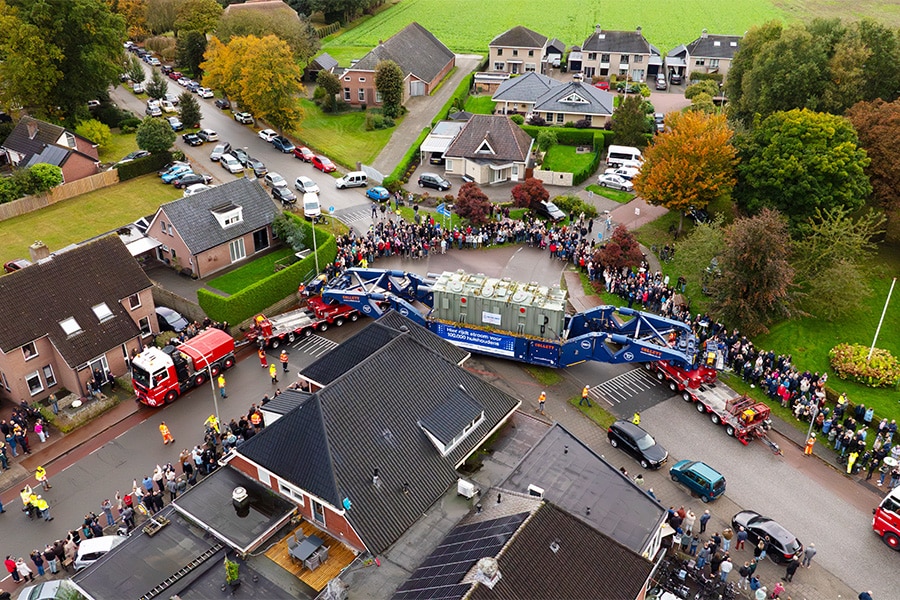
Two axle lines with ten axles each were used for the six-axle transport, driven on both sides by a truck. Reefman: “The pulling and rolling equipment is ours, the boiler bridge in which the transformer with consoles hangs was rented from the British company Collett. We often use this modular tank bridge because it can be assembled in height and length and fits onto our equipment relatively easily via a swivel joint. Moreover, the front and rear sections can be disconnected and transported separately. In total, this 67-meter-long combination with transformer weighs 505 tons.”
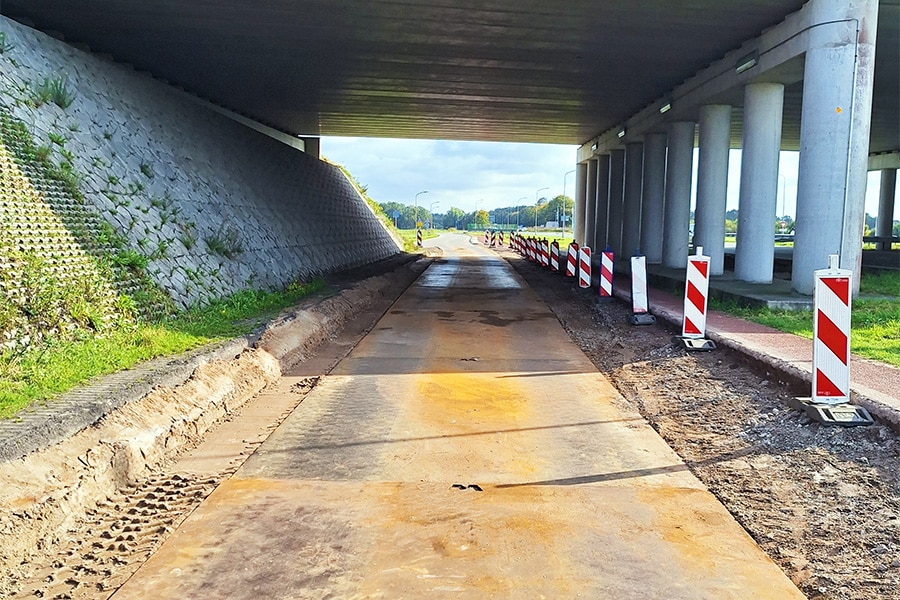
To move that safely from the ‘port’ in Veendam to Ter Apelkanaal, the necessary calculations, measurements and soil investigations were first carried out: Wiertsema and Partners made the bearing capacity calculations for the unloading quay, roads and sand packs, Nepocon those for the bridges and culverts. At Nieuwe Pekela and Onstwedde, the bridges turned out to be possibly not strong enough for the enormous axle loads. “For that, a steel overpass was deployed from foundation to foundation,” Reefman explains. “A bigger challenge was the viaduct over the N33, which we inevitably had to pass under. However, the transport was almost half a meter too high. In consultation with the authorities, we decided to mill away the road surface and excavate 40 cm of sand under the viaduct and twenty meters in front of it and behind it. To ensure the stability of the viaduct, a strip of asphalt had to remain along the embankment. With this modification, transport could pass under the viaduct over driving plates.”
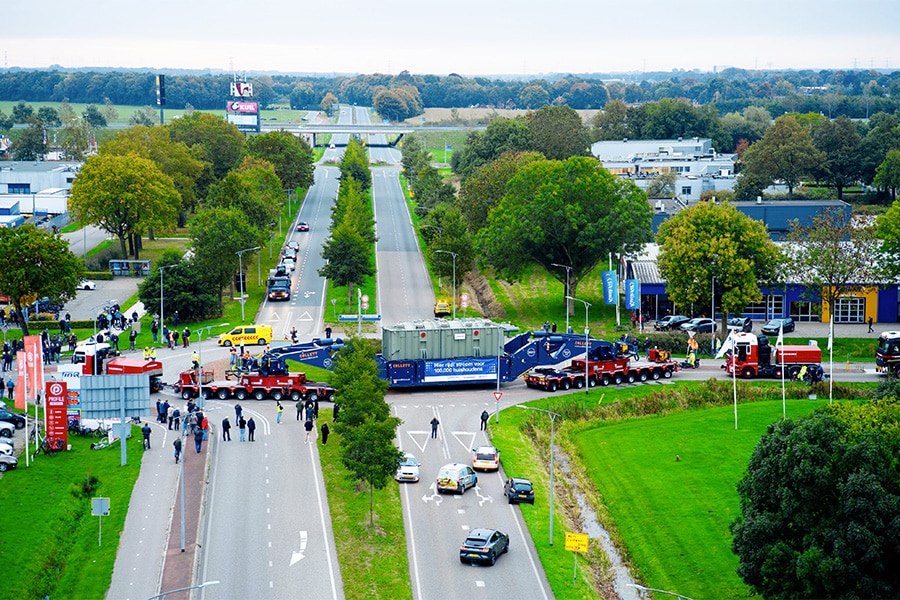
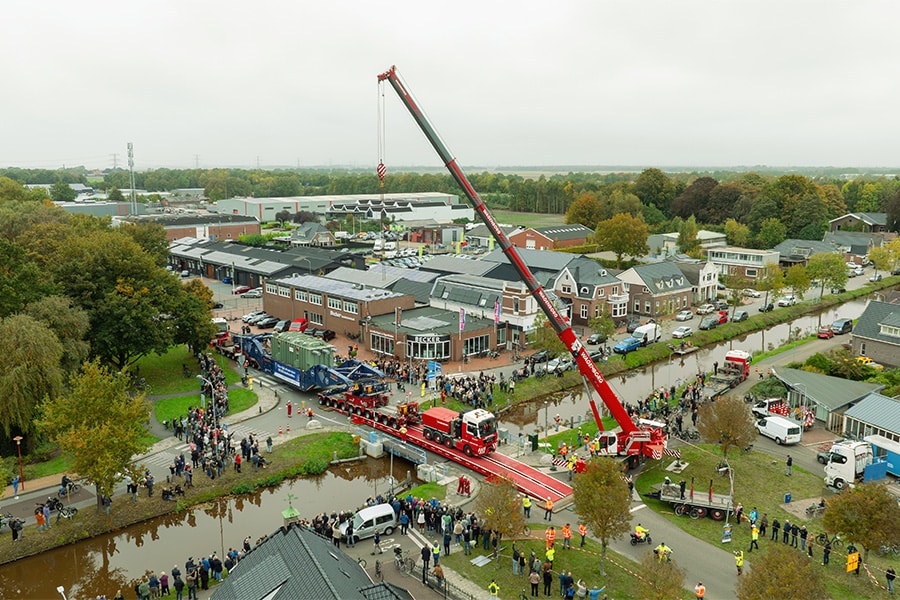
There were more hurdles to overcome in the route, although the traffic circles were quite manageable with the flexible transport combination. For example, the curves along the Mussel-A-Canal, with a deep ditch running alongside, were reason to install a sheet pile wall over two hundred meters, in order to take the curves safely. “But I think most of the crowd stood at a sharp bend in Mussel,” Reefman concludes. “Before that, the terrace of the café on the inside bend had to be cleared because we went completely over the terrace with the transformer. The first time it went very slowly, with the next transformer it went a lot smoother. If you align and coordinate everything well with the municipalities and, in this case, the café owner, you can overcome any obstacle.”