Platform on concrete and steel in construction
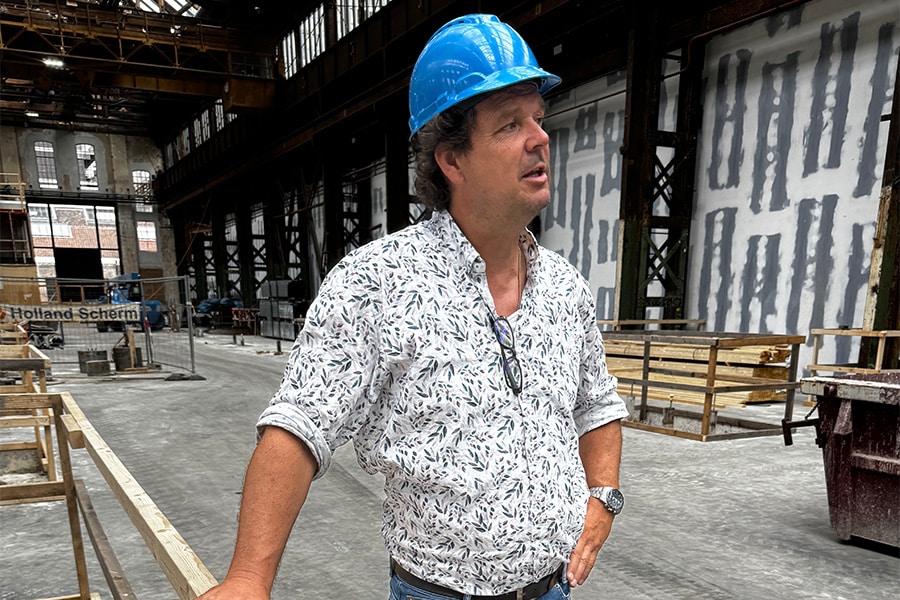
“This will not only be the jewel of Oostenburg, but also of Amsterdam and far beyond,” says a visibly passionate Robbert de Jong, head of construction at Van Gendt Hallen. He is more than just enthusiastic about the construction challenge that came his way a few years ago. He works on it day and night. “When I first stepped inside, my jaw dropped. Not only because of the history, but mainly because of the potential.”
De Jong, who trained as a civil engineer in Alkmaar and was co-owner of a concrete construction company for many years, is no stranger to complex structures. “But this project demands everything,” he says. “As a builder, you are challenged to the maximum here. This is not a standard job. Everything is unique. Every truss, every connection...”
The building will soon house nineteen museum rooms for the Drift Museum (8,000 m²), offices for sustainable start-ups (9,000 m²), catering facilities (1,000 m²), retail space (700 m²), six residences—four of which will be in the mid-rental segment—and an underground bicycle parking facility for 648 bicycles. The goal is to create a dynamic ecosystem where innovation, entrepreneurship, and community life come together. “As far as I'm concerned, this will be an unprecedented breeding ground for multiple cross-pollination.”
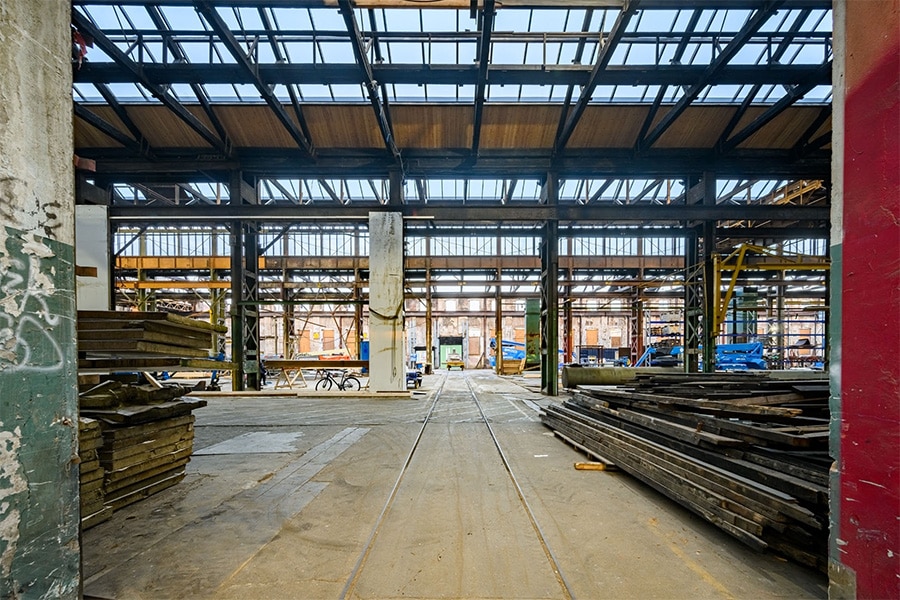
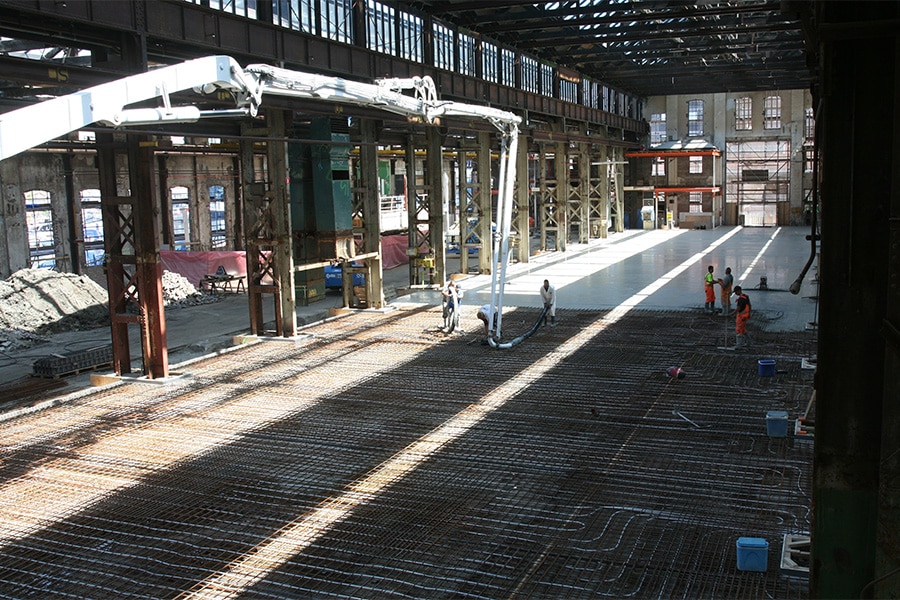
The bar is set high. Eduard Zanen, the ambitious and sometimes even visionary owner, wants to turn the Van Gendt Hallen into an energy-plus building that generates more than it consumes. That requires far-reaching choices. “We are using double glazing on the roof, vacuum glass in the facades, and solar panels on the steam hoods,” explains De Jong. “We are looking at the entire 100-year lifecycle. So not just the one-off impact of the materials we use, but also the long-term energy consumption. The bottom line is that we want to achieve a big plus.” That also means unexpected obstacles. “I have to admit that I underestimated how much deviation there was in the dimensions. You think: rhythmically built, everything with a six-meter span, but suddenly there's a seven-meter span in between. Then you have to switch gears. Yes, indeed: you don't see that immediately with the naked eye. And of course, you want to distribute the forces from the roof to the support points optimally and ensure that the roof remains stable.”
Yet what comes across most is admiration. “This building has enchanted me,” says De Jong. “You can feel the history in every corner. And as a civil engineer, you understand the value of those old structures. Concrete and steel dominate here.
It contains a lot of concrete, which is essential for stability and durability. Steel is also used extensively. Take the footbridge, for example, with a clear span of 32 meters at a height of 15 meters. It really has to be just right. That's architecture. This span will be located in the Drift Museum, which will be housed in the halls.”
The exact opening date is not yet known. The complex will be partially open to the public, with functions for both the neighborhood and the city. The halls have been placed under the management of a foundation to keep them permanently available for social functions. This makes the project more than just a real estate development: it is a cultural and technical heritage project with impact. According to De Jong, the Van Gendt Halls are a textbook example of how concrete and steel demonstrate their strength not only in terms of load-bearing capacity, but also in terms of transformation. “There is, of course, a great deal of nostalgia here, but above all, there is the future. There is no compromise here, only precision. This is not a construction kit, but architecture. It is an unprecedented asset for Oostenburg, Amsterdam, and... far beyond.”
Van Gendt Hallen: steel, concrete, and vision in a national monument
The revival of an industrial icon
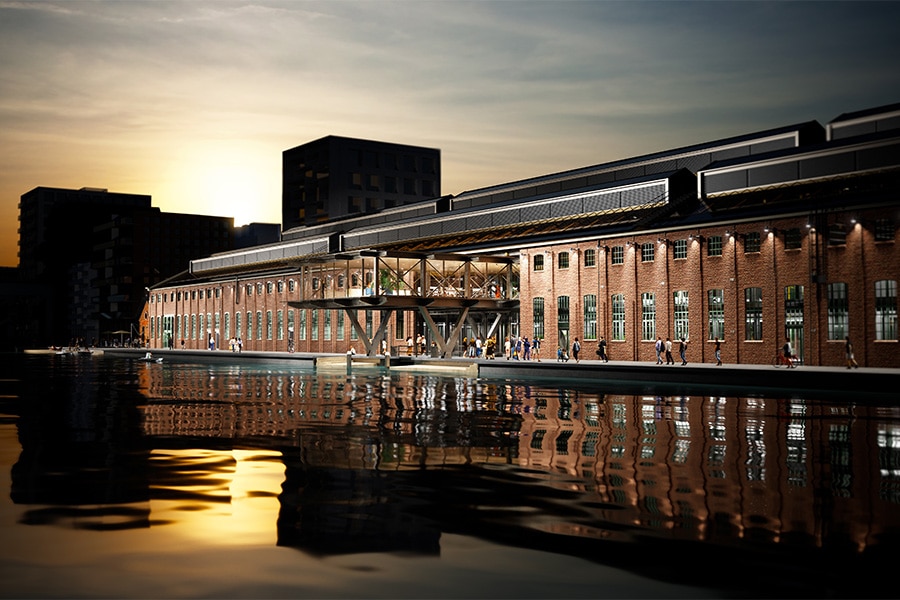
A monumental building block with a story is being rebuilt on the VOC quay in Amsterdam Center-East. The Van Gendt Hallen—five interconnected industrial halls dating from 1897—stood empty for years and were threatened with demolition, but are now the scene of an unprecedented restoration. Not only in terms of scale and ambition, but above all in the way concrete, steel, and sustainability come together in a national monument context.
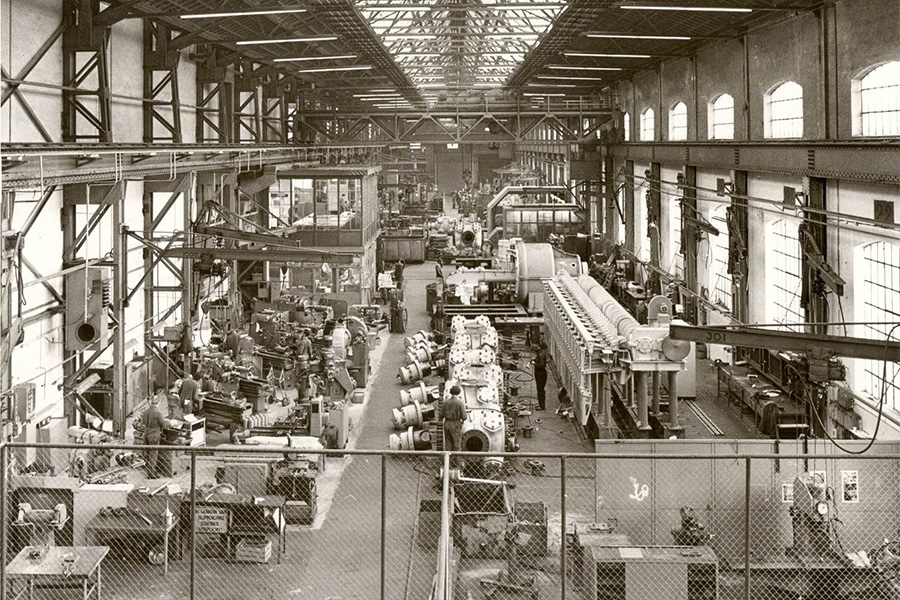
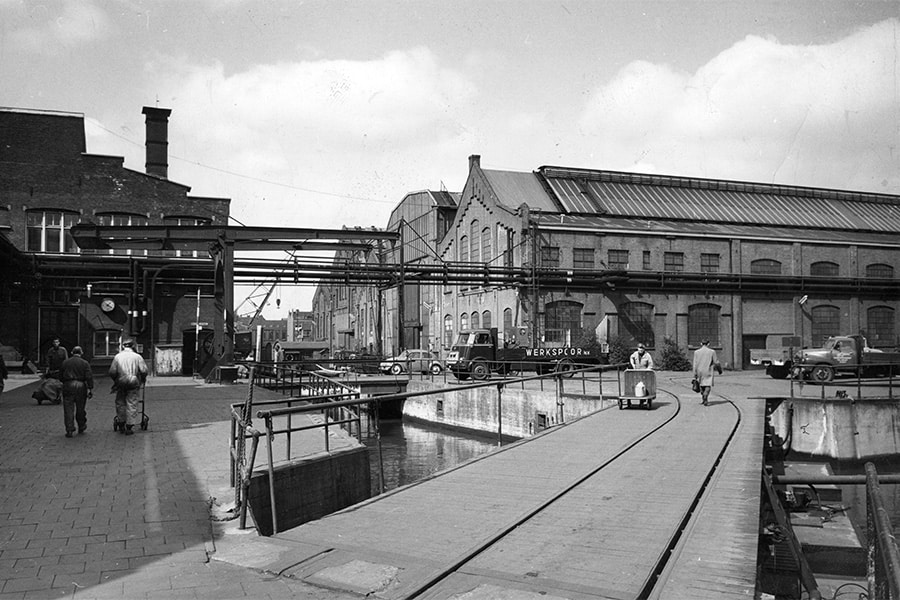
These halls were once the beating heart of Amsterdam's machine industry. The first steam trains and diesel engines in the Netherlands were built here, commissioned by the Royal Dutch Factory of Tools and Railway Equipment. The design was by none other than Dolf van Gendt, known for the Concertgebouw. The glass roofs and cast-iron trusses give the complex a robust elegance that does not deny its origins.
Thanks to local resident Titus Dekker, who fought against demolition for years, the halls were eventually designated a national monument. This marked the beginning of a second life. Entrepreneur Eduard Zanen—co-founder of Bugaboo and now active in sustainable start-ups such as What the Future and Ubed—took the initiative to redevelop the complex. His goal: not just preservation, but a future-proof transformation.
The renovation is radically sustainable. All 4,600 panes are being replaced with high-quality vacuum glass that is only 7 mm thick, in the original cast iron frames. This provides top-quality insulation without visually detracting from the monument. The iconic steam hoods have been rebuilt using Duplicor—a lightweight, fire-resistant biocomposite made from recycled PET bottles and bio-resin—and now feature solar panels. A total of 8,000 m² of solar panels will be installed on the roof. Smart ground storage provides heat and cold storage under the building.
The VOC quay will remain open to the public. Where the old railway line ran through the halls, there will be a central axis—a kind of indoor street where restaurants, shops, and culture come together. The long-awaited inlet harbor will enable electric transport by water. Visitors will soon be able to moor their boats at the quay from the city center. Less traffic, fewer emissions, more experience.
Architectural firm Braaksma & Roos, which specializes in repurposing industrial heritage sites, is responsible for the design. Everything revolves around preservation and reuse. Old pipes, hoisting structures, and machines are carefully cleaned and reinstalled. This ensures that the story of the place remains visible and tangible. Studio Zu, with architect Javier Zubiria, has taken responsibility for the entire look and feel of the interior transformation.