Platform on concrete and steel in construction
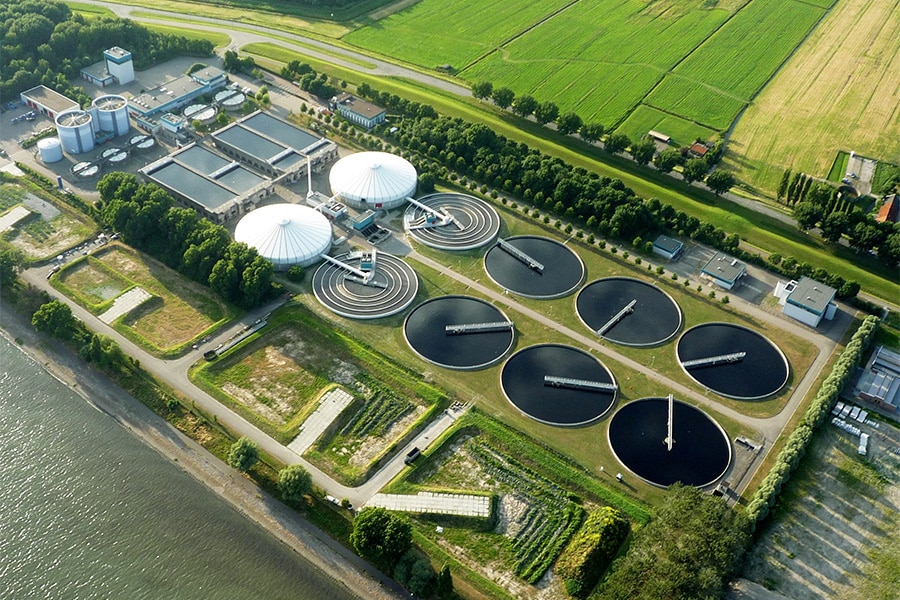
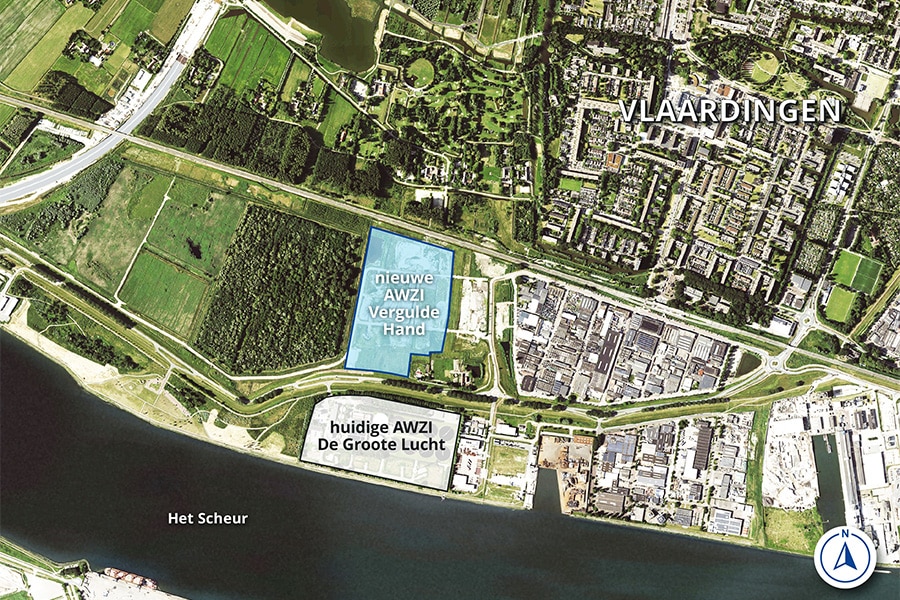
The Delfland Water Authority is involved in a range of activities, including wastewater treatment. To prepare for the future, the water authority is planning to build a new water treatment plant in Vlaardingen. The number of residents and businesses in the Vlaardingen, Schiedam, Maassluis, Midden-Delfland, and De Lier region continues to grow. Wastewater from this region is currently treated at the ‘De Groote Lucht’ plant in Vlaardingen. This treatment plant is outdated and not ready for the future. After extensive research, the decision was made to build a new plant instead of renovating the old one and to use a purification technique that is unusual by Dutch standards. Remco Verschoor, project director of the new Vergulde Hand water treatment plant, talks about the importance of this new plant and the unique technique that has been chosen for it.
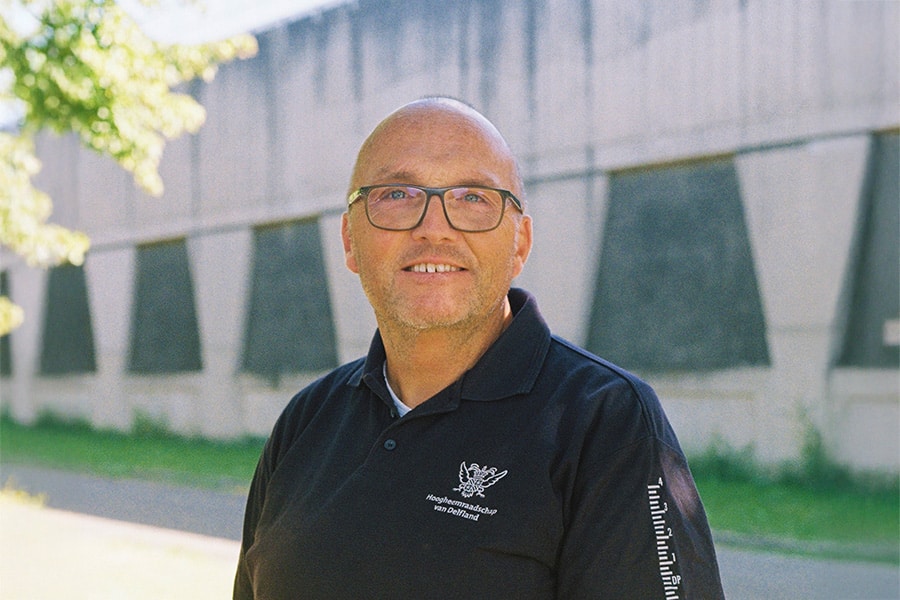
Like many other water boards, the Delfland Water Authority faces a number of challenges in the coming years. “For example, the European directive on urban waste water is set to change, and the European Water Framework Directive imposes requirements on the quality of the surface water into which Delfland discharges,” says Verschoor. “The population in the region is also growing rapidly, which means that the capacity of the current water treatment plant is no longer sufficient. All in all, it is a complex puzzle to find the right way to meet these future challenges, especially when you consider that we also live in a fairly densely populated area and have to make choices about the limited space available.”
The De Groote Lucht water treatment plant will reach the end of its technical lifespan in 2030. “During the exploratory phase, we conducted extensive research into new construction or renovation, taking into account all the challenges mentioned,” explains Verschoor. “In Vlaardingen, we are fortunate that the old treatment plant is located opposite the Vergulde Hand West industrial estate, with space for the construction of a new treatment plant close to the existing pipeline system. After weighing up all the risks, advantages, and disadvantages, Delfland decided to go ahead with new construction. We have now purchased the 13-hectare site from the municipality of Vlaardingen. The agreement is that the site will be ready for construction at the beginning of 2027, so that we can start building.”
2027 may seem a long way off, but according to Verschoor, there is still a lot to be done before then. “We are going to build a treatment plant for 450,000 pollution units with a hydraulic capacity of 16,000 m3. During the planning phase, we worked closely with the engineering consortium Witteveen+Bos/Haskoning to investigate and assess four promising alternatives based on efficiency, sustainability, operational management, and the impact on the environment and surroundings. Ultimately, we opted for the Modified University of Cape Town (mUCT) technology with sludge separation using membranes. This technique uses a membrane instead of secondary settling tanks to separate the sludge from the purified water. It is a new concept in the water management world in the Netherlands, but it is based on proven technology. For example, it is used on a large scale in the drinking water sector and there are similar wastewater treatment plants in Stockholm and Versailles, among other places.”
The Delfland Water Authority's starting point is to use the new treatment plant to achieve a certain degree of flexibility for the future. Verschoor: “The mUCT technology delivers the cleanest water of the four alternatives. This technique requires the least amount of space, so that there will still be room for expansion or modifications in the future if regulations are further tightened. Furthermore, the technique scored best on life cycle costs and on the reuse of effluent. This is purified sewage water that is discharged from a wastewater treatment plant after treatment.”
Before construction begins, the Delfland Water Authority is actively seeking cooperation with the market. “Water authorities are facing an immense task. We cannot do this alone. This market is small, and a number of parties in the Netherlands have already left the market. This is due to the way in which water authorities tender and organize risk distribution. We are now going to do things differently. Among other things, by engaging in dialogue through effective market consultation. At InfraTech, the knowledge platform for the entire infrastructure sector, we have already actively tried to encourage all kinds of companies to re-enter the water board world. That is what we are focusing on. We are doing everything we can to arrive at a form of tendering that is attractive to as many parties as possible and that delivers what we need.”
An important aspect of Delfland's market approach is building knowledge and expertise. “This major project is providing Delfland with a wealth of knowledge and experience, which we actively share with other water authorities and the market. We also draw on the experiences of other water authorities. For example, we had the preferred alternatives challenged by process technologists from fellow water authorities, even from abroad. We aim to complete the new Vergulde Hand water treatment plant in 2030,” Verschoor concludes.