The element at the centre
Tekst Tjerk van DuinenBeeld BIM4Production®
Flow software for industrialised construction
The use of ERP software has evolved considerably over the past sixty years. In Maarten van der Boon’s view, it has now gone beyond its purpose for industrial precast manufacturers. Van der Boon is Marketing & Sales team leader at software developer BIM4Production®. “It has become a Christmas tree of features, which users often struggle to navigate. ‘Click-yourself-to-death systems’ is a tongue-in-cheek phrase we hear in the market. Element manufacturers in particular lose a lot of time planning production, gaining an overview of schedules, and monitoring and assuring quality when they do this through an ERP system. It is therefore time for a completely new perspective on precast production, one that puts the unique element to be produced at the centre.”
Modern precast element manufacturers primarily want to know what needs to be produced and delivered, when, and to what quality standard. They also want insight into the progress, or flow, of production. Van der Boon: “Production and logistics can be organised in ERP systems, but manufacturers have been telling us for a long time that it is very complicated. For example, production schedules are ‘encoded’ in orders, meaning that the ordering process and the items ordered are made to represent a kind of schedule.”
Excel as a planning tool
“That is why many precast manufacturers use a complex Excel file, or often several, alongside their ERP system to keep track of production and logistics planning, with all the inconvenience that brings,” says Van der Boon. “Quality is often monitored on a sampling basis using a separate app, or even a combination of solutions, such as paper-based quality checks and individual photos on a mobile phone, brought together in a dossier in the cloud. In short, multiple systems are used, with just as many, if not more, manual processes and disconnected information. Does that mean you have planning and quality under control? Probably, but I am not exaggerating when I say that keeping track of it all takes a great deal of time, money and manpower.”
Engineering to order
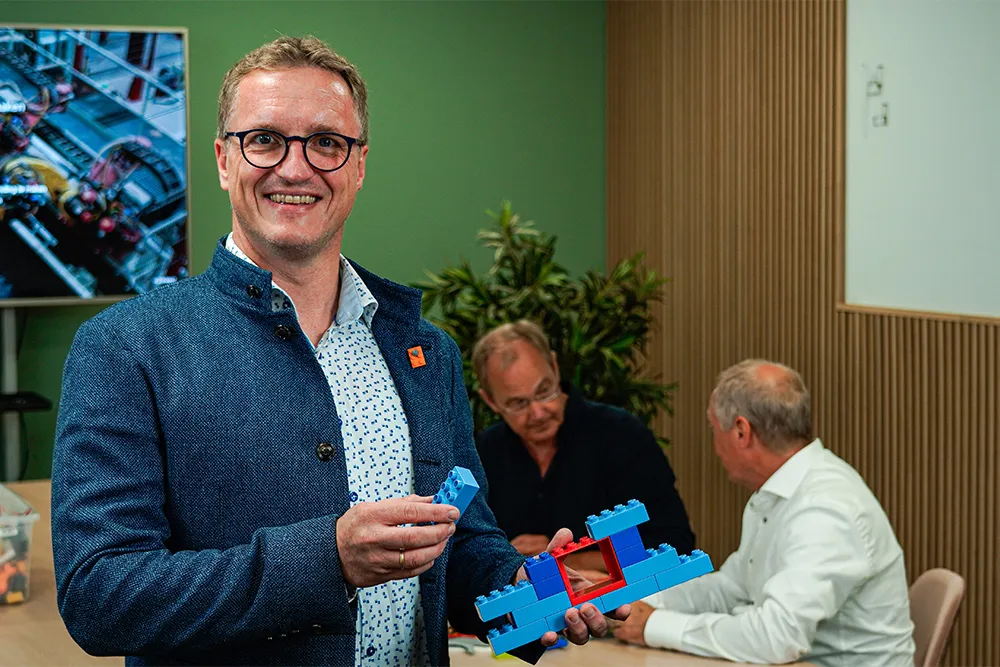
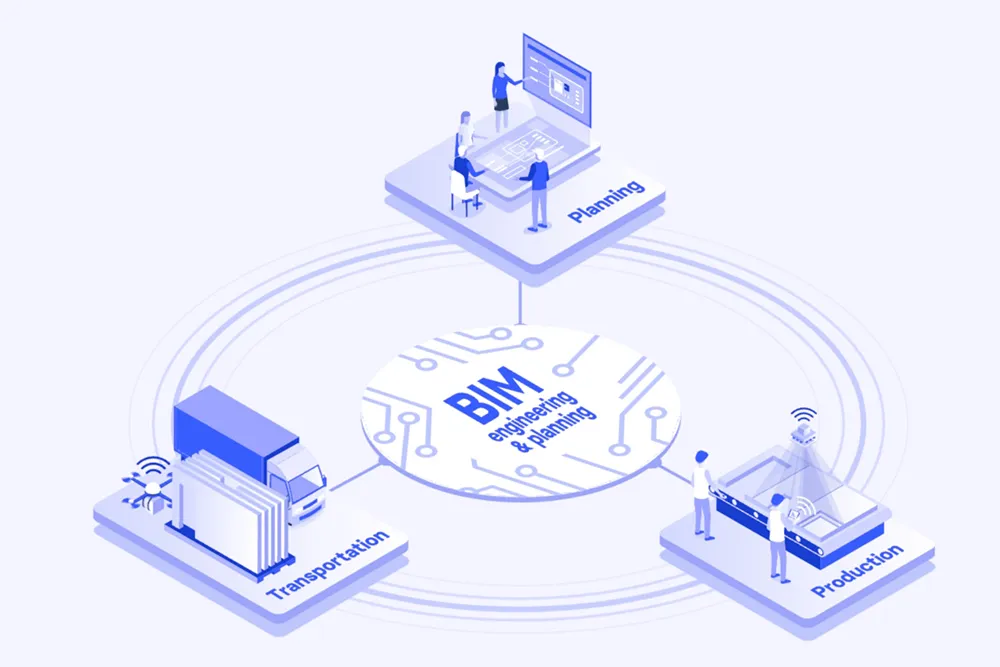
As discussions progressed, it became increasingly clear that something else was needed. “We discovered that the ‘transaction-oriented’ data models used by ERP systems are one of the, if not the, main obstacles to precast production. We saw that, with the ‘Engineering to Order (EtO)’ production approach commonly used by element manufacturers, it should not be the transaction but the production flow of each individual element that drives the process. When production flow is optimised, valuable transaction data can be generated for ERP software, for example. In a strategy session using the LEGO® SERIOUS PLAY® method, we went back to the basics: what does an element manufacturer actually do? What does it need? What adds value to the production process? This gave us a different perspective on the planning and production of precast elements. An element manufacturer makes an element that is incorporated into another factory, where complete homes are assembled, or it is numbered and packed logically for delivery to a construction site. In both cases, it is like a LEGO brick that combines with other LEGO bricks, or elements, to form a building.”
An upside-down Christmas tree
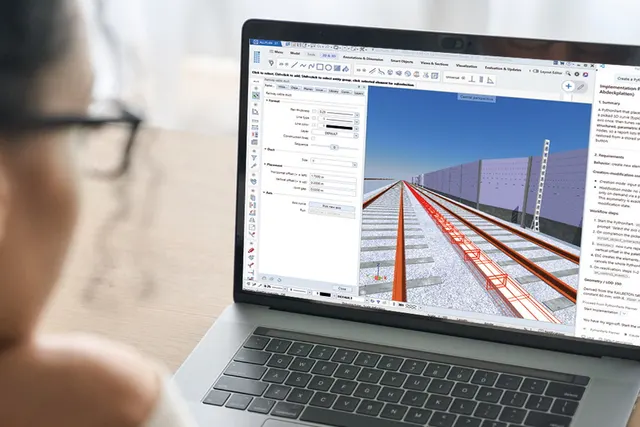
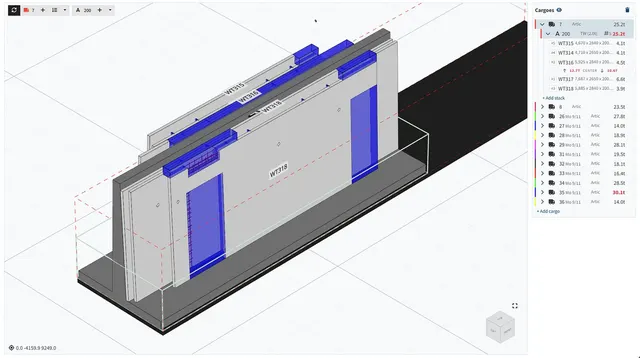
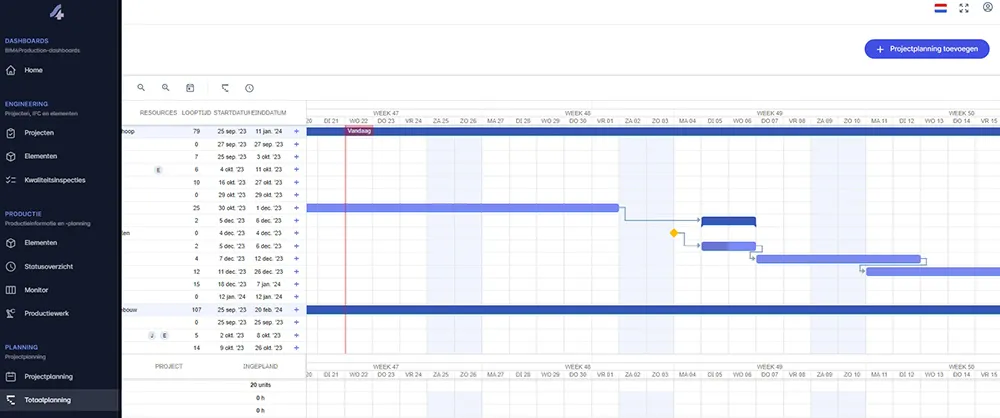
An element must be delivered on time and to the right quality standard. Optimal production flow leads to speed, delivery reliability and quality control for the assembler. Production must therefore be based on a single source of truth for planning and production. To help element manufacturers gain control of their production, BIM4Production® went back to the drawing board more than three years ago to redefine production planning, logistics and quality. Van der Boon: “Not on a transactional basis, covering projects, orders, deliveries, stock levels and so on, but around the element itself. This led to the creation of BIM4Production® in mid-2022. It is platform software that turns the ERP Christmas tree upside down, so to speak. BIM4Production® is a production platform that brings the entire process into flow, from BIM engineering through to delivery and handover, including quality control and assurance. The starting point is the element to be produced, which you can ‘pick up’ digitally and then view all its information: quantities, material compositions, production schedule or status, and quality.”
BIM4Production is a platform for managing the production of each unique element, bringing it into flow, and managing the quality assurance process. “The various outputs from BIM4Production provide input to an ERP system for transactional, usually financial, entries. The platform is therefore ERP-independent and works with a range of ERP solutions, including, of course, our own ERP.”
ASML
Once flow has been established in an element factory, the next step is integration across the production chain. “ASML became a major player, among other things, by ingeniously driving innovation throughout its supply chain,” says Van der Boon. “That enabled it to make bigger strides in innovation and become a global player. I do not want to sound overambitious, but we believe something similar is possible in industrialised construction. The data models underpinning our platform software have been developed with this in mind. Technically, I do not see any insurmountable problems. In my view, the cultural shift is more challenging, because companies have to let go of the idea that they are in control. Producers need to see themselves as part of a concept, a chain, and ensure production, product quality and delivery reliability within that concept, as ASML has done. That can create flow throughout the chain and take industrialised construction to a much higher level.”
It is like the automotive industry: a clearly defined end product, with established partners and long-term agreements, Van der Boon emphasises. “You are no longer supplying a hollow-core slab, but making a quality contribution to a housing provider’s residential concept, or even to the end user’s enjoyment of their home. We call flow at this level of the chain Business Integration Management. It is the ambition we are pursuing with our BIM4Production® platform: software that connects the different production stages in an element factory, or across the chain from the element factories, to deliver an end product with quality assured under the Wkb. We want to develop future-focused software that makes a difference both for individual precast factories and across the entire chain. Because the future belongs to industrialised construction.”
Een zakelijke vraag aan BIM4Production®? Neem contact op
Bedrijven in dit verhaal
Blijf dit volgen
Bij een nieuw verhaal krijg je een e-mail. Geen account nodig.
- OnderwerpSoftware & automation
- BedrijfBIM4Production®