Platform on concrete and steel in construction
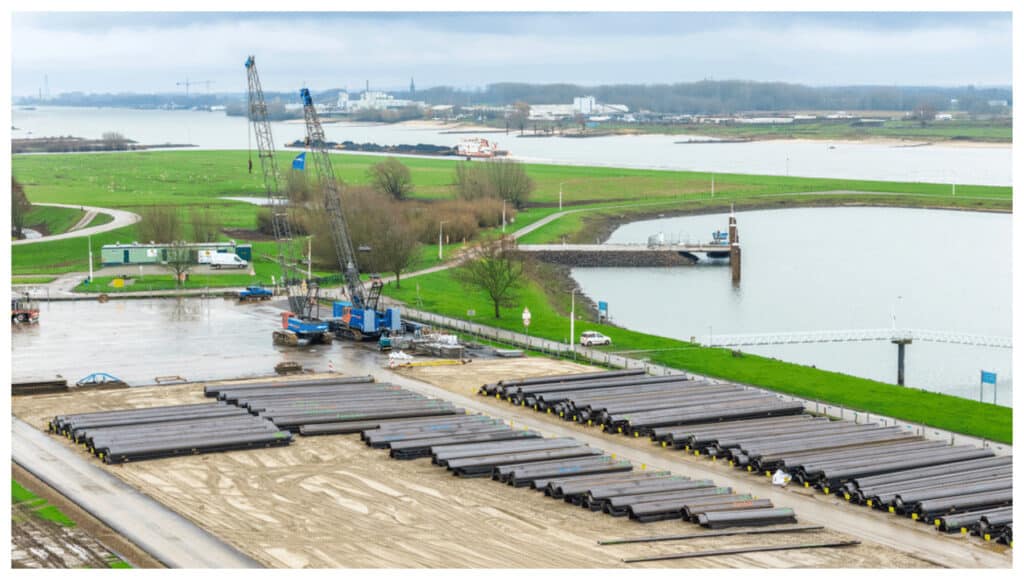
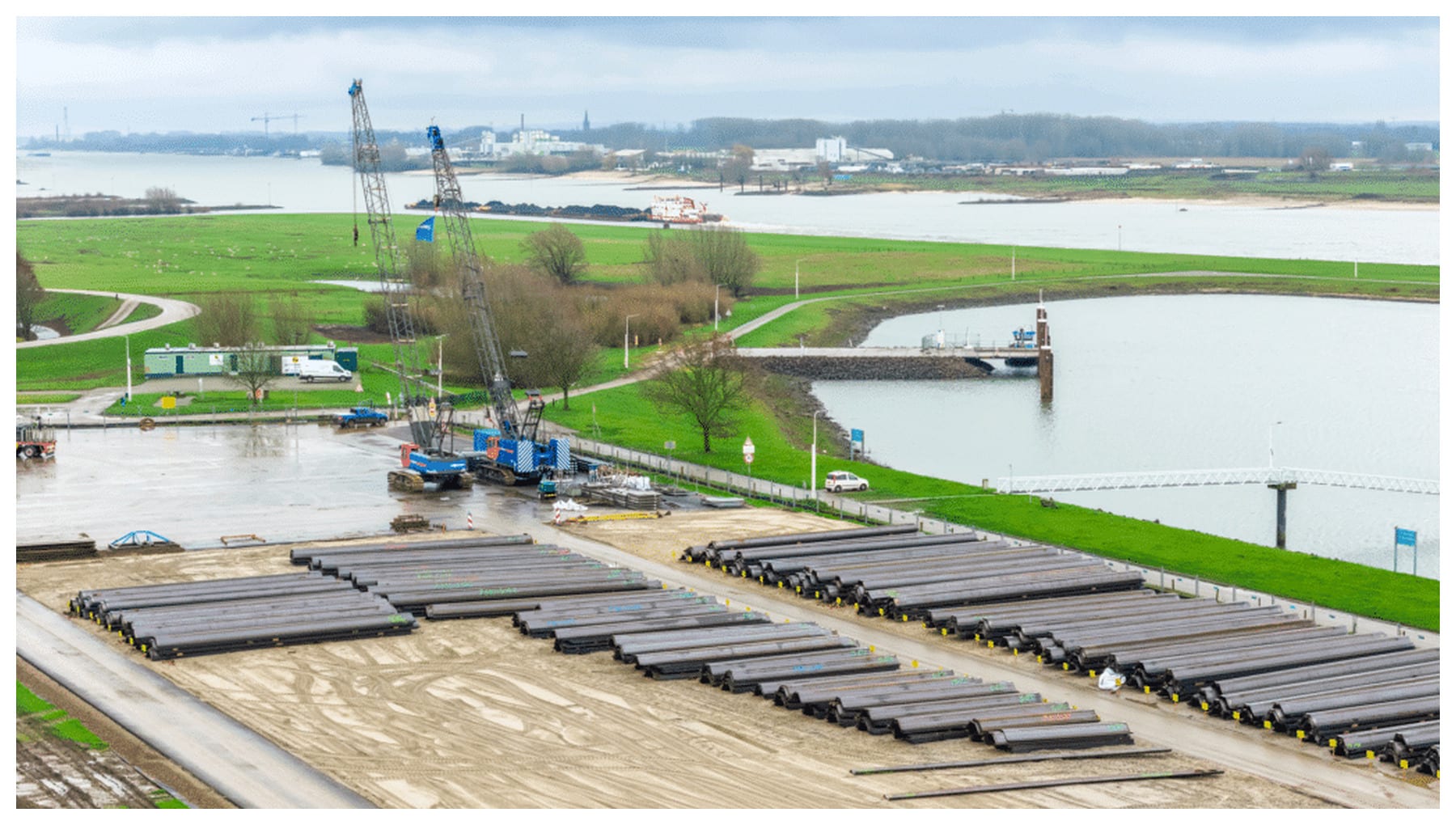
The Neder-Betuwe dike reinforcement project is a large-scale flood protection initiative along the northern bank of the Waal River, from Tiel to Wely. This 20.2-kilometer stretch is sandwiched between previous dike reinforcement projects—such as Tiel-Waardenburg, Stad Tiel, and Wolferen-Sprok—which have already been successfully reinforced with steel sheet piles in recent years. Steel once again plays a key role in the current project: nearly 11 kilometers of the dike will be reinforced with sheet piles, spread across multiple dike sections and carried out in three phases over a period of five years.
The project is being carried out by Dijkalliantie Neder-Betuwe, a joint venture between GMB, Ploegam, and Dura Vermeer. The project is characterized by a strong focus on custom solutions, as traditional approaches—such as large-scale dike reinforcement using soil—are often not feasible. Steel sheet piles offer an efficient and space-saving solution in these cases.
In dike reinforcement, sheet piles serve a dual purpose. They protect the dike against two critical failure mechanisms: piping and macro-stability. In piping, water flows under the dike and carries away sand, which can weaken the flood defense. The sheet pile wall extends or interrupts the flow path, preventing the formation of sand-carrying wells. At the same time, the sheet pile wall contributes to stability by acting as a robust structure that absorbs forces within the dike body. In addition, at some locations, the sheet pile wall also serves directly as an anti-digging measure against beaver damage. This allows the entire reinforcement project to be addressed with a single measure, within the existing dike profile and without significant impact on homes, infrastructure, and the surrounding area.
The project requires a significant amount of steel (more than 30,000 metric tons), consisting of various steel sheet pile profiles. This includes a mix of AZ18-700, AZ24-700, and AZ26-700 profiles, with lengths ranging from 8 to 16 meters. Depending on the location, the sheet piles are installed using either vibratory or thrust methods. Approximately 50% will be installed with minimal vibration using a silent piler or broker-guided driving technique. This is important in the vicinity of buildings, where minimizing vibrations is essential, but also more broadly from an ecological perspective for the surrounding area.
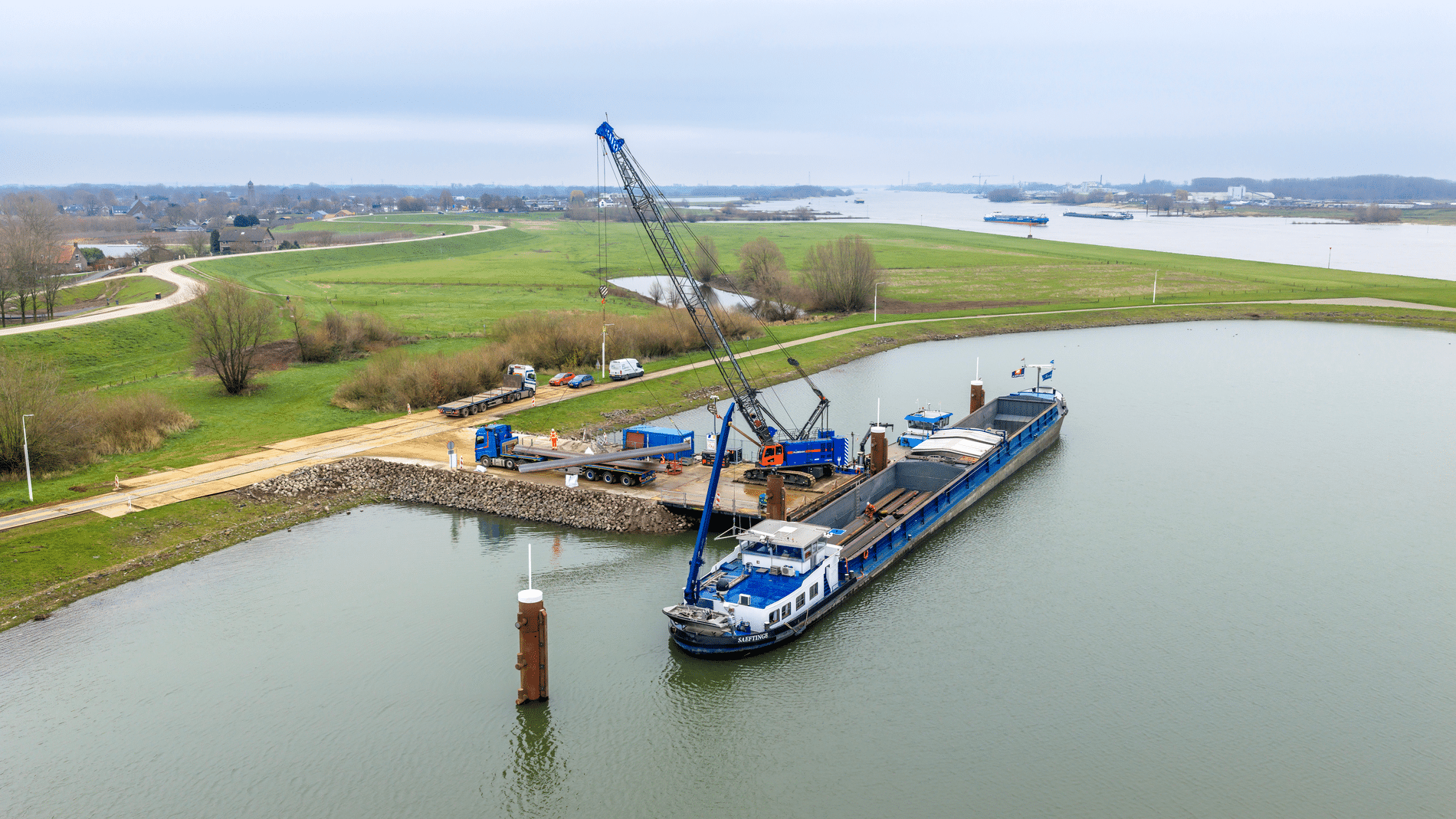
The project is divided into three phases, with corresponding shipments by ship. This ensures that the large quantities of steel are transported to the project area efficiently and sustainably. The first shipment for Phase 1 took place in December 2025 using three inland waterway vessels, followed by a second shipment—also consisting of three vessels—in July 2026. A third shipment will follow at a later stage. By storing sheet piles early on, the consortium creates flexibility in the project’s execution and effectively mitigates risks in a volatile market.
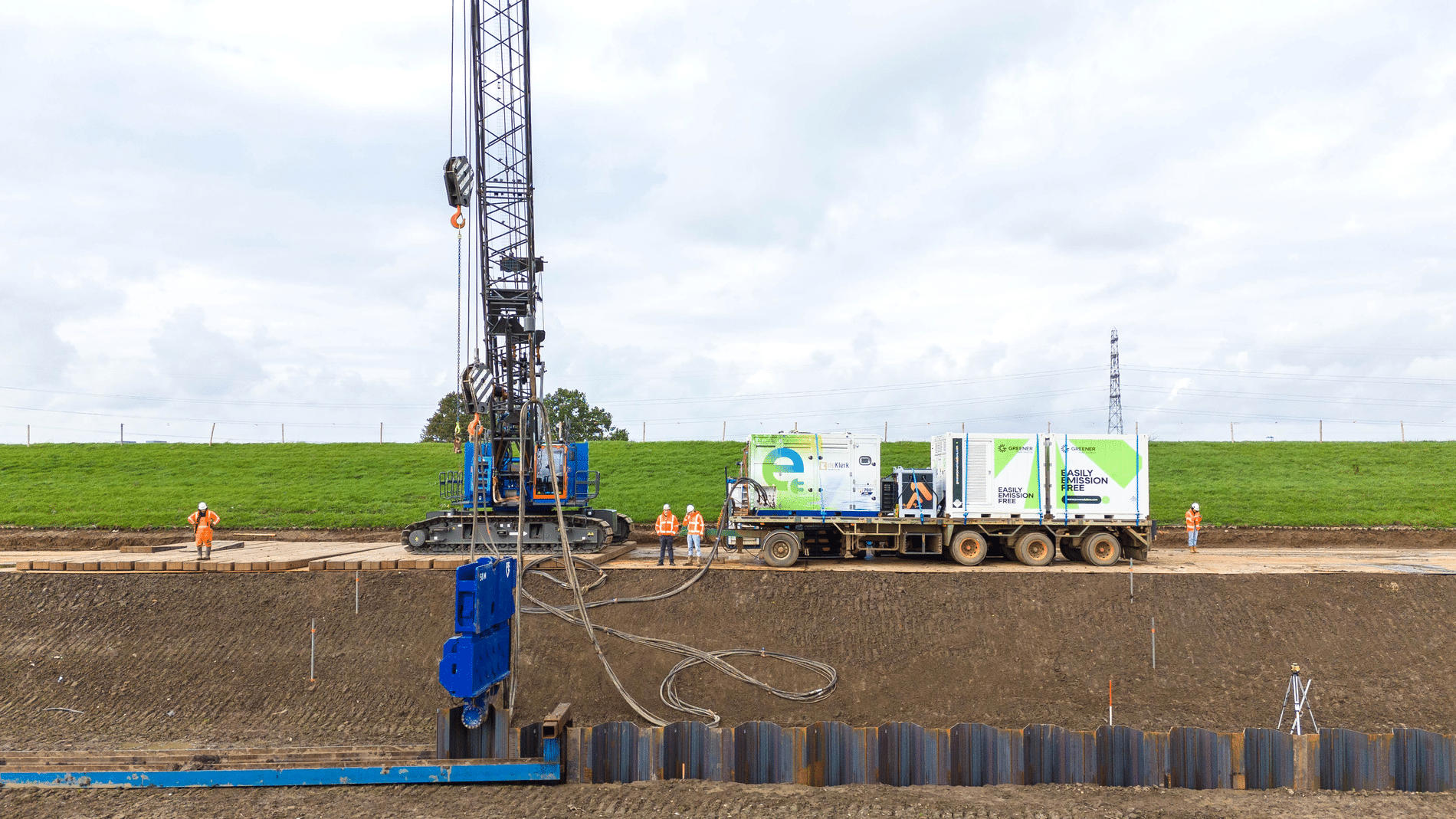
Sustainability is a key principle of the project. Emissions are reduced during installation at the construction site through the use of electric equipment. This, combined with the choice of EcoSheetPile™ steel sheet piles and transport by inland waterway vessel to the construction site, contributes to the overall sustainability of the project. These sheet piles are manufactured in Luxembourg using a electric arc furnace with approximately 100% of recycled steel. This results in a significant reduction in CO₂ emissions: 423 kg CO₂ per metric ton of steel, compared to 2,200–2,500 kg CO₂/t for blast furnace steel. This carbon footprint is documented in the updated EcoSheetPile™ EPD.
The Neder-Betuwe dike reinforcement project demonstrates how steel sheet piles play a key role in modern hydraulic engineering projects. Thanks to their ability to simultaneously address piping and macrostability, their efficient application in confined spaces, and their favorable sustainability profile, they offer a robust and future-proof solution. Combined with smart logistics and low-emission construction practices, Dijkalliantie is building a levee that is ready to meet the challenges of climate change and rising river flows.