Platform on concrete and steel in construction
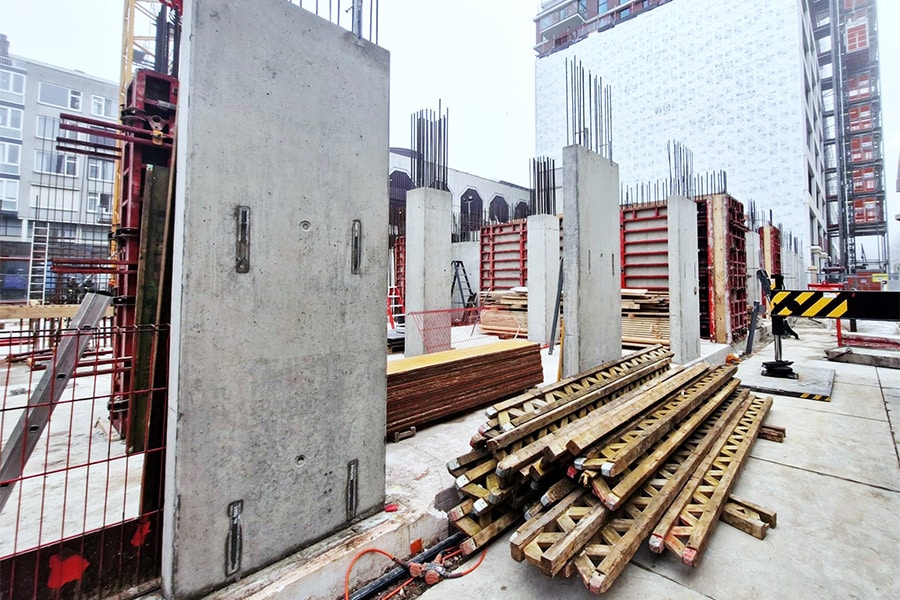
Construction is currently underway on one of Rotterdam's most eye-catching high-rise projects: The BaanTower. The facade technology, which uses thousands of undercut anchors, is also unique. From the start of the facade's construction, Hilti has not only been a supplier of fastening materials, but has also played a role as a sparring partner in the construction team, thereby demonstrating its added value.
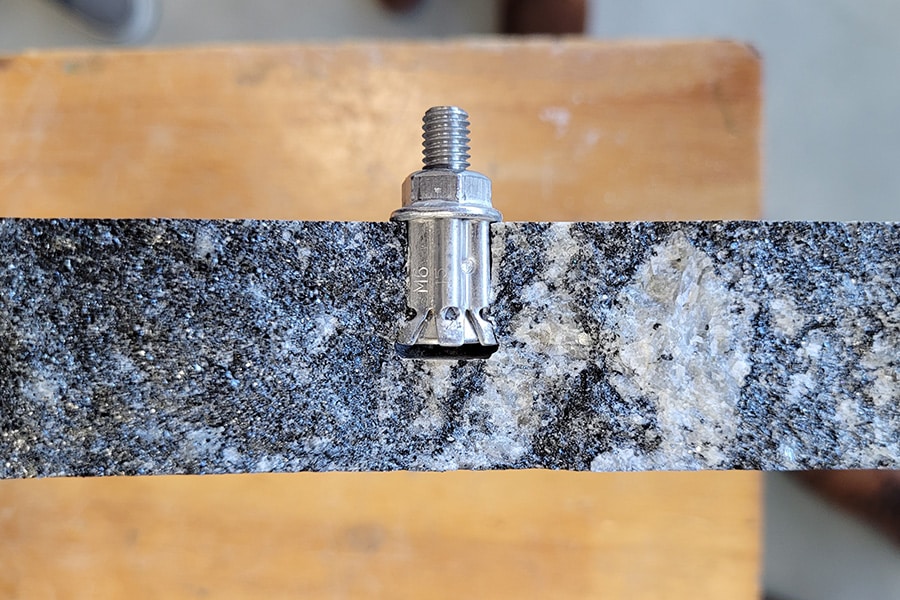
Hilti focused on two main disciplines within The BaanTower project: facade technology and installation technology. Thomas Goedegebuure himself, business developer facade at Hilti Netherlands, was primarily involved in the facades. “The first contact about the facade cladding for The BaanTower was made in the fall of 2022,” he says about the 159-meter-high residential tower, which is scheduled for completion in 2026. “Hilti was asked to contribute ideas about the anchoring of the natural stone facade panels and the installation of the large window frames by facade builder Blitta.”

According to Goedegebuure, what makes this project so special for Hilti is its role in the construction team. “We are not an external supplier who only delivers what is requested, but a fully-fledged sparring partner. Regular consultations were held with the chief structural engineer, detail structural engineer, Blitta, natural stone supplier, main contractor RED Bouw, and developer. That made all the difference. It was precisely this cooperation between all parties that enabled us to realize the facade construction reliably and efficiently.”
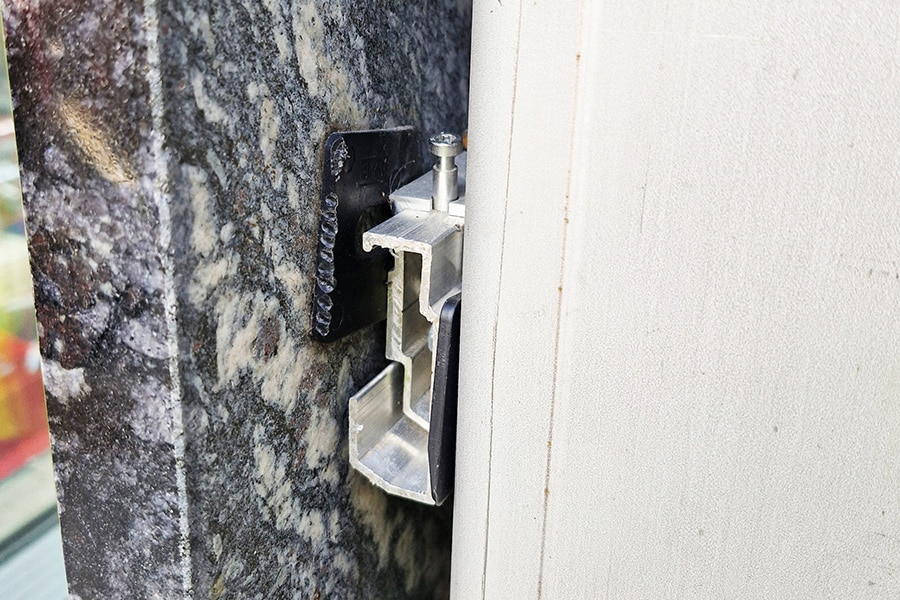
An important part of the facade technology was the use of Hilti's HSU-R undercut anchors. “These are small anchors that are placed in the back of the natural stone panels. Only four are needed per panel to securely fasten the entire panel,” says Goedegebuure. “Prior to implementation, extensive testing and protocols were carried out and a mock-up of the aluminum substructure was created. This test setup can be viewed at the construction site.”
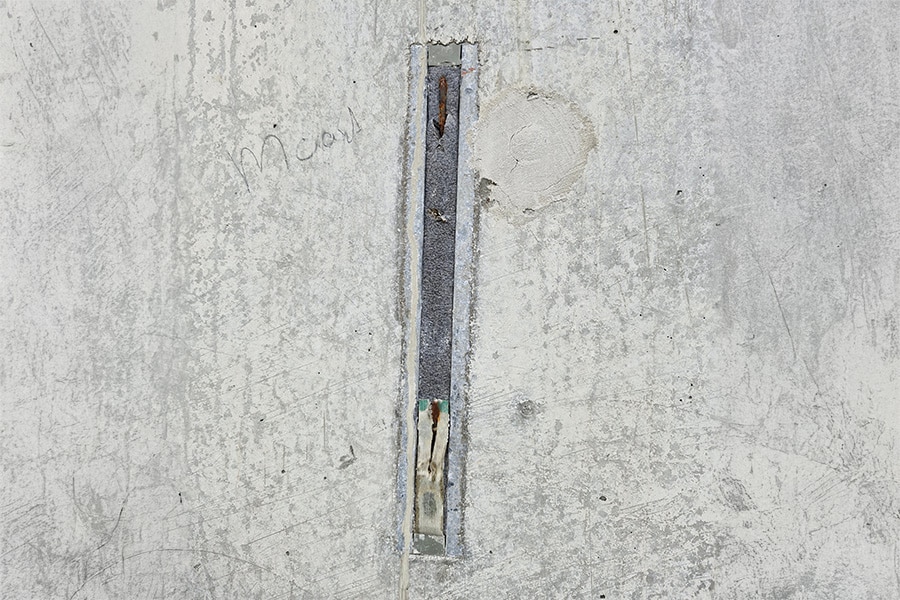
The installation method was also innovative. Instead of drilling on site, the anchoring was incorporated during the concrete pouring process. Hilti supplied the anchor rails for this. What is unique is that the same rails had to be used to secure both the natural stone and Blitta's gigantic window frames. “Initially, it was thought that five to ten different types of anchor rails would be needed for this,” Goedegebuure continues. “That would have made installation extremely complex. During the engineering phase, we worked with our partners to reduce this to two types. That simplified the process enormously and reduced the margin of error. This is where you see the added value of our role as a sparring partner. You can only develop solutions like this if you are part of a single team with all parties and weigh up the interests of each other.”
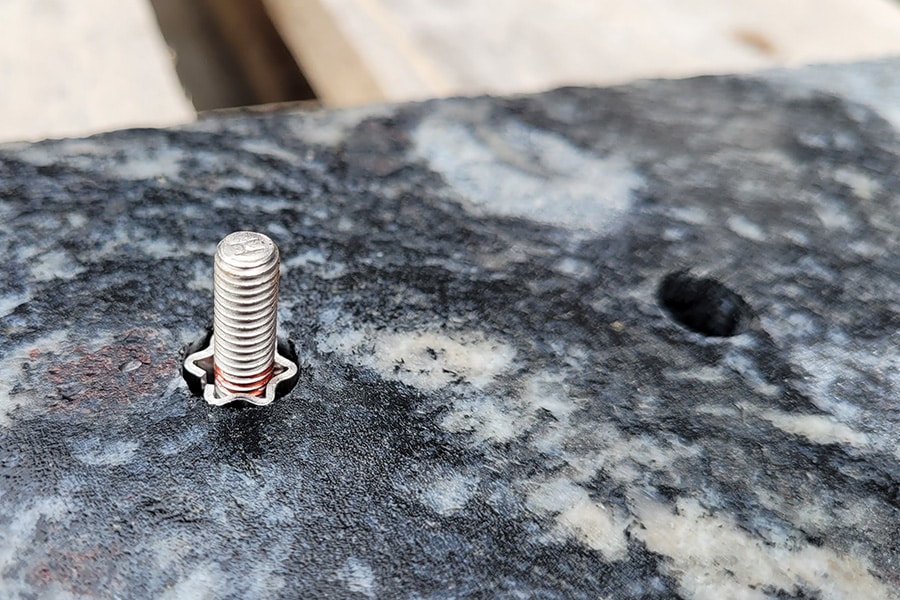
The end result is that the entire façade has been anchored using Hilti materials: almost 16,000 anchor rails and 60,000 undercut anchors were used. “This means we can now rightly say that the entire façade is anchored to the building using Hilti,” says a proud Goedegebuure.
For Hilti, The BaanTower is more than just an impressive reference. According to Goedegebuure, the project shows what is possible when a supplier acts as a sparring partner in the construction team: “We identified requirements, devised solutions, simplified processes, and reduced the risk of failure.” With The BaanTower, Hilti proves that cooperation within the construction team leads to more efficient processes and maximum safety during implementation. This not only increases productivity, but also guarantees the long-term sustainability of the building.