Building resilience in a vulnerable country
In the Netherlands, we have a government. A government focused on renewal and acceleration. We face major challenges: climate adaptation, grid congestion, investment in energy infrastructure and an enormous housing challenge. We want to keep building and growing, while keeping our feet dry, ensuring we have enough electricity and continuing to buy, now and in the future.
For a small country with over 18 million inhabitants, these are ambitious goals. Villages and cities need to expand, infrastructure needs upgrading and systems need to be designed to meet future needs. As builders, we recognise these challenges. More than that, we want to build. The plans are ambitious and inspiring. But are we doing the right thing together?
Perhaps we should first ask ourselves a different question: are we building solutions for today, or working towards a resilient society for tomorrow? Is adding homes without limit and solving grid congestion through engineering alone enough? Or does this era call for a broader cultural shift in how we design, build and assess risks? Resilience starts not with technology, but with people: with how we handle knowledge, expertise and responsibility. In construction, we increasingly seek to eliminate extreme risks through control and certainty. That is understandable, but it can also be paralysing. Building resiliently does not mean abandoning standards, quite the opposite. A safe Netherlands requires sound standards, robust rules and proven systems in concrete, steel and other construction materials. But it also requires the courage to take considered risks. It means standing by your convictions as a professional and taking responsibility for the choices we make.
With that in mind, I would like to introduce the DILT concept: the Deep Integrated Utility Tunnel. It is not a new idea, but one that has yet to be put into practice to any significant extent. Expertise in tunnel boring and underground techniques is advancing rapidly. Tunnel boring machines are getting larger, diameters are increasing and precision is improving. This opens up the possibility of constructing deep, long tunnels beneath cities and rural areas, below pile toe levels and existing properties.
DILT consists of shafts and routes: vertical shafts and horizontal tunnels that together form an underground network. Just as we now have above-ground backbone infrastructure, for example from the Port of Rotterdam towards Antwerp and the Ruhr region, we can take these vital systems deeper underground. For energy, heating and cooling, water, wastewater, logistics and even the movement of goods. This requires substantial investment, but continuing to build upwards and improvise above ground will also cost money and space, and erode public acceptance in the long term. The question is not whether this is expensive, but whether we are willing to invest in long-term solutions. Consider public-private partnerships with long-term construction consortia, where profit has a place but is not the driving force. Where value creation, continuity and social returns are central. Well, perhaps that is getting close to a resilient society.
What would this deliver? Underground access in times of scarcity. A faster energy transition. Robust infrastructure that continues to serve cities and regions, even in difficult times. But let us be honest: no system can make us resilient by itself. True resilience starts with you. With how you think about risk, collaboration and professionalism in your organisation. By starting conversations, being open to colleagues and serving society. Not by always striving for the highest or the most, but by contributing the best you can, wherever you are.
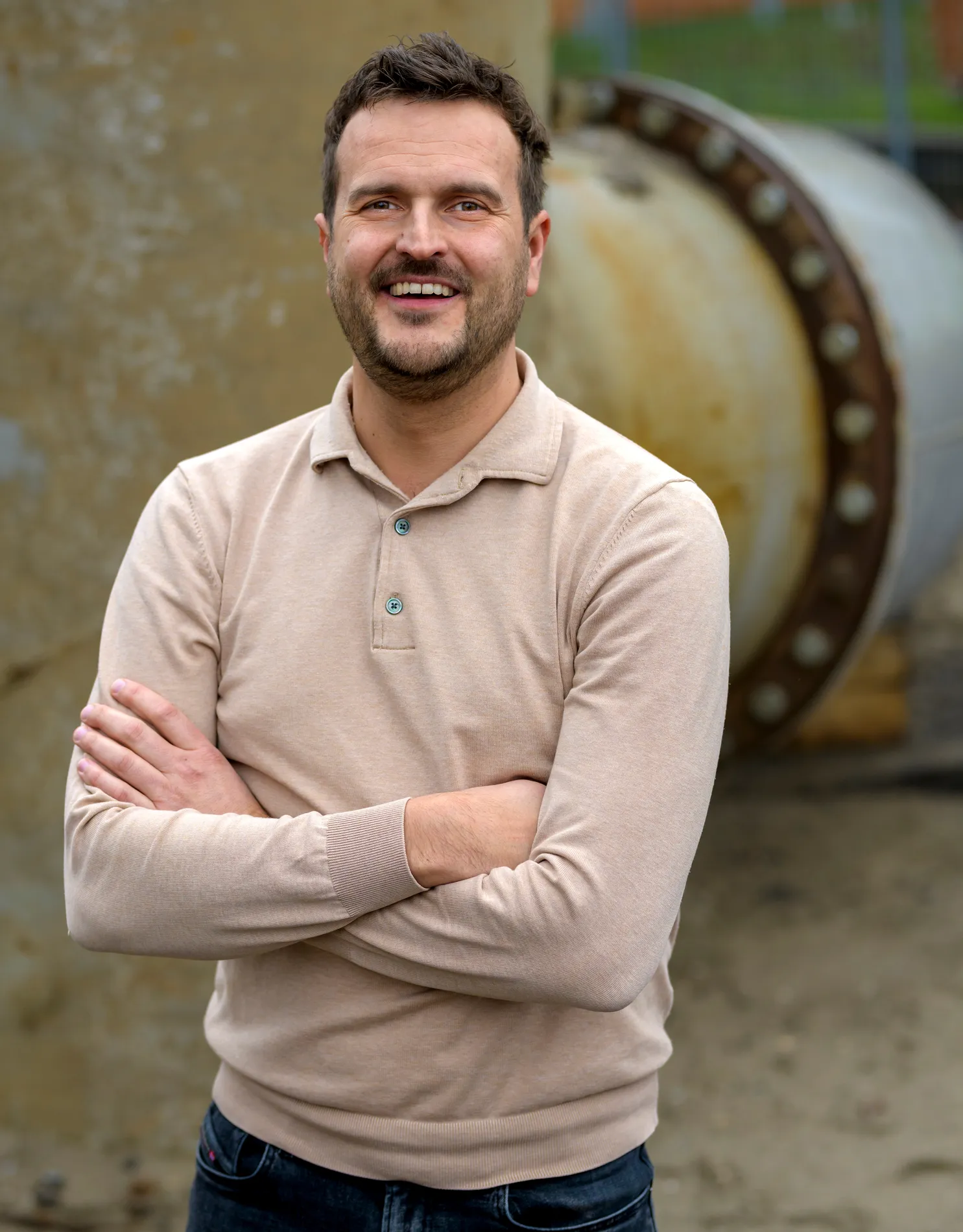
Jaap Peters, Project Leader, Engineering Department, Municipality of Rotterdam
Vraag over dit verhaal? Stel je vraag
Blijf dit volgen
Bij een nieuw verhaal krijg je een e-mail. Geen account nodig.
- OnderwerpGeneral