[00:01] Introduction – Sustainable Concrete and the Service Life of Infrastructure
Roel van Gils: Welcome to another new episode of the Concrete & Steel Construction podcast. Concrete is one of the most important building materials for our infrastructure. Bridges, tunnels, viaducts, and railway structures—they must withstand heavy loads, moisture, temperature fluctuations, road salt, de-icing salt, and much more for decades on end. At the same time, the construction sector faces the challenge of reducing CO2 emissions. In this episode, we explore how we can make concrete last longer, what role admixtures play in this, and why service life may well be one of the most important sustainability criteria. Joining us today are three experts: Jos Kronemeijer from ProRail, Harry Corporaal from Heijmans, and Bastiaan Bos from Sika. Gentlemen, welcome.
Corporal Harry: Thank you.
[00:43] Introduction to Harry Corporaal
Roel van Gils: Let's start with a quick round of introductions. I'll begin with Harry. Please introduce yourself.
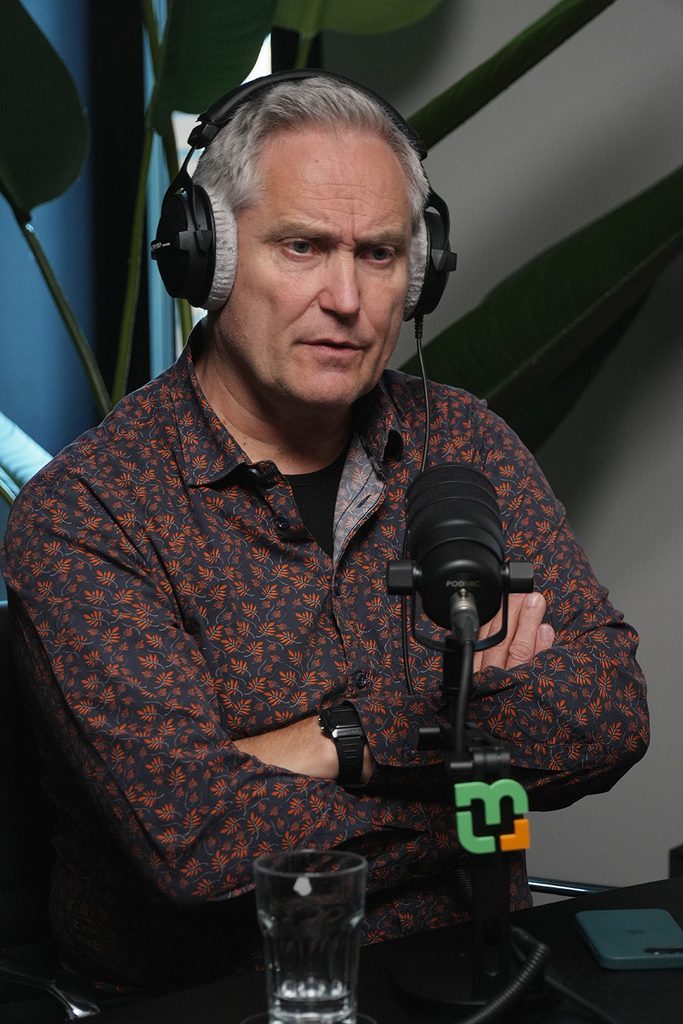
Harry Corporaal: That’s right. My name is Harry Corporaal. I work at Heijmans as a concrete technologist and materials technologist. I’m involved in concrete-related activities on the construction site and in making them more sustainable. I’ve been active in the concrete industry my entire career—over 30 years—a large part of which I’ve spent as an instructor at the Concrete Association, dedicated to explaining concrete technology.
Roel van Gils: Still?
Corporal Harry: And I still do. That's right. And today, just here for a bit.
Roel van Gils: Yes, thank you.
[01:17] Introduction to Jos Kronemeijer
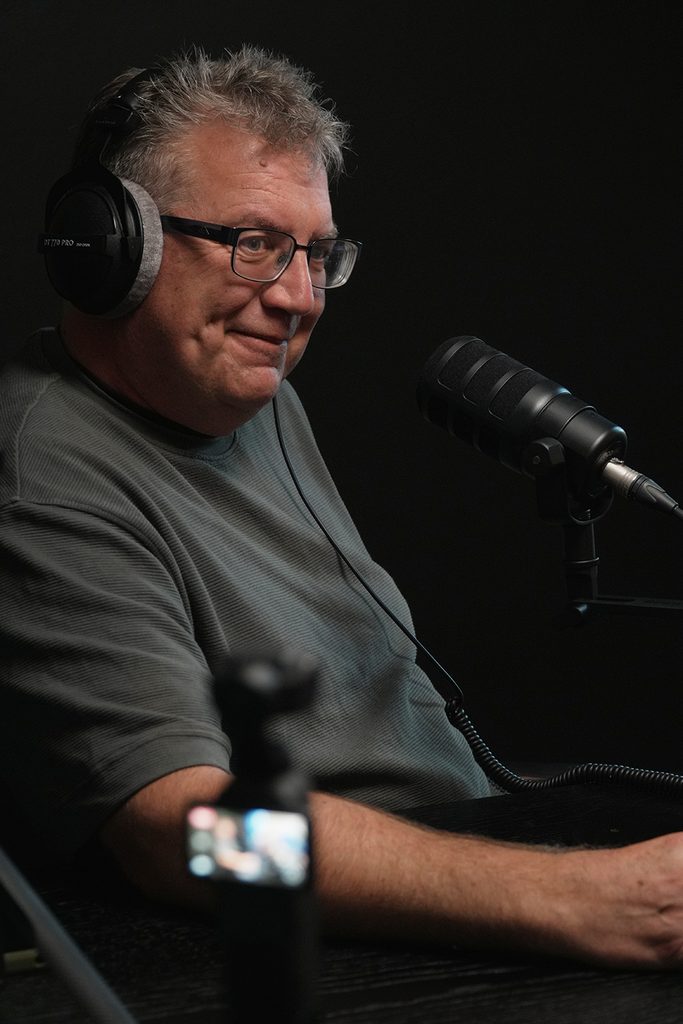
Jos Kronemeijer: My name is Jos Kronemeijer. I work at ProRail. I’m what they call a systems specialist at ProRail. As a materials technologist, I work at the intersection of sustainability and durability. Wherever sustainability and reducing the environmental footprint are desired, I help clarify the implications for durability—and thus service life—to draw a connection back to the opening speaker. And within ProRail, I’m currently collaborating with virtually all departments that involve concrete, cement, and cement-based materials. We’ve been doing this more intensively since the launch of the Climate-Neutral and Circular Infrastructure program. I’m closely involved with that initiative. And just like Harry, I’ve been in the field for about 30 years. Harry, 35? I’m definitely in that category, you know. Have we lost count? Yes, and I’ve also been teaching for the Concrete Association.
Roel van Gils: You've known each other for a very long time.
Jos Kronemeijer: Yes.
Bastiaan Bos: We run into each other regularly.
Roel van Gils: Look. Okay, thank you.
[02:14] Introduction to Bastiaan Bos
Bastiaan Bos: Well, I'm Bastiaan Bos, and I work at Sika. Compared to these two gentlemen, I'm relatively new to the concrete industry.
Roel van Gils: Okay.
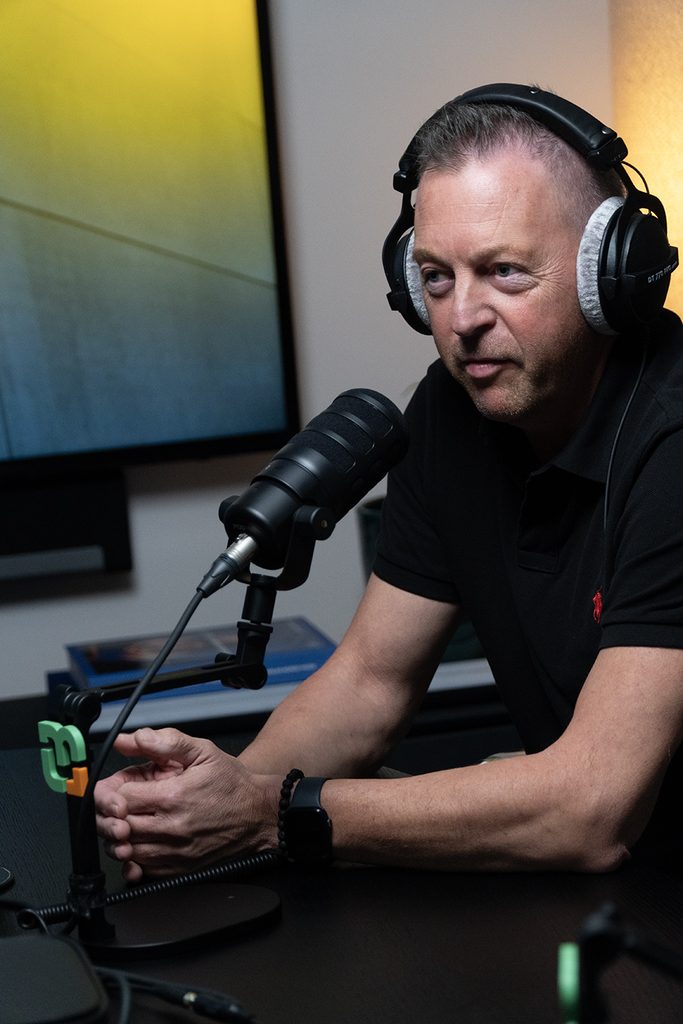
Bastiaan Bos: About 28 years. So I’m getting close. Yes, I’ve been in the concrete business my whole life. I started out in concrete technology at concrete plants. Working with my hands in the concrete, making test cubes, measuring the water-cement ratio, compressing the cubes—getting to know concrete. From there, I continued to develop my skills, took courses, and became a concrete technologist and concrete technology consultant. Yeah, I guess I’m a bit of a nerd when it comes to the field. My role at Sika is, of course, to manage account management for the southern Netherlands. But ultimately, it all comes down to concrete technology.
Roel van Gils: Mhm.
Bastiaan Bos: So, helping my clients with new solutions. Seeing what’s available on the market. Within the bounds of competitiveness, of course. Yes, exactly. And every now and then, we try to bring in new clients. But the focus is on existing clients.
Roel van Gils: But also knowledge sharing in that sense, above all?
Bastiaan Bos: Yes, knowledge sharing, too. Yes, definitely.
[03:09] What do experts mean by “sustainable concrete”?
Roel van Gils: Great. And yes, once again, welcome. If I may start by asking both of you to describe sustainable concrete in one sentence. That might be difficult, but Harry?
Harry Corporaal: Yes, that sounds difficult, but of course it doesn’t have to be at all. Look, sustainable concrete means making concrete that meets all the requirements set for it. So that includes the client’s expected service life, the damage mechanisms that could occur, and the environmental conditions. And within all those requirements, you look for the mix with the lowest CO2 emissions possible. That’s sustainable concrete. And in that order, too.
Roel van Gils: Well, look at that—it's a little more than one line, but oh well, that's fine. Jos?
Jos Kronemeijer: Yes, I think I’m catching on to what Harry is saying. I think technical service life was the approach we’d always been used to taking for decades. But this new development—the consequences of sustainability efforts, that is, improvements in sustainability—those kinds of factors are creating a new perspective.
Bastiaan Bos: I'll give it a try. I think "sustainability" means sustainability. You choose concrete with the lowest possible environmental impact, without compromising its lifespan or performance.
Roel van Gils: Yes. So, sustainability means a low carbon footprint and a long service life. It’s that combination.
Corporal Harry: And thus meet the requirements set for it.
Roel van Gils: Yeah, yeah, that's it.
Corporal Harry: So the requirements aren't just from the client, but also related to whether it can actually be built. And we mustn't forget that last point: feasibility.
Roel van Gils: Yes, we’ll definitely come back to that later. But I assume there are also regulatory requirements as well.
Jos Kronemeijer: Availability of Raw Materials in the Near Future.
Roel van Gils: Yes.
Jos Kronemeijer: The cost of producing those materials is closely linked to the price of fossil fuels or alternative fuels. It’s all interconnected.
[05:04] Sustainability from ProRail's Perspective
Roel van Gils: As a rail network operator, when do you consider concrete to be sustainable enough?
Jos Kronemeijer: In principle, because ProRail is held accountable for the availability of the tracks for the carriers. As soon as there is a clear understanding of how long the equipment functions properly from a technical standpoint, the baseline performance begins.
Roel van Gils: Yes.
Jos Kronemeijer: And related to that, ProRail introduced the CO2 Performance Ladder about 15 years ago to raise awareness that it should be possible to achieve a lower carbon footprint. And that impact is evident everywhere in the market. In every corner of the sector.
Roel van Gils: Yes, I think that was handled well.
Harry Corporaal: Yes, that’s right. Because, of course, you have structures that need to last a very long time and be available. And that’s an important characteristic—or requirement—that you place on a structure. There are also structures that only need to last ten years. And that allows you to take a different perspective on sustainability.
[06:02] Feasibility and Structural Safety
Roel van Gils: And what's that like for you guys, Harry?
Harry Corporaal: Well, that’s one of the key aspects, as I already mentioned. Of course, it’s also important—and we often forget this, as I just pointed out—that it has to be feasible. So when we erect a building and the support structure is in place—and that support structure has to be removed after about five days—I’ll need to achieve a certain strength to ensure the structural safety of the building. And we won’t compromise on that structural safety. So people can tell us from all sorts of angles: “It has to be greener”—until we can no longer build. We can come up with smart solutions to postpone that. And that’s where the development from contractors comes in—finding ways to still meet our construction schedule while using sustainable concrete, which may take longer to develop strength. Because if we don’t do that, then we’re not on the right track either. Because structural safety is then at stake, and that always takes precedence.
Roel van Gils: But even today, don't you still need primary raw materials to ensure structural safety?
Jos Kronemeijer: No, less and less.
[07:05] Circular additives as an alternative to primary raw materials
Harry Corporaal: No, not that. No, concrete obviously has two sides to it. On the one hand, we’re always talking about the adhesive, the binder, and how we can make it more eco-friendly. We’re familiar with developments in geopolymers, calcined clay, cements, the amount of slag, and the types of accelerators and activators. There are all kinds of developments related to that binder. And yes, a lot is happening in that area. The latest podcast on prefab was also very much about that. But we’re also very committed to circular aggregate. So, the grains that we bind together with water and cement—what we can still call cement. You can use a lot of non-virgin material for that as well. And that’s a development that we at Heijmans are also strongly committed to.
Roel van Gils: Such as non-primary material. Can you give some examples of that?
Harry Corporaal: Yes, there are actually three major streams for that. First, the use of, for example, crushed railroad ballast. The second is recycled gravel from asphalt structures. These have advanced so far in development these days that we can build with them very effectively. Of course, there are a number of application areas where you have to be careful. And finally, high-quality recycled gravel from concrete. And yes, that’s a major breakthrough for the Netherlands in terms of sustainability. When you consider that you can actually restore the gravel in concrete to its original state—with virtually no cement remaining on it—these are the kinds of initiatives we’re strongly committed to.
[08:27] Recycling Techniques and Regulatory Barriers
Roel van Gils: Because those techniques exist?
Corporal Harry: Those techniques are still being developed. And the first ones are ready to go, so we’re eager to use them extensively. Recycling down to the component level. The Netherlands is leading the way in that area. And it’s going fantastically well. You can actually see the results. It’s unbelievable.
Bastiaan Bos: You can't tell it apart from the real thing.
Harry Corporaal: That's correct. When you show that to people, they understand what you mean. But it’s true that, from a regulatory standpoint, we still find it a bit challenging. However, if you, as a contractor, clearly explain to clients and structural engineers what you’re doing, they’ll understand that we’d like to implement it.
Roel van Gils: Because why is that still difficult or problematic from a regulatory standpoint?
Harry Corporaal: Well, we’re facing some definition issues. Anything derived from concrete, we call it concrete aggregate. And concrete granulate can also be something that contains impurities or a lot of low-quality cement stone. So we’re cautious about using it, because that concrete has to retain certain structural properties. And it has to meet the requirements set by the structural engineer. So we’re careful about how much of it we use. But the definition is that these types of aggregates derived from concrete are actually called concrete granulate. But in reality, they’re just raw aggregates. So if we can resolve that and turn it into a performance standard, we’ll make progress in terms of regulations. That will happen naturally. Until then, it’s simply a matter of demonstrating equivalence. And that’s perfectly feasible.
[09:53] Environmental Impact of Binders and Aggregates
Roel van Gils: Bastiaan, did you want to add something?
Jos Kronemeijer: I’m just realizing that 80–85% of concrete’s emissions profile is determined by the binder system. So there’s a quick win here—there’s a lot of low-hanging fruit. As Harry just mentioned, a lot is also happening in the area of aggregates. Perhaps another interesting idea: making variants of artificial gravel from industrial waste or natural sediments. That could also be a promising avenue to explore. But when it comes to the central theme—what can be improved with additives in that area—I think there are also a whole lot of gray areas and quick wins.
Harry Corporaal: Yes, that’s because sustainability isn’t just about the CO2 you can quickly and sustainably remove from binders, but also about the degree of circularity and process reduction. And you can really see that in our company—those are the two key areas we focus on. How much non-virgin material do you use, and how much CO2 reduction can you achieve compared to a previous year?
[10:53] When does an excipient supplier come into the picture?
Roel van Gils: So when does an excipient supplier come into the picture?
Jos Kronemeijer: Yes, I think once the performance specifications for the project and for the construction phase are finalized. That’s when the contractor involved in the project starts shopping around—not only to buy concrete from local suppliers, but also to seek advice and understand how specific raw materials work. So, it’s generally the purchasing organizations for—in this case, concrete—for those projects that end up turning to suppliers like Sika for raw materials and additives, as well as concrete plants and concrete factories.
Bastiaan Bos: Yes, I think that’s when the contractor can no longer resolve the issues. If you get stuck and need additional resources, we’re happy to step in and provide support.
[11:40] Additives for CO2 reduction, workability, and service life
Bastiaan Bos: Of course, there’s a wide range of possibilities here. We were just talking about circularity. You could approach it this way: I’m going to minimize the CO2 impact of my cubic meter of concrete as much as possible. So you’ll lower the water-cement ratio. Adding plasticizers, which allows you to reduce the amount of cement. That’s the upfront approach, but you can also look at how to make your concrete more sustainable in the long term. So at the outset, you focus on minimizing your environmental impact—what steps can you take to achieve that? In that case, plasticizers are often the most common solution. They ensure workability, so you’ll be able to process the material properly on the construction site later on. Because I can come up with a perfect mix on paper, but at 6 a.m. on Monday morning at the concrete plant, you have to be able to actually do it. That’s a really important point. And of course, there are also admixtures that primarily focus on shrinkage reducers—reducing shrinkage in your concrete, minimizing autogenous shrinkage, and making the concrete more watertight. That can significantly extend the service life of a structural element. Significantly extend it, yes. And perhaps that’s something worth looking into further. Often, too much focus is placed on the cubic meter.
[12:48] Definition and Applications of Concrete Admixtures
Jos Kronemeijer: It might be fun to briefly bring up a definition we often use in the concrete industry for “additives.” How did it go again, Harry? An admixture is a material added at a dosage of around 5% relative to the intended binder content to help adjust the properties—if I’m saying this correctly—in either the plastic or the hardened phase to achieve a specific desired goal.
Bastiaan Bos: Okay.
Jos Kronemeijer: And that’s just three words, four letters. That covers a very broad field. And if you look at what’s available in terms of generic materials to help adjust properties, that can lead to improvements in waterproofing, faster construction, and reduced maintenance efforts during the operational phase. There’s no financial incentive for that yet, but it’s being looked into very closely. Because if projects can function longer with a certain level of maintenance, then the maintenance component is also an emissions component that you could reduce. Then there’s no need for someone to hop in a car—whether electric or not—to carry out all sorts of tasks there. So when you talk about additives, you’re talking about an incredibly broad field. And I think many parties in the construction industry still aren’t always fully aware of the fact that additives are a crucial, essential raw material for making concrete. When we started out in the field, back in the 1940s, the basic rule was still: you make concrete with sand, gravel, cement, and water. However, these days we can no longer produce certain grades of concrete without admixtures. And that applies to a whole range of types. In that sense, we need admixtures to keep up with today’s construction pace and so on.
[14:24] Small amounts of additives with a big impact
Bastiaan Bos: Yes, admixtures, absolutely. If you look at a cubic meter of concrete, we say: let’s assume it weighs 2,400 kilograms per cubic meter. That contains, let’s say, three kilograms of admixtures. So you’re talking about 0.1 percent of your cubic meter of concrete being admixtures.
Roel van Gils: How is it possible that such a relatively small amount can have such a big effect? Are we going to get into practical, technical details for this podcast?
Bastiaan Bos: I'm still up for it, but you get a say in this, too. Small weight, big impact. So that's it.
Roel van Gils: Yes, I'll respond to that, of course.
Jos Kronemeijer: That means you’re adding a chemical product in an incredibly small volume, which has a significant impact on a whole range of properties. And that brings us straight to an interesting point.
[3:06 p.m.] Chemical compatibility and changing raw materials
Jos Kronemeijer: Those who use additives must not only keep the intended goal in mind, but also ensure they properly control the additive within the production process. This means verifying the chemical compatibility of the raw materials. And that’s definitely an area that requires attention. The chemical composition of many raw materials is changing rapidly due to efforts to reduce the carbon footprint, which are being pursued everywhere. This means that, in the near future, more preliminary research will be needed to tailor the suitability of raw materials and the addition of admixtures to a specific application. As a result, the variety of concrete types will only continue to increase.
Roel van Gils: But what about the multitude of additives, then?
Jos Kronemeijer: Absolutely.
Bastiaan Bos: Fillers may become increasingly exotic in the future, and we’ll need to use less and less clinker. So the challenges are growing. And perhaps—and the technology already exists within Sika—we’ll be able to develop polymers, tailored to specific needs. Tailored specifically to a particular type of cement or local raw materials. So those developments are certainly not standing still.
[4:05 p.m.] Risks and Side Effects Associated with the Use of Additives
Harry Corporaal: That’s right. Of course, it’s always important that we consider risks. For a contractor, the word “risk” is always the first consideration. What does that mean for us? And we’re happy to use admixtures in concrete. Because we really want good workability, good stability, air where it’s needed, but not air where it isn’t. Well, does that mean there are always side effects? That’s the next definition I’m going to ask Jos about from a textbook. And we really need to know that. And with the sheer number of admixtures constantly coming onto the market, along with ever-new materials, it also means it’s becoming increasingly difficult to fully understand all those side effects. And that’s why so many of those admixtures aren’t being widely adopted in concrete just yet. Because you really have to have conducted a great deal of testing. In the Netherlands, we actually still don’t measure our concrete enough to get a clear picture of everything. If you compare that to other countries, you can see that we’re just used to doing it this way: we switch out an admixture and nobody pays attention to it. Whereas we really should be delving much deeper into what else is happening. And is there a risk, for example, of an unexpectedly high air content? Which could result in unexpectedly low strength, without us having measured it. And this is where the risk lies. That’s not necessarily a negative point. But it’s an important point to recognize that additives are very important, yet they’re also very critical, and we all need to examine them critically.
[5:19 p.m.] Comparison with medication use and the importance of provider advice
Corporal Harry: I might have a good analogy, a good metaphor.
Jos Kronemeijer: Think of excipients in certain situations as being like when you have a headache. That’s when you want to take a little paracetamol. That headache can be relieved with one or two paracetamol tablets. But if the headache is severe, you might be tempted to down an entire tube. And then you’ll experience side effects. Those kinds of effects also apply to the excipient. So let’s say, not on its own.
Roel van Gils: So, what about policy, then?
Jos Kronemeijer: Understanding how it works and, as a result, let’s say, relying more heavily on the advice of the suppliers of those products. To see what your experience is with the combination of raw materials we’re using for this purpose.
[6:01 p.m.] Research, international knowledge sharing, and support from Sika
Roel van Gils: Yes, I'm already curious, Bastiaan, to see how you guys handle that.
Bastiaan Bos: Of course, we conduct an extraordinary amount of testing. Sika has a vast amount of expertise worldwide and a huge number of laboratories. We meet frequently and talk to one another. We come from different worlds and exchange information. What’s taken for granted here in the Netherlands might be completely unknown in Australia—and vice versa. And perhaps there are things being developed in Australia that would be a perfect fit here. So it’s about keeping your eyes open at all times and listening to what the contractor is asking for—what the construction industry needs. Surround yourself with knowledgeable people and talk to them. And that, I believe, is my main goal within the entire additives industry: to get involved. Where is the need, and how can I be of service?
Roel van Gils: Are people actively asking for it?
Bastiaan Bos: Look, Harry is right. People are definitely asking for it.
Corporal Harry: Yes, I can confirm that.
[6:56 p.m.] Collaboration throughout the supply chain as a prerequisite for sustainability
Harry Corporaal: Sustainable concrete—or making concrete more sustainable—is always a collaborative effort. We at Heijmans can’t do it alone. The concrete plant can’t do it alone. Sika can’t do it alone. ProRail can’t do it alone either, so you need all of them. For example, when we want to incorporate entirely new materials into concrete, we have to partner with a supplier. It could be a precast supplier or a ready-mix concrete supplier, along with their upstream suppliers. And we’re currently working on a brand-new small bridge where we’re very keen to achieve low CO2 emissions. That involves exploring entirely new materials for concrete. You also provide us with suggestions on how to use admixtures. The collaboration takes shape. And that’s how we develop a mix that works with the appropriate admixture. Without that collaboration—and that’s what this topic was briefly about—it’s not possible. So we need a kind of openness toward one another and the willingness to share experiences in order to innovate. Otherwise, we’ll stick with traditional concrete—what we know and what’s specified in the standards. Which is also perfectly fine.
Roel van Gils: But we're not making any progress in the area of...
Corporal Harry: Exactly. So if we keep things to ourselves, that's how it turns out.
Roel van Gils: Do you share that with the market as well? Or is that still a step too far?
[8:10 p.m.] Open collaboration, knowledge sharing, and new environmental requirements
Harry Corporaal: Well, that’s a tough question. The answer is: I think we all have that intention, yes. When I look, for example, at existing partnerships that include contractors, they also focus on substance. They’re simply about measuring the results of sustainability ideas that are out there. And we test things together and share our findings. I’ve noticed that this collaboration is open. And that’s what we’re always looking for within projects, including with clients. And I think you’ve noticed that too, Jos.
Jos Kronemeijer: Yes, perhaps a nice addition. Legislation will be enacted very soon that literally stipulates that environmental emissions may not exceed a certain threshold. MKI, the environmental cost indicator, is a Dutch concept designed to assess environmental impact in a number of performance-related matters. And once you start working with it, you’ll start seeing results. Perhaps let’s go back to what Bas just said. When you’re talking to a major additive manufacturer that serves multiple countries, and you’re fortunate enough to occasionally look beyond the border into other countries or closely follow what’s happening online, you sometimes come across additives that are used in other countries—where high summer temperatures have been a long-standing issue (in the Netherlands, this was always relatively unique, but we’re seeing it happen more often)—and the additives that are better suited to those conditions will also become more attractive for use in the Netherlands. And that interaction means that much more consultation and cooperation within the familiar triangle is needed to jointly implement these measures.
[21:46] Collaboration between the structural engineer, concrete producer, and raw materials supplier
Roel van Gils: So what about that famous triangle?
Jos Kronemeijer: The structural engineer, the concrete producer, and the raw materials supplier. And let’s just say, whatever the client wants—that’s actually the starting point for all performance specifications. But as Harry says, it has to be—and remain—feasible. If you have an exotic raw material that’s produced by only one manufacturer, you create a bit of a monopoly, which generally doesn’t help. You also don’t want excessive dependence on the entire supply chain. But within the context of these initiatives, that’s happening quite intensively.
Harry Corporaal: And then, of course, there’s the question: what does a client expect from us? So if, when we’re tasked with building a structure, a client simply asks us for the lowest price, then that’s exactly what they’ll get—a structure built at the lowest price. In that case, we’re no longer even talking about sustainability. We still have our own goals that we intend to achieve, but I’ve noticed that it’s more the client who lacks sufficient guidance on how to specify sustainable concrete.
[22:43] Specifying Sustainable Concrete and the Role of the Client
Roel van Gils: But does that still happen? Is it still the case that sustainable concrete isn't being specified? Or is it just a matter of, "Just go with the standard options"?
Corporal Harry: There is a discussion about it, but it's a low priority.
Roel van Gils: Price is still the deciding factor.
Jos Kronemeijer: Well, I wouldn’t say that. Maybe I can explain it differently to ProRail. When I look at what the major public clients—Rijkswaterstaat, ProRail, and the Government Buildings Agency—require, they have their own additional design specifications. As you’ve already mentioned, the Building Code provides a basic set of requirements: safety, durability, reliability, recyclability, and so on. Specific clients can—and indeed must—take into account the factors that are typical or unique to their projects. If you look at what’s happening in the rail industry, the shutdown of a particular rail line is very costly. So when you want to build quickly in the rail industry—during train-free periods or service suspensions—that also has consequences for the materials you use. If paving speeds need to be high because the train-free period is short, you may have to use additives that facilitate that. And again, this must be done while achieving the lowest desirable, achievable environmental rating.
Corporal Harry: Yes, in that case you still have a performance requirement, and it’s a very high one. So that also requires a high energy content. So, relatively speaking, it might be a less sustainable concrete. But it is what fits that requirement. Only within those limits do you then look for ways to make it as sustainable as possible.
Jos Kronemeijer: The consequences of environmental emissions permeate every aspect of industry. Everywhere.
[24:14] A bridge project using new materials and CO2 storage
Roel van Gils: You just mentioned that case involving the bridge made with new materials, didn't you? Can you tell us a little more about that?
Harry Corporaal: We’re conducting research to see if we can make concrete mixtures very eco-friendly. We even want to get as close to zero as possible. We’re exploring options involving CO2 storage and low cement content. And that’s the direction we’re currently pioneering. What we’re doing there is quite challenging, because you immediately run into the first definitional problem: what is sustainable? And that’s a question everyone asks themselves.
Jos Kronemeijer: You can already tell.
Roel van Gils: Yes, that's where I started.
Corporal Harry: And in this example, for instance—and this project is primarily intended to get the discussion off to a good start.
Bastiaan Bos: It's still a little unclear.
Harry Corporaal: What we call it: we store CO2 in the concrete. That’s the idea. And that means you’re taking a kind of compensatory action. So you have CO2 emissions, and you have CO2 that you store. And if you add those up and subtract them, you might be able to get close to zero. And then the ultimate question is: is that sustainable?
[25:22] The debate over the sustainability of CO2 storage in concrete
Roel van Gils: And who gets to decide on that?
Harry Corporaal: Well, the market, public opinion, clients. We’re having discussions with them. And we show them things like this. We show them that something remains intact and that it can have tremendous power. There’s a little bridge like that in Heijmans’ front yard. We went there together. And you can clearly see that our CO2 emissions are very low. But the question is: do we think CO2 capture—which remains the focus right now—is a good idea? So the bridge is intact and it meets the requirements. We still face many challenges. But it inspires the market to decide: is this a path to take or not? Well, that’s what we’re doing.
[26:02] The Role of Admixtures in Innovative Concrete Mixes
Roel van Gils: So what is the role of an excipient supplier?
Bastiaan Bos: Certain problems are arising. They're going to be adding some very exotic materials to the concrete.
Roel van Gils: Like what?
Bastiaan Bos: Very special powders, so to speak, that can absorb CO2. I can name a few, but at some point it comes down to the chemistry. When concrete—or cement—reacts with water, a chemical process—a chemical-physical process—takes place. If you start adding these kinds of exotic materials, you’re going to change that. So you’re really getting into the chemistry. And then there’s workability—you want that material to remain workable for longer. So you face some serious challenges. On paper, of course, it’s fantastic if you can produce CO₂-neutral concrete or even achieve a negative CO₂ balance—meaning it actually absorbs more CO₂ than the reference product.
[26:56] Environmental costs, life-cycle analysis, and the risks of new materials
Jos Kronemeijer: Exactly. There’s now an incentive for that. The MKI is a criterion that helps the procurement side identify which materials show promising reduction potential. Only by following the formal life-cycle analysis process can you also examine what happens at the end of a product’s useful life. And if you’re working with new materials—for which, for example, there’s still little experience—it’s helpful if the providers of that technology have done their homework to demonstrate: “Look, we’ve investigated the combination with steel to make reinforced concrete, and it works great.” Or maybe not—or there are some questions. But also, when it comes to the materials released—whether you’re downcycling, recycling, or, hopefully, upcycling—you need to know whether you’re creating a new problem. The last thing any of us wants is to create a new asbestos problem. So the lever you pull sets sixteen other gears in motion.
Bastiaan Bos: On the Move.
Jos Kronemeijer: That's actually part of the issue.
Bastiaan Bos: In principle, products—and new products in particular—are only sustainable if they do not have a negative impact on performance and the product lifecycle.
Jos Kronemeijer: Yes, yes.
[27:55] Service Life, Liability, and Risks Associated with Innovative Concrete
Harry Corporaal: That’s an incredibly good point. And that’s also why we, as contractors—but also in collaboration with other contractors—are looking into this. Because we can incorporate something new into concrete. But will it stay intact for 20, 40, or 50 years? How long will it last? What’s the service life, then? But who’s responsible for it? If I deliver something with a 100-year service life, and it collapses after 10 years, I think the client will give me a call. I suspect that’s important. And that’s why, as contractors, we focus so much on the word—as I mentioned earlier—risks. We’re looking at how long something will last, where I can safely use it, and where I can’t yet. So with all these innovations, we’re really trying to identify the right applications—where they’re a good fit for us and where we’re taking too much of a risk.
Bastiaan Bos: So your bridge has to support traffic and require no maintenance?
Corporal Harry: For example. If that's what was agreed upon with the client.
[28:47] How ProRail Manages the Risks Associated with Innovative Materials
Roel van Gils: What's the situation at ProRail?
Jos Kronemeijer: Yes, in the same context. When we start needing innovative materials—because that seems to be the only way to break free from old dogmas, from conventional choices that create a carbon footprint that simply has to be reduced—then innovation inherently, intrinsically, always involves a new risk. There’s no historical track record of performance yet. Once you investigate where those risks lie, you can identify them and then assess them. And then you have a discussion. So you say: we don’t yet know if it will last 20 years, or 50 years, or 100 years. We’ve conducted a study using conventional aging tests and accelerated aging tests, and we’re actually quite optimistic about the likelihood that it will last 25 or 50 years. Fortunately, there are more and more tools available to help with this. And if you go down that path—and, to put it simply, do your homework properly to link technically reliable performance to a reduced environmental footprint—then you need to have some kind of roadmap for that.
[29:48] The shift from product specifications to performance specifications
Jos Kronemeijer: And what ProRail has been doing for quite some time—unlike some other public clients—is placing a much greater emphasis on performance specifications from the outset. What used to be largely prescriptive in product specifications will very soon shift rapidly toward an increasing emphasis on performance specifications. And that shift is going to be a landslide.
Roel van Gils: And would that mean it could cost more to set up, for example?
Jos Kronemeijer: Yes, that’s possible. If it means that the product will last four or five times longer, or require much less maintenance, or can somehow serve as a valuable raw material for another industry at the end of its technical lifespan, those are all perspectives that will play a major role.
[30:28] Standards and the Need to Evaluate Concrete Based on Performance
Harry Corporaal: You mentioned an important word: performance. Our current standards are often structured very much around composition—masses, a certain number of kilograms of binder, that sort of thing. But if we’re truly going to evaluate based on performance, then the standards need to shift in that direction to foster innovation and make it more accessible. So we need to move away from fixed numbers, such as minimum cement contents and maximum water-cement ratios. If I could demonstrate it in a certain way, it should be accepted as comparable.
Bastiaan Bos: Yes, demonstrably.
Harry Corporaal: Performance—that’s what it ultimately comes down to. But how do you do that? That’s the path, and that’s the transition we’re in the midst of, and that’s the evolution we’re experiencing. Because there are still so many structural codes that haven’t been established, which means a structural engineer can’t certify the structural safety of a building. Because if we don’t meet the standard, then we don’t meet the material standard for concrete—EN 206 with all its amendments. Yes, then you also can’t use the calculation rules of Eurocode 2. And if Eurocode 2 can’t be used, then the structural engineer says: well, I can’t calculate it. And who then says it’s safe? Well, then you enter a phase where innovation stagnates.
[31:34] Measurement Methods for Structural Safety and New Materials
Harry Corporaal: So what the Netherlands needs are methods for measuring the properties of materials related to concrete, which can also be used to safely calculate structural designs. And here in the Netherlands, we are on the cusp of that development. There’s also a lot of thought going into the mini-COE and shear strength testing of concrete, which are intended to fill that missing link. We’re trying to fill the gap in the design codes so that we can also perform structural analyses using new materials. And those are things we need, in my opinion. But we must remain very critical to ensure we’re doing the right things. I’m following many of these developments very closely.
[32:19] Demonstrable performance and hardware-independent systems
Jos Kronemeijer: To point out to my colleagues who set specifications for the prefab sector the possibilities we have—within ProRail’s design regulations and the specifications and/or guidelines that apply to unique situations— to provide—in addition to the new performance specifications—a framework for determining which measurement methods are necessary to demonstrate that required performance. And that’s when you actually make the shift to material-independent production systems for the first time. Because that’s what the world, so to speak, needs. Definitely. And this alleviates the concerns of designers, who are ultimately held accountable when structures show signs of damage prematurely—and we shouldn’t automatically assume this will lead to a collapse, but rather that somewhere in the pipeline there’s an awareness that: okay, we’ve done a lot of research on this. I think I can assess the risk. And then we’ll get started. Because without innovation—and without facilitating the opportunities to get that innovation approved—it’s just a circus that’s at a standstill. Because ultimately, the biggest obstacle isn’t even so much the fact that there aren’t enough innovations. Innovations are everywhere. There’s no shortage of initiatives to get things done. It’s just that lack of regulation, insight, transparency, and a clear understanding of the consequences—that’s where the problem lies.
[33:38] Room for innovation within existing contract types
Roel van Gils: And is there enough room for innovation within the current contract structures?
Corporal Harry: What types of contracts are you referring to?
Roel van Gils: You know that.
Harry Corporaal: Yes. Will you take it? Well, I’d like to mention at least one. I’m very pleased with the construction team model. It’s a model where you collaborate with a client. Two-phase alliance contracts, and so on. But then you end up in a situation where you can really evaluate alternative proposals, discuss them together, identify risks, and move forward as a team. And I think that’s the only contract form where you can really think through sustainability and sustainable concrete. Other contracts are simply based on building it as-is, on a cost-plus basis. And if you have the lowest price, you might still be allowed to make suggestions for sustainability. And yes, that’s a completely different way of collaborating. And often, not much actually gets off the ground.
[34:33] Contract Types and the Relationship Between Design and Maintenance
Jos Kronemeijer: Yes, that type of contract must allow room to help capitalize on innovative opportunities. And certain contract models are popular for a while, only for their drawbacks to become apparent later. Design-build, and design-finance-operate. There was a quiet hope in the rest of the world—and to some extent still is—that if you place all design considerations with the contracting parties, you’ll automatically address those issues as well. But the moment the statutory warranty period—currently ten years for latent defects—does not permit a maintenance contract to be awarded to those same design-build contractors afterward, then, let’s say, the maintenance issue has suddenly become a question mark again. How are we going to fare in that regard? And there’s still room for improvement there.
[35:29] Making the added value of excipients measurable
Roel van Gils: You were just talking about performance, about making it measurable. How do you make the added value of additives measurable, Bastiaan?
Bastiaan Bos: Testing. So, on paper, everything can sound great, and often with the PDSs—the product data sheets—you think, “This is the golden egg.” But that remains to be seen. And it’s also a matter of finding the right admixture to go with that cement and those aggregates. It’s not a given that a product will work right away in a specific mix. So test, test. Get your hands dirty with concrete. Talk to each other.
[36:01] Plasticizers as a means of saving time and improving quality
Jos Kronemeijer: I might have a good way to explain it. When you use an additive—collectively known as a plasticizer—to temporarily make concrete more workable while it’s still in its unhardened state (hence the term “plasticizing”), you can construct a structure using less labor and less energy to achieve proper compaction. That’s a significant time savings for a contractor. Time savings, but also quality gains. Because the material is easier to compact, easier to transport—you name it. In this country, the entire construction process is largely determined in terms of cost by the price of labor. And in that regard, there’s a huge benefit on that front, but also a gain in quality. And with that comes technical reliability.
[36:41] Risks Associated with Cost Savings on Additives
Jos Kronemeijer: And something that some procurement organizations at contractors don’t always have a clear grasp of—I was there from the very beginning—is that, at a very early stage in projects, in consultation with suppliers, we’d say: “Look, these are the material specifications we want to purchase.” We’d go to the concrete plant or a prefab factory. And the procurement department sometimes thought they could save money by haggling over the price. In fact, there are sometimes incentives involved. Like: “Look, those suppliers are asking for way too much; it could be a bit cheaper.” What they don’t always mention—and what the procurement team doesn’t always realize—is that they aren’t always technically competent enough to foresee the consequences of omitting certain additives. To bring the discussion back to superplasticizers: A mix design that doesn’t contain a superplasticizer is significantly cheaper—many euros cheaper. And on a total project where so many cubic meters of concrete are used, that amount doesn’t seem like much. But the consequences are far more far-reaching.
Roel van Gils: Like what?
Jos Kronemeijer: Reinforcement cover, risk of reinforcement corrosion, shrinkage effects, creep effects, construction schedules.
Roel van Gils: And so on.
[37:40] Why Material Specifications Shouldn't Be Changed Without Good Reason
Jos Kronemeijer: Do you have a moment? Yes. And in that sense, it’s a component whose benefits—if you use them wisely—can unfold, well, like, I’m tempted to say, a double-edged sword. The dumbest thing you can do is take an additive that was researched in the preliminary phase as a useful solution to a specific problem—whether it’s manufacturability or long-term behavior—and have someone cut it out somewhere down the pipeline, because it has to be cheaper. Do you have any idea what’s going to happen? That’s my reaction. I know it happens. Fortunately, I was given the authority within the organization I was with at the time—a design-build contractor—to say: “You’re not going to touch the specifications.” Good luck with the procurement process, but you’re not touching the specifications. Because a lot of thought—both time and effort—has already gone into optimizing them. Sounds familiar, I think, Harry?
Corporal Harry: Sure.
Roel van Gils: Okay.
[38:29] Who is responsible for sustainable concrete?
Roel van Gils: We’re wrapping things up, because I think I could sit here with you all for hours. Who should ultimately take responsibility for sustainable concrete—or for concrete that lasts longer? Where does that responsibility lie?
Corporal Harry: That responsibility lies primarily with the entire supply chain.
Roel van Gils: Yes.
Harry Corporaal: Because a supplier can provide highly sustainable raw materials. And a concrete plant or a precast factory can use them to produce highly sustainable concrete elements. But the contractor must also use them in a highly sustainable way. And the design team—not to be forgotten in this case—must ensure they don’t use more concrete than is necessary for the entire structure. And a client who provides the necessary flexibility. So if we don’t have the entire chain in place, we won’t get there. And who is responsible then? Everyone is responsible for their own part. And that will always be the case.
Roel van Gils: Sure.
Harry Corporaal: But forming those alliances. And right now, we’re often very fragmented. Especially in construction processes with endless subcontractors, sub-contractors, and sub-designers—you really don’t know who’s responsible anymore or where to turn. And all of that creates barriers to becoming more sustainable.
[39:35] The Importance of Education and Knowledge About Additives
Jos Kronemeijer: I’d also like to highlight the importance, value, and necessity of education. General knowledge about excipients—their function, compatibility, and very basic concepts—is only covered to a limited extent in existing training programs. So this topic deserves to be given greater prominence. If only because many excipients can be tailored to solve specific problems, yet the consequences of misuse, improper use, or whatever are so far-reaching. So you do have a role to play, Harry—it comes back to the educational component, doesn’t it?
Harry Corporaal: Yeah, but you do have a point, don’t you? Because while the basic knowledge of excipients is covered, the excipients themselves are evolving so rapidly at your company, Bastiaan, that it’s impossible to keep up. And yet you still face the challenge of bringing something to market based on that. Because if the engineers don’t understand how something works and how to approach it, you won’t get anywhere. After all, there’s been a long history of under-experience in this area for years.
[40:34] The admixture as the "conductor" of the concrete mix
Bastiaan Bos: Yes. In principle, you can think of additives—I’m going to use a sort of one-liner or metaphor here—but think of them as a conductor. He stands in front of 400 musicians. He’s on his own. That’s what I mean by “little weight but a big impact.” He doesn’t play an instrument himself, but he makes sure the orchestra works together. And that’s kind of what an additive does, too. You just add a tiny drop of it. But it determines how the ingredients will interact with each other. And if you don’t do it right, you’ll ruin it. Then your orchestra won’t sound right anymore; it won’t function properly. And then you’ve got a problem.
[41:13] The Limits of Additives and the Importance of Suitability Testing
Jos Kronemeijer: There is no such thing as a silver bullet. An additive cannot fix a poorly formulated recipe that seems to work on paper. But you can improve it. I think that’s also an important realization for those who work with these formulations.
Roel van Gils: Yes.
Jos Kronemeijer: One of the reasons there is so much misunderstanding in the world regarding the function and existence of specific additives is that additive manufacturers, naturally competing with other manufacturers, develop similar production systems. Which, as I always joke, comes with the best disclaimer of all time: “You must conduct a suitability test when using our raw material.” And that last part—it’s often where things fall short. So the input from people like Bastiaan—for those users who think they want to tackle this specifically—that input is becoming more important. But it’s just as Bastiaan says. It’s like an orchestra where everyone has to be able to play in the same time and to the same melody.
[42:12] End of the conversation
Roel van Gils: Do you agree, Harry?
Corporal Harry: Absolutely.
Roel van Gils: Great. Gentlemen, thank you for this conversation. And listeners, thank you for tuning in.