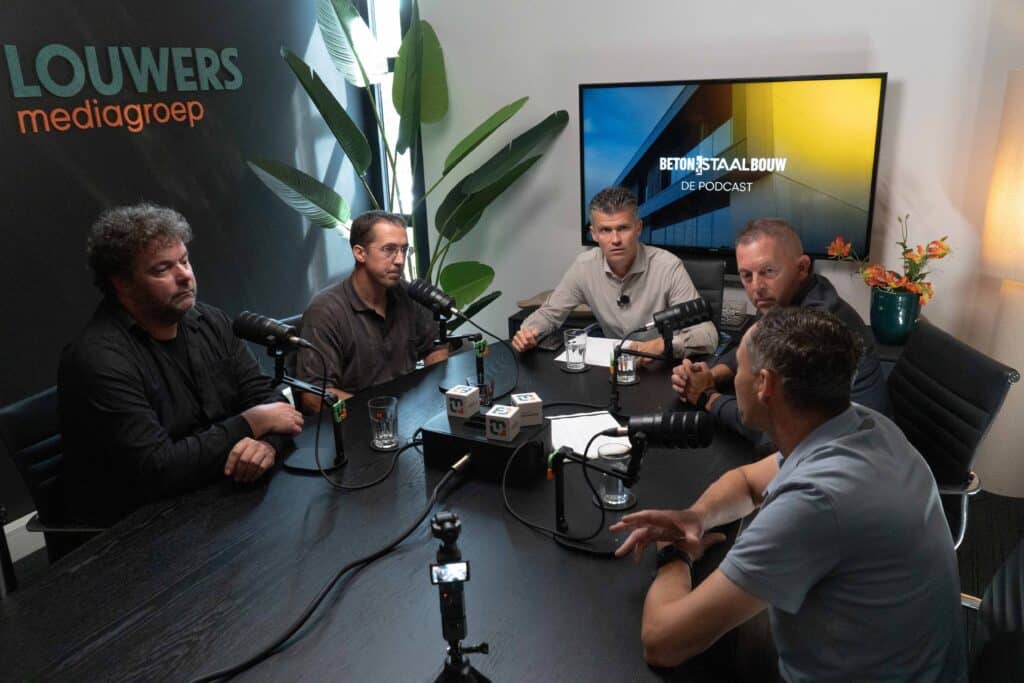
[00:05] Speed, Quality, and Sustainability in Precast Concrete
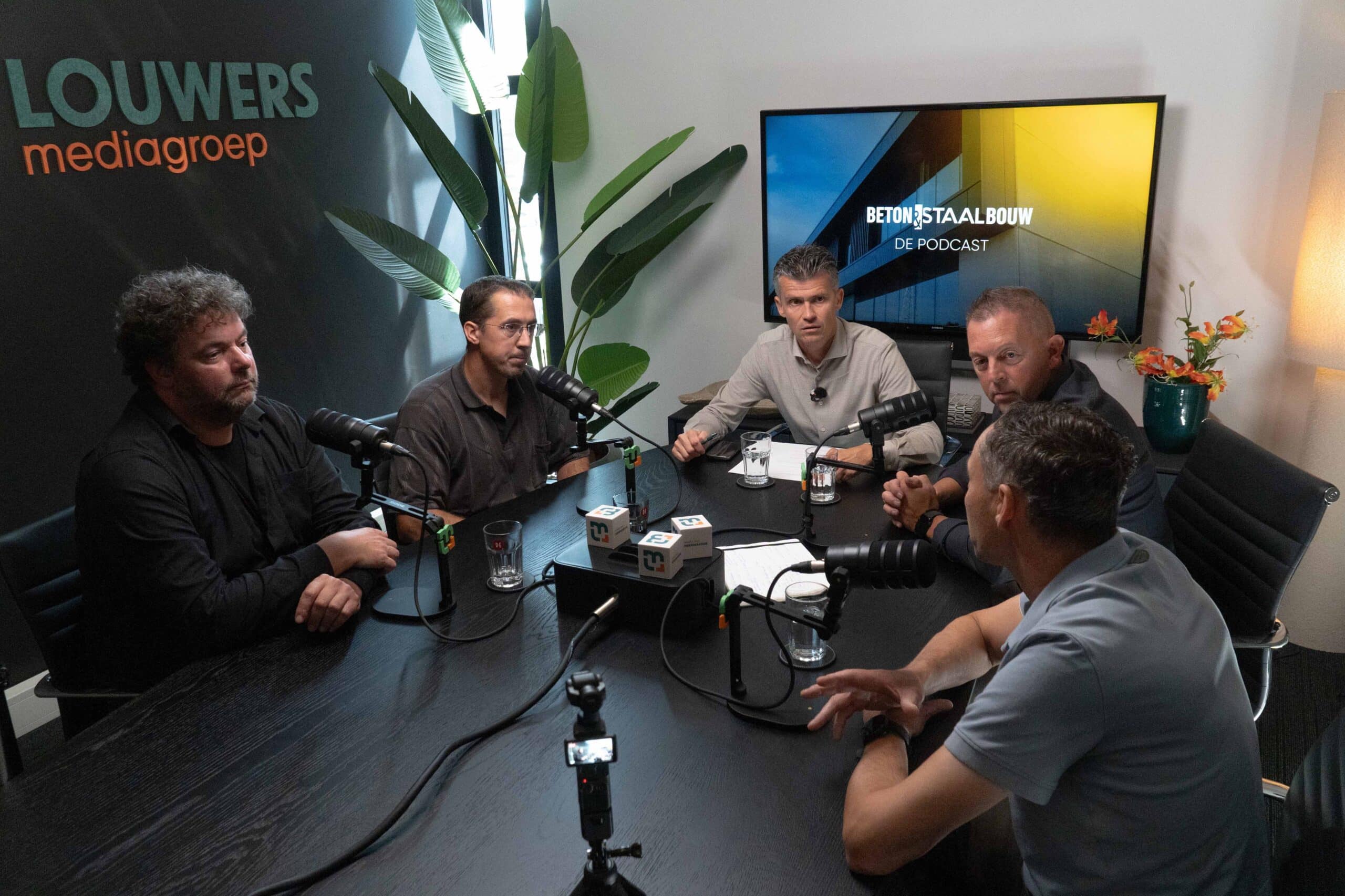
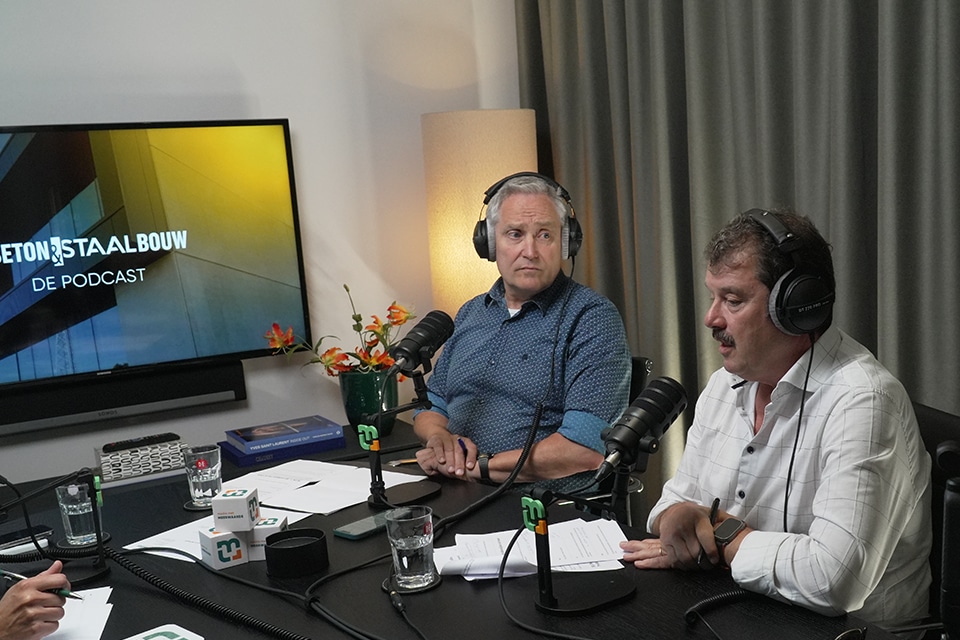
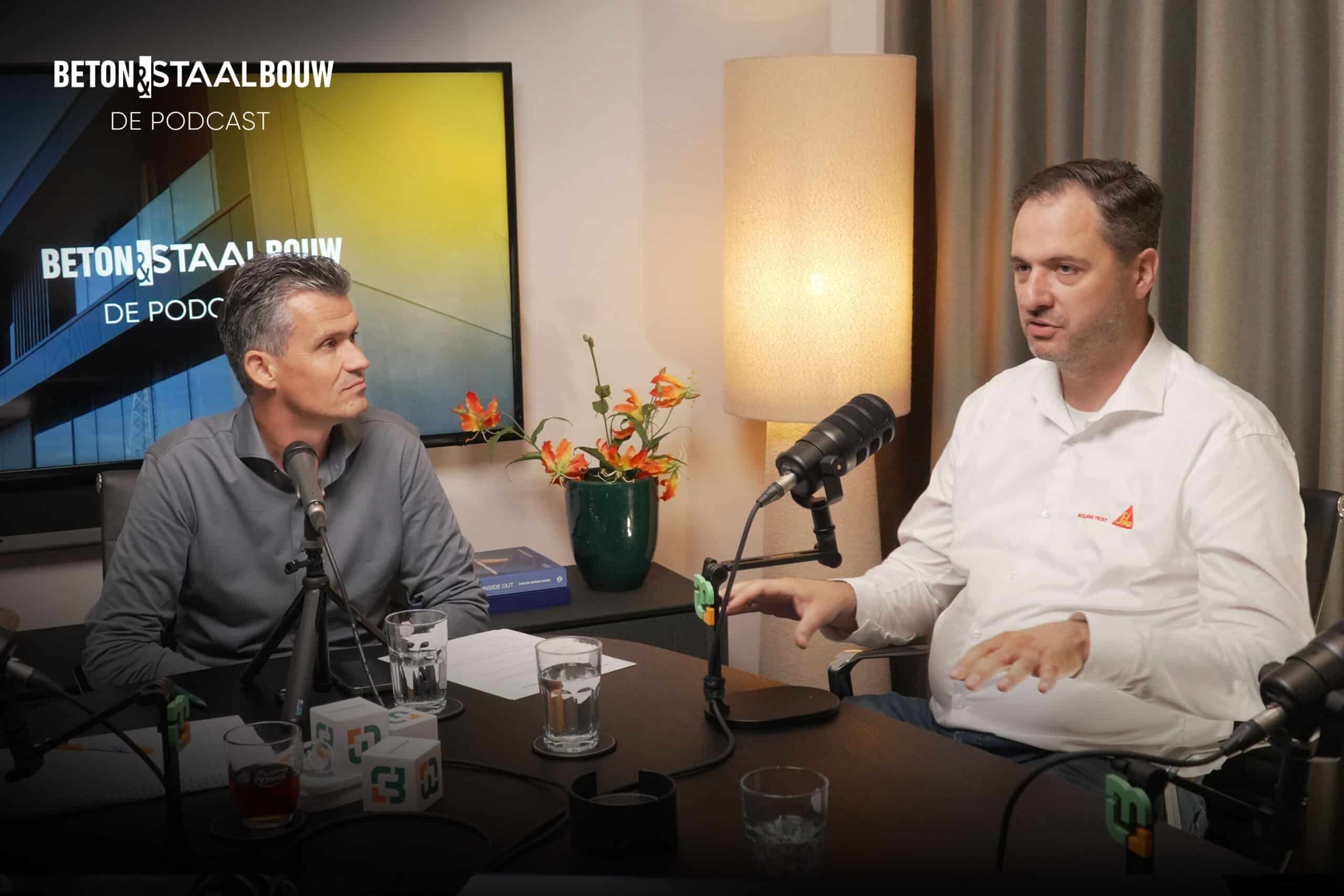
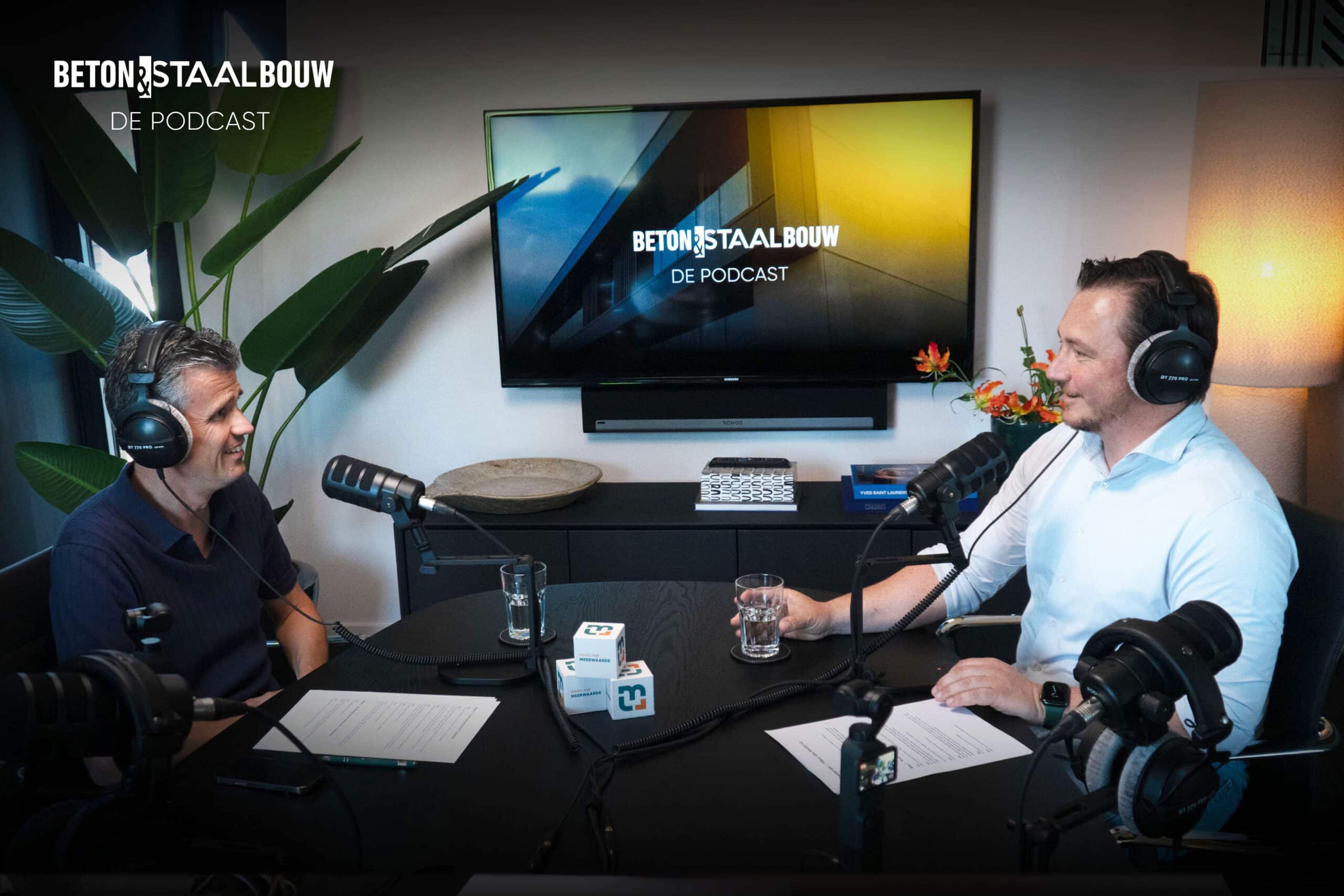
Roel van Gils: Welcome to another new episode of “Concrete and Steel Construction,” the podcast. In the precast concrete industry, it’s all about speed, quality, and sustainability. These three factors sometimes seem to conflict with one another. Faster production often means higher energy consumption. More sustainable production, on the other hand, requires less cement and lower CO2 emissions. And of course, quality must remain consistent down to the last millimeter. Smart admixtures are playing an increasingly important role in this. They ensure that concrete gains strength faster, can be removed from the formwork sooner, and requires less preheating at the factory. Today we’ll be discussing this with four guests, each of whom deals with these challenges on a daily basis from their own area of expertise. Gentlemen, welcome. Perhaps you could start by briefly introducing yourselves.
[00:49] Meeting the Guests
Jack Heugen: My name is Jack Heugen. I work at Geelen Beton in Wanssum. I’m a concrete technologist there and manage all the mixes. I mainly focus on sustainable concrete and circular concrete. In addition, I’m also an instructor at the Concrete Association. I teach the “Basic Knowledge of Concrete Technology” course. That’s what I do.
Roel van Gils: Okay, thank you.
Jos van der Scheer: Well, I'm Jos van der Scheer. I work at Spaansen in Harlingen. I'm responsible for concrete mixes and innovations related to them. I work on this every day to make the mixes more sustainable and thereby reduce CO2 emissions.
Roel van Gils: Okay, thank you.
Harry Verstappen: Yes, I’m Harry Verstappen. I’ve been working at Sika as a product engineer for a year now. My role involves providing technical support—for customers, of course, but also for our sales department. In addition, I’m also involved to some extent in product certification, mainly in a support role. It’s not that I handle the entire process, but I primarily provide support for the certification process. And I also help develop new products. So that includes conducting tests at customer sites and so on. I’ve been working at Sika for a year now as a quality engineer for ready-mix concrete. Here in the Netherlands, I think that’s called “transportbeton.”.
Roel van Gils: Yes. Okay, thank you.
Bastiaan Bos: My name is Bastiaan Bos. I started working in the ready-mix concrete industry 28 years ago, after completing my degree in civil engineering. That’s how I got my start in concrete. That’s also where I began my training as a concrete lab technician and concrete technologist. Then I joined Concrefy. It used to be called BIAS B.V. There, I completed the Concrete Technology Advisor program and worked there for 24 years. And then I decided to join Sika last September to see what more I could contribute to sustainability and address all the challenges facing the concrete industry in the Netherlands, given all the new regulations and sustainability requirements.
[03:17] The Biggest Challenges in Precast Concrete
Roel van Gils: Okay, thank you. You’re actually already setting the stage for the first question, Bastiaan. The challenges in precast concrete—that’s right. Today’s market. Where do the biggest challenges lie? I’ll turn to Jack and Jos first, of course. Can you two answer that? Jos?
Jos van der Scheer: Yes, well, the biggest challenge is to replicate the same mix as quickly as possible using a recipe that’s as sustainable as possible. And yes, we have 32 tables, and we want to start them over again every day. The pickup crew arrives at five o’clock. We start pouring at seven, finish in four hours, and then we try to adjust the mixtures—using accelerators, among other things—to make sure we can pull it off.
Jack Heugen: So, a double dump?
Jos van der Scheer: No, not two dumpings. We dump once a day. One shift, so to speak. But we do try to get everything out again in the evening. We need to do that. We do have tilting tables, though, so that makes a huge difference in terms of formwork removal efficiency.
Harry Verstappen: And do you remove the formwork on the same day?
Jos van der Scheer: Yes.
Harry Verstappen: Okay, that's pretty fast. A quick ten hours or so?
Jos van der Scheer: Yes, that's right.
Harry Verstappen: Yeah, pretty fast.
Jos van der Scheer: Yes, and we’ve made the transition from CEM II/B-S to CEM III/A, and we’re now using CEM III/B. So that’s the whole challenge—getting that done.
Harry Verstappen: Definitely.
Jos van der Scheer: Yes, because that wasn’t the case years ago. We actually started with CEM I. Because, well, that wasn’t an issue at all back then. But it is now.
[05:07] Less aggregate and lower cement content
Harry Verstappen: And what has been your experience so far with those CEM III/A and CEM III/B cements? Because I think that’s a significant step backward. You have to switch to a CEM III/A or CEM III/B and to a cement with a higher slag content. But you also want to reduce the cement content. So that makes it all extremely difficult, I think.
Jos van der Scheer: Yes, that’s right. The walls are made of XC1 concrete, which has a minimum cement content of 260 kilograms. We were right on target with CEM II/B-S. With CEM III/A, we’d need to go slightly higher. But we’re currently exploring the use of accelerators to bring that back down to 260 kilograms.
Bastiaan Bos: And you have the luxury of being able to adjust the temperature.
Jos van der Scheer: Yes.
Bastiaan Bos: If your tables are heated.
Jos van der Scheer: That's right.
Bastiaan Bos: Otherwise, we definitely won't make it in ten hours.
Jos van der Scheer: No.
Bastiaan Bos: Do you have to heat the tables all year round, or is that only during the winter?
Jos van der Scheer: No, all year round.
Harry Verstappen: All year long?
Jos van der Scheer: Yes.
Harry Verstappen: Okay.
Jos van der Scheer: And we can also raise the mixture temperature with hot water. So yes, we’re really trying to find the optimal solution right now. Yes, the accelerating raw materials.
Harry Verstappen: It really is a bit of a cost-benefit analysis—how to use an accelerating additive to minimize heating while keeping the cement content as low as possible. Yes, so that’s a difficult challenge, of course, that you have to tackle these days.
[06:31] More curing time at the end of the week
Jos van der Scheer: We use CEM III/B—and you mean toward the end of the week, right?
Harry Verstappen: Yeah, yeah.
Jos van der Scheer: And then we have Friday through Monday—or until Sunday evening, when the cleanup crew arrives—so we’ll have a little more time for paving. We’ll also be able to use less binder.
Jack Heugen: And Jos, are you talking about a CEM III/B 42.5 N?
Jos van der Scheer: Yes.
Jack Heugen: Because there’s also a 32.5 N that we use in hull production. Yes, you need heat for that. Because I, too, have to meet that 260-kilogram requirement. And I also have to deal with formwork removal strength. Of course, they want a production cycle as well.
Jos van der Scheer: So do you guys ride in the evening, too? Or on the carousel?
Jack Heugen: We have a carousel system at Geelen Beton in Wanssum. So we’ve recently expanded from three to six climate-controlled rooms. This gives us more capacity to let the concrete sit a little longer if needed. But demand is also growing steadily. So we want to ensure that those mixes are managed properly. And of course, the goal is to use as little clinker as possible—because that’s what it’s all about… We naturally want to produce high-quality concrete with as little CO2 as possible. And concrete that will still be durable many years from now. So the technical service life is, of course, also important here. So we can reduce the clinker content. We have to realize that this can also come at the expense of other factors. Because what has advantages can also bring negative aspects to light. We really need to be able to assess just how far we can go.
[08:10] Aggregate reduction and safe formwork removal strength
Roel van Gils: But do you also recognize the challenge that Jos is facing, of course?
Jack Heugen: Yes, definitely.
Roel van Gils: So what’s your biggest challenge?
Jack Heugen: The biggest challenge is reducing the clinker content. But we can’t do without cement yet. We won’t be able to do that for a long time. However, it is my challenge in the coming years to ensure that we move toward a reduction that is responsible. Yes, that applies to the building shell as well. We see that in prefabricated construction. We produce various elements and different compressive strength classes. And in the winter, we work with CEM III/A 52.5 N. And yes, the water-cement ratio is a key factor. We need to create good mixes that are stable and don’t segregate.
Jos van der Scheer: That's also a major challenge.
Jack Heugen: That’s a challenge, too. It’s not just about the right mixture. There are many other factors that matter. But in the winter, yes, you’ll really need some good help to manage this. You also can’t compromise on safety just to get the formwork removed on time. Because, well, at minus five degrees, you’re dealing with concrete mixes that are just three degrees—maybe even colder. And yet you’re still expected to be able to remove the formwork after twelve or fourteen hours. And there’s still about 5,000 kilograms hanging from the crane. The concrete technician is responsible for ensuring that everything is done properly. Because the production worker—the pourer and the formwork remover—simply doesn’t stop to consider that there are, of course, inherent dangers in the concrete pouring process.
[09:39] Accelerators, water-cement ratio, and temperature
Jos van der Scheer: The production process, where the rate of strength development… The most critical moment, so to speak, when removing the formwork is when the strength is at its lowest.
Jack Heugen: So yeah, Jos, what are you looking for? You’re definitely looking to use less clinker; you’re looking for higher production rates, and that requires optimizing your mix. Granular packing is one aspect of that. We’ve discussed that together before.
Jos van der Scheer: Yes, that's right.
Jack Heugen: Reduce the water content, because the water-cement ratio plays an important role. But to do that, you need accelerators. Yes, but which accelerator? Which cement do you use in the mix? So, you’re really spending a lot of time trying to find the right combination.
Jos van der Scheer: Yes.
Jack Heugen: Well, if you only have a vowel content of 23% in a mixture—which is what we use in the casco—then, yes, you’ll have to use an accelerator, raise the pH, or heat it. But yes, I’ve learned this from the experience we’ve gained working with the casco. We started the structural shell project in 2016. During the winter, you try to manage that process carefully so that the components come out right. The temperature—it’s huge… The heat input, the heat capacity introduced into your concrete—that’s so incredibly important.
[10:51] Additives and Workability
Roel van Gils: And, of course, the quality has to stay the same in the meantime. How difficult is it to strike that balance, Harry?
Harry Verstappen: Yes, how difficult is it to strike that balance? As Jack already mentioned, it’s obviously a huge challenge to get your concrete’s technical properties just right. You have to go for… Viscosity often increases as well when you switch to a mix with a very low water-cement ratio. And then you also need admixtures: plasticizers, superplasticizers—which are very powerful—that still allow you to end up with a mixture that has low viscosity, so that you can achieve a beautifully finished surface.
Jack Heugen: And when it comes to formwork removal, do you see a difference between traditional vibrated concrete and self-compacting concrete in that regard? In other words, do you think there’s a real distinction in the use of custom additives?.
Harry Verstappen: Additives are often adjusted accordingly. So, of course, if you…
Jack Heugen: With self-compacting concrete, the proportion is higher.
Harry Verstappen: In that case, you’re often working with superplasticizers that have a higher concentration—30, 35%, for example, or something like that. These polymers are often more effective at reducing water content. But the defoamer is also often adjusted accordingly. So, different defoamers that work better and require a slightly higher dosage—you name it. In self-compacting concrete, a distinction is made here. So it’s not the case that we have just one defoamer for all our products. It doesn’t work that way.
Jack Heugen: No, of course you also have to deal with ready-mix concrete, which takes longer on site than…
Harry Verstappen: Yes. And it’s often a matter of the combination with specific cements. Sometimes, certain defoamers, when used with certain cements, produce excellent results. With other manufacturers using different cements, the results aren’t quite as good. And then we’re sometimes asked: “Hey, is there anything else you can do for us by testing a different defoamer there?”
Jack Heugen: So your customers ask you that question?
Harry Verstappen: We often filter that out of a problem, so to speak. So they come back with certain issues. They say, for example, “Hey, we recently switched to a different cement,” because they, like you of course, are also searching for other cements with less clinker. And now we’re facing these problems that are starting to escalate. But we’re still working with a Sika product—a specific one. Yeah, what can we do about that? For example, with the issue I just mentioned—that the surfaces aren’t really very smooth, with too many air bubbles in them—our first response is often: “Hey, let’s take a look at that defoamer.” Is there anything we can do about that? And the form release agent, of course. There are so many factors at play—as you all know, of course.
[13:43] How do accelerators work?
Roel van Gils: Maybe let’s go back to the technical side for a moment, since accelerators and additives have already been mentioned a few times. Can you explain in simple terms what they do?
Bastiaan Bos: Well, the main purpose of an accelerator is, of course, to step on the gas. Yes, the challenge, of course, is that accelerators are also designed primarily to activate clinker—that is, C3A, so to speak, clinker minerals. The downside of the current situation is that clinker contents are getting lower and lower. The admixtures have been developed to activate the clinker. So that presents a huge challenge. Finding other ways to perhaps activate slag or make your concrete mix reactive in some other way. So, in short, what we’re doing quickly is simply giving your C3A a little nudge.
Roel van Gils: You don't make it stronger, but you make it faster… You want a quicker response.
Harry Verstappen: Yes, the hydration reaction is actually accelerated by the accelerators. This results in a faster dissolution of certain components of those clinker materials, which in turn allows the formation of C-S-H—or cement stone, so to speak—to proceed more quickly. So that process can occur earlier and more quickly. Yes, that’s the problem today, of course. We’re moving toward cements with less and less clinker, which naturally means those products are becoming less and less efficient.
Roel van Gils: So that means you have to use additives?
Harry Verstappen: You have to start using admixtures. So they’re also working on other admixtures—other accelerators that operate on a slightly different principle, which will speed up the hydration process. And now a new admixture is coming onto the market that actually uses seeding technology. So it essentially seeds certain C-S-H particles into your concrete, and those then serve as nuclei on which cement stone can grow. A kind of catalyst, really. So it’s a different technology to boost the process.
Roel van Gils: Even for the first few hours, then?
Harry Verstappen: It may also apply to late strength development, but it usually applies to early strength development—that's where it has the greatest effect.
Bastiaan Bos: Does the C-S-H reaction really kick in, say, after the first six hours?
Harry Verstappen: It doesn't have that much of an effect on bonding, but mainly on early strength development. Whereas with earlier technology, you often had raw materials that affected both early strength development and, quite often, bonding as well—so you saw accelerated bonding.
Roel van Gils: Yes.
Harry Verstappen: Or a combination of the two, then.
[16:26] New Technology and Self-Compacting Concrete
Roel van Gils: But is that new technology already being used?
Harry Verstappen: So we also have a number of products at Sika that are based on that. On that principle.
Roel van Gils: Are you guys using that yet?
Jos van der Scheer: No. What kind of products? No, well, actually, accelerators, yes. We were just talking about admixtures. That’s right—what an important factor that is. We work with self-compacting concrete. And as we move toward CEM III/B, you really notice that the mixes become much tougher. Well, others see it differently. They say it’s dry. And of course, it won’t pour. And that’s the biggest challenge we face.
Harry Verstappen: Yes, because of the high Blaine number, so to speak. You end up with a very high viscosity. This reduces the cement content and, of course, the water content.
Jos van der Scheer: Yes. And then you really have to look for an additive that works well with the cement. But in any case, there’s a huge difference between them.
Harry Verstappen: Yes, of course we have a whole range of different polymers, so to speak, that we can use. And then it’s really up to us to find the right combination of polymers that will work well with those specific cements. And that can be quite a challenge at times.
Bastiaan Bos: If you also have specific polymers, for example, that have high viscosity…
Harry Verstappen: It has to work technically, but it also has to be economically feasible, so to speak. I could also bring an additive to market that costs, say, ten euros per kilogram.
Jack Heugen: Of course. So you also have to deal with different customers, different product groups, and different features that people want. Yes, and if you really have to find the right balance, that’s very difficult these days.
Harry Verstappen: And I think: why is that difficult? Because I believe a lot of differences are going to emerge on the market now. A wide variety of new cements are going to hit the market, along with many different new fillers, all with their own unique properties. I also think we’re heading toward a situation where we’ll have to create almost tailor-made admixtures for customers. That used to happen much less frequently. Back then, you could develop a product that you could successfully use with multiple customers. And I think that approach is going to fade to some extent. And that’s going to make things very difficult and challenging.
Jack Heugen: That's interesting.
Harry Verstappen: And it's interesting, too. And then there are the circular raw materials to consider as well.
[18:58] Every concrete plant requires a different solution
Roel van Gils: So what you do there… you actually determine that based on each client’s parameters, right?
Harry Verstappen: Yes, whatever the customer wants, because every situation is different, of course. Every plant is different. The setup is completely different. The raw materials are different.
Bastiaan Bos: Mixing Plants.
Harry Verstappen: The mixing systems. It’s all different. These are all factors that come into play. So every customer has different needs. And that makes it very difficult to provide a definitive answer right away every time. And of course, it’s up to us to persevere and keep searching for good solutions.
Bastiaan Bos: A generic solution… It’s an interesting field. Which cement, which fillers, which plasticizers will work with it, and which mixing systems? Every customer is a unique case.
Jack Heugen: Yes, that's right. Over the next five years, so many new raw materials will be coming onto the market. So it's really a challenge—not only for the cement industry, but also for other fillers. But it's also a challenge for you to find the right additive to go with them.
Harry Verstappen: That's going to be quite a bit of work for us, too.
Bastiaan Bos: That's important in this context—making yourself known, talking to customers, and talking to non-customers as well.
[20:12] Consistent raw materials and narrow bandwidths
Jack Heugen: Different raw materials that are constantly changing. A lot of people don't realize that. But you also have to factor in the variations in your scales. Yeah, well, it all has to add up.
Jos van der Scheer: The Bandwidth of Your Raw Materials.
Jack Heugen: Yes, right. And then you think you’re measuring it out precisely to the liter, only to find there’s a deviation. And then you end up with a completely different picture. And then people are quick to point fingers. It’s the admixture’s fault, it’s the cement industry’s fault, it’s the formwork release agent’s fault. Yeah, and then it turns out it’s the limestone powder’s fault, for example. It’s possible. That you’re actually doing it right.
Roel van Gils: But how do you solve that, then?
Jack Heugen: Make clear agreements with suppliers. Be clear. I simply demand a certain range. I always say: I can’t stress this enough. The paint industry has been making the same orange color for eighty years—RAL such-and-such. Why can’t the concrete industry do the same? That’s something to think about. If you start thinking that way, you’ll involve the supplier in the process. The supplier is a key part of the concrete supply chain. We have to do this together.
Harry Verstappen: Yes, that's right.
Jack Heugen: It’s a team effort—that’s how we have to solve it. We have to be critical. And if you know you’re getting the same ingredients all the time, then you can keep baking the same sandwich.
Harry Verstappen: Yes.
Jack Heugen: A baker has to deal with that, too. If you use a different ingredient, you won’t get the same roll.
Jos van der Scheer: That's right.
Jack Heugen: It sounds very simple. But in practice, it really is that simple. It's just that it's very difficult to manage all of that.
Harry Verstappen: It can be very simple if everything goes smoothly. But once a problem arises, it becomes really difficult for the concrete engineers on site. And that often starts with trying to figure out: Okay, where exactly is the problem?
Jack Heugen: Yes, it’s a tough one for Sika, too. Practical concrete technology: figuring out right away where the problem lies? It can arise from fifteen different causes all at once, causing a mix to fail to flow, or fail to compact, or fail to set. Figure it out. Yeah, and the field is getting even smaller with technicians who really understand this. We really need to look for new talent, too—people with practical technical skills.
Harry Verstappen: That exchange between the various industries—so to speak—between cement, additives, and manufacturers—is becoming more and more important. Yes, I’m definitely seeing that happen more and more. And sharing experiences.
Jack Heugen: Sharing experiences, yes. And knowledge and an open mind.
[22:34] Additives are becoming increasingly important
Roel van Gils: But admixtures actually become more important as concrete becomes more sustainable. That’s certainly a claim we can…
Harry Verstappen: I think we can safely say that. Additives will become increasingly important in the coming years. That’s already somewhat the case, but the challenges will only get bigger. That’s for sure.
Jack Heugen: Accelerators, in particular. Yes, I've been saying that for years. Accelerators—that's really what it's going to be. And to what extent—well, that's the question.
Harry Verstappen: And that remains a difficult search, because there are so many accelerators on the market. But then again, it's not always that straightforward.
Bastiaan Bos: We're still looking for the golden egg, too.
Harry Verstappen: Does it exist?
Bastiaan Bos: Yes.
Harry Verstappen: Sometimes it's also the price, of course. Sometimes you do find good gear shifters, but they're so ridiculously expensive that you think: well…
Bastiaan Bos: It’s also the combination. You can look at a very powerful polymer that really only has a short working time… Maybe you need half an hour of workability. It cures for half an hour, and then you can say, “Okay, now I can release it.” And now you can let it harden. So then you can lower your water-cement ratio. High-performance polymers. Bringing external temperature into your concrete, like with your tables. You know how it is: if I have that average temperature, then I know for sure I can remove the forms after ten hours.
Jos van der Scheer: Yes, that’s right. You’re just building in a little bit of safety there. And then the operators can simply see on the screen: green or red. And that table won’t tip over if it’s not ready. So that’s very important. But anyway, let’s talk about the mixtures. The mixers used to be designed to be quite robust. So they could take a beating. But that tolerance is getting smaller and smaller. And the additive is indeed a very important factor in getting that little bit of clinker in there to react and do what we, as customers, want. We want a half-hour open time to be able to process it. And it really needs to get going pretty quickly. Because we also want to do machining or other operations.
[24:38] Heated tables and early strength
Roel van Gils: So you also use heated tables. Is that a combination, then? Do they reinforce each other?
Jos van der Scheer: Yes, definitely. The temperature in a mixture is actually the easiest way to speed up the process. It gets warm, and then the curing time really speeds up significantly. And the more you add and the faster you do it, the better it is for the final result.
Roel van Gils: But what would you ideally like to see? Less preheating, for example? That, of course, also consumes energy.
Jos van der Scheer: That’s right. It takes a lot of energy. But you do need to get it started. It’s important to get the heat in there as quickly as possible. Because anything you put in after, say, three hours…
Roel van Gils: Does it have no effect?
Jos van der Scheer: Or not. You keep it at the right temperature, but you can’t really get it to react. And during the open time—so to speak—the phase when it hasn’t set yet, that’s when you need the most energy from heat. And if you then apply a catalyst, it naturally helps to speed up the reactions even further.
Bastiaan Bos: That’s, so to speak, your minimum cement content. For XC1, it’s 260 kilos.
Jos van der Scheer: Yes.
Bastiaan Bos: That’s where you’d want to go. Then you can weigh your options: do I use accelerators, or do I heat my tables even more? Maybe I don’t need to go up to 25 degrees—or I don’t know what temperature they’re set to—but I want to get toward 30. Yes, that means I can significantly reduce the amount of cement. And where’s the tipping point? Yes, that’s where energy comes in. Yes, it has a bit to do with maturity. So yes, maturity is a really great tool for controlling and monitoring your hardening process.
Jos van der Scheer: Yes, but those are the challenges we face and recognize. And yes, heat as soon as possible. That’s when you’ll have the greatest impact.
[26:38] Ripeness measurements and shorter cycle times
Roel van Gils: Bastiaan, you mentioned a prefab manufacturer that reduced its cycle time by about 20%. Can you tell us a little more about that? And how do you get started on a project like that?
Bastiaan Bos: You go to a client. You see what they’re currently using, and you look at where their challenges lie, I’d say. And you can, just to give an example, use the maturity method. Measuring early strength. It’s the De Vree method, NEN 5970. You simply observe how your concrete behaves during the first twelve hours or the first 24 hours—whichever is appropriate. If you can map that out, then you can also provide very targeted advice. What am I going to adjust in the mix to get the most out of it? To reduce that 20% time, for example. Well, the challenges get bigger. Lower water-cement ratios, additional heating, different polymers, adding accelerators. It’s a nice interplay, so to speak, to advise a client: “Hey, I see opportunities.”.
Roel van Gils: Yes. Do you guys recognize that, too?
Unknown speaker: Yes.
Roel van Gils: You guys are constantly working on this, of course?
Jack Heugen: We're working on it full steam ahead. Yes, we've been working on making that happen for the past two years.
Jos van der Scheer: Yes, you really just have to figure out what works best within your system. I mean, you have a mixing process in a factory. But of course, you also have… In my opinion, by the way, the construction industry is shifting toward prefabrication. So soon you’ll have to…
Roel van Gils: Produce more?
Jos van der Scheer: Yes, more. The carpenters, the skilled workers, are just quitting. And for us, just as you said, it’s also important that we maintain the skills of our workers. Because that’s also a major challenge—getting it all done. So we’ll have to do more with fewer people and under tighter deadlines. The production lines stay the same, so yes, you’re still trying to get more products off the line.
[28:50] Prefabrication as a controlled manufacturing process
Jack Heugen: And I’d like to add, Jos, that prefabricated elements are, of course, all manufactured under controlled conditions in a factory. We have much better control over the process than when concrete is poured on-site. That’s an advantage. So yes, well, I think the future lies in being able to produce high-quality components using as little cement as possible. And you’ll need help with that—from the admixture industry, but also from other suppliers.
Bastiaan Bos: Yeah, you guys are really setting the bar pretty high. Yeah, that’s what they say. Reducing cement use from 480 kilograms to 360. But if you look at it this way: I want to go from 320 to 260—yeah, then you’re really at the absolute minimum.
Harry Verstappen: Yeah, a huge challenge right off the bat. Yeah, when I heard that—260 kilograms of cement… So that’s already a thing in the Netherlands. You have to take other things into account, too. They’re pretty progressive there, yeah.
Bastiaan Bos: If you look at neighboring countries, the Netherlands is leading the way in that regard.
Harry Verstappen: Definitely. I have to say, it’s a really fun challenge from a concrete technology standpoint.
Jos van der Scheer: Absolutely. And that’s when real challenges in concrete technology start to emerge. As I mentioned earlier: for CEM II/B-S, you have a nice, workable, robust mix. Then you move on to CEM III/B 42.5, and suddenly you end up with a completely different kind of mortar.
Jack Heugen: You need to make adjustments.
Jos van der Scheer: Yes.
Jack Heugen: Is it really that bad?
Jos van der Scheer: Well, no, it's not that bad.
Jack Heugen: The ZVB?
Jos van der Scheer: Yes. No, I think those raw materials are actually quite robust. And fortunately, I also have colleagues who know how to handle them well. Because basically, I always say: it’s the water-cement ratio that determines it. So if you want better workability, you really have to pay close attention to the admixture. In the sense that: well, the concrete is getting a bit stiffer, so you need a little more admixture. That’s how we adjust it to keep the WCF at the right level. Because ultimately, that determines the entire cycle.
Jack Heugen: That’s a factor for you guys. Yes, the water requirement in the mixture. Because that’s really what it’s all about.
Jos van der Scheer: You can also adjust the temperature in the mixer a little bit by using hot water.
[31:12] Temperature and Daily Quality Control
Bastiaan Bos: Do you have a minimum temperature that you want in the mold?
Jos van der Scheer: Well, we’d prefer a minimum of 20 degrees. Now that it’s summer, with the hot days, we’re heading toward 30. And that’s actually going really well. Normally, you run into other problems then—with workability, shrinkage, and the material starting to set faster. But it’s going really well. We have very direct lines of communication in the factory. I mean, for starters, we regularly walk over to the pourers to check what we’re bringing in and what we’re seeing. And fortunately, the guys give good feedback on what they’re seeing, too. Like: “Well, it’s different from yesterday.” And that’s how we keep track of things. Of course, there are the daily measurements of workability and compressive strength. But we’re not worried about that at all. That’s always fine. It’s really amazing with that CEM III/A.
Roel van Gils: So that's no longer the problem?
Jos van der Scheer: No, absolutely not. It could be a little less. But with CEM III/B, the strength does drop off quite a bit.
Bastiaan Bos: Is it also strong in the 28-day period?
Jos van der Scheer: Yes, because it just takes a lot longer. Those Friday mixes are made with 260 kilograms of CEM III/B. And that’s really very little clinker you have available.
[32:46] New Polymers and Seeding Technology
Roel van Gils: Let’s take a quick look behind the scenes at Sika. What’s coming up? What developments are you working on? You just mentioned it briefly, but…
Harry Verstappen: Yes, I’m not sure if I’m allowed or able to say much about that. But what’s really important right now in my situation is that Sika is bringing a lot of new polymers to market, so to speak. And the main goal will be to replace the outdated polymers with newer ones that are actually even more powerful.
Roel van Gils: And what's the advantage of that?
Harry Verstappen: That you can reduce water usage even further. That's the big advantage.
Bastiaan Bos: So, of course, “reducing” also means using less cement. It also means being able to work with mixtures containing much finer materials and with the new fillers. All of these need to be kept in motion. And that’s where those very powerful PCE polymers come in.
Harry Verstappen: So that’s a new type of polymer. And that’s actually going to be the major challenge in the coming years—one that’s right around the corner—to renew our outdated portfolio. So that’s a huge challenge. Now let’s talk about the accelerators. We also want to further expand seeding technology—which is fairly recent—by gaining more knowledge and experience. And maybe some new, interesting combinations will emerge as well. I’m thinking mainly of a blend between the old and the new technology. But that’s at a slightly higher level within Sika. I don’t personally get involved in that. But of course, I do keep an eye on it from a distance. There are certainly still developments underway. But, well, over the next few years, that will become clear, so to speak.
Roel van Gils: Haven't we gotten a scoop here yet?
Harry Verstappen: We don't have any breaking news yet—not yet.
[34:39] What Manufacturers Expect from Additive Suppliers
Roel van Gils: So, Jack and Jos, what do you actually expect from an excipient supplier based on your practical experience?
Jack Heugen: Yes, we really do face challenges. And as was just mentioned, we’ll soon be receiving six or seven recipes at the factory. So, a custom-formulated admixture. I think that’s the direction we need to take. For us as technologists, it’s about optimizing the overall mix of raw materials in a concrete blend. And that includes an admixture. We can’t do without admixtures. Because without them, we can’t produce this sustainable concrete. In 2000, they started using the third generation. You can clearly see that the concrete has improved significantly as a result—it’s more sustainable, provided you handle it properly. Because admixtures can also be a hazard. You really need to know what you’re doing.
Harry Verstappen: Especially with the new additives, which are even more potent. It becomes even more dangerous as you approach an overdose. So yes, if you have a system that tends to show some weighing discrepancies in the additive balance, those are all critical points that you’ll need to monitor more closely.
Jack Heugen: Yes, aside from the excipient, we have to strip down the mixtures more and more. Strip them down responsibly. So those limits—and you put it that way too—you only have a very narrow range. A range that allows me to accommodate some variation. Yes, so that stability issues and phase separation are minimized. And that’s what we’re working on. And for that, I really need a reliable excipient supplier. And of course, I also want to understand what’s happening, so I sometimes ask: how does that work?
Harry Verstappen: And yes, that was certainly the trend, especially in the past. The goal was to use as few additives as possible that were as versatile and robust as possible. The direction we’re heading in now—yes—means we’ll have to work in a more tailor-made way. And that will be a challenge for you as well.
Jack Heugen: It's a quest, a quest.
Harry Verstappen: And yes, customers very often expect us to come up with a solution right away. And I think that every now and then we have to tell them: yes, we’re going to have to try a few times before we find a solution.
Jack Heugen: You have to mention it. And if you explain it, they’ll understand. Yes, because they expect a lot from you. They think it’s some kind of magic solution that will fix everything. No, it’s just one part of the overall process.
Harry Verstappen: And that interaction with customers is, of course, going to be very important.
Jack Heugen: Yes. Keep asking questions.
Harry Verstappen: That's right. That will be very important.
[37:16] Weighing Deviations and Process Control
Jack Heugen: What I’m trying to say is, in fact: all those raw materials are weighed precisely to the kilogram. And yes, in the Netherlands, that’s not always the case. Which can catch you by surprise.
Jos van der Scheer: Yeah, no, that’s really the most important thing there is. I mean, if you have a 5% deviation, for example—that weighing system—it can go either way. And then all sorts of weird things start happening. You just don’t want that.
Jack Heugen: It depends on your mixture. If you have a 15-kilo deviation in the powder—too much—that means you’ll need to add more water to get the same sauce. The same yogurt, the hazelnut porridge—you can always call it that in ZVB. But if you add fifteen kilograms too much powder, that has to be compensated for. Yeah, and then you get… And then they’ll point out: “Hey, what’s going on here?” And then they’ll start making adjustments, and you’ll veer further and further off track.
Jos van der Scheer: Yes, no, that's right. We're seeing that happen, too. And at some point, you're way outside your bandwidth, and then it's like, "Help, what's going on?"
Harry Verstappen: Are they going back to basics for a bit? And are you guys also using more and more inline processes to monitor things? Like monitoring the mixer, the resistance, or the amperage of your mixer—things like that?
Jack Heugen: Sensors in the silos, beneath the filler materials. But it's just a tool.
Harry Verstappen: They're tools.
Jack Heugen: There are no systems that ensure the mixture always has the same workability. There are variations there, too. Let me come back to those fifteen kilograms for a moment. You might say, “Well, it’s only half a percent.” But that’s still enough water to reduce the total volume. If you have such a large deviation in the paint industry, you end up with a completely different color from the pigments.
Harry Verstappen: But I think there’s perhaps still room for improvement within the concrete industry when it comes to bringing more tools to market that can effectively support producers like you. More measurements, more digitization wherever possible—and where feasible, of course. Who knows—these days, it seems AI can solve everything.
Jack Heugen: Yes, for the most part.
Jos van der Scheer: What you do end up with, with all those meters, is that the process takes longer. So you have to sacrifice capacity.
Jack Heugen: Process engineer instead of concrete engineer.
Roel van Gils: Oh, right.
Jack Heugen: We'll definitely give it a try. With all those raw materials and all those blends we're getting. That's a fun challenge.
[39:49] The Next Five Years in Precast Concrete
Roel van Gils: What do you see as the most important development in precast concrete over the next five years?
Jos van der Scheer: Oh, well, over the next five years. We’ve now made the transition to CEM III/B. So from CEM I, CEM II/B-S, CEM III/A, CEM III/B. And eventually to zero kilograms of CO2.
Roel van Gils: You're already well on your way in that regard. Can you also express it in percentages?
Jos van der Scheer: Well, you’re switching from 100% clinker to 30% clinker in your cement. So that’s still quite a significant step. Yes, and the clinker is the biggest culprit when it comes to CO2. Or rather, it’s a major contributor—it produces a lot of CO2 emissions.
Roel van Gils: The hardest part, of course.
Jos van der Scheer: Yes, absolutely. That's…
Jack Heugen: 100% isn't working.
Jos van der Scheer: No, no.
Jack Heugen: I don't think it's going to work out either. But if we can get 80% to our ultimate goal, then I'll be very satisfied over the next five years. Yes, and I think it will work out, the way I see it.
Roel van Gils: Within five years?
Jack Heugen: Yes, I think so. But it also depends on what kind of product line you’re making. Do you have opportunities to invest as well?
Roel van Gils: Yes.
Jack Heugen: And that’s part of it, of course. People are hesitant to invest because they don’t have the knowledge to convince others.
[41:19] Regulations and Further Reductions in Cement Use
Jos van der Scheer: I don’t know about you, but at some point you run into regulations. You’re stuck in that little box. And so now we’re aiming for the best possible result within that box. But I’m convinced that it could work with a little less binder, provided you have enough time and the right temperature.
Roel van Gils: Time, yes. There isn't any, or at least not as much—that's for sure.
Jack Heugen: There’s hardly any time for that. So you just squeeze it all in here and there, quickly, in between other tasks. Yes, but to follow up on that: sure, there are possibilities, of course. You can also produce concrete elements as part of the test procedure. Yes, there are possibilities there, too. We’re working on that full steam ahead at Geelen Beton. And yes, we’re seeing that with a certain combination, we can even use 150 kilograms of cement and still meet the standard. And then we achieve an average compressive strength of 55 newtons. So there are possibilities. However, you obviously have to keep the entire process under control. Everything has to be just right. The mixer operator has to respond appropriately, and the supplier must, of course, ensure that they always deliver the same mix of raw materials. And you have to check thoroughly and keep monitoring.
Harry Verstappen: It's a whole chain. One weak link in the chain can ruin everything, so to speak.
Jack Heugen: Just turning one of them completely around. And then you have to be able to adapt very quickly. Yeah, right. And if, at some point, you suddenly get eight buckets of a different kind of concrete all at once—because the sand changes, becomes much coarser, or a certain powder changes—then you really have to be able to adapt immediately.
[43:00] Sika's Role in Promoting Sustainability
Roel van Gils: And Bastiaan, what role does Sika play in that?
Bastiaan Bos: Yes, a major role. I also think that, when I look at myself, I’m still fairly new at Sika. I do have 28 years of experience in concrete, which I naturally bring to the table. Sika is a very large company that develops its own polymers. So there’s a lot to explore within the organization. And my job is, so to speak, to keep my eyes open. It also involves talking to colleagues in other regions or on other continents, in other countries. Looking for that “golden egg,” as you call it. So that I can go to Jack or Jos and say, “I think I’ve found it.” And with that, we can help our customers—or even non-customers—become more sustainable. I think that’s the main task.
Harry Verstappen: That technical support is also becoming very important. It really needs to happen sort of in between the soup and the potatoes, so to speak. So the more we can carry out certain preliminary tests from our end—which can already take some of the burden off you—the better. You have to be able to take the burden off customers. You have to have confidence in it. I think that’s also going to be a very important focus area within Sika—being able to take more of that burden off customers in those areas. Because there’s already such a shortage of time within an organization.
Bastiaan Bos: Making it even smarter.
Jos van der Scheer: Yes. And it’s also important that we, as customers, clearly communicate what we actually want. Because if you don’t clearly state your needs, you won’t get the result you want.
Jack Heugen: Yes. And here in the Netherlands, we also need the expertise to ask specific questions of an additive supplier like the one here. Yes, that’s difficult.
[44:47] Closing
Roel van Gils: Let's agree to meet here at this table again after a certain period of time to present the golden egg. That would be great.
Jack Heugen: Yes, absolutely.
Roel van Gils: Gentlemen, thank you for sharing your knowledge and expertise. And listeners, thank you for tuning in.
Jack Heugen: Thank you.