[00:02] Introduction to the podcast and the topic of fire resistance
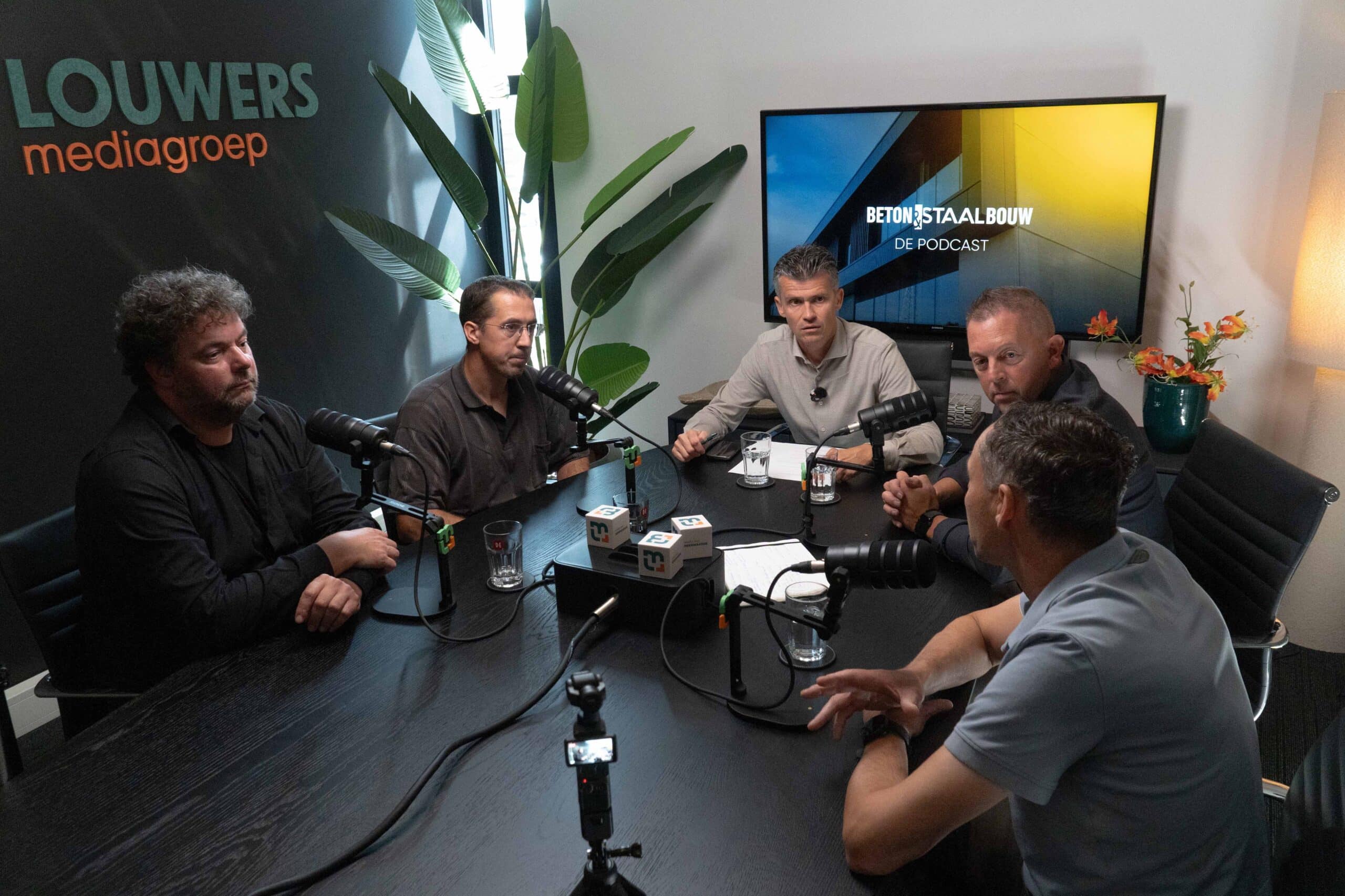
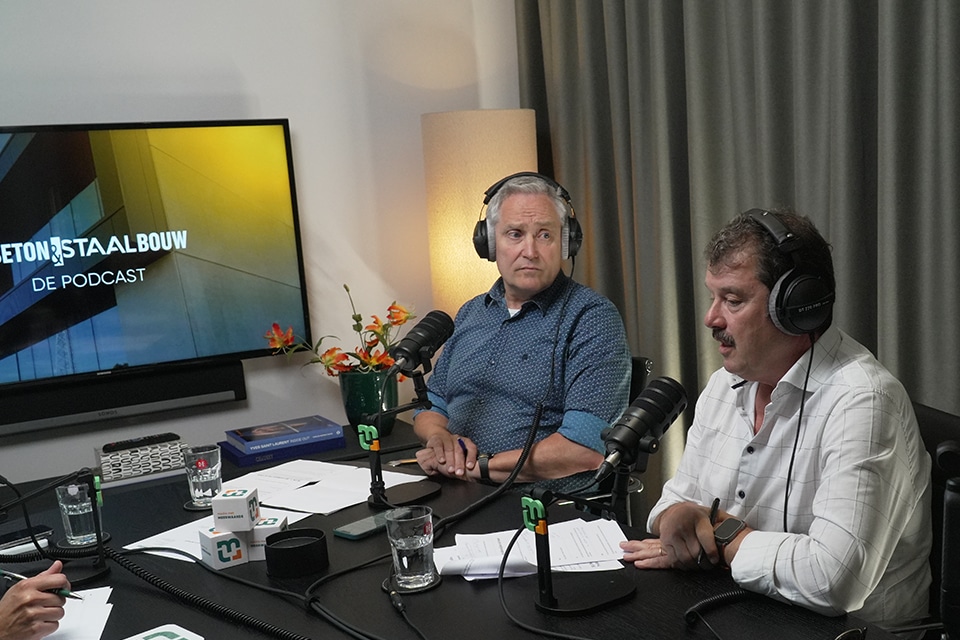
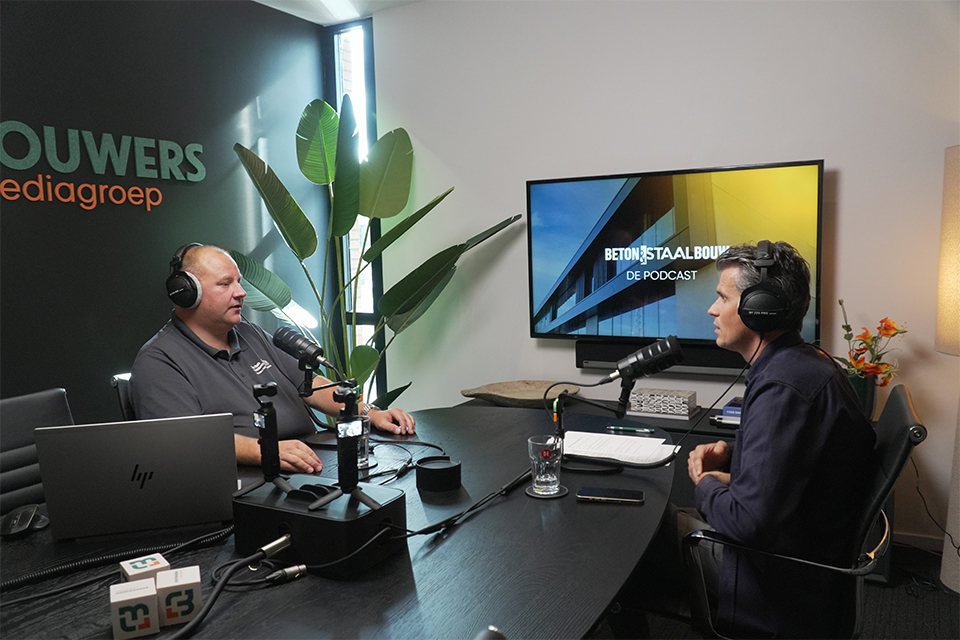
Roel van Gils: Welcome to another new episode of “Concrete and Steel Construction,” the podcast. Today’s focus is on fire resistance. Yes, fire safety—everyone considers it important, but at the same time, it’s perhaps one of the most underestimated aspects of a building. You usually don’t see it. You don’t see a fire-resistant penetration, the coating on a steel structure is barely noticeable, and a fire-resistant window frame often just looks like any other window frame. Until a fire breaks out. Then, suddenly, everything has to do exactly what it was designed to do. Joining me at the table is Adrie den Dulk from Den Dulk Brandwerend. Adrie, welcome. Please introduce yourself briefly.
Adrie den Dulk: I’m Adrie den Dulk, founder and founding father of Den Dulk Brandwerend BV. We specialize—we actually call ourselves a fire-resistant contractor—in everything that needs to be made fire-resistant. And with that, I personally think we’ve actually covered everything. We specialize in literally everything that needs to be made fire-resistant from a structural standpoint. So, for example, we don’t deal with fire alarms, sprinklers, or things like that. We handle everything related to construction.
[01:05] The Wide-Ranging Application of Structural Fire Resistance
Roel van Gils: Well, that’s exactly what we’re going to be talking about today, isn’t it? Because you say: we specialize in everything that needs to be fire-resistant. Just how broad is that, actually?
Adrie den Dulk: Well, that’s such a broad concept that all the components in a building—such as escape routes, floors, and everything else—can be made fire-resistant. Everything can also be considered fire-resistant, because all parts of a building can also be part of an escape route. And that’s why they could all be fire-resistant.
[01:31] Growing Focus on Fire Safety and Enforcement
Roel van Gils: Why is fire resistance such a hot topic right now?
Adrie den Dulk: Mainly because there have been a number of major fires in Europe in recent years. And that has served as a wake-up call for municipalities, safety regions, and insurers—as well as all the contractors. Because certain things hadn’t been properly tested before but have been thoroughly tested now, we’re now seeing that the materials used actually don’t meet the standards they need to meet in order to be an integral part of a fire-safe building. And regulations are now being enforced in this area.
Roel van Gils: Yes, more and more.
Adrie den Dulk: Yes, we’re noticing the same thing now. It used to be the fire department; these days, it’s the safety region and the municipality itself—specifically, the building and housing inspection department—that enforces these regulations. Lately, though, we’ve been noticing a growing trend where insurers are also getting more involved. And those insurers actually have a lot of leverage, because they impose certain requirements on the building owner and the builder, ensuring that fire safety is indeed properly in order. Otherwise, the building simply won’t be insured.
[02:37] Fire Safety in New and Existing Buildings
Roel van Gils: So you’re not just involved in new construction, but perhaps especially in renovations as well?
Adrie den Dulk: Yes, that’s right. We also work on new construction. We definitely do a lot of new construction. But what we do notice is that in older buildings and existing structures—especially if renovations have taken place—some properties are a bit older, and those areas often get neglected. Because what’s hidden behind the ceiling and out of sight—well, nobody really notices that. So until you open up a ceiling panel, you’re in for a huge surprise. Especially in older buildings—you wouldn’t believe what’s running through them. And certainly when there’s a change in tenants, for example, when a new tenant moves in. Yes, that’s when new wires and cables are run, and new air ducts are installed. Because, well, everyone wants things to be fresh, new, and nice. But the fire wall is often overlooked, which means a whole lot of flammable material actually passes through a fire wall that hasn’t been properly sealed.
Roel van Gils: Were people unaware of that until recently? Or were they just winging it?
Adrie den Dulk: It’s often ignorance. Ignorance. We’re building, and yes, that fire barrier—often people just think, “Oh, whatever.”.
[03:45] Architectural survey and investigation of fire barriers
Roel van Gils: And as long as things are going well, they’re going well, of course. And what do you do first when you’re called in? Where do you start—with a structural survey?
Adrie den Dulk: There are two ways we can get started. Sometimes our client provides us with a structural survey as a basis for assessing the building’s fire safety. We also often get requests from building owners or residents: “Den Dulk, can you come take a look at what’s wrong with our building?” Then we come out with the fire safety consultant to conduct an inspection. We open up the ceilings.
Roel van Gils: Oh, really?
Adrie den Dulk: Yes, definitely. Let me put it this way: it starts with archival research. So first, we pull out the drawings. Because, well, if you want to know where a fire wall is, you have to know where it’s located. With older buildings, it’s also common for the drawings to no longer exist or to be inaccurate. So then we have to figure out: what’s the actual layout? And that’s when we do that archival research. Based on that, we’ll then conduct an on-site inspection.
Roel van Gils: Yes.
Adrie den Dulk: Then we conduct an assessment, share the results with the client based on that, and ask what the client wants. Does the client want to proceed? Do they want us to prepare a quote to resolve the issue? If so, we’re more than happy to provide a quote. And if they want to request quotes from multiple providers, that’s fine too. That’s their right. But we start with either a baseline assessment or an inspection to identify what’s wrong with the property.
[05:09] Periodic inspection and maintenance of fire-resistant systems
Roel van Gils: And then, of course, you come across all sorts of things, just as you mentioned.
Adrie den Dulk: That’s possible. It’s not always necessary. We sometimes find that it’s fine—that it’s actually in pretty good shape. But what people often forget, of course, is that a fire-resistant seal—just like a wooden window frame that’s been painted on the outside—also simply requires maintenance. And that just needs to be checked once in a while. As described in the Bbl, periodic and adequate maintenance must be performed. Yes, and what that entails is up to each individual to decide. But we say: do it once every two or three years. Check it. That way, you’ll at least know that everything is still in good working order. And if any changes have occurred, you can address them right away during that maintenance check.
[05:53] Fire resistance is more than just a requirement on paper
Roel van Gils: Yes, because it’s actually more than just a requirement on paper. You mentioned that at the beginning, too. In practice, fire resistance is sometimes seen as just a checkmark on a piece of paper.
Adrie den Dulk: Yes, but in the past, a lot of it was seen as red tape. But we really need to get rid of that, because it’s not right. We need to do away with it as soon as possible.
Roel van Gils: And it’s not just about fire-rated penetrations through walls, for example, but it also involves glass, doors, and window frames. It’s a holistic approach. That’s why you act as a general contractor in that sense.
Adrie den Dulk: Yes, that's right. And also regarding how the application is used, how it is applied, or whether it may be applied.
Roel van Gils: That’s true, too. Otherwise, it’s just a matter of adding up the risks, of course. But that makes your work quite specialized.
Adrie den Dulk: Absolutely.
[06:38] Specialized knowledge and collaboration with suppliers
Roel van Gils: So, in that sense, you really need to know a little bit about everything.
Adrie den Dulk: Yes, and that’s why we have a number of specialists here at the office, and of course we also have a consultant on staff who knows all the ins and outs. And we often bounce ideas off each other when we’ve done a recording or when we’re not sure about something. We call each other on the job site. What do you think about this? How are we going to solve this? How can you solve this?
Roel van Gils: But you also need to know under what conditions to use it and how the system has been tested and certified.
Adrie den Dulk: Yes, that's right.
Roel van Gils: You guys have all that know-how.
Adrie den Dulk: That’s part of our company and also in our own database—it’s about how we can solve problems and how we’re allowed to solve them. And if we don’t know, we bring in the suppliers. We’re a certified Hilti Partner. We can consult with them directly at Hilti about how to handle, tackle, and address issues. But we also have that same support with Promat and our other material suppliers.
Roel van Gils: So we really stay in close contact with those suppliers.
Adrie den Dulk: And also about how you can make something.
Roel van Gils: Yes.
Adrie den Dulk: Sometimes we also have to engineer certain walls, for example, on large industrial projects. Yes, that’s when a Promat or a Hilti comes into play, and they join us on the construction site.
Roel van Gils: Okay.
Adrie den Dulk: Regarding that specific…
[07:58] In-house production of fire-resistant wooden window frames
Roel van Gils: Another unique aspect of your company is your in-house factory where fire-resistant window frames are manufactured—wooden window frames, to be precise. What makes those window frames so special? Or could you perhaps tell us a little about them?
Adrie den Dulk: The window frames themselves aren’t really anything special. I say that quite irreverently. I’m actually incredibly proud—proud as can be—of the window frame factory we have. The window frames we make—the fire-resistant ones, particularly those rated for 60 minutes—are made from sapelli mahogany. Sapelli mahogany has a specific wood density, which gives it a specific burn-through time, thereby providing it with its natural fire resistance.
Roel van Gils: So, no treatment or coat of paint?
Adrie den Dulk: No, not at all. Because of the wood’s density, it has a certain burn-in period. During that burn-in, charring occurs. Where charring has taken place, the burn time will be longer—just like the charcoal in your barbecue. Once it’s burned through, yes, it becomes harder to ignite. That’s why we also use Deventer profiles in the rebates to ensure airtightness, as well as in the panels and bottom sills. And the doors we use have been tested for the specific conditions in which they’ll be installed.
[09:12] Fire resistance of the complete window frame system
Roel van Gils: Yes, so they're tailored to that specific situation.
Adrie den Dulk: And then, when you consider everything as a whole, we can derive the fire resistance from that. But it also has to be installed in a proper wall construction. Because that’s another area where things can sometimes fall short. After all, you can have a fire-resistant window frame a thousand times over, but if the wall around it isn’t up to par, that’s the weakest link.
Roel van Gils: The window frame, the door, the glass—everything is fire-resistant for 60 minutes.
Adrie den Dulk: Whether it's 30 minutes or 90 minutes.
Roel van Gils: Oh, so it can even provide up to 90 minutes of fire resistance?
Adrie den Dulk: 120 minutes as well. But in the industry, we do 120 minutes. However, that applies only to certain other specializations. It doesn't apply to wooden window frames.
Roel van Gils: No, but do you only manufacture the fire-resistant window frames at the carpentry shop?
Adrie den Dulk: No, we recently took over a small woodworking business. We’re the only ones who mount it ourselves on fire-resistant window frames. But they make everything: railings, doors, walls—all kinds of carpentry work is done there.
Roel van Gils: If it is designed to be fire-resistant, it is shipped as a complete system.
Adrie den Dulk: Yes, that's the plan.
[10:13] Smoke resistance of doors and door frames
Roel van Gils: In a fire, you’re obviously dealing with flames and fire, but also with smoke.
Adrie den Dulk: Since 2024, a smoke-proof requirement has been added for new construction. That also means that if we replace a door in an existing building today, as soon as you replace the door, you must comply with that requirement. This means the door must also be smoke-tight. Consequently, we have to use Deventer profiles, for example. These are special rubber seals that are not only smoke-resistant but also fire-resistant.
Roel van Gils: Is it around the door?
Adrie den Dulk: It’s mounted around the door on the frame—so not on the door itself, but in the door jamb. The jamb is 25 mm wide, and that’s where we install the profile. This effectively creates an airtight seal for the door. And at the bottom of that door, we now install a drop seal. This drop seal closes when the door is shut. We offer both surface-mounted and recessed versions. It ensures that the smoke tightness required for a new-construction door is achieved. And, of course, the door closer that goes with it—because that door must have a door closer, since everything in a fire compartment must be self-closing. That door closer ensures that the entire assembly remains closed.
[11:27] Installation and finishing of fire-resistant window frames
Roel van Gils: Do you also handle the editing?
Adrie den Dulk: Yes, we’ve always had a number of carpenters and a carpentry crew on hand who remove the old window frames and install new ones. They’re also excellent at installing glass, in full compliance with all requirements. Everything is installed according to the specifications. And that includes the finishing touches, because we also have a company for that called Den Dulk Afbouw. Den Dulk Afbouw actually came about because we want to deliver a complete package. So now we also paint the window frames we’ve installed. We didn’t really do that in the past, but we do now. And that makes people very happy.
Roel van Gils: But painting in the sense of—and also with a fire-resistant coating?
Adrie den Dulk: No, just a regular coat.
Roel van Gils: Oh, you can actually do that?
Adrie den Dulk: Yes, that's perfectly possible.
[12:13] Fire-resistant treatment of steel and concrete
Roel van Gils: Okay. All right, so we’ve talked about wood—the wooden window frames—but of course you do a lot more than that: coating concrete and steel, or at least applying fire-retardant treatments. Can you tell us a little about that?
Adrie den Dulk: Well, we work with steel. I actually started the company by coating steel with fire-resistant coatings. That’s what we specialize in. Steel, of course, has a very problematic characteristic in the event of a fire: when it gets hot, it deforms very quickly. That’s why fire resistance requirements for steel must be strictly adhered to, and why coating and cladding thicknesses must be precisely maintained. Otherwise, steel will fail very quickly. In the past, we had a sawmill. We’re going to restart that as well. So we have our own sawmill and four spraying crews that can apply the fire-resistant coatings. We also have a whole line of fire-resistant coatings specifically designed for concrete. And while concrete, of course, has the excellent property of being extremely strong, it tends to spatter and crumble in a fire. The coatings we use for this purpose are ideally suited to making concrete fire-retardant as well.
Roel van Gils: But you're talking about your own sawmill. So what's the connection to steel?
Adrie den Dulk: Steel cladding—we cut the sheet metal for the steel cladding.
Roel van Gils: Oh, right—they're all custom-made.
Adrie den Dulk: And we make the bobbins ourselves, along with everything else that goes into it.
[13:36] Application and inspection of fire-resistant coatings
Roel van Gils: And how do you apply a coating like that? Is it a single coat, or do you apply it first and then paint over it?
Adrie den Dulk: No, no. What we see a lot these days is that we have to apply a good, approved primer. After that, we measure the coating thickness. Then we apply a fire-resistant coating on top, the thickness of which we’ve calculated. The tables provide the coating thickness we need for that specific steel profile. We then apply it in one or more layers, depending on the level of fire resistance required. We then perform a follow-up measurement. Depending on whether it’s desired, we may or may not apply a topcoat over it. We document everything in our logbook. We then issue a guarantee that the work was done properly. And that’s how the fire resistance is achieved.
[14:20] Registration, Logbooks, and Warranties
Roel van Gils: Look, that's a good point, too. Everything is recorded.
Adrie den Dulk: Everything. We work with Hilti on this, using Fieldwire. And everything is meticulously recorded there. On the drawing, with every detail—names and specifications, QR codes—so that everything has its own unique identifier. We record everything there. And that also serves as our warranty system.
Roel van Gils: And that warranty—how long does it last?
Adrie den Dulk: It depends on the product. And it really is product-specific. For example, it sometimes happens that we apply steel coatings to steel outdoors. Yes, the warranty and service life for that are different from a coating we apply indoors. So it really depends on the product.
[2:55 p.m.] Maintenance and Inspection of Coatings
Roel van Gils: And those coatings also require maintenance, as you mentioned at the beginning?
Adrie den Dulk: Yes, that's correct.
Roel van Gils: Can you give an example of that?
Adrie den Dulk: Well, look, the law actually states that everything must be undamaged. So, yes, how often does damage occur? There are projects where we come to inspect the steel structure annually.
Roel van Gils: Yes.
Adrie den Dulk: And that means they’ll need to be topped up as well. Some of these structures aren’t really visible—they’re mounted above a ceiling. You can leave them there for fifteen years, and nothing will happen to them.
Roel van Gils: No, yeah, I get it.
Adrie den Dulk: Do you know what happens above a ceiling like that?
Roel van Gils: If all goes well, nothing.
Adrie den Dulk: No, as far as I know.
Roel van Gils: No, that's right.
[3:30 p.m.] A real-world example of a project at Schiphol
Roel van Gils: Can you name a project in which all those examples—all those aspects—come together?
Adrie den Dulk: Yes, we recently completed a major project near Schiphol. There, we started by addressing an issue raised by the safety region regarding the glass, which was reportedly non-compliant. Mirrored wire glass—there was too large an area of it, and it had to be replaced. We did address all of that. But then we also conducted that fire safety inspection. And it turned out there were a whole lot of issues with the building. So over the years, due to renovations and other changes that have taken place, as well as changes in the requirements, it turned out, among other things, that the fire dampers installed there—which were, so to speak, rosette dampers—a term not everyone is familiar with—were actually steel louvered dampers that close automatically. Yes, they’re no longer fire-resistant. They wouldn’t pass the test.
Roel van Gils: Did it used to?
Adrie den Dulk: In the past, with the old testing methods, they did manage to slip through. But of course, testing methods have become more comprehensive and more effective. They’ve learned from that. And also, of course, from actual fires that have occurred. Yes, that’s when they realized: well, it doesn’t close after all. Or it closes too early. That’s why we also had to replace all the fire dampers in that building.
Roel van Gils: Right, yeah.
Adrie den Dulk: But also uncoated steel structures. Yes, those are things that have crept into a building like that over the years.
[4:50 p.m.] Changing testing methods and defects in existing buildings
Roel van Gils: But it was, of course, originally built according to the requirements of that time, and those requirements have since been tightened.
Adrie den Dulk: Right, right. But what we do notice a lot is that the requirements haven’t really changed at all. It’s just that back then, there was a lot of ignorance about them. And the contractor would just go ahead and build it. And we still ended up building a fire-resistant wall. Yes, but the connection to your steel roof, for example, isn’t fire-resistant. So yes, that’s something we deal with a lot these days.
Roel van Gils: It’s what you mentioned at the beginning. It’s very relevant right now, of course.
Adrie den Dulk: The issue comes up, and then it turns out we have to take action. Yes, building owners aren't exactly thrilled with us.
Roel van Gils: No, I understand that. They're all costs.
Adrie den Dulk: Yes, they’re all costs. And I understand that, too. It’s just that most people say, “Yeah, but back in the day, it was always approved by the safety region.” Well, back then, someone from the safety region would come by for a cup of coffee. They’d stop by for ten minutes to listen, and say, “Oh, yeah, it still looks pretty nice here.” And then they’d leave.
Roel van Gils: Yes.
Adrie den Dulk: These days, municipalities are demanding that the safety region provide a report, and they expect you to simply go and check it out.
Roel van Gils: Yes, and then you really have to look at the reasoning behind it.
Adrie den Dulk: And then we just have to take a look. And it turns out that further investigation is needed.
Roel van Gils: Yes, and then we come along, and of course you’re back to looking at the big picture. And there’s always something wrong with everything, of course.
[5:53 p.m.] Fire Safety and Building Occupancy Rates
Roel van Gils: Fire resistance also has something to do with occupancy rates, doesn't it? At least, there is a connection there. Are there any buildings you pay extra attention to?
Adrie den Dulk: Yes, well, we’ve been noticing a lot lately that it’s the residential buildings—the ones where people actually live—that are affected. So where do fires break out first? Often in a home—not even in an office building, not even in a hospital. Because a hospital, for example, has a high occupancy rate but poor ventilation. But what do we notice in a hospital? That the alarm system is very fast. You also have detectors installed in a hospital, but you also have actual monitoring in the form of the people who work there.
Roel van Gils: So they could anticipate that.
Adrie den Dulk: Yes, but in a building where you’re sleeping—like a hotel—or in a residential setting where you’re staying, yes, that’s where we notice that people don’t realize a fire has broken out. And especially if it’s happening with your downstairs neighbors, for example. I wouldn’t notice if a fire broke out at my downstairs neighbors’ place.
Roel van Gils: No, I see.
Adrie den Dulk: By the time it reaches me, it’s already too late. And those are precisely the types of buildings we’re seeing a lot of these days—the ones that housing associations are also paying much more attention to. Yes, they’re really taking action on that these days. Thankfully.
[7:09 p.m.] Allowing time for alerting and evacuation
Roel van Gils: Yes, and I think it's mainly about making time in those situations.
Adrie den Dulk: Yes, to allow enough time for the fire department to be alerted and for the fire departments to have time to respond to the fire. And for people to have time to evacuate the building and flee.
[7:27 p.m.] Fire Hazards Near Meter Cabinets and Air Ducts
Roel van Gils: And what kinds of materials and aspects all come together in those kinds of projects?
Adrie den Dulk: Yes, what we see a lot of are meter cabinets. The meter cabinet itself needs to be made fire-resistant, because, well, it’s basically an open connection to your neighbors.
Roel van Gils: Oh, that one just goes down.
Adrie den Dulk: Yeah, it just goes down there. What's in the meter cabinet? Yeah, a plastic pipe. Well, what burns really well? Plastic.
Roel van Gils: Yes, that's the first thing.
Adrie den Dulk: And then there are the air ducts. Because everyone wants fresh air in their home. But those are risers that run from apartment to apartment. They’re large risers that are just left open. Well, if they’re not clean, what builds up in them? Dust. Well, dust burns. So if a fire breaks out, you literally have a fuse running right through your building. And what we’re seeing a lot now is that, because we take a comprehensive approach, we clean the air duct. We install a fire damper in it. And then it’s safe. And if you take care of everything and have a specialized company install the fire alarms again, well, then you’re basically completely protected.
[8:25 p.m.] Fire dampers in new and older homes
Roel van Gils: Wasn't that taken into account during construction—a fire damper in those ducts, for example?
Adrie den Dulk: In new construction, yes, now.
Roel van Gils: Yes, now I do, yes.
Adrie den Dulk: We do now. We do it everywhere in new construction. It’s just that, literally until ten years ago, it often simply wasn’t done.
Roel van Gils: Right, yeah.
Adrie den Dulk: Yes.
Roel van Gils: But people who hear this, who… Well, you should take a moment to check yourself.
Adrie den Dulk: Or we'll come by to check.
Roel van Gils: Yes, no, of course. But it's actually…
Adrie den Dulk: No, but they are things. We’re sometimes surprised by just how open the Netherlands is—literally, so to speak.
[8:56 p.m.] Advice for Residents and Building Owners
Roel van Gils: Yes, so what exactly is the advice?
Adrie den Dulk: Yes, ask your building owner or feel free to take a look yourself. Use your common sense. Does what’s here look right? And often, if you live in an apartment complex, you’ll see a sticker from the fire-resistant installation company in the utility closet. It has a QR code. Yes, feel free to scan that QR code. That will take you to the section of the logbook where that fire-resistant penetration is listed. If everything is in order. If it’s not, well, then you can…
Roel van Gils: In that case, you should definitely raise the alarm.
Adrie den Dulk: It's about everyone's safety.
Roel van Gils: Absolutely. That's your life.
Adrie den Dulk: That belongs to your neighbors, too.
Roel van Gils: But also of yourself.
[21:32] Den Dulk Brandwerend's methodology and distinctive approach
Roel van Gils: Okay. Well, if you had to summarize your approach, what sets you apart, Adrie?
Adrie den Dulk: My business partner always puts it so well: “We do what we say, and we say what we do.” And that’s such a wonderful motto. We try to base everything we do on that principle. So, through our advice, we strive to contribute ideas toward a comprehensive concept.
[21:53] Project Scope and Fire Resistance in Data Centers
Roel van Gils: And in terms of project size, what kind of projects are we talking about? Can you handle anything?
Adrie den Dulk: No, I don't even want to be able to handle everything. No, that's… But when it comes to project size, we're also working on data centers. Those are very large projects. We have a dedicated team for that. They're well-suited to the task.
Roel van Gils: What's the main attraction there?
Adrie den Dulk: Mainly large cable penetrations through walls to servers. But also the fire resistance of water pipes in that same building. Because, yes, cooling pipes, but also regular drinking water pipes. Because, of course, every building has a restroom. And everything has supply lines, and those run through fire barriers.
[22:32] Common Mistakes in Connections and Feed-Throughs
Roel van Gils: Where do things go wrong the most?
Adrie den Dulk: In the implementation of—let’s say—the transition from a non-fire-resistant to a fire-resistant material. So also from concrete to a wall—that transition. There are often misconceptions about how fire resistance is achieved. So, for example, how do I make my steel pipe that goes through that wall fire-resistant? Just using a little sealant is often not enough. Certainly not for a steel pipe that’s about 200 millimeters in diameter. Because you can seal it up nicely with a fire-resistant acrylic sealant. That does block some things. But, well, steel is a conductor. So the fire will be on the other side within five minutes.
Roel van Gils: Yeah, yeah, yeah. Anyway, you guys know that.
Adrie den Dulk: We know that. It's just that a lot of other people don't.
[23:26] Recommendations and Proposed Solutions in Fire Safety Investigations
Roel van Gils: But do you guys contribute your thoughts on that as well? Do you offer advice?
Adrie den Dulk: We have the person who issues the recommendation act on our behalf. So my consultant—our fire safety consultant—also includes application guidelines in the report. And that’s how we make a difference. It’s not as if we just state that something is bad. No, we also provide implementation guidelines.
Roel van Gils: The solution to that, too.
Adrie den Dulk: And then I don't have to do it myself. I don't have to carry it all out. But I do want the consultant to take it on, to make sure we're heading in that direction.
[23:58] Flexible deployment and support for enforcement
Roel van Gils: And suppose a conclusion has been reached: something needs to be done. Can you act quickly in that case?
Adrie den Dulk: Yes, we currently have a team of 35 people, which includes some flexible workers, so we can deploy them flexibly wherever they’re needed. It’s not something that happens in two days, though.
Roel van Gils: No, no, but you don't have to wait for months.
Adrie den Dulk: No, you don’t have to wait months. And even if there were problems with the safety region—such as fines, threats, or things like that— We also have a consultant on staff who speaks the safety region’s language. And that person can often help smooth things over. So it’s not always unimportant.
Roel van Gils: So, ultimately, it’s mainly about speed and reliability, then?
Adrie den Dulk: Yes. But especially with doors and window frames—there’s often a lead time for those. Because, of course, they’re custom-made parts. So yes, there’s sometimes a lead time for those.
[24:51] Building Owners' Responsibility for Fire Safety
Roel van Gils: Yeah, no, I get it. One last question. What would you like everyone responsible for a building to ask themselves today?
Adrie den Dulk: Does my building look good?
Roel van Gils: Yeah, what if a fire breaks out tonight?
Adrie den Dulk: Am I doing the right thing? In good faith, that is.
Roel van Gils: To the best of my knowledge and belief.
Adrie den Dulk: I think that's the most important thing.
Roel van Gils: And what if you don't have all that expertise in-house?
Adrie den Dulk: Yes, ask us or one of our partner companies. We also have offices throughout the Netherlands, but we can’t be everywhere at once. Just ask a reputable consulting firm.
Roel van Gils: Yeah, okay. Great. Thanks, Adrie.
Adrie den Dulk: Here you go.
Roel van Gils: Concrete and Steel Construction, the podcast, is produced by Louwers Media Group.