Platform on concrete and steel in construction
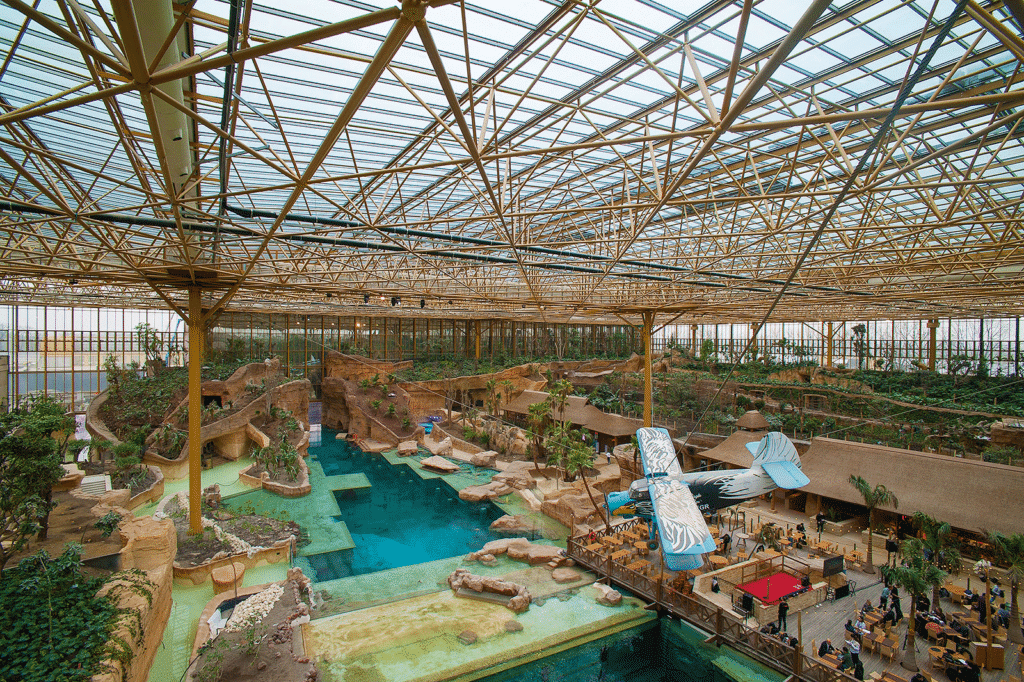
Edenya. This is the name of Pairi Daiza's new botanical greenhouse. With a ground area of no less than 40,000 m2 and a height of 25 meters, Edenya is the largest tropical greenhouse in the world. It will be the new home for plants and several animals. The impressive structure was built by Deforche Construction Group of Izegem and took 3.5 years to complete. “What we have realized here is unprecedented,” states CEO Jeroen De Cock. “The end result is impressive and illustrates our technical ingenuity. This will also open new doors for us.”
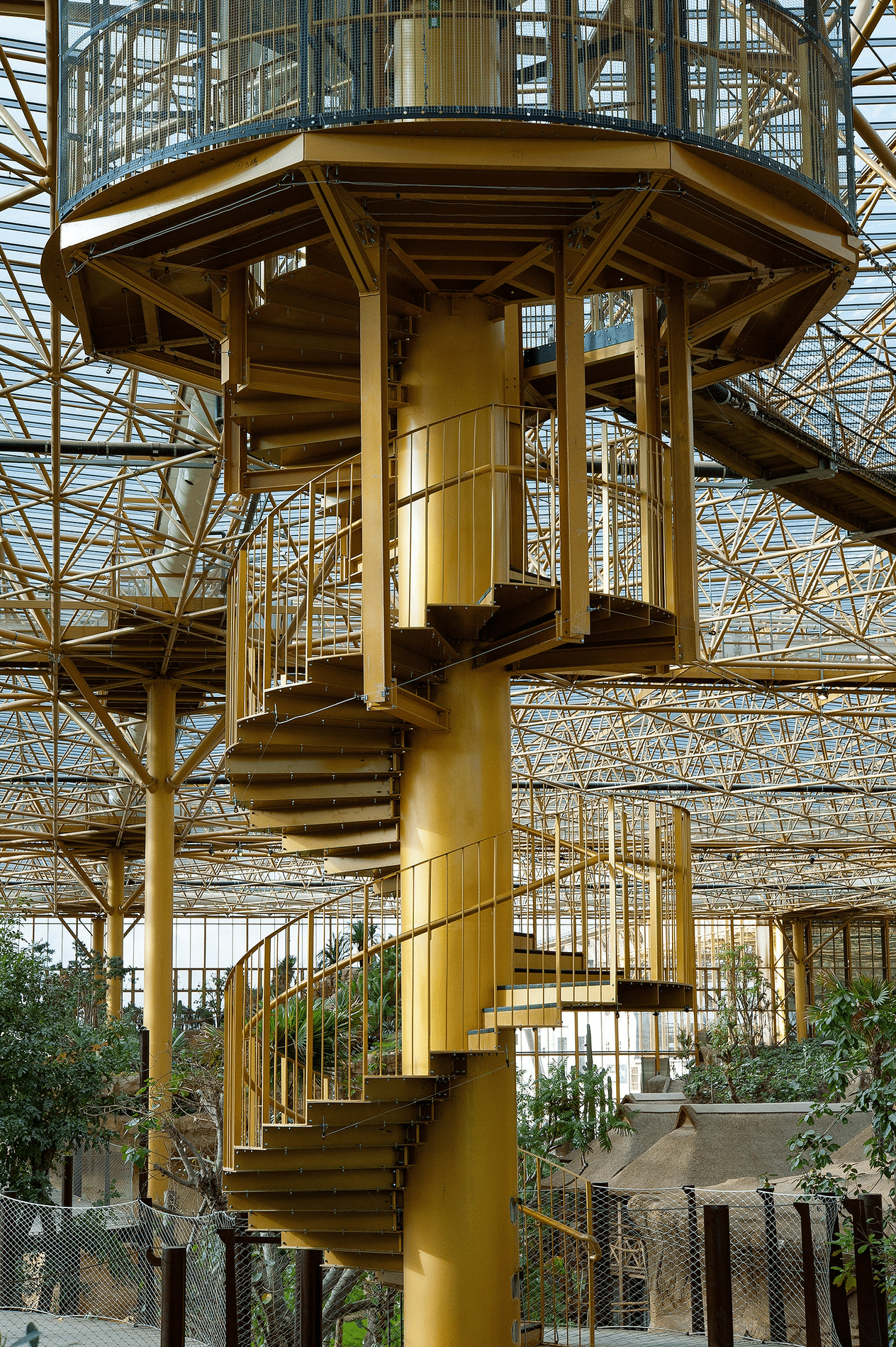
Recently, Pairi Daiza opened a new tropical world with waterfalls, rivers and a jungle full of rare animals. In addition to the fauna and flora, the construction, with its unusual architecture, also stands out. “Visitors will be amazed. Edenya brings together design, functionality, climate, people and animals in harmony and in one giant building,” says De Cock. Deforche Construction Group was allowed to develop Edenya. “And that was not an obvious task. On the one hand, we had to respect the architectural vision. On the other hand, there were the technical challenges in terms of safety, sustainability, light quality and comfort.”
Three and a half years were eventually spent working on the project. In the process, Forzon, the department within the West Flanders construction group that specializes in glass roof structures, translated the design into a feasible construction project. “This included the complete engineering, including calculating the structural loads, determining the configurations in glass, steel and aluminum and working out technical solutions for a number of complex construction nodes,” De Cock explains. Prefabrication and assembly were also coordinated by Forzon. “As a result, design and execution were always aligned.”
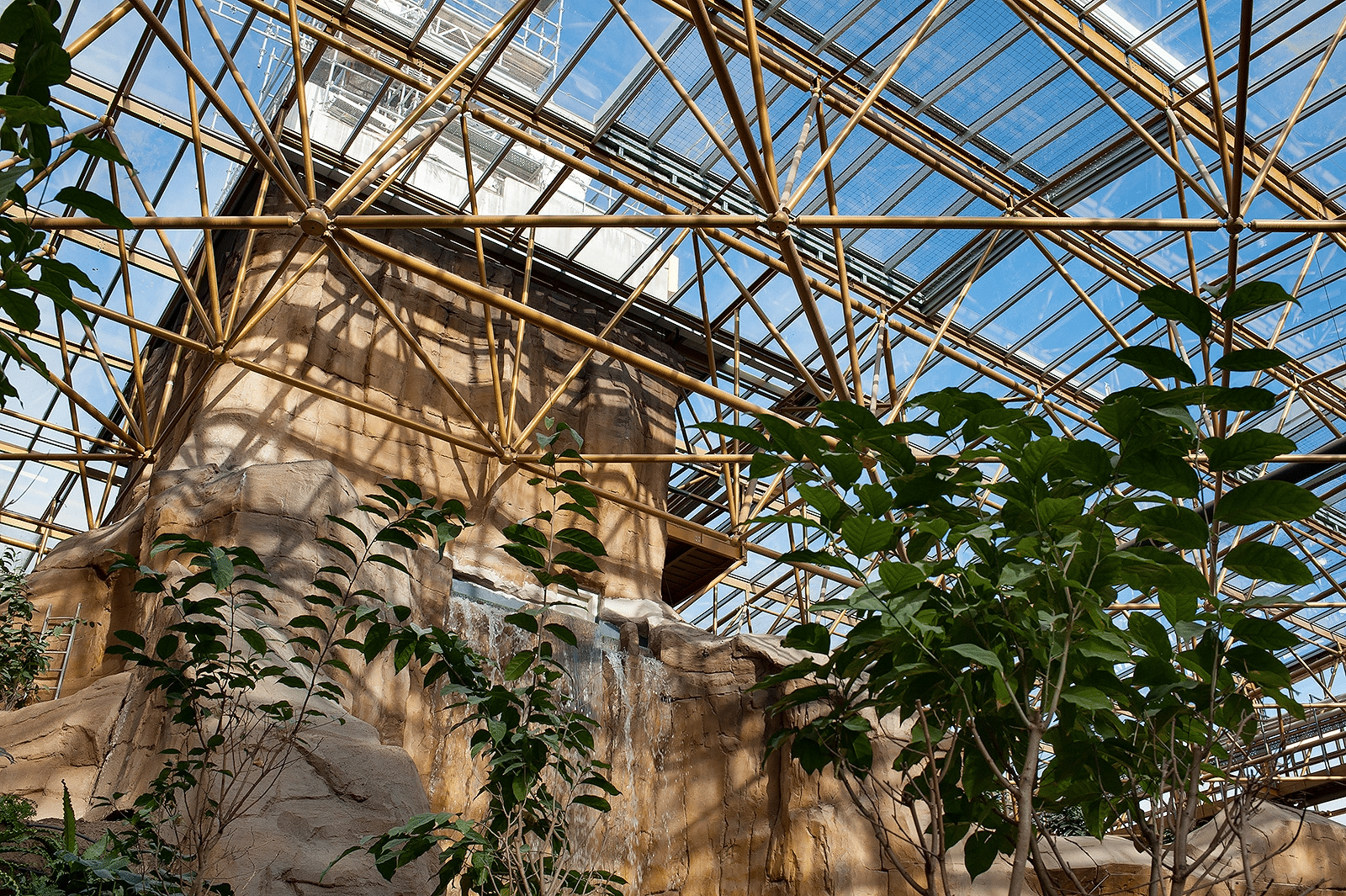
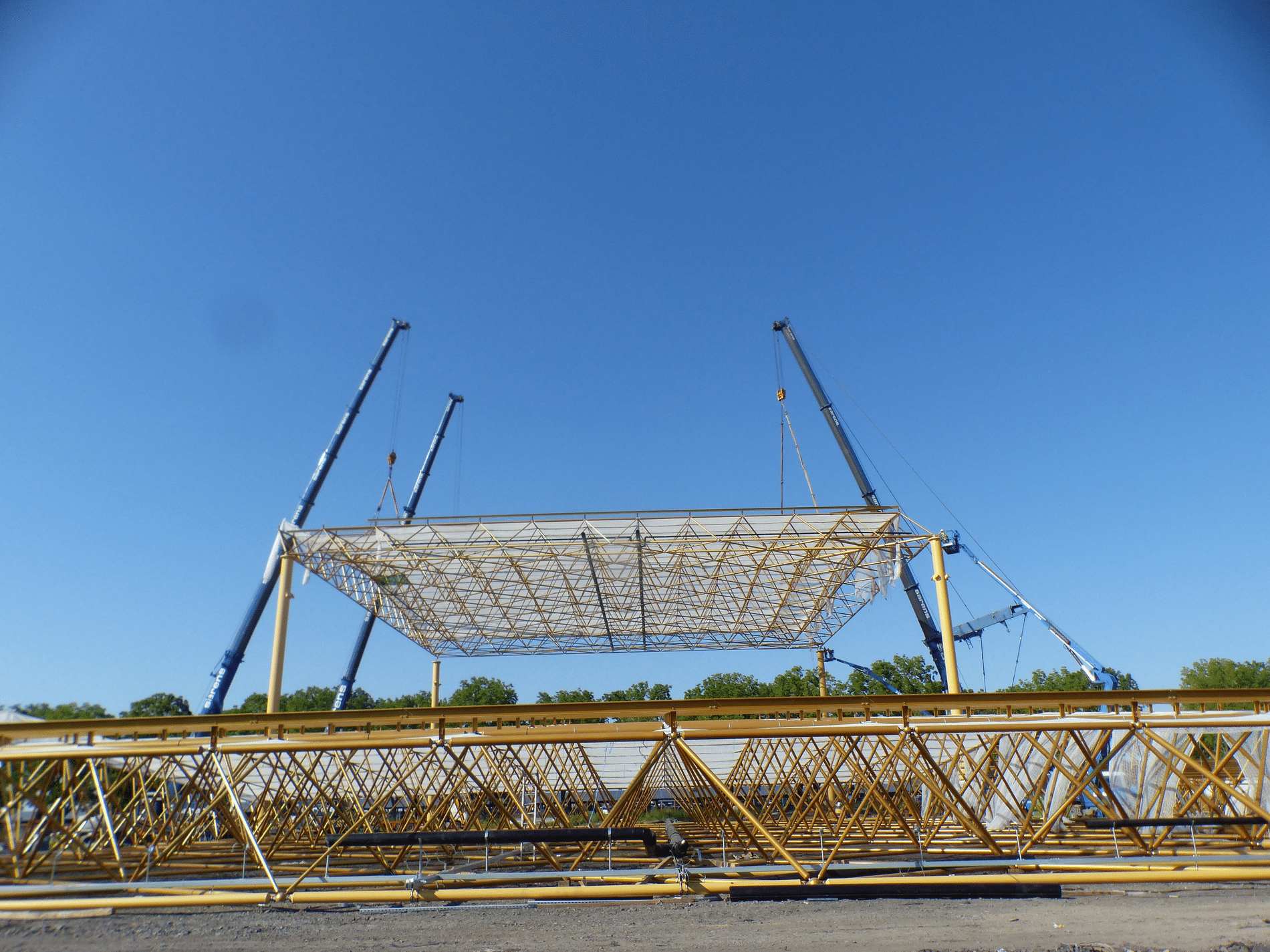
To assemble Edenya, various techniques from soccer stadium construction and greenhouse construction were combined. “To achieve speed, we chose to work with lightweight construction elements and large prefabricated modules. Those modules now span some 2,500 m2 of roof area. They were first built on the ground and then hoisted up to a height of 20 meters, piece by piece, in 10 minutes,” explains project manager Stijn Cappon. That technique offered many advantages. “It allowed us to build the roof structure and underlying areas in parallel, independent of weather conditions, which allowed the works to progress smoothly.”
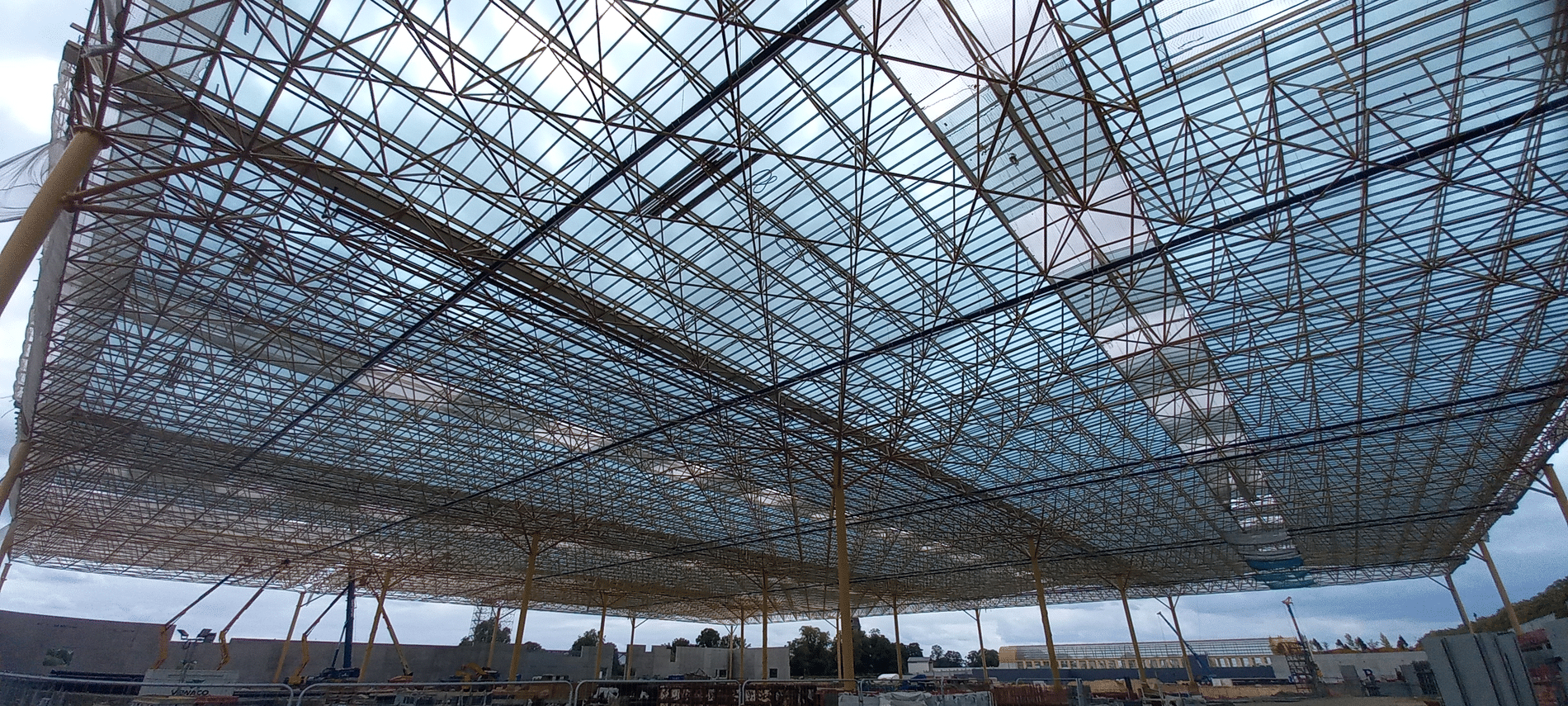
The glass was also designed specifically for Edenya. “The glass canopy fulfills an important function. It provides insulation while regulating sunlight and UV radiation,” Cappon continues. That UV regulation is necessary and should benefit the well-being of the plants and animals. “Standard glazing does not filter sufficiently and could be harmful to flora and fauna. The intention here is to mimic nature so faithfully and make the animals feel comfortable. Therefore, we designed the glass roof to be easy to maintain. For example, it can be cleaned with robots so as not to disturb the animals.”
The glass is also Cradle-to-Cradle certified, and the structure itself, which consists of steel and aluminum, can be recycled for the most part. “We built Edenya according to circular principles. Not only because this was asked of us, but because these principles are in our DNA. After all, we are building here for different generations who will experience nature in a unique way,” De Cock echoes. The construction company has already succeeded in that goal. The modular design and lightweight construction ensure efficient use of materials, while ventilation, water recovery and energy management optimize consumption. “The result is a paradise, with minimal impact on the environment.”
“We hope that every visitor not only takes notice of the natural beauty, but also pauses to consider the structure itself,” De Cock concludes. “Years of intense work have gone into this and we hope that this iconic realization will further put our company on the map, even far beyond our borders.”