Platform on concrete and steel in construction
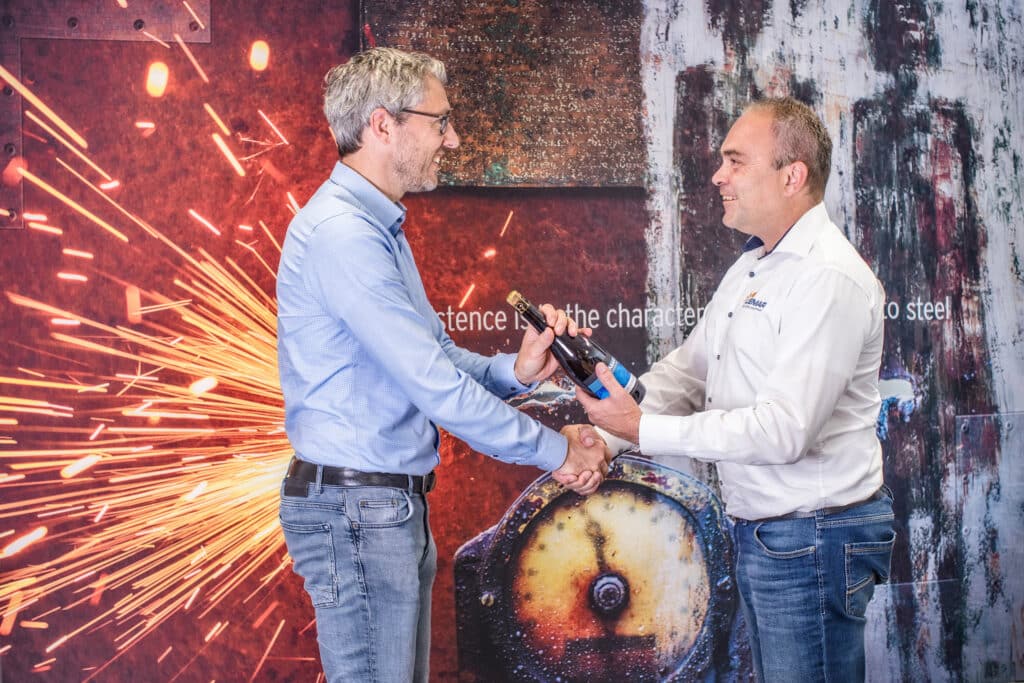
The selection process for a new ERP system often starts with functionality: what can the system do, what integrations are possible, and which requirements can be checked off? According to Niels Oudenaarden, commercial director at Liemar, that only tells part of the story about the system’s ultimate value. “Companies that make a very deliberate choice don’t just look at the software. They also look at the partner with whom they want to advance their business operations in the coming years.”
The ERP market is in a state of constant flux. Technologically, more and more is possible, and at first glance, solutions can sometimes seem very similar. Project management, time tracking, procurement, scheduling, and financial processing are available in all sorts of forms. That’s why, according to Niels, a comprehensive wish list says less and less about the ultimate quality of the choice. “Of course, a list like that provides a framework. But if multiple vendors can check off virtually all the boxes, you still don’t know which one you’ll end up working best with.” Still, he says that difference often becomes apparent even before the software is demonstrated in detail.
“For me, it gets interesting when we talk about how a project actually unfolds within a company,” says Niels. “Where does information flow smoothly, and where doesn’t it? Where does uncertainty arise? Where do departments each operate in their own little worlds? Ultimately, that says a lot more than just whether a particular role exists somewhere.”
In a steel construction company, cost estimation, work planning, purchasing, scheduling, production, assembly, project management, and finance are all interconnected. What happens at any point in the process affects other parts of the organization. According to Niels, this is another key difference between ERP solutions. Many systems have historically been built from separate modules or functional areas. While each of these components can function well on its own, in practice information remains siloed. “You can automate each component perfectly well on its own and still not have a fully integrated business. It’s the cohesion that makes the difference.”
Over the years, Liemar has consciously chosen to view things from this holistic perspective: the project and the business operations surrounding it take center stage. “What happens during the cost estimation phase later becomes significant for the project. The project requires capacity and materials; execution yields progress and hours; and ultimately, you want to understand what that means for the big picture. That information must remain usable throughout the company.”
This approach is also evident during the selection and implementation phases. In a recent project, there was a fairly specific request regarding the system’s design. Technically, this was entirely feasible. However, during the discussions, the conversation quickly shifted to what that choice would mean for the rest of the process down the line.
“At times like that, you have to look beyond the original question,” says Niels. “If we see that a decision made later in the process could cause new problems, we discuss it. Sometimes that means you end up choosing a different approach than what was initially planned.” According to him, a company usually knows very well what’s causing it trouble. But the first solution that comes to mind might not actually solve the real problem.
“The temptation is to immediately configure a specific request. We want to first understand what’s behind it. Often, you end up somewhere different from where the conversation started.” That said, Liemar doesn’t need to tell the customer how to produce steel. “Our customers know their trade and their product much better than we do. What we bring to the table is an understanding of what project-based manufacturing entails and how the various processes and information within such an organization come together.”
So not every request is automatically accepted. An exception that seems logical for one department might result in extra work or less useful information down the line. “If, based on our experience, we see that a decision could cause problems later on, we’ll point that out. Otherwise, you end up adding very little value.”
According to Niels, it becomes clear which partner a company has chosen, especially when reality turns out to be different from what was initially expected. “When everything goes according to plan, working together isn’t that complicated. It gets interesting when things don’t go as planned. That’s when you need to be able to work together to assess what’s really going on and what’s in the company’s best interest at that moment.”
This also requires some effort on the part of the customer. An ERP implementation is not an IT project that can be entirely left to a vendor. Processes must be critically examined, people must make decisions, and sometimes familiar ways of working must change. “You need to be able to challenge each other on these issues. A partner who says ‘yes’ to everything might sound appealing, but in the long run, that isn’t always what’s best for a company.”
Niels has noticed that companies that have chosen Liemar recently have explicitly looked beyond the software alone. Naturally, the functionality was critically evaluated, but industry knowledge, the people behind the solution, the way we collaborate, and the long-term vision also played an important role. “I think those are healthy selection processes. Of course, a company needs to critically evaluate what our solution can do. But I think it’s just as important that they want to know how we think, whether we truly understand their organization, and how we handle things when it gets complicated.”
In several recent projects, a great deal of time was therefore spent on discussions before all the details of the implementation were addressed. “You realize then that a company isn’t just trying to determine whether the software package is a good fit. They’re also trying to assess whether we, as a partner, are a good fit. That makes sense, because you’ll typically be working with an ERP partner for many years.”
Words like contribute ideas, partnership, grip and industry knowledge are now widely used in the ERP market. Niels sees this as a logical development, but he also has a caveat. “It’s easy to use words like that. Ultimately, a customer has to experience them.”
For Liemar, industry knowledge means more than just knowing the terminology of steel construction. It’s mainly about recognizing situations and patterns. “When you’ve worked with project-based steel and metal construction companies for years, you’re quicker to recognize certain things.” The same goes for personal contact. “To me, that means truly understanding what’s going on within an organization and staying engaged—even after implementation.”
“Software is not an end in itself. You want people to be able to collaborate more effectively, for information to be coherent, and to be able to provide guidance sooner and more effectively.” Functionality, technology, and a well-designed system remain, of course, important prerequisites. But those who base their selection solely on these factors are evaluating only part of the future collaboration.
“Ultimately, the most valuable conversations rarely revolve around a screen,” Niels concludes. “They’re about how a company operates, where it wants to go, and what it wants to get a better handle on. The software must then support those goals.”
Neem dan rechtstreeks contact op met Liemar Software BV.
 Contact opnemen
Since its founding in 1985, Liemar has offered business and ERP solutions for project-based companies in steel and metal construction. Our mission is to optimize your company and processes as a partner and to create more insight together. This leads to more peace and efficiency, both for the entrepreneur and employees. With the 'New Return [...]
Bekijk Bedrijfsprofiel