Platform on concrete and steel in construction
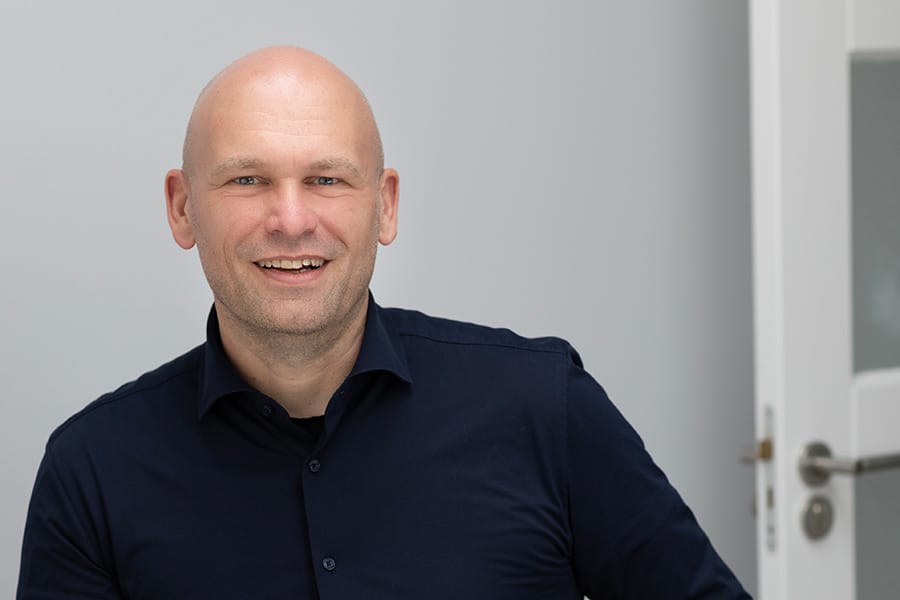
In the steel construction industry, “Work in Progress” is often viewed as a financial overview: what has been spent, how much has been invoiced, and what value do we assign to ongoing projects? This approach is primarily retrospective. According to Niels Oudenaarden, commercial director at Liemar, effective project management starts with a different question: what still needs to be done, and does that work still fit within the budget and schedule?
“A project rarely becomes unprofitable only when the loss appears in the numbers,” says Oudenaarden. “That usually happens much earlier. For example, when work takes more hours than budgeted, changes pile up, or production and assembly are delayed. However, that development isn’t always immediately reflected in a revised forecast.” At steel construction companies, he regularly observes that the financial project overview doesn’t provide a clear picture, even though signs are already visible elsewhere in the organization. The work planning department knows that a lot of drafting work is still pending; in the workshop, assemblies turn out to be more labor-intensive than expected; the project manager is aware of the consequences of changes; and the scheduler sees that the remaining hours will barely fit before the delivery date.“The information is often there, but scattered across departments, (Excel) spreadsheets, systems, and people’s minds. Everyone sees a part of the reality. If those parts don’t come together, a project may appear to be under control and manageable on paper, while the expected margin is in fact already under pressure.”
There is a significant risk in the way the budget is viewed. Oudenaarden: “Suppose 1,200 production hours were budgeted for a project and 800 were recorded. According to the budget, that leaves 400 hours remaining. But that doesn’t automatically mean the project can be completed within those 400 hours. To do that, you need to know what work actually still lies ahead.” If work planning and production estimate that another 550 hours are needed, a very different forecast emerges. The expected final total then becomes 1,350 hours: 150 hours over budget. “The remaining budget tells you how much you were still allowed to spend. The remaining work determines how much you’re likely to actually spend.”
According to Oudenaarden, this distinction makes “Work in Progress” more than just a financial calculation. Terms such as “asset” and “liability” related to Work in Progress therefore mean nothing in and of themselves for day-to-day project management. They merely describe the financial relationship between value realized and invoicing. “But that still doesn’t tell you what caused that position, how much work is still outstanding, or how the project will turn out. A financially accurate snapshot is not the same as a reliable forecast.”
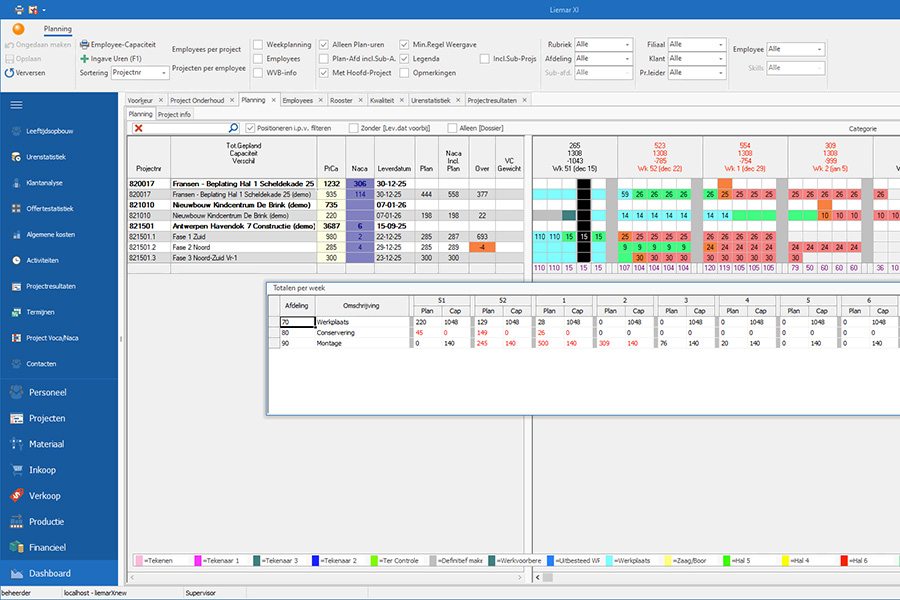
Making a forecast is an important step, but according to Oudenaarden, it’s not enough. The required hours must also be available. “If a project still requires 550 production hours, you need to be able to allocate those hours somewhere in the capacity plan. If only 350 hours are available before the agreed-upon delivery date, you don’t have a feasible forecast. In that case, you’re faced with a whole new problem.” That’s when choices have to be made. Can part of the work be outsourced? Is overtime necessary? Can the delivery sequence be adjusted? Or do people and machines need to be pulled from other projects? That makes planning more than just a tool for scheduling work over time. “Planning then serves as the reality check for your project forecast.”
A financial overview may indicate that there is still sufficient budget available for the remaining work. At the same time, the schedule may reveal that the required capacity is lacking. The solution to that shortfall usually costs money: overtime, hiring additional staff, or outsourcing. Or the project may run over schedule, causing the completion and invoicing dates to shift. “In that case, the schedule directly affects profit margins and liquidity. That’s why you can’t assess project results and capacity planning separately.”
Time overruns also spread easily within a steel construction company. The same engineers, work planners, welders, and fitters naturally work on multiple projects. Oudenaarden: “If Project A unexpectedly requires 300 extra hours, those hours don’t just disappear into a vacuum. They’re often taken away from Projects B and C. Those projects start later or also fall out of sync.”
A reliable picture of work in progress, therefore, does not emerge automatically from recorded data, but rather from a specific point in time when people from different disciplines come together to assess the current status. According to Oudenaarden, this does not involve filling out an increasingly extensive report. Rather, the questions must remain concrete. What has demonstrably been completed, and what work remains to be done? How many hours and what costs do we expect for that? Are the remaining hours accounted for in the schedule? Which orders and subcontracts have already been placed, and what additional and reduced work still needs to be processed? What impact does a deviation have on other projects, delivery dates, and invoicing? “Finance cannot determine this on its own. The project manager, work planning, production, and scheduling each have the necessary information.”
Many companies look to additional dashboards as a solution. According to Oudenaarden, these can help—but only if the underlying information is accurate. “A dashboard can visualize what has been recorded. It cannot correct missing hours, forgotten obligations, or outdated schedules. Nor can it independently assess how much work remains.” It is therefore more important that cost estimates, budgets, actual results, progress, and scheduling all follow the same project structure. Then, a deviation can be traced back to, for example, engineering, production, assembly, materials, or outsourcing. “The right level of detail is the level at which you can still recognize and influence a deviation. Anything below that level may provide useful information, but it can also create a false sense of security if no one keeps the data up to date.”
At Liemar, Work in Progress is not treated as a separate financial item. The preliminary cost estimate forms the basis for the project budget. During execution, the picture is updated to reflect hours worked, purchases, commitments, progress, changes, and invoicing. Project and capacity planning then show when the remaining work can be completed and how any deviations will affect other projects. Oudenaarden: “We ensure that management, project management, production, planning, and finance all operate based on the same up-to-date reality.” This also changes the conversation about work in progress. It’s not just about what we’ve spent and invoiced so far, but primarily about what still needs to be done, what that’s likely to cost, and whether we can deliver it within the available time and capacity. “That way, work in progress becomes part of daily project management. You don’t just see where the project stands today. You can assess where it’s headed sooner—and still have time to act on it.”
Inspiration Session & Workshop on the Competitive Strength of the Dutch Manufacturing Industry
On November 19, 2026, Liemar and Indus will host an inspirational session and workshop for entrepreneurs and chief operating officers of
steel construction companies, at TruSteel's headquarters.
Neem dan rechtstreeks contact op met Liemar Software BV.
 Contact opnemen
Since its founding in 1985, Liemar has offered business and ERP solutions for project-based companies in steel and metal construction. Our mission is to optimize your company and processes as a partner and to create more insight together. This leads to more peace and efficiency, both for the entrepreneur and employees. With the 'New Return [...]
Bekijk Bedrijfsprofiel