Extending the life of reinforced concrete
Tekst Philip DoutreligneBeeld Renotec nv
Cathodic Protection (CP)
Corrosion of reinforcing steel is ultimately disastrous for the stability of concrete structures. It is a natural electrochemical process caused by differences in electrical potential between steel and concrete, resulting in rust formation.
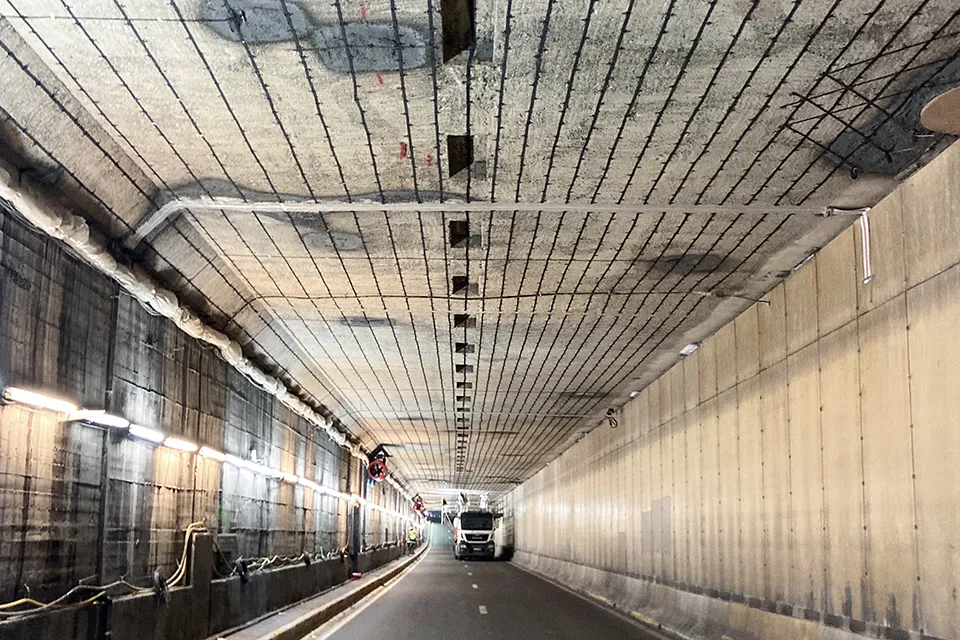
Belgian company Renotec nv is highly active in the repair of reinforced concrete structures, specialising in Cathodic Protection (CP). These techniques protect reinforcing steel against corrosion, sustainably extending the service life of bridges, tunnels, (heritage) buildings and other concrete structures.
How does cathodic protection of reinforcing steel work?
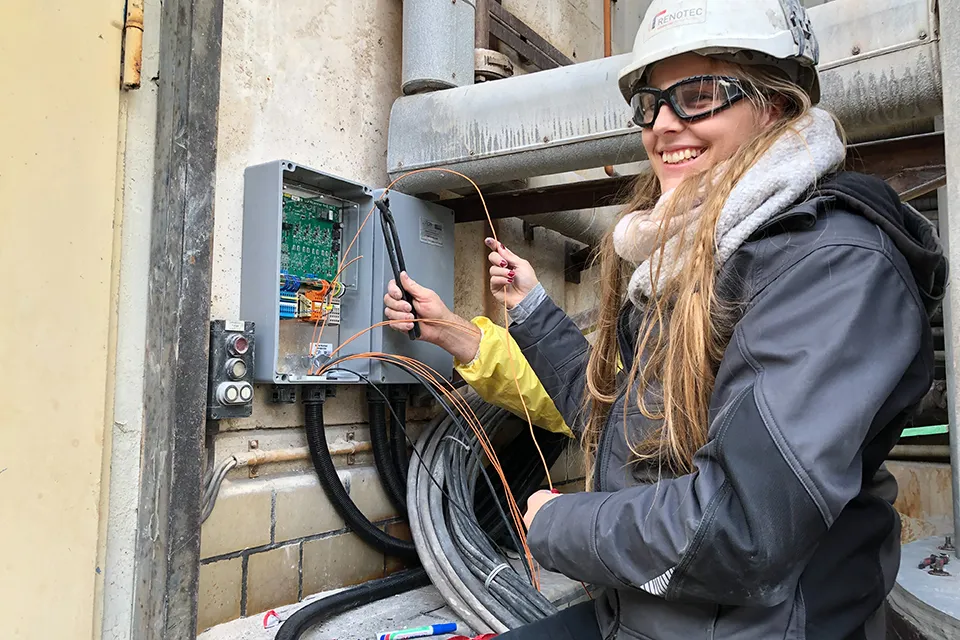
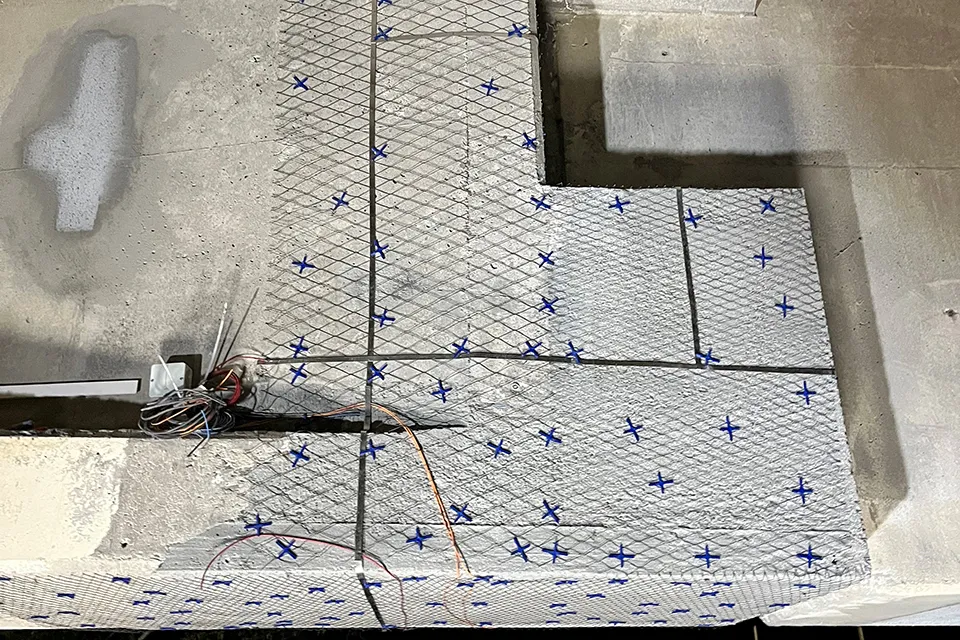
Frederick Crevits, project manager at Renotec nv: “Differences in electrical potential in the concrete-steel mix cause the reinforcing steel to act as an anode. It releases iron and hydroxide ions into the concrete (the cathode), causing rust to form on the steel. The corrosion process can be accelerated further by the presence of chlorides in the concrete. The solution is as simple as it is ingenious: by continuously applying a low-voltage direct current to the concrete, the roles are reversed and the reinforcing steel becomes cathodic rather than anodic. In practice, this is achieved by adding a very noble metal and applying a voltage to it. This metal then acts as the anode. Typically, this is titanium coated with mixed metal oxide, in various forms (strips, mesh, drilled-in anodes, …), embedded or injected with a cement-based material. There are even coatings that can be energised and used as anodes.”
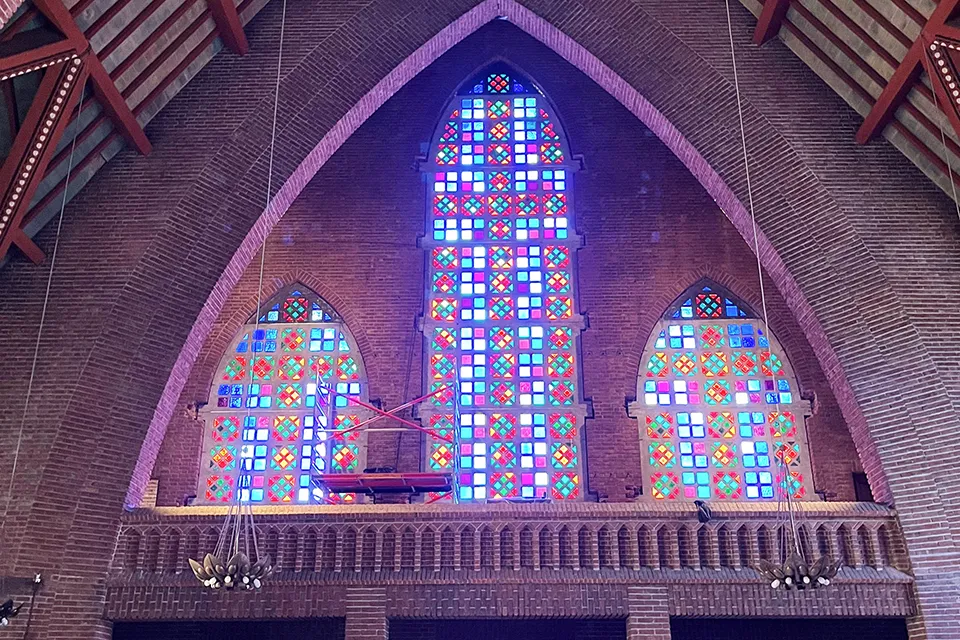
Renotec nv has its own specialist, qualified staff, including project engineers responsible for preparation and site supervision. It also employs its own operatives, who carry out projects from start to finish. This enables Renotec nv to undertake complex concrete repairs involving cathodic protection entirely in-house, using its own personnel.
Two systems
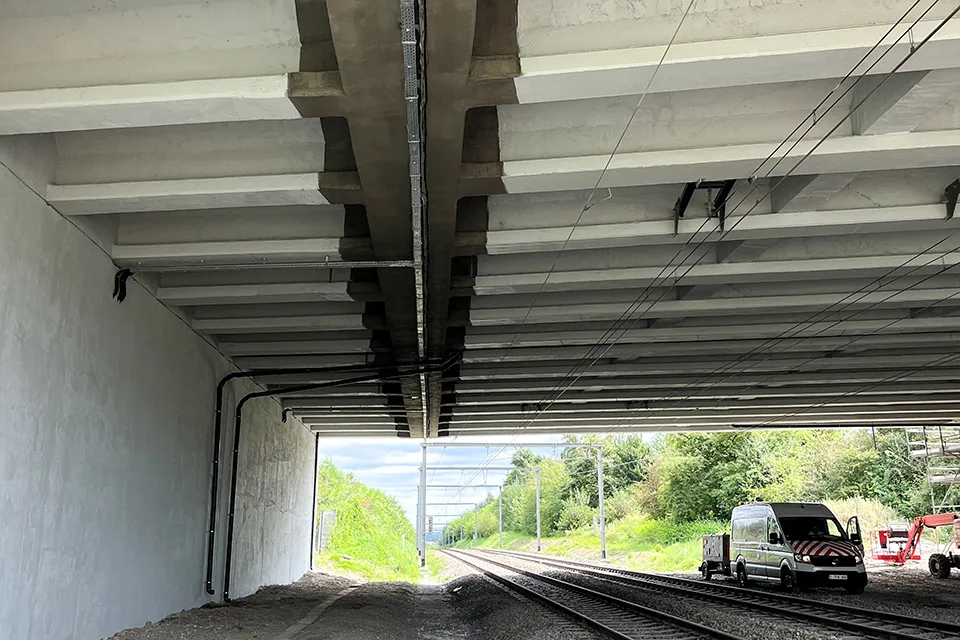
Jana Goris, project manager at Renotec nv: “In essence, there are two types of cathodic protection. The first is galvanic cathodic protection (GCP), which originated in the maritime sector (ships, sheet piling, …). This uses galvanic elements, usually made of zinc, which are less noble than steel. The elements therefore act as anodes and sacrifice themselves to protect the steel. The other technique is impressed current cathodic protection (ICCP), which my colleague Frederick has already discussed. This uses an external power source to supply the protective current. This system has many advantages over GCP. For example, it can be adjusted to provide optimum cathodic protection for the reinforcing steel. Since it uses (MMO) titanium and an external power source, it can guarantee up to 100 years of protection with minimal maintenance.”
Cathodic protection can sustainably extend the service life of a reinforced concrete structure. This can keep concrete repairs to a minimum, as CP provides ongoing protection.
Looking ahead
The future of concrete repair using cathodic protection looks promising. Renotec nv aims to continue offering innovative solutions that not only extend the service life of structures, but also contribute to a more sustainable and environmentally friendly world.
Renotec nv specialises in concrete repair, asbestos removal, restoration and repurposing, pipe rehabilitation, energy-efficient renovation and the renovation of industrial sites. With 35 years of experience and more than 900 employees, the company delivers innovative solutions across a range of niche markets.
Vraag over dit verhaal? Stel je vraag
Blijf dit volgen
Bij een nieuw verhaal krijg je een e-mail. Geen account nodig.
- OnderwerpConcrete