Platform on concrete and steel in construction
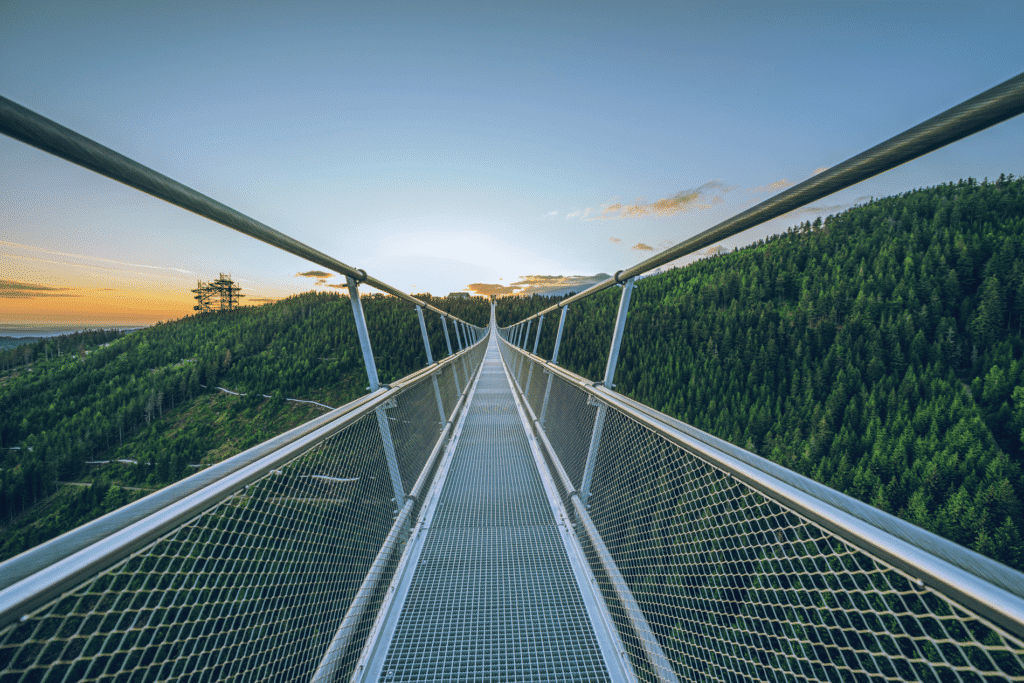
Balustrades, balconies, canopies and all kinds of urban furniture, as well as guardrail systems, light poles and traffic gantries: these are well-known examples where discontinuous hot-dip galvanizing ensures maximum service life of steel components in the daily streetscape.
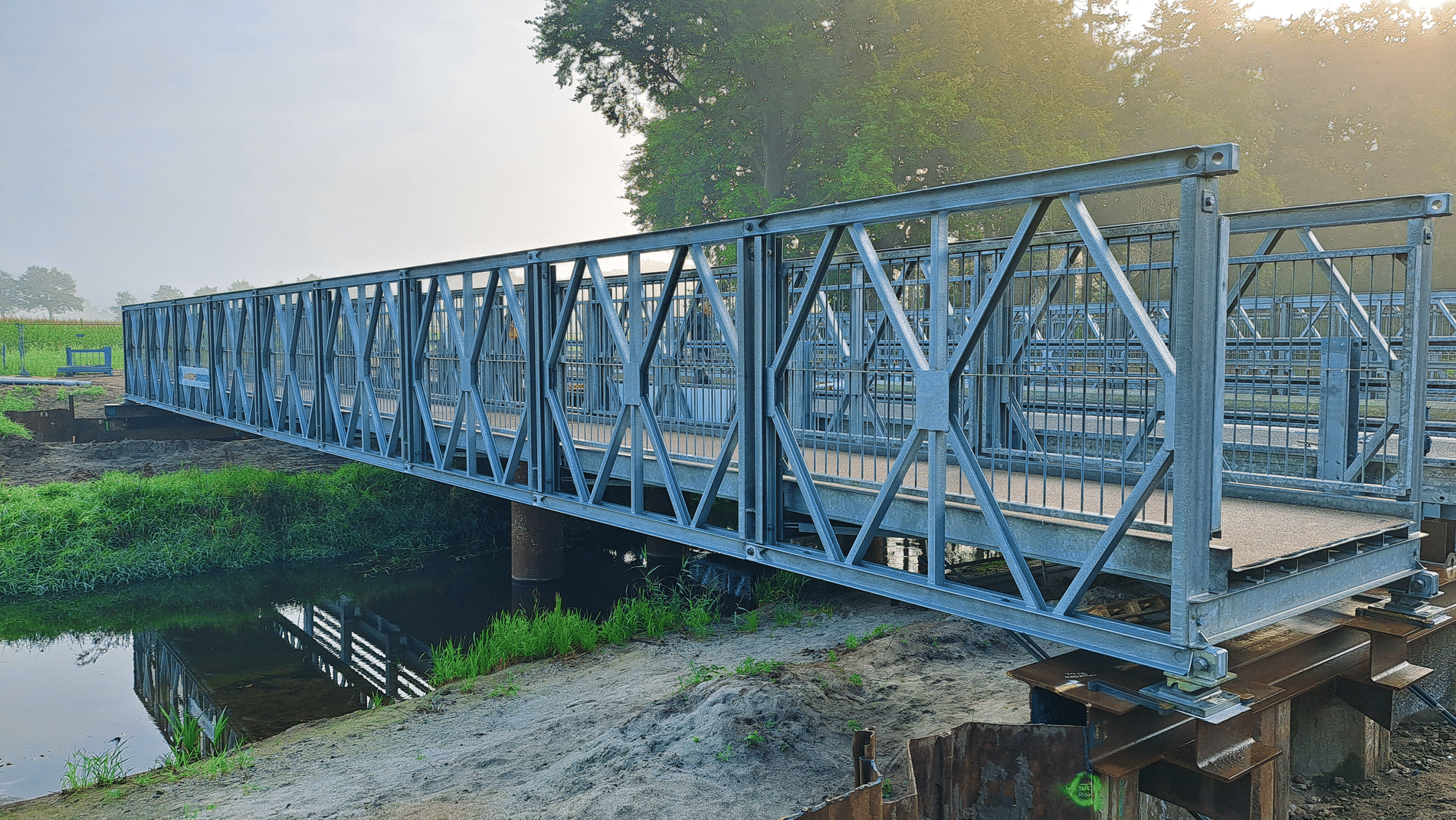
Bridges are also particularly suitable for this form of corrosion protection, provided designers take into account certain boundary conditions such as the dimensions of the zinc baths in which the components must be able to be immersed. Especially for bridges, sustainable corrosion protection is essential, given the significant impact on the Total Life Cycle Cost and environmental impact associated with repeated repainting of the steel. Hot-dip galvanized steel is also virtually maintenance-free. There is no hassle of repeated repainting of the steel components and the associated impact on mobility and road safety. “Anyone designing bridges today with sustainability, circularity and longevity in mind cannot really avoid hot-dip galvanizing. It is a robust, proven and economically sensible choice,” Zinkinfo said.
Rijkswaterstaat recently completely revised its Sustainable Steel Preservation Guide. In the new version (2.0, July 2025), hot-dip galvanizing is now, quite rightly, included as the first and preferred option for protecting steel structures. According to the new choice scheme, when technically possible, hot-dip galvanizing is the most sustainable choice. It offers the lowest environmental impact over the entire life of a structure and scores better than metallizing or paint systems. The change follows extensive research to which ZinkInfo has actively contributed substantiated data on circularity, service life and environmental impacts.
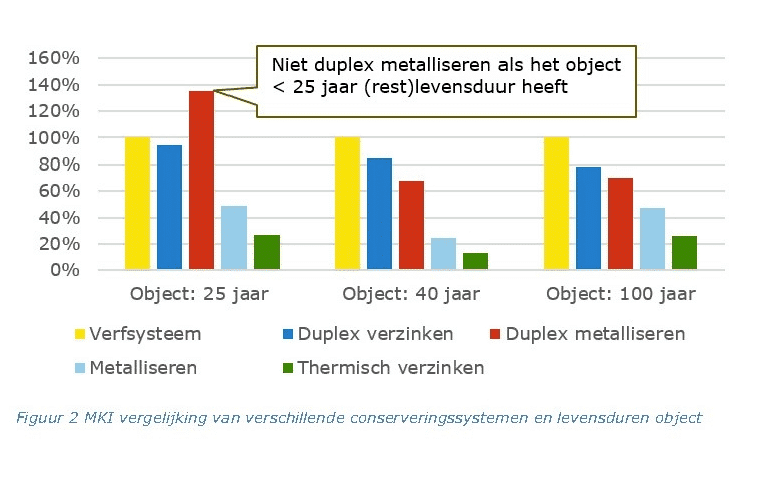
The graph shows the MKI comparison of different preservation systems suitable for atmospherically loaded steel structures. Paint systems are the starting point here, with a value of 100%. A higher percentage indicates a less durable system, a lower percentage indicates a more durable alternative than a paint system. The MKI value depends on the service life of the structure:
- Left: lifespan of 25 years;
- Middle: lifespan of 40 years;
- Right: life span of 100 years.
In all three scenarios, hot-dip galvanizing scores noticeably better than the alternative preservation systems.
An excellent example of the strengths of hot-dip galvanizing for bridge construction are the temporary, modular bridges that companies such as Janson Bridging have been leasing or selling to public and private clients worldwide for decades.
Galvanizing fits perfectly with a demountable system. Modular bridges are built with bolted connections and require parts that are reusable and remain robustly protected. Compared to painting, galvanizing is considerably stronger: paint is more likely to be damaged during assembly and disassembly, while a zinc coating is more resistant to impact. In addition, temporary bridges are often used in wet, remote or aggressive environments where maintenance is difficult to perform. In such circumstances, hot-dip galvanizing offers enormous added value. Moreover, some ‘temporary’ bridges remain in use for years or even permanently, in which case reliable, long-term protection is crucial.
Those interested in delving further into the benefits and concerns of hot-dip galvanized steel in bridge construction can find the webinar ‘Galvanized steel in bridge construction - a no-brainer’ on the ZinkInfo website.