Guardrail renovation technically and economically viable, with environmental benefits
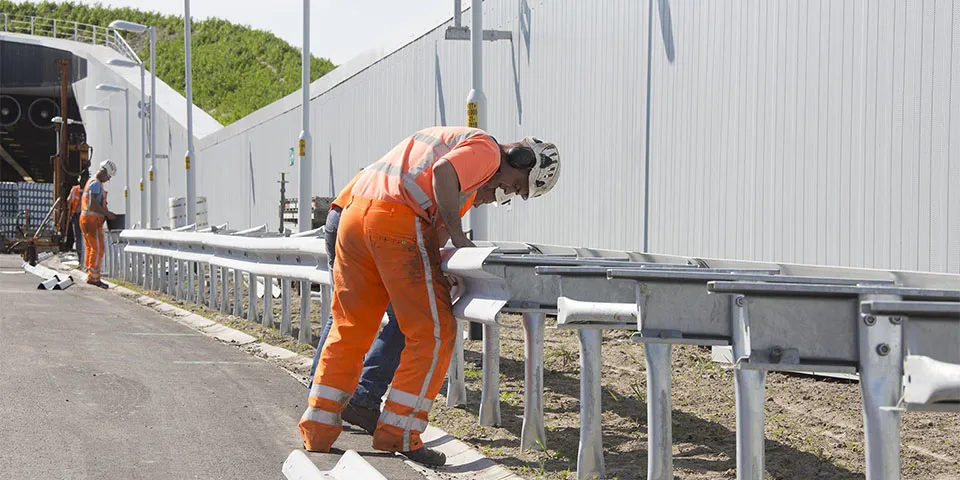
Renovating guardrails (crash barriers) can be put into practice responsibly. Renovation and reuse deliver significant environmental benefits, reducing environmental costs by up to 70 per cent. Renovation is also cheaper than producing new rails and meets the stringent safety requirements for guardrails. These are the findings of a study by Rijkswaterstaat, management consultancies TwynstraGudde and LBPSight, contractors, guardrail suppliers and galvanising companies.
Making guardrails circular is one of the ways in which Rijkswaterstaat aims to work circularly by 2030, using as few primary raw materials as possible. The study into circular guardrails examined the entire renovation chain, in which used guardrails are given a new lease of life by dismantling the rails, cleaning them, stripping off the zinc coating and hot-dip galvanising them again before reinstalling them alongside the road.
Shared understanding
As independent parties, TwynstraGudde and LBPSight facilitated the process surrounding the study, ensuring that all interests were weighed and that everyone could contribute their own expertise. This led to a shared understanding of the business case, and all parties in the chain expressed their commitment. ‘We held intensive discussions with a working group of contractors, galvanising companies, a renovation company and suppliers to scrutinise every aspect of renovation. Together, we were able to establish that it is technically and economically viable. This was made possible by everyone’s open-mindedness and enthusiasm. We will now work together to set up the validation project. Renovating guardrails makes sense, but it will not happen by itself,’ says Henk Senhorst, project manager at Rijkswaterstaat.
Validation project
The validation project aims, firstly, to build knowledge and experience with the technical and organisational aspects of the renovation chain, together with the parties involved. Secondly, it aims to demonstrate that the renovation chain is the way forward and that the parties involved will focus on it. A major maintenance project on a national road has now been selected, with the set-up of the renovation chain due to be validated in practice at the end of 2020 and the beginning of 2021.
Parties involved
The following parties are involved and support the use of reused guardrails: Rijkswaterstaat, Bouwend Nederland, BAM, Berm Beveiliging Nederland, Heijmans, Zinkinfo, Arosso, Laura Metaal, SafeRoad, Steel Constructions and Van Doorn Geldermalsen.
Vraag over dit verhaal? Stel je vraag
Blijf dit volgen
Bij een nieuw verhaal krijg je een e-mail. Geen account nodig.
- OnderwerpGeneral