Platform on concrete and steel in construction

Why understanding your schedule determines your project and business results
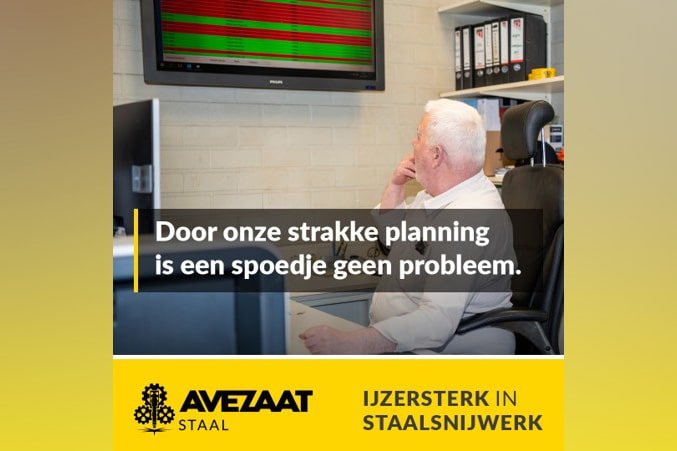
In steel construction, you start almost every project with a schedule. You schedule work, set deadlines and distribute capacity. On paper, you create overview and structure. Nevertheless, practice almost always deviates from what you had thought out beforehand. Work takes longer than expected, priorities shift and projects continuously influence each other. This is not an exception, but the reality of project-based work.
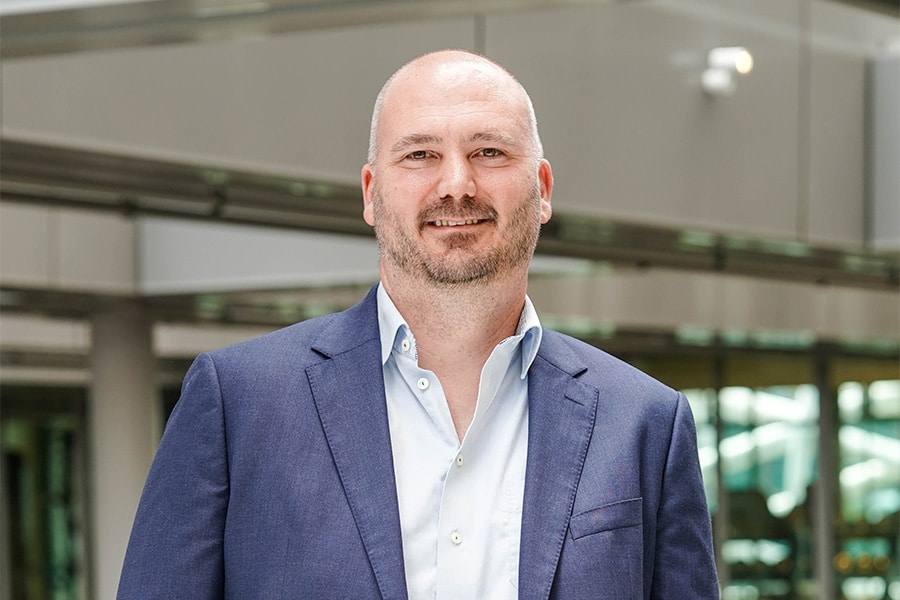
‘Many steel companies have their planning in order,’ says Niels Oudenaarden, commercial director at Liemar. ‘But that doesn't mean they have a grip on their projects. The difference is not in making a schedule, but in understanding what happens once that schedule gets moving.’
Your schedule is fundamentally a tool for looking ahead. It helps to structure work and align expectations. As such, it is an important starting point for any project.
At the same time, your planning is always based on assumptions. About lead times, availability of people, deliveries and dependencies between activities. If those assumptions are not continuously checked against reality, there is a growing distance between what you have planned and what actually happens.
This distance often only becomes visible when the project is already in progress. Then there is still an overview, but the insight to make targeted adjustments is lacking. ‘A planning without context is actually an assumption,’ says Niels. ‘And as soon as reality deviates - which always happens - you see that the assumption is no longer correct.’
The dynamics of your project arise not in the planning itself, but in the execution. That is where decisions are made, where deviations occur, and that is where what is feasible becomes visible. It is precisely in that phase that your planning changes from a static schedule to something that is constantly under pressure. Small deviations are inevitable. A task that takes a little longer, a change that is made in the interim or a delivery that arrives later are daily realities.
By themselves, these deviations seem limited. But together they determine the course of your project. They influence the deployment of people, the sequence of work, and ultimately the turnaround time and costs. If the connection is not visible, deviations remain isolated events. Their effect then becomes clear only afterwards.
Linking your planning to the reality of execution fundamentally changes its role. Your planning is then no longer just a means of organizing work, but becomes an instrument for understanding what is happening and what that means for the rest of your project. It makes visible where bottlenecks arise, how projects affect each other and what choices are needed to ensure progress.
‘Once you see what a change means for the rest of your projects, you start looking at planning differently,’ Niels says. ‘Then it becomes steering information.’ That doesn't mean deviations disappear. It means they become visible earlier and their impact is easier to understand.
Although planning is often viewed as an operational tool, it has a direct impact on the bottom line. Any deviation in planning affects the deployment of capacity, the turnaround time of work, and thus costs. If your projects take longer or run inefficiently, it directly affects the margin.
Yet in many steel companies, that relationship only becomes apparent after the fact. Projects seem to be under control during execution, while the result is under unnoticed pressure. ‘Many companies don't know what a project has delivered until after it's finished,’ says Niels. ‘But at that point you can't change anything anymore. Then you look back, instead of having steered.’
The difference between recording and steering lies in the moment at which information is available. If data on progress, deployment of people and costs only come together after the fact, insight is created, but the ability to adjust is lacking. The result then becomes an observation.
When that same information is available during your project, a different picture emerges. Then it becomes visible where a project is headed and the impact of choices made along the way. This makes it possible to intervene earlier, shift priorities and consciously steer toward the desired outcome.
Planning does not stand alone. It is part of a larger whole in which work preparation, execution and financial insight are connected. If these parts function separately from each other, you have information but lack coherence. This makes it difficult to understand what is actually happening and what that means for your project as a whole.
Only when you connect your planning to what's happening on the shop floor and how that affects costs and progress, does a complete picture emerge. ‘Without insight no grip,’ says Niels. And without grip, you can't manage for results. Then planning remains something you make, instead of something you steer by.‘
Planning is not an end in itself. It is a means of understanding what is happening, what that means and where your project is moving. As long as that understanding is only available after the fact, the outcome remains a surprise. When that insight is available during your project, the way you work changes. And with it, the result changes as well.
Neem dan rechtstreeks contact op met Liemar Software BV.
 Contact opnemen
Since its founding in 1985, Liemar has offered business and ERP solutions for project-based companies in steel and metal construction. Our mission is to optimize your company and processes as a partner and to create more insight together. This leads to more peace and efficiency, both for the entrepreneur and employees. With the 'New Return [...]
Bekijk Bedrijfsprofiel