Platform on concrete and steel in construction
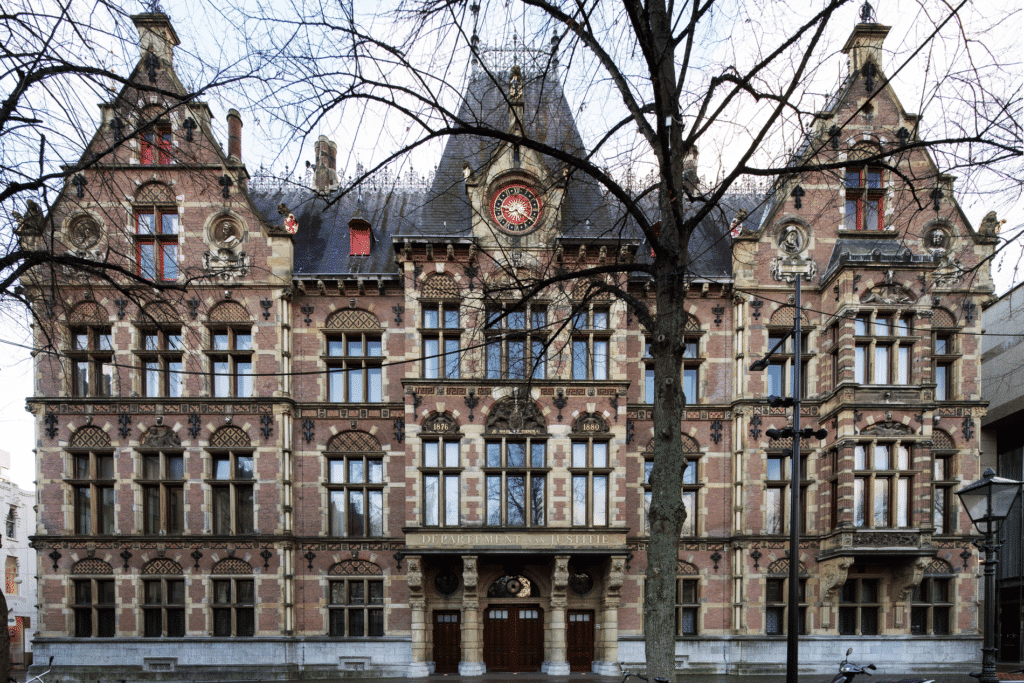
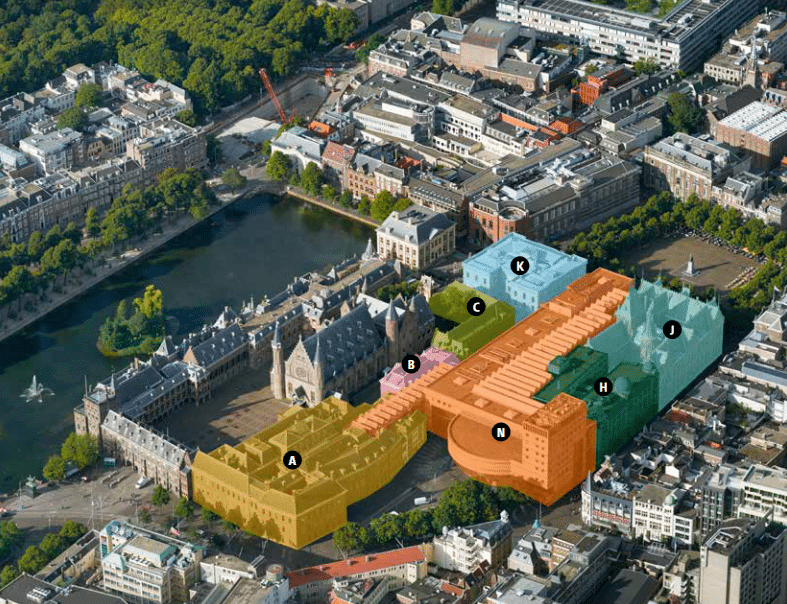
On the Plein in The Hague, Building J, the former Ministry of Justice, is currently completely under construction. This design by Chief Government Architect Cornelis Peters was largely used by fractions of the Lower House until a few years ago. After the renovation, the monumental structure will serve as an office and meeting location and house the Central Information Point for MPs and staff, among other things. In this sixth installment of the series on the renovation of the Binnenhof, we highlight the structural interventions that are particularly necessary under the roof zone, where new floor fields are being constructed and where an additional floor is to carry the heavy new climate installations. That means new load-bearing structures woven into a monumental building.
The renovation of Building J was entrusted by the State Property Agency to true restoration specialists. Van Hoogevest Architects produced the design, which fully restores the original richness of the building. Implementation is in the hands of restoration contractor Nico de Bont, which together with J.P. van Eesteren (construction) and Croonwolter&dros (engineering) is part of the TBI construction consortium for the renovation of the Lower House complex. Arcadis is responsible for the structural advice. In this article, the focus is mainly on the roof zone, where new third and fourth floor floors are being realized. Constructively, this involves adding full floor fields within an existing building envelope, with limited storey heights and a monumental façade structure that cannot be loaded without question.
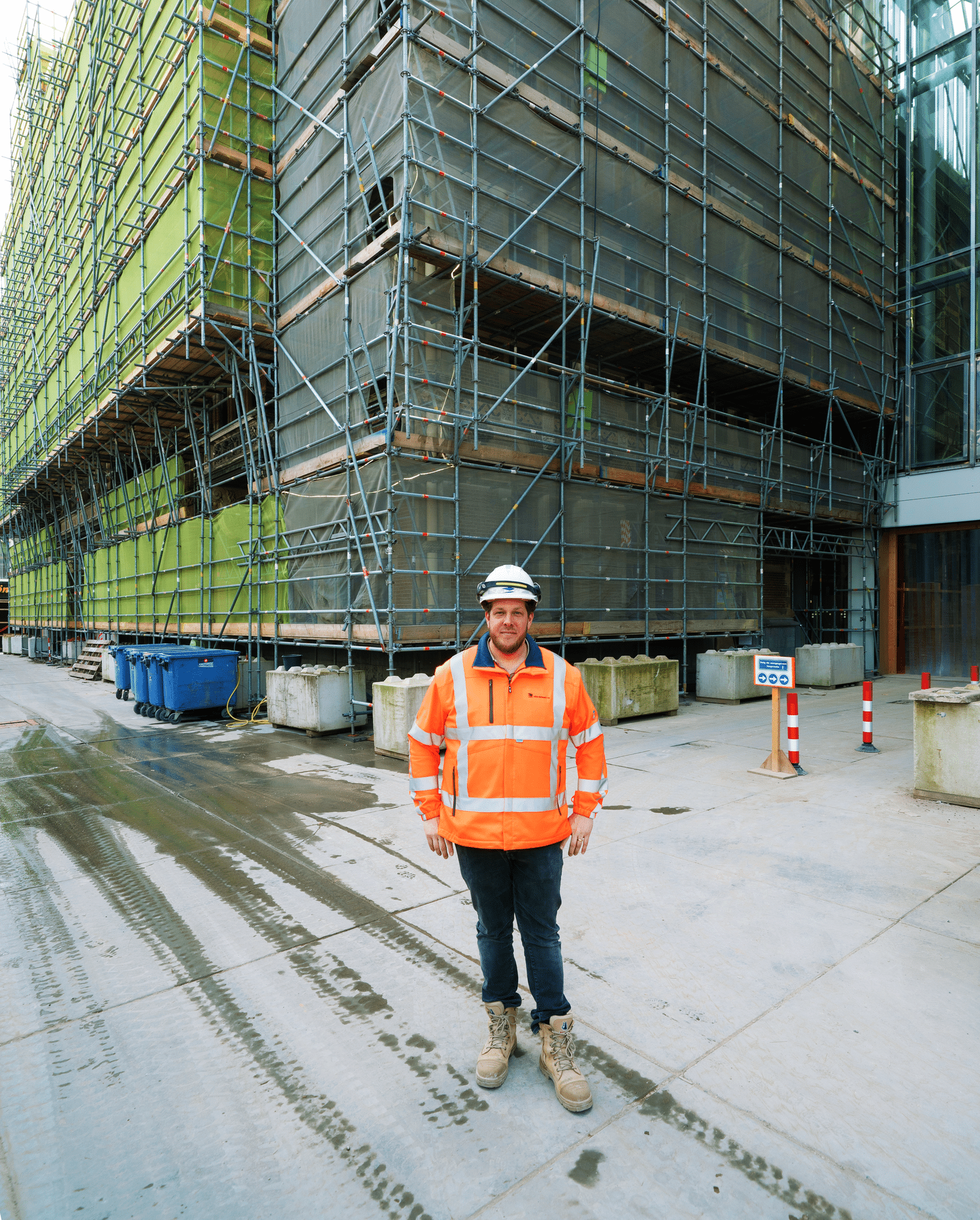
That means making very careful choices. “Perhaps the most important choice has been what we let carry and what exactly we didn't,” says Frank Blokdijk, work organizer at Nico de Bont. “We are actually building the third floor over the existing floor. This new floor does not bear down on the existing floor structure, but on an independent steel structure. The force transfer will soon be via newly installed steel elements that function both vertically and horizontally independently of the existing wood and masonry structures. This will prevent historic components from unintentionally becoming load bearing.”
Prior to the engineering phase, the building was extensively surveyed using point clouds based on existing scans and additional surveying by the steel supplier. “With existing construction, dimensional accuracy is not a given,” says Blokdijk. “You have to deal with flexing trusses, misalignment and detail solutions that have been historically modified.” To make reliable calculations, the floor was first largely stripped and wooden trusses and columns were exposed. Arcadis then created an accurate scan whose point cloud formed the basis for the digital building model.
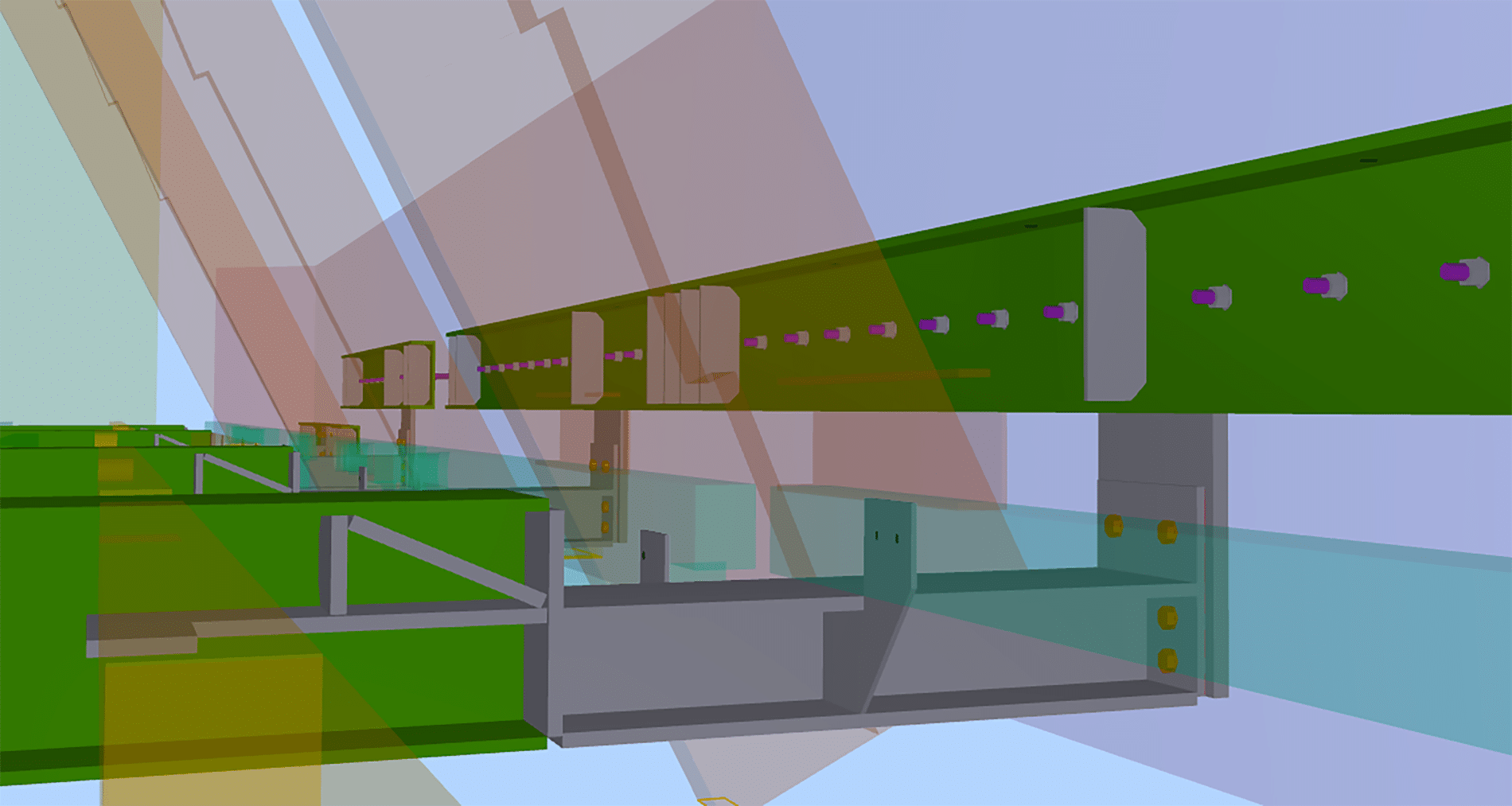
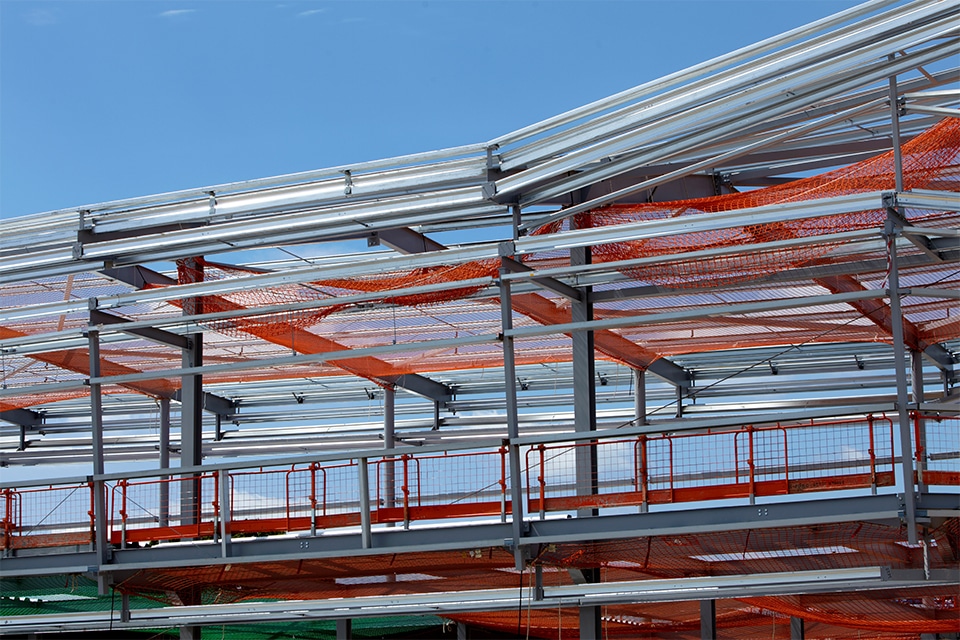
The main load of the new floors is transferred via steel hammer pieces attached to the monumental facades with adhesive anchors. These hammer pieces take the vertical loads from floor beams and transfer them to the load-bearing masonry. “Those facades are substantial,” Blokdijk said. “We are talking about masonry walls about six hundred millimeters thick.” The hammer pieces prefabricated by Vic Obdam are mechanically anchored with adhesive anchors, with both the load-bearing capacity of the masonry and the force distribution carefully calculated. The transitions between steel and masonry were detailed to avoid direct, rigid coupling to prevent stress concentrations and undesirable acoustic bridges. All the steel in contact with the exterior walls is hot-dip galvanized to provide additional protection against moisture.
During the clearing of structures, it was found that past interventions had occurred in several places, including elevators and installations. Parts of trusses were locally modified or even removed, which disrupted the original force action. Instead of temporary emergency solutions, additional steel structures - wreaths, tie rods and portal-like frames - were chosen to reseal the force transfer. “Steel acts as a corrective agent here,” Blokdijk explains. “Not to replace the old, but to make structural sense again. Digital models, fed by the point clouds, make it possible to dimension and position those interventions precisely.”
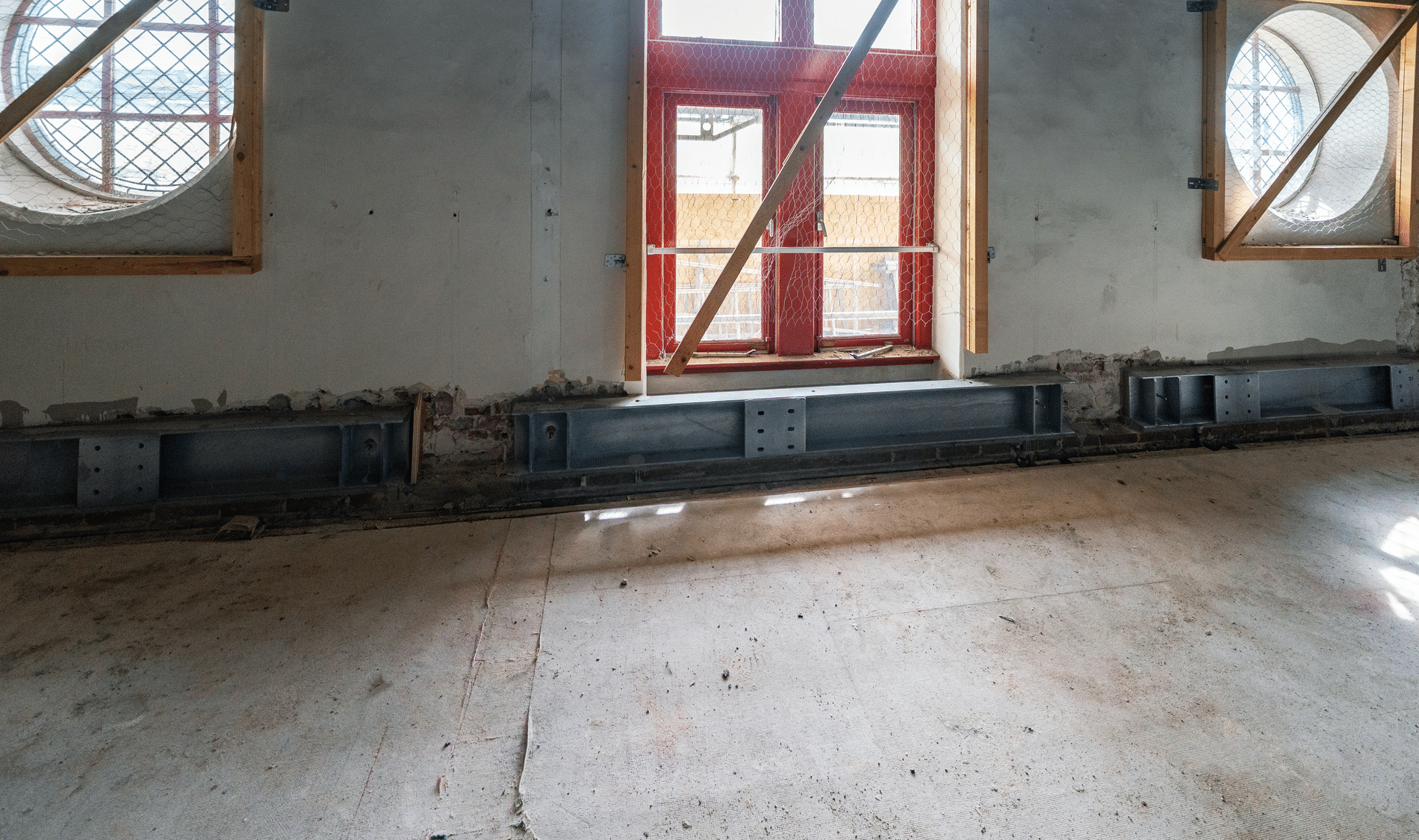
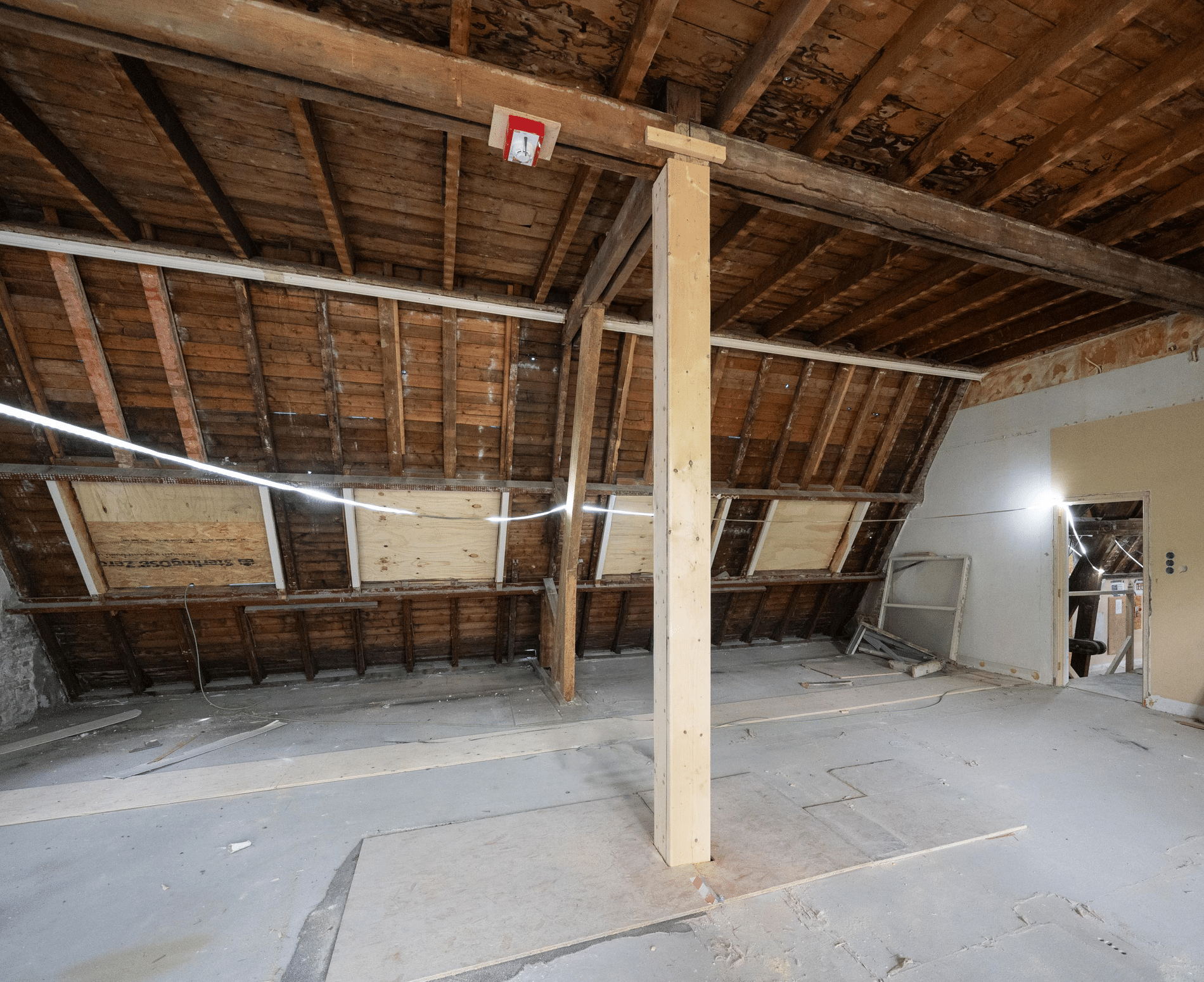
An important principle in the design is the acoustic decoupling between old and new. This principle has direct consequences for the structural detailing. Existing wooden columns, which originally extend to the floors below, are constructively ‘enclosed’ by new steel and shortened at the bottom. “Those columns should no longer be part of the new force distribution,” Blokdijk continues. “By fully enclosing them, we can cut them off underneath without loss of load bearing capacity. This creates a floor structure that is structurally autonomous, but geometrically close to the existing structure.”
In addition to own weight and use loads, the installations play a decisive role in the design. A high installation density will be realized in the roof zone, with air handling units, ducts and piping partly on the new floors. “Those installations are not an afterthought,” Blokdijk emphasizes. “They determine where steel can lie, where recesses are needed and where precisely it is necessary to reinforce. The steel structure has been adapted accordingly with bracing, recessed gutters and carefully positioned recesses. In some zones, pipes are not routed through, but along girders, with the profile adapted locally to limit deflection and stress peaks. Acoustically, installations are decoupled via spring packs instead of elastomers, because otherwise the weight of the installations cannot be adequately controlled. These springs are matched to the load and performance requirements and provided with mechanical limits.”
Fire safety also influences structural choices. Wooden trusses and joists are made fire-resistant with coatings, which are pre-tested in combinations of wood and steel. Seams and gaps larger than one centimeter are filled because the coating can only handle limited swelling. “These are not aesthetic details, but critical boundary conditions,” Blokdijk said.
In addition to permanent construction, temporary steel is needed for scaffolding and supports during construction. Some auxiliary structures run through several floors to allow for safe work without stressing existing parts. Where possible, donor steel is used. “That is structurally sound and fits within our sustainability ambitions,” says Blokdijk. The approach to preservation is also pragmatic: steel outside of sight is coated with available leftover paint.
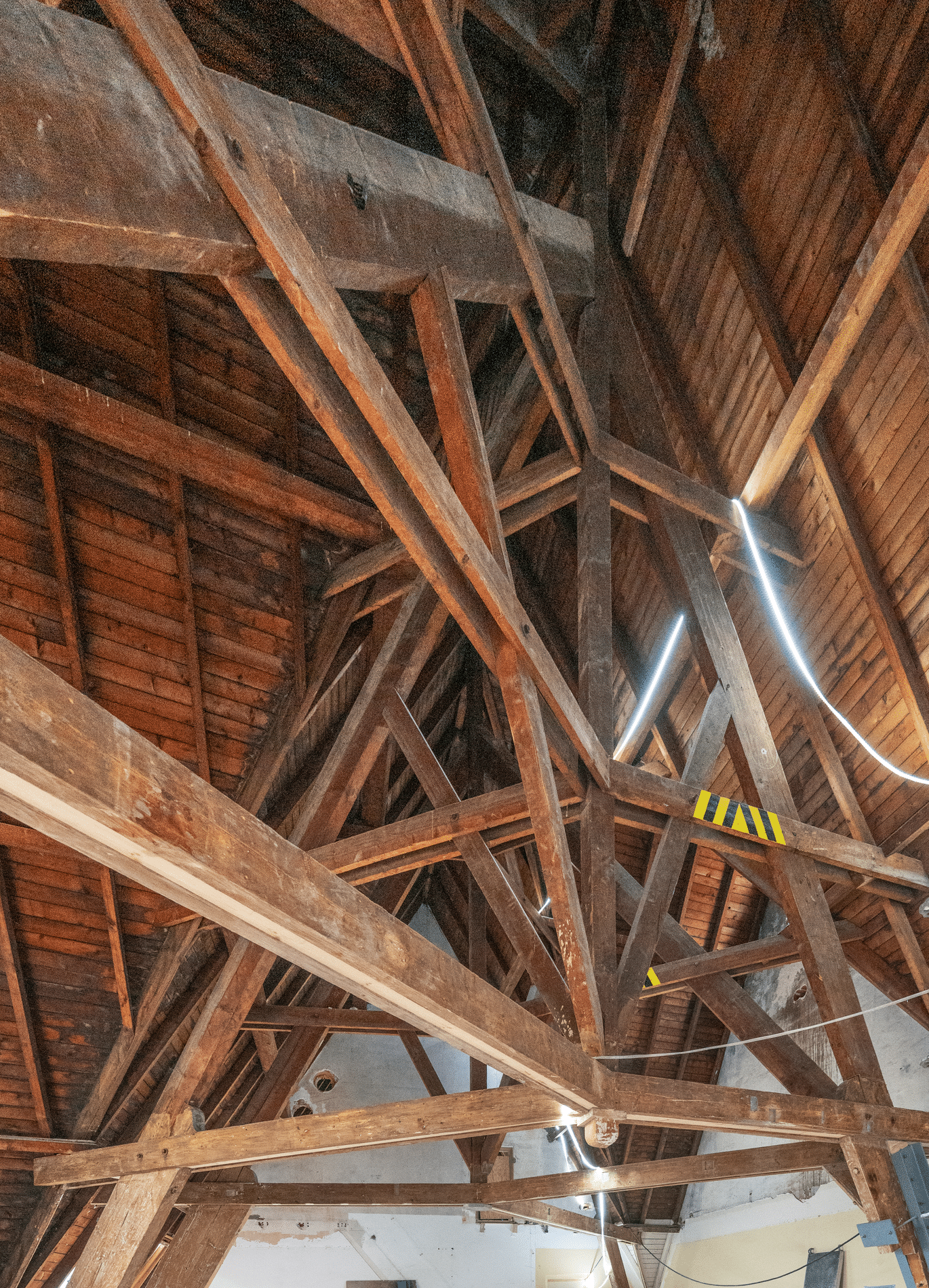
Ultimately, the complex steel structures in Building J are largely invisible to users. “Steel is one hundred percent functional and indispensable here,” Blokdijk concludes. “It makes new functions possible without making the monument carry or succumb to contemporary demands. If we do our job well, you see mainly Peters” building. The new structures just do their work in the background."