Platform on concrete and steel in construction
During the 13th VBI Supply Chain Strength Event, one question took center stage: How can the concrete sector accelerate the reduction of CO₂ emissions without compromising on quality, availability, and scalability? Manufacturers of cement, binders, and precast concrete demonstrated that the solution does not lie in a single technology, but rather in a combination of innovations that reinforce one another.
Although cement accounts for only about 15% of the volume of concrete, it is responsible for approximately 85% of the CO₂ emissions from traditional concrete. Clinker production is primarily responsible for these emissions. Approximately two-thirds of the CO₂ is generated during the chemical conversion of limestone, and one-third is due to the energy required for the process. As a result, cement remains the most important lever to pull.
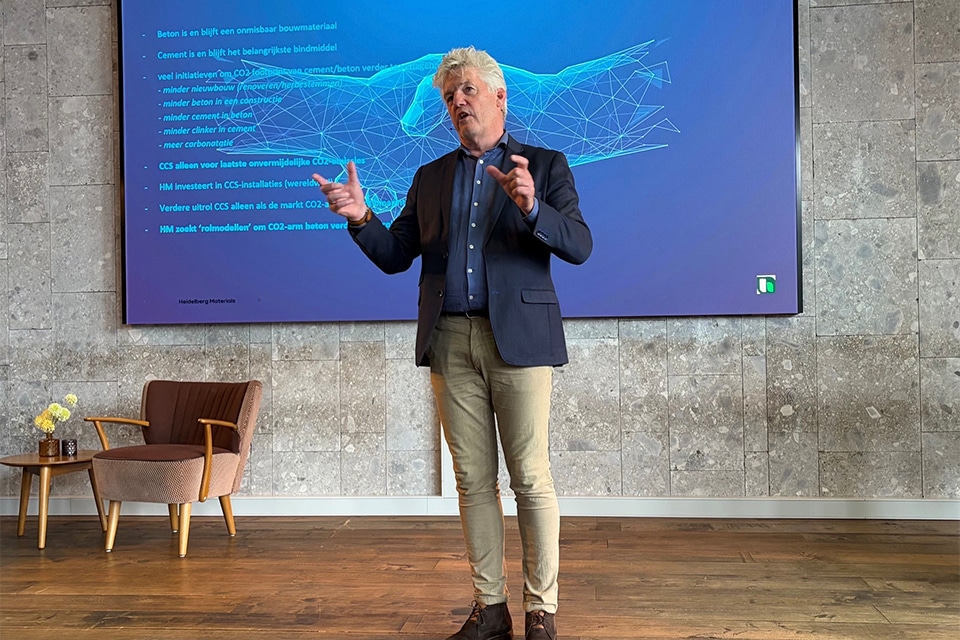
Jan Veenstra (Heidelberg Materials) presented the strategy for achieving virtually climate-neutral cement. According to Heidelberg, several measures are necessary:
Veenstra does not view CO₂ capture as a choice but as a necessary step toward eliminating the remaining process emissions from cement production. Through its plant in Brevik (Norway), the company is bringing evoZero—the first large-scale cement produced with captured CO₂—to market. The captured CO₂ is transported by ship and permanently stored beneath the North Sea as part of the Longship/Northern Lights project. With this initiative, Heidelberg aims to set a new global standard for cement production.
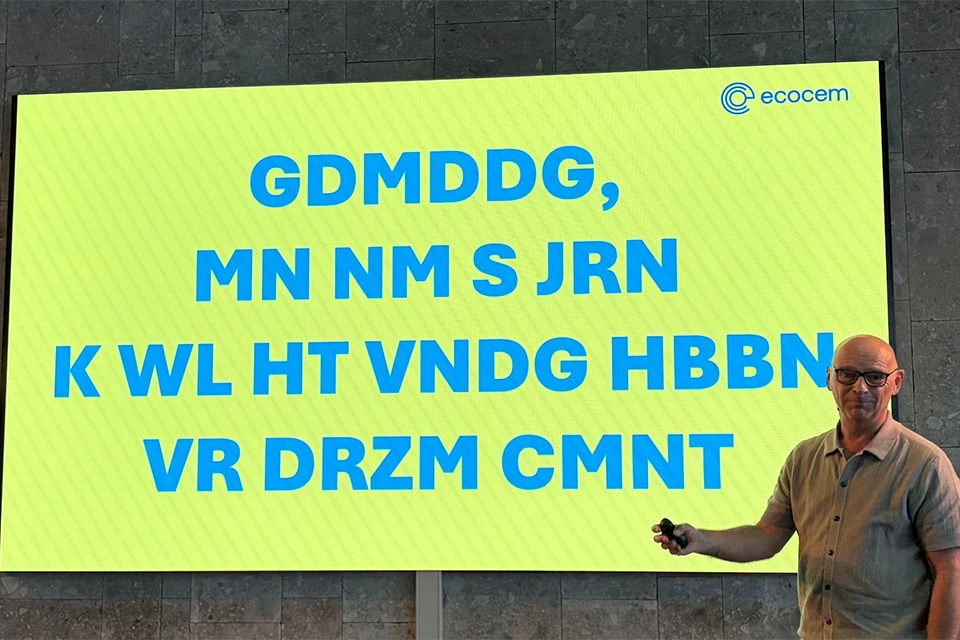
Jeroen Langenberg (Ecocem), on the other hand, questioned the emphasis on CCUS as the primary solution. According to the company, the costs of cement production could rise sharply due to the large-scale implementation of CO₂ capture. That is why Langenberg sees clinker reduction as the most efficient path for the coming decades.
Langenberg also pointed out a new problem: traditional substitutes such as blast furnace slag are becoming scarcer due to changes in the steel industry. This calls for new binder technologies. The company is therefore developing ACT (Advanced Cement Technology), in which optimization of the composition and grain packing leads to high-performance concrete with a significantly lower carbon footprint. The technology is now being used in large-scale residential construction projects.
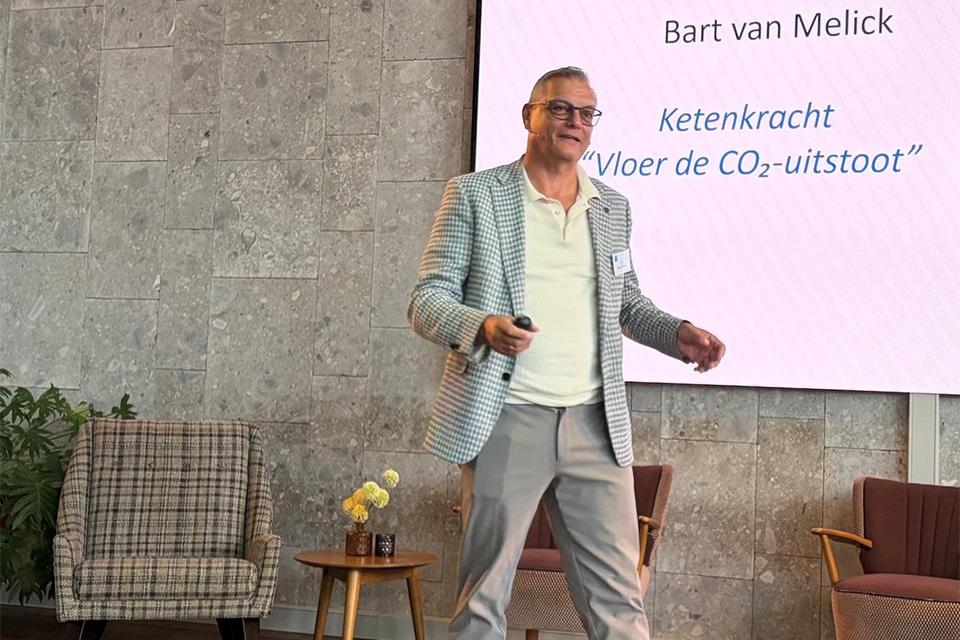
Bart van Melick (ASCEM) presented INVIE, an alternative binder produced from industrial waste streams. According to the company, this can achieve a CO₂ reduction of up to approximately 80% compared to traditional cement.
Van Melick sees the greatest structural opportunity primarily in that third route, because the availability of blast furnace slag is declining and, in their view, CCS remains costly. At the same time, the company acknowledges that market acceptance is still being hampered by regulations, certification requirements, and unfamiliarity with new binders. According to Van Melick, demonstration projects and collaboration within the supply chain are necessary to scale up these innovations.
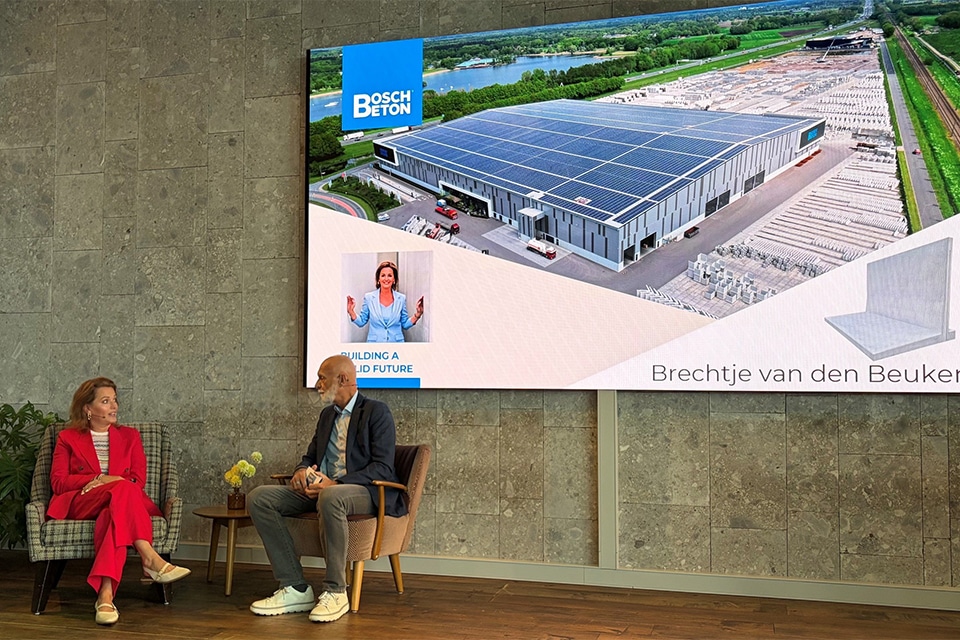
Brechtje van den Beuken (Bosch Beton) demonstrated that precast manufacturers are also doing their part. The company is working toward a cement-free generation of retaining walls through a gradual reduction in cement content.
In addition, Sonocrete was presented—a technology that achieves the same compressive strength with approximately 30% fewer CO₂ emissions, because it requires less cement. Van den Beuken emphasized that sustainability is not just a technical issue, but also requires investments in materials research, process development, and production.
Despite the differing viewpoints, the common thread running through the Ketenkracht event was strikingly unanimous: there is no single solution that can make the concrete sector climate-neutral in one step.
The speakers identify several building blocks that are needed in combination:
Furthermore, virtually all presentations emphasized that technological innovation alone is not enough. Scaling up also requires adapted regulations, certification, investments, and collaboration between cement producers, concrete manufacturers, clients, and research institutions. It was precisely this supply chain collaboration that formed the core of the thirteenth VBI Ketenkracht event.
Perhaps the most interesting conclusion from the event is that the speakers agreed on the goal, but not on the path to achieving it. Heidelberg Materials positions CO₂ capture as an indispensable ultimate solution, while Ecocem and ASCEM, on the other hand, place great emphasis on further reducing or even replacing clinker. This difference in strategy makes it clear that making concrete more sustainable is not about a single winning technology, but likely about a combination of multiple solutions that complement one another.