Platform on concrete and steel in construction
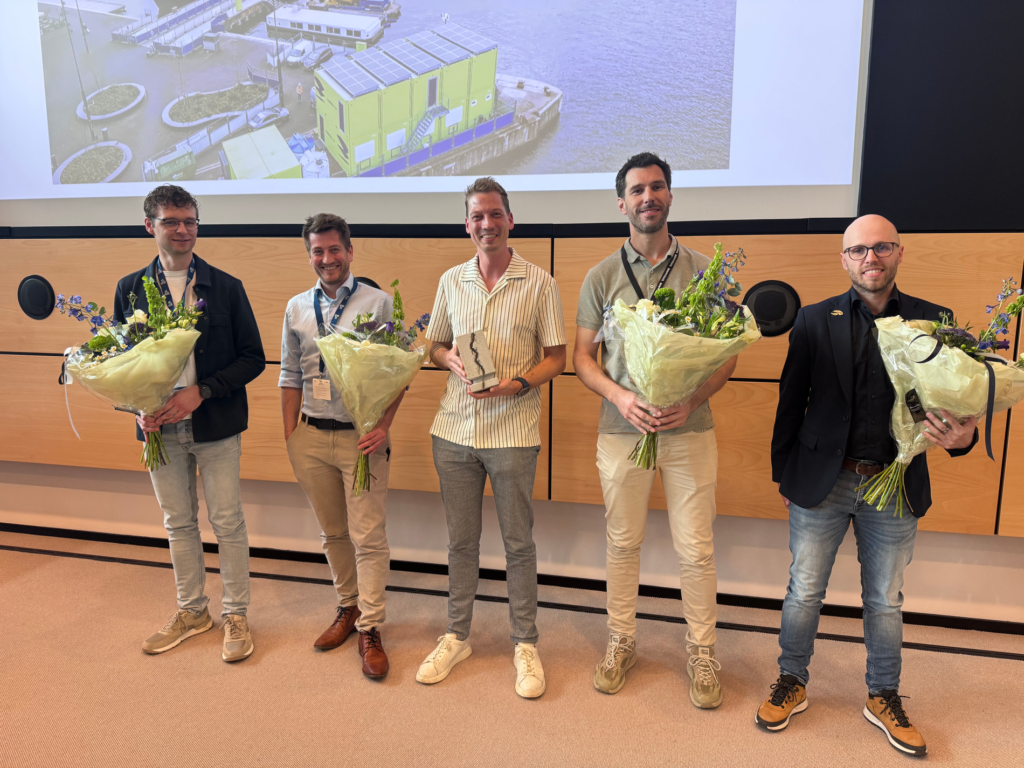
During the member afternoon of the Concrete Maintenance Platform on April 9, in addition to two interesting knowledge sessions, the first Concrete Repair Award was presented to winner Mobilis TBI.
With the renovation of the 260-meter-long NDSM pier, Mobilis TBI shows that smart solutions can be devised for a project with very challenging accessibility. “The quality of the submitted proposal, the test with the robotic arm, the elaboration with the bellyboats and the virtually emission-free construction site were decisive for jury to choose this entry,” said Patrick Dewez on behalf of the Concrete Repair Prize jury.
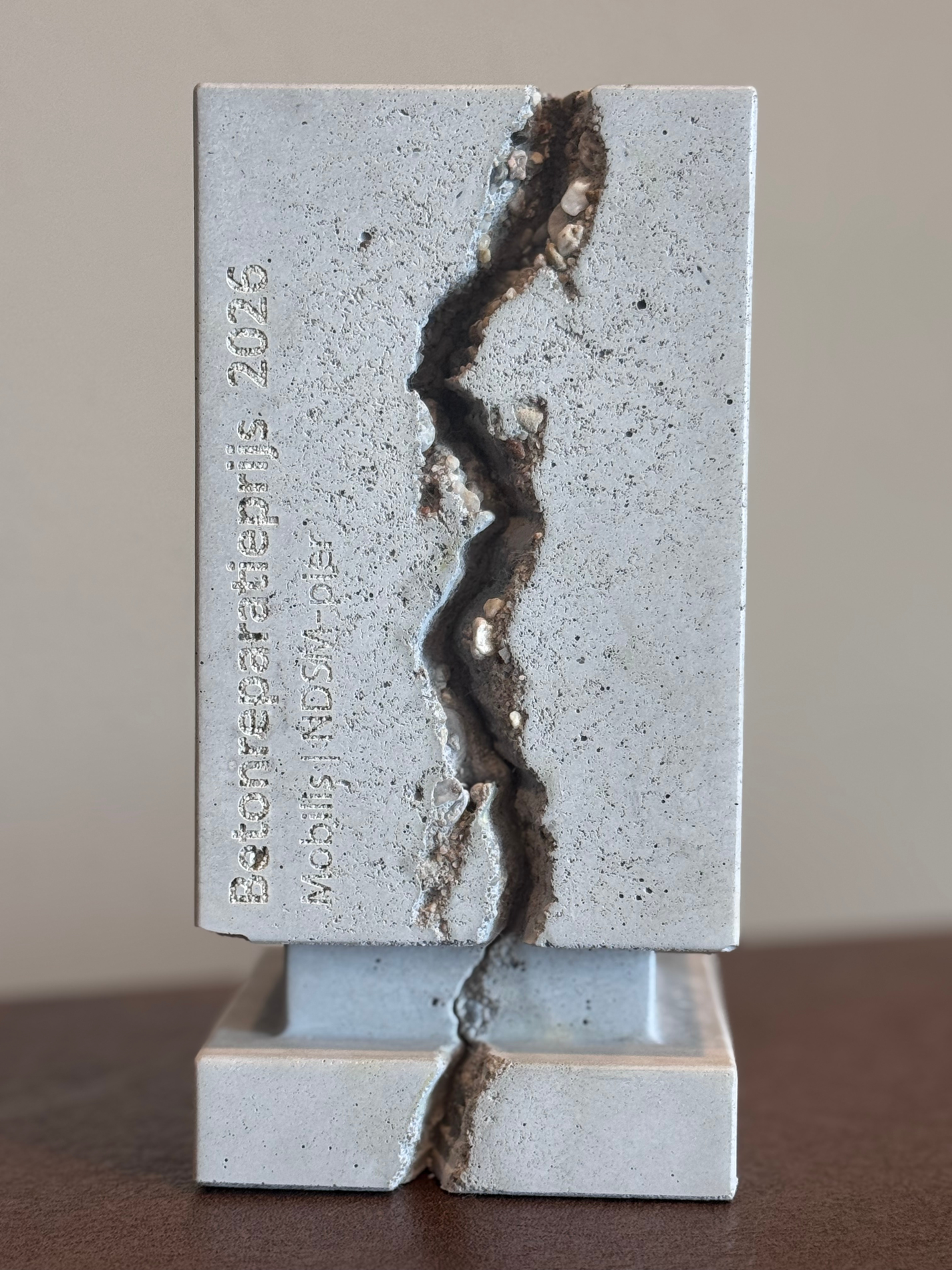
The following is an overview of the projects submitted, beginning with winner Mobili TBI.
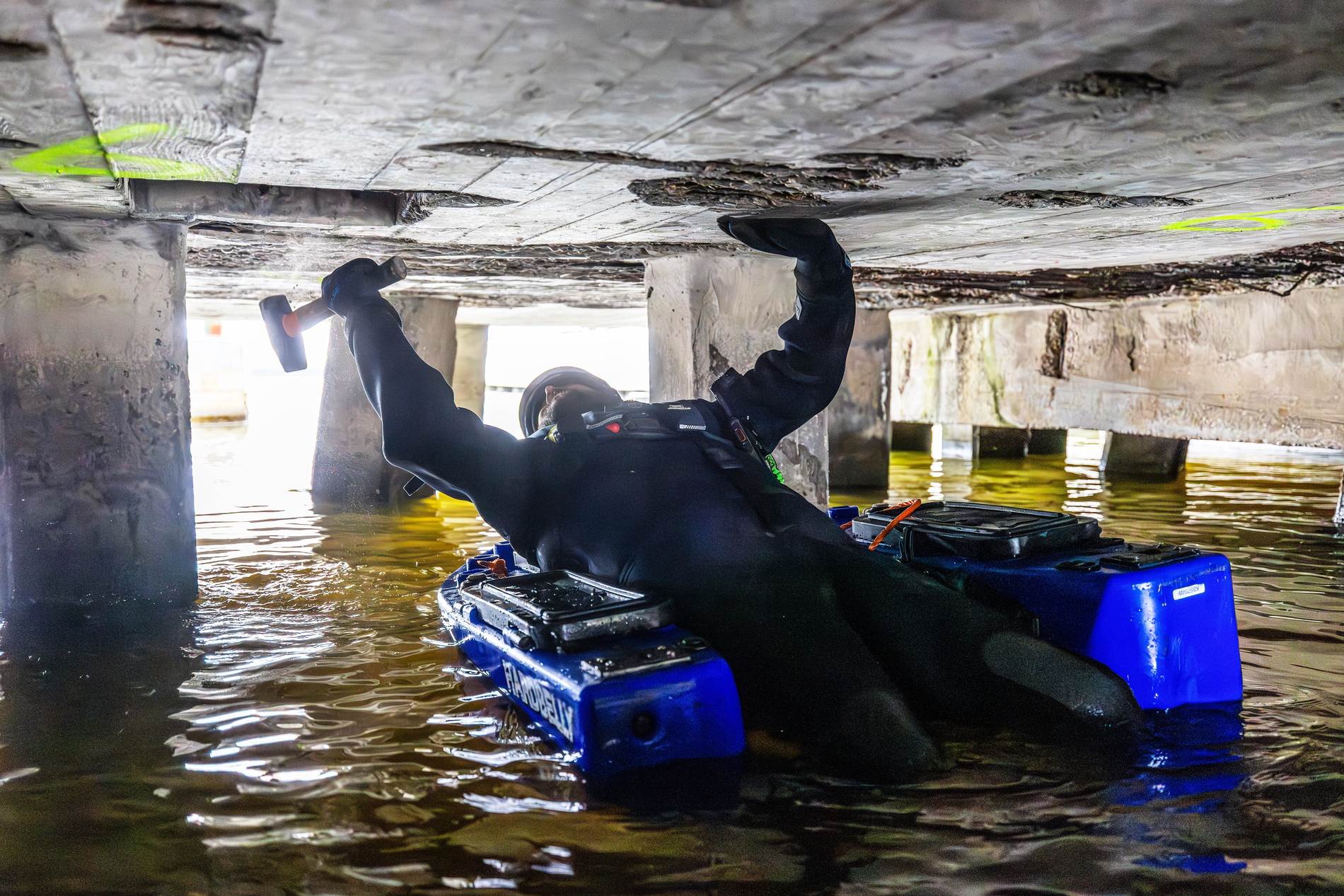
The renovation of the 260-meter-long NDSM Pier in Amsterdam shows how technical innovation and sustainability come together under exceptional execution conditions. Whereas a working height of approximately 1.8 meters is usually available under quays, here work has to be done in a space of only 70 to 90 centimeters. This limitation forces a different approach, both in equipment and execution methods.
Hydro-jetting to behind the reinforcement was chosen for the concrete remediation, followed by restoration with spray mortar in multiple layers with increased coverage. Specially developed steel work buckets make it possible to operate below the waterline, while belly boats provide access to hard-to-reach areas. The use of a so-called ‘Spine’ hydrojet - a rail system integrated into a collection bucket - ensures efficient remediation and immediate collection of released material, reducing emissions and disturbance.
Attempts to further automate the spraying process with a robotic arm foundered on the limited space and fine mesh of the rebar. With that, craftsmanship of concrete repairers remains decisive. Falko Smits, Project Manager at Mobilis TBI: “In this project we used a number of existing techniques for which we did develop some tools. A good example are the steel work buckets, which, incidentally, we could reuse in a subsequent project. What this project also showed is that standardizing renovation projection is almost impossible to do. Given the challenges that existed and the solutions found, this project really is a showpiece for us.”
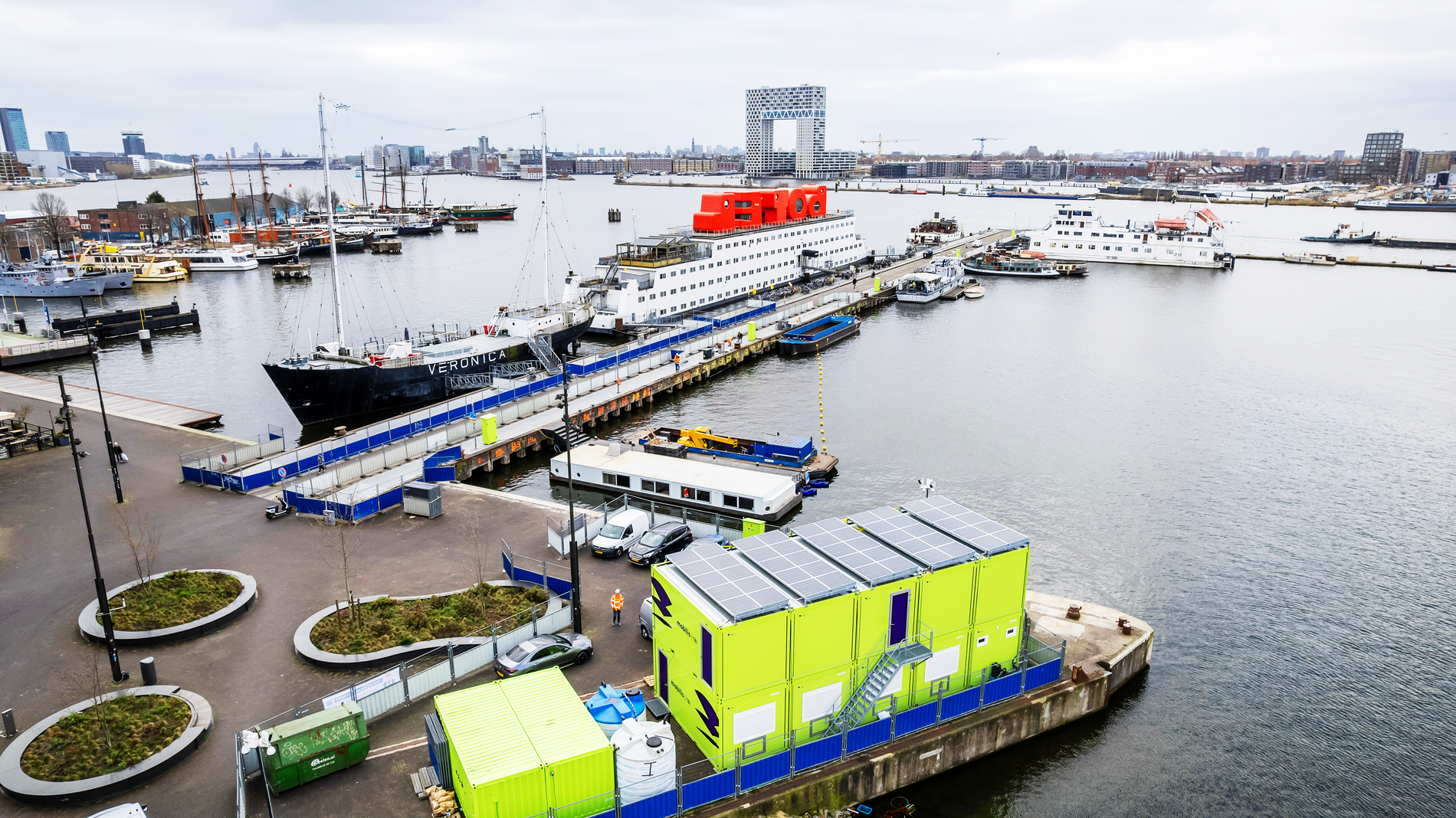
The construction site is largely emission-free. Electric equipment runs on shore power, supported by a battery buffer (240 kWh). Transportation is by water, which reduces the load on the downtown area. This approach resulted in a CO2 reduction of approximately 70% (48 tons in 2025) compared to conventional solutions.
Remarkably, in addition to emission reduction, material savings are also achieved through targeted repair rather than complete replacement - an aspect that is not yet always obvious in renovation projects.
Since August 2023, the IJzer Tower in Diksmuide has been undergoing a thorough restoration. The 84-meter-high peace monument, built between 1951 and 1965, showed concrete damage to the underside of the floor plate of the so-called ‘crosshead’ at a height of about 70 meters. The damage was caused by reinforcement corrosion, a well-known but difficult to control phenomenon in aging concrete structures.
An exploratory concrete investigation by SANACON (February 2024) confirmed that both carbonation and chloride intrusion were at the root of the corrosion. Remarkably, the chlorides are believed to have entered the concrete already during the construction phase. The floor slab consists of precast elements suspended from cantilevered steel trusses. On the visible side, an aesthetic masonry finish has been applied, making inspection and maintenance difficult.
Mere local repair with traditional concrete repair would not solve the underlying problem. This is because the corrosion is systemic and can develop beyond the already visible damage zones. Moreover, the limited accessibility at height and the masonry finish make early detection complex. Therefore, cathodic protection (RD) was chosen as a sustainable intervention. This technique actively inhibits the corrosion process without large-scale concrete removal. This preserves the original appearance of the protected monument. Alternatives, such as a safety net for loose concrete fragments, proved aesthetically unacceptable to the client.
The choice of KB underlines a broader trend: in heritage structures, the focus is shifting from curative to preventive and integral preservation. At the same time, this raises the question of how to deal with hidden defects in precast systems that are difficult to inspect in the long term.
The renovation of the Princess Margriet Tunnel not only marks a constructive intervention, but also serves as a testing ground for data-driven asset management. After earlier damage caused by collapsing tension piles and drifting tunnel elements, Rijkswaterstaat deployed large-scale reinforcement with approximately 1,400 new tension piles and additional anchoring of the tunnel walls. Within this context, there is room for innovation.
In the barrier construction at the tunnel entrance, a test rig has been set up with Solid Services' DuraMon system. This wireless sensor system makes it possible not only to detect corrosion processes in concrete, but also to interpret them at an early stage. Measurements of chloride content, moisture and temperature, among others, are combined with parameters such as pH, steel potential and corrosion rate. This shifts the focus from reactive maintenance to predictive management.
The systematic approach to validation is striking. Three installation methods are tested in parallel: integration into fresh concrete, application in returned drill cores and installation via drilling into the existing structure. These variants were applied under identical conditions, both in an aggressive splash zone and in a reference area. In total, the trial includes six measurement sites, whose data will be monitored over a period of five years.
The ambition is clear: informed maintenance strategies and greater control of degradation processes. At the same time, the question is justified to what extent the complexity and costs of such systems outweigh the practical added value in the long term. The coming years should show whether this technology actually makes the step from pilot to standard application within the Dutch infrastructure.
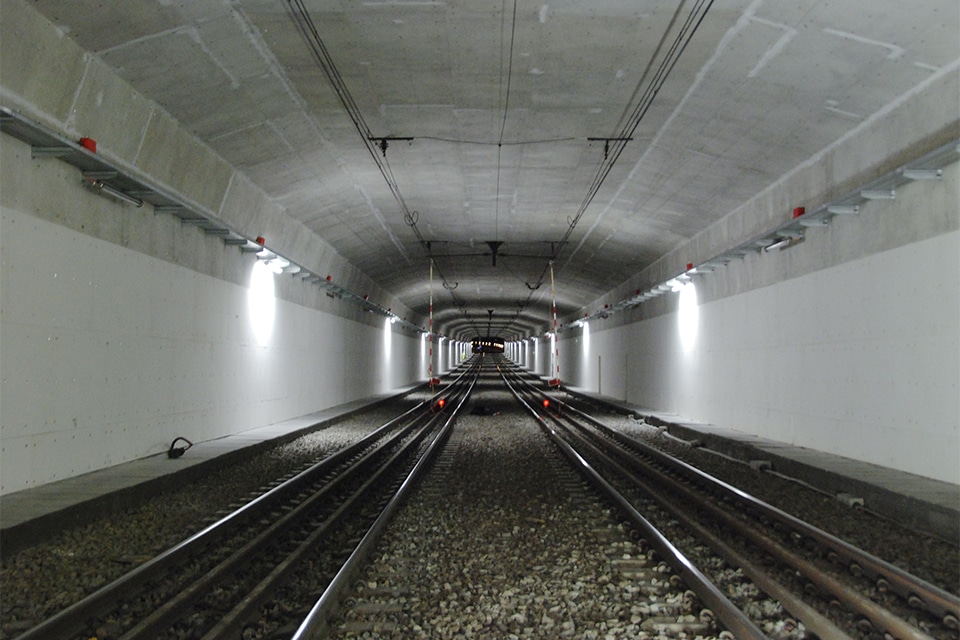
The Brussels Capital Region is committed to structural renovation of its tunnel infrastructure. After previous incidents of concrete fragments coming loose, a large-scale maintenance contract was put out to tender in 2021 for 14 tunnels. For four of them - Troon, Tervuren, Porte de Namur and Boileau - cathodic protection (RD) is an essential part of the rehabilitation strategy for the tunnel roofs.
The issue of reinforcement corrosion already came into sharp focus in 2016-2017 following extensive inspections by Brussels Mobility and Egis. These studies laid the groundwork for targeted interventions, where KB emerged emphatically as a sustainable solution. The experiences in the Annie Cordy Tunnel, where this technique was successfully applied earlier, played an important role in this.
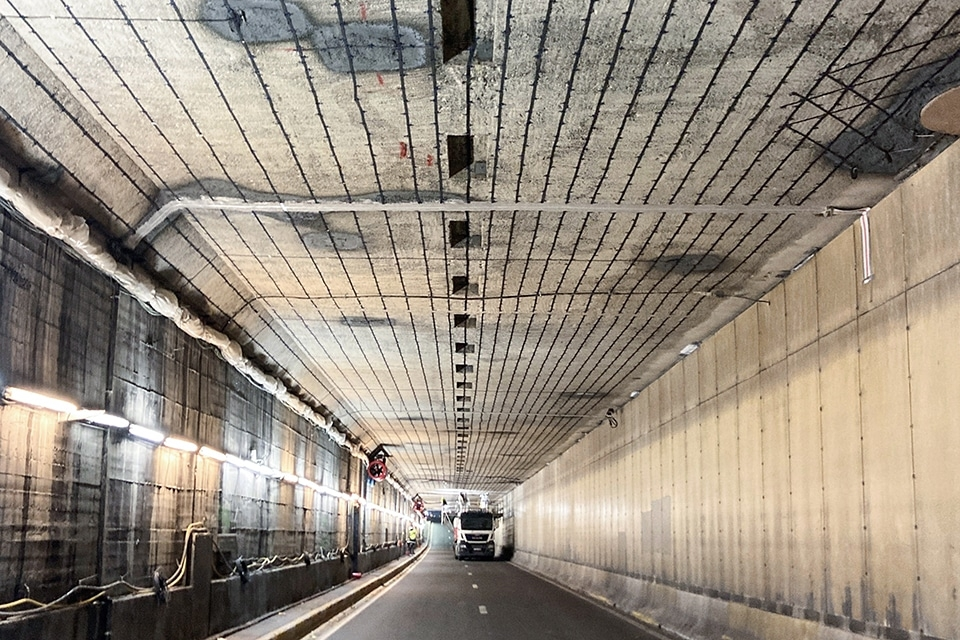
The implementation of the KB systems took place between May 2022 and September 2024 and included approximately 10,000 m² of tunnel surface, divided into 48 zones. RENOTEC handled the realization, in cooperation with engineering firm
SANACON for design and supervision. Prior to implementation, a detailed preliminary investigation was conducted for each tunnel, including measurements of concrete resistance, coverage and electrical continuity of the reinforcement.
A system was chosen using TiMMO strips as the anode, embedded in a spray mortar overlay. This confi
guration provides flexibility for future anchoring of tunnel installations, something that is problematic with full-surface anode systems. In addition, the system allows for customization for variations in reinforcement density.
After the concrete repair and installation of all components, the systems were tuned and made operational. This marks an important step toward the manageable life extension of this critical infrastructure, although long-term monitoring remains crucial to ensure effectiveness.
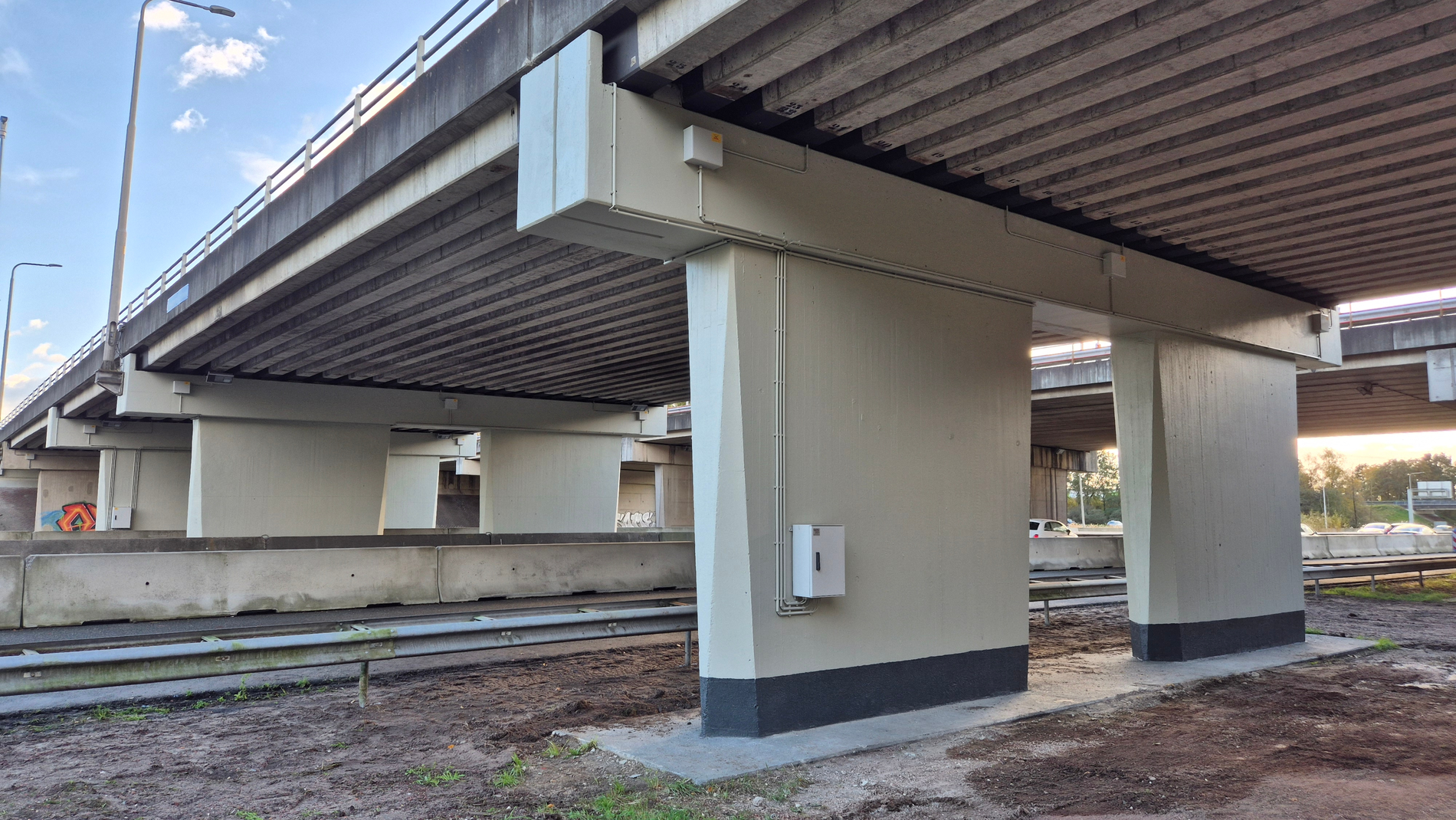
At Knooppunt Hattemerbroek, where the A28, A50 and N50 motorways meet, two viaducts have been substantially repaired without proceeding to replacement. The cause was serious concrete deterioration due to chloride-induced corrosion of (prestressing) reinforcement, caused by penetrating de-icing salts. In addition, one viaduct involved a design error: supports had been incorrectly positioned decades ago, which had already led to a temporary emergency construction.
Commissioned by the Department of Public Works, Mourik Infra and Vogel, with Nebest as consultant, opted emphatically for conservation. The focus was on an integral approach aimed at extending life span and stopping corrosion processes. Affected concrete was selectively removed and repaired with high-quality mortars. Cathodic protection (ICCP) was then applied to structurally control active corrosion. This involved applying conductive coatings to the girder heads and a combination of titanium anodes and coatings to the supports. The structural flaw was corrected by widening the supports. High-pressure water scrapping was used to remove concrete without damaging the reinforcement, after which new reinforcement and buttressing were applied. This restored the force transfer.
The chosen strategy is expected to provide a residual life extension of at least 25 years. At the same time, the CO2 emissions are significantly lower than with complete replacement. However, this approach does require long-term monitoring and management of the protection systems, which is not always obvious in practice. By preferring rehabilitation to demolition, traffic disruption remained limited. The project highlights the potential of targeted conservation, but also shows that success remains dependent on careful long-term management.