Platform on concrete and steel in construction
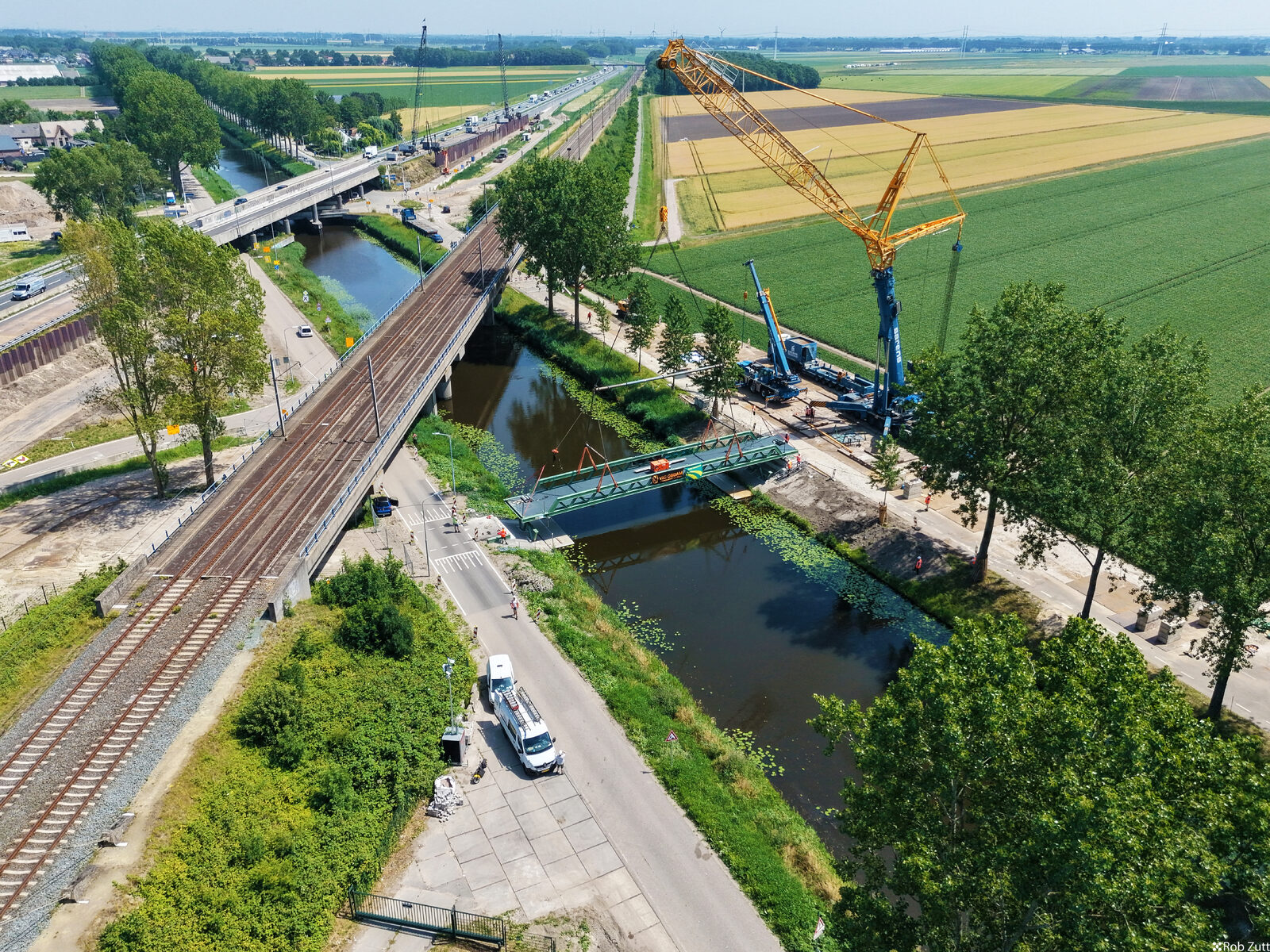
It was originally intended as a temporary bicycle bridge due to construction work on the A44. In Abbenes, however, the municipality of Haarlemmermeer opted for a permanent solution using a used steel bridge from the National Bridge Bank. This gave a former harbor bridge from Vlissingen a new lease on life. For Vic Obdam Staalbouw, it was a project in which precision, craftsmanship, and collaboration were more important than routine.
The groundwork had already been laid when Vic Obdam Staalbouw joined the project. The design had been detailed in a RAW specification, with Dura Vermeer as the general contractor and Haskoning, Ipv Delft, and the municipality of Haarlemmermeer as the parties involved. Nevertheless, Jan Smit of Vic Obdam calls the project an example of circular bridge construction. “It all started with the people within the municipality who were willing to stick their necks out,” he says. “A temporary solution was needed, but they asked themselves: ”Can’t we just turn this into a permanent bridge right away using what’s already available?’”
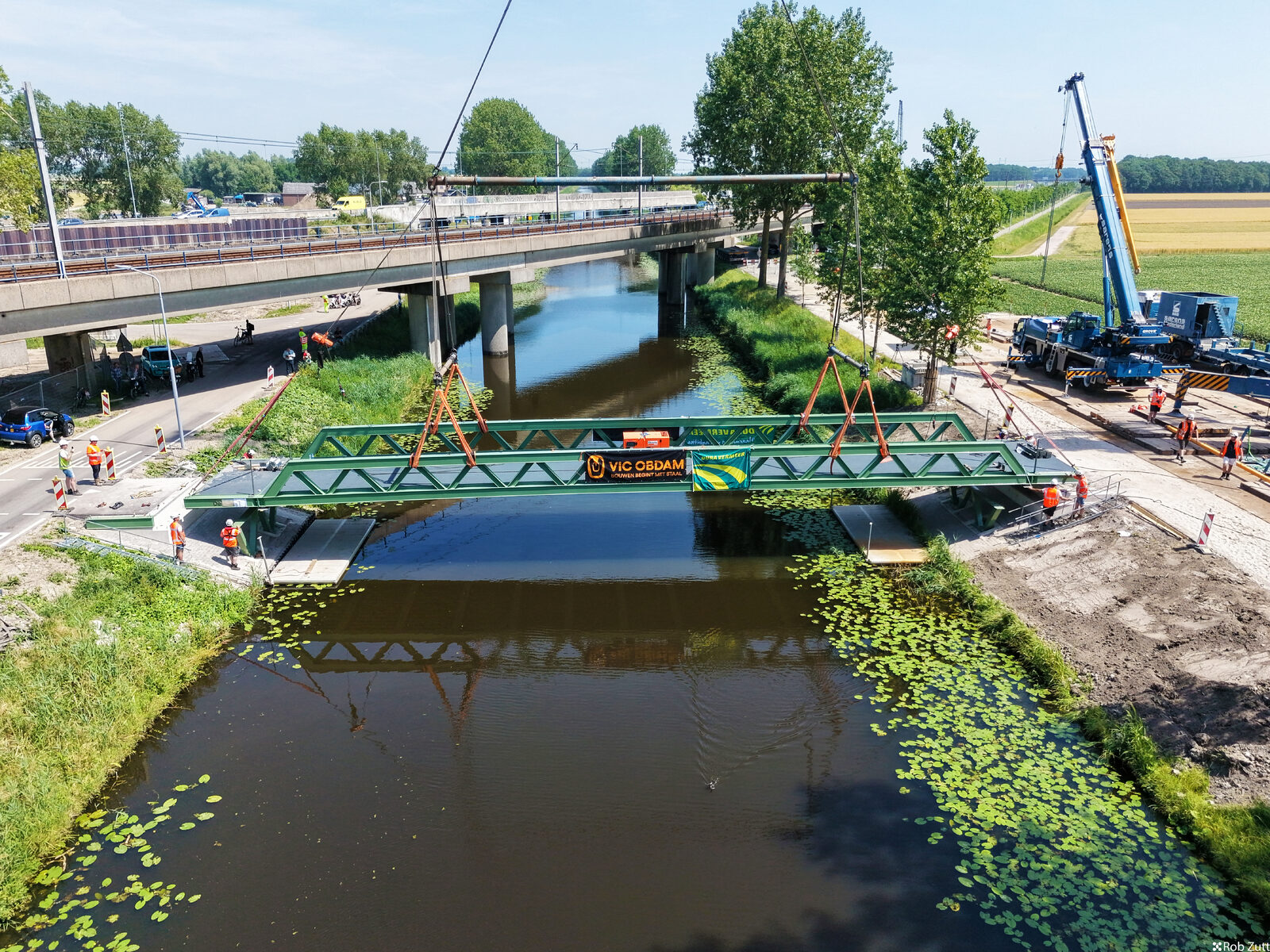
A suitable bridge was found in the National Bridge Database. It originally served as an emergency bridge for heavy traffic in Bovensmilde, later as a temporary traffic bridge on Ameland, and subsequently as a loading and unloading bridge in Vlissingen. In Abbenes, it is now beginning its next life: as a bicycle bridge over the Hoofdvaart. This reuse results in a reduction of 58 metric tons of CO2 compared to building a new bridge. Construction time and costs are also more favorable.
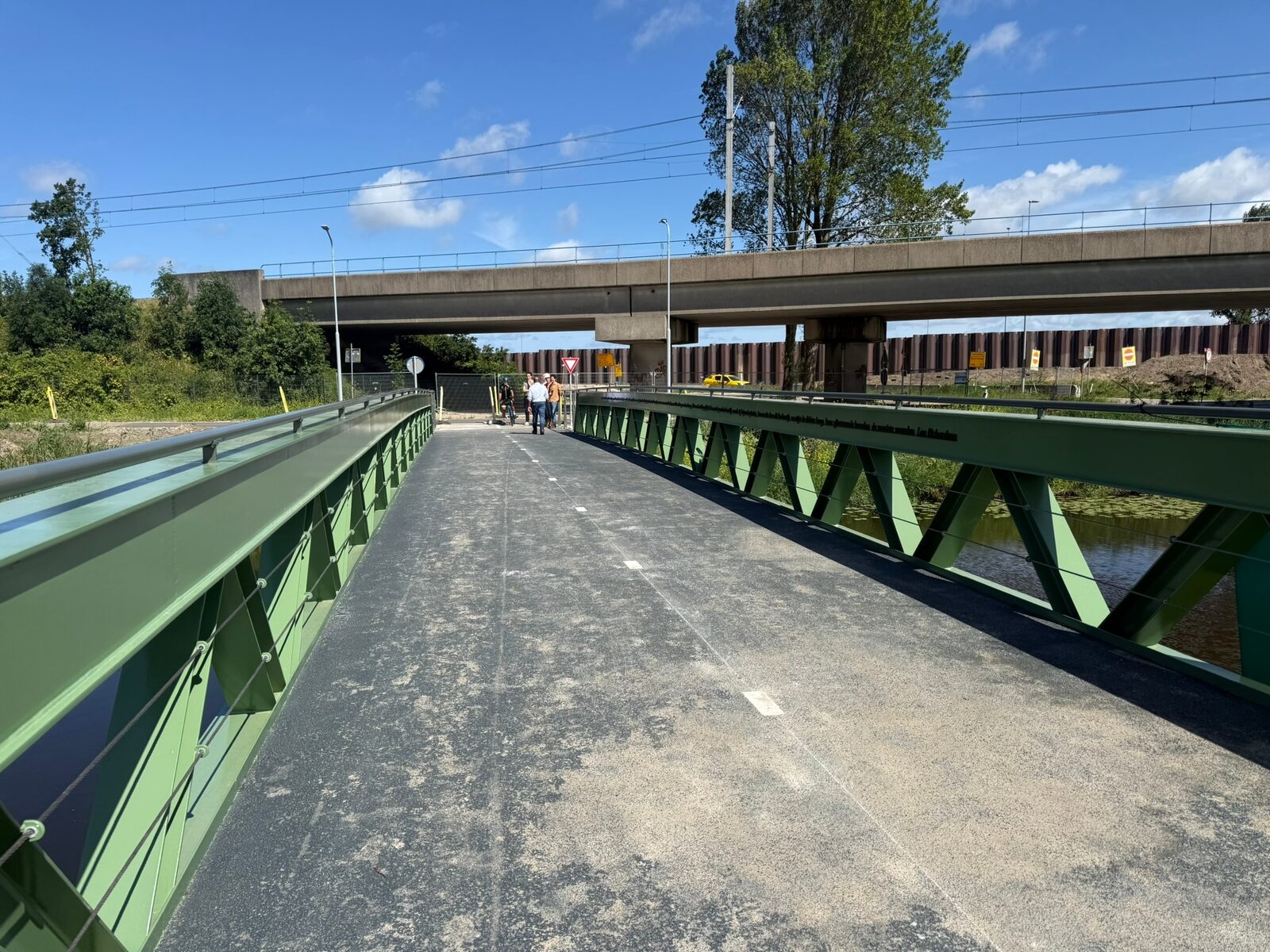
For Vic Obdam, the work began with careful measurements. To that end, the bridge was fully scanned. “We created a point cloud,” explains Smit. “We could already see that it was longer than specified in the design. It also turned out that the original section had a slight curve, while the extended section was straight.” This had to be taken into account for drainage, bearings, and sight lines. Furthermore, one end of the truss was found to be slightly twisted. “You can hardly see it with the naked eye, but from the railing you get a long line of sight. Together with the design team, we decided to make the railing run straight.”
From a technical standpoint, the intervention primarily involved ‘thinning out’ the bridge. The existing top and bottom chords, made of box sections, were removed. A brace was removed and repositioned to give the truss a single, unbroken line of sight. To restore the structural integrity, new plates were welded along the length of the bridge: on the top side on both sides of the girders, and on the bottom side on the outer edge. “Those plates are fully welded,” said Smit. “You’re sealing off a section like that, so it has to be watertight. Afterward, the entire structure was re-preserved.”
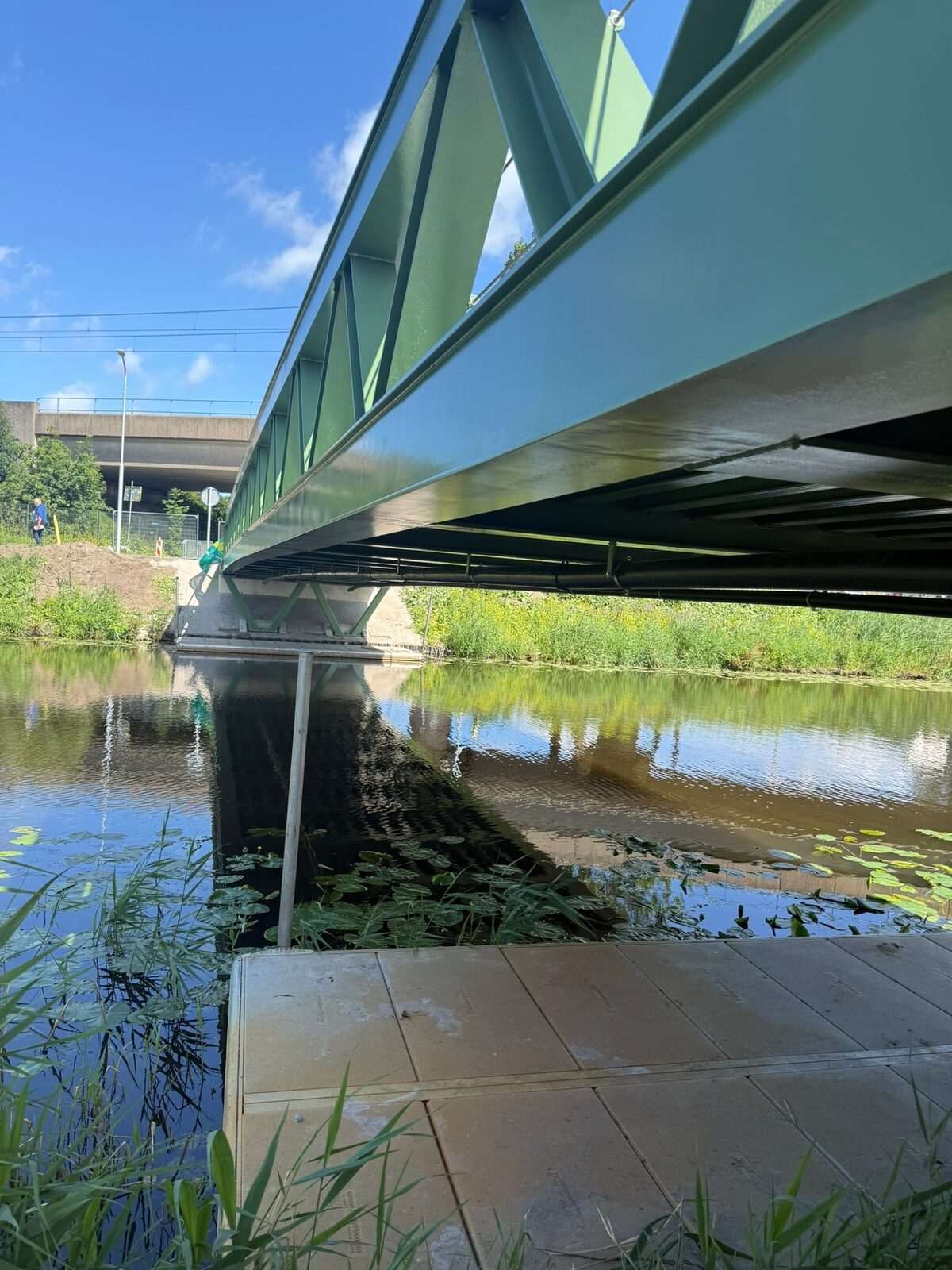
The circular approach was not limited to the main structure. The removed tubular beams were reused in the new approach bridges and V-shaped support columns. The abutments also incorporated a circular element using reused concrete material. The steel main bridge, approximately 28 meters long and weighing about 60 metric tons, was coated in RAL 6011 green using a three-layer wet paint system. The bridge rests on V-shaped columns and on bearings at the approach spans. Support blocks were installed between the steel and concrete: rubber blocks with steel plates that absorb deformations.
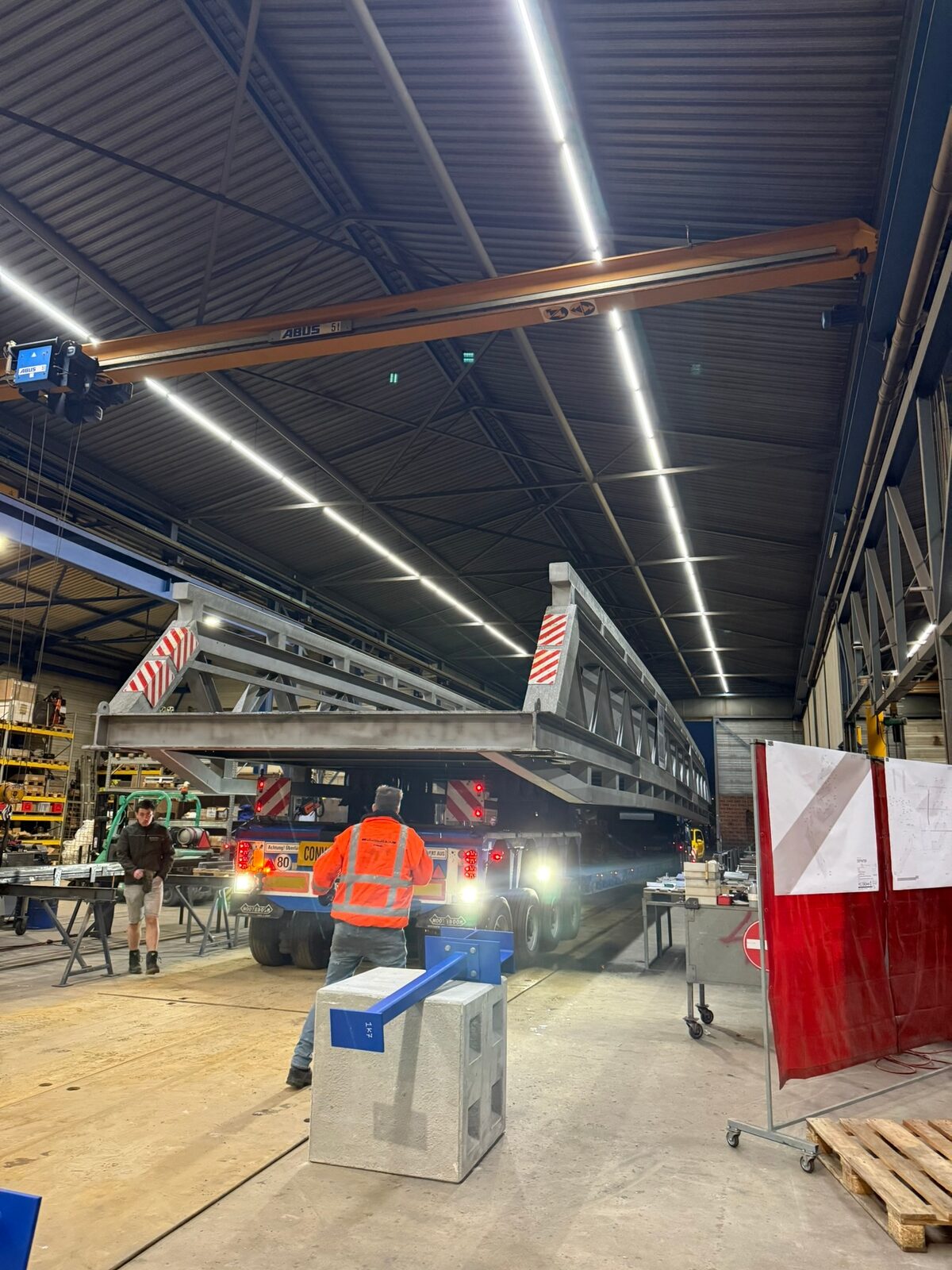
For an accredited training company, a project like this is especially valuable. It’s precisely the deviations that make reuse an educational experience, Smit believes. “In new construction, a lot comes from the 3D model: drilling, sawing, numbering—everything is prepared. Here, you have to measure and assess things by hand much more often. What do we find? Are the welds sound? Does a bend have structural implications? That’s craftsmanship the way it used to be. For students in the workshop, the bridge therefore proved valuable: circular construction requires eyes, hands, and experience.” In addition, this bridge project demonstrates that reuse only works when the client, designer, structural engineer, and contractors are willing to share risks and adapt quickly. “Sometimes a bridge like this is sitting in the workshop, and you notice something that doesn’t quite match the design,” says Smit. “Then you need an immediate answer. In this project, everyone played their part.”