Platform on concrete and steel in construction
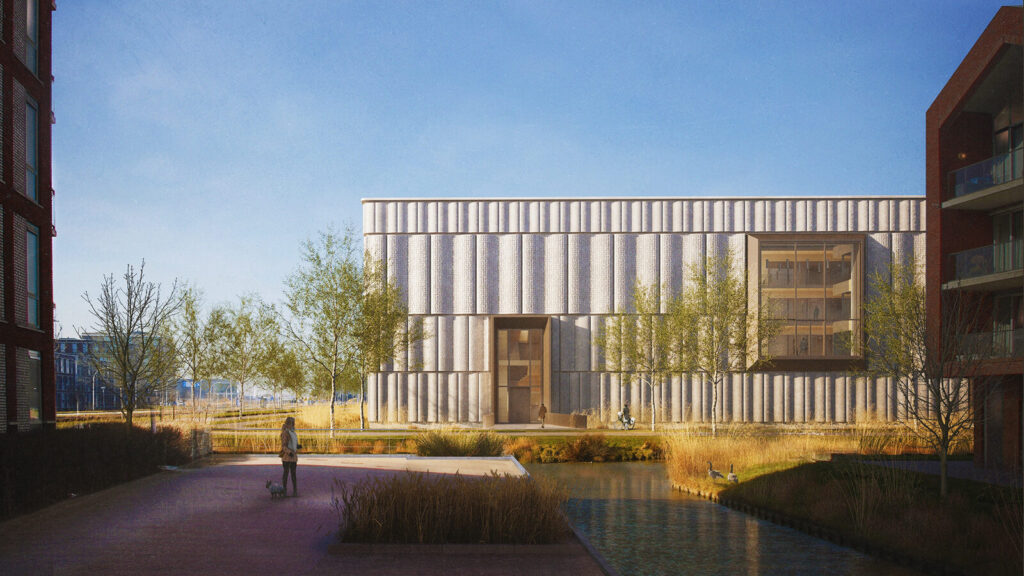
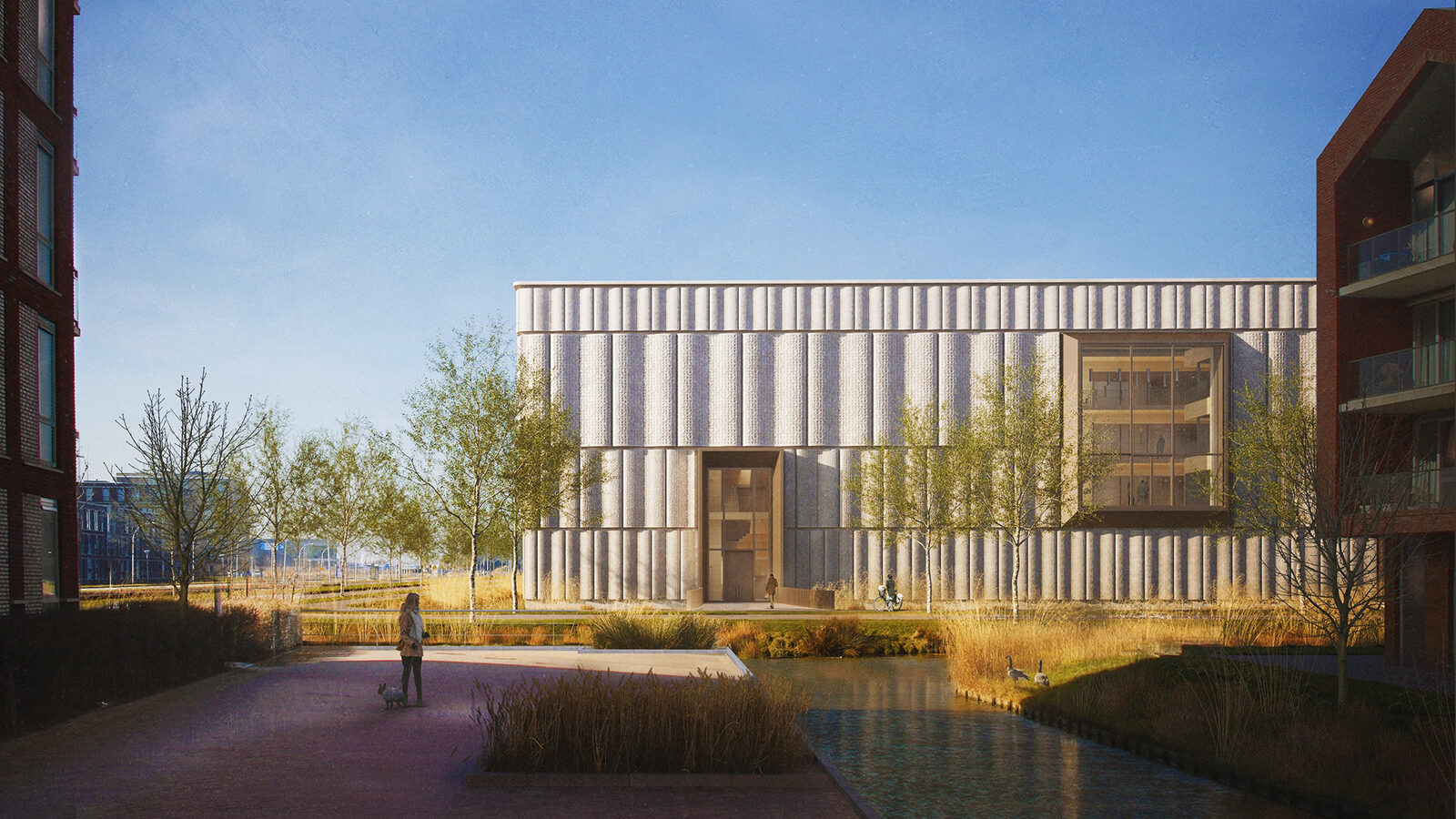
Storing millions of books, newspapers, and magazines without traditional climate control systems. This will soon be a reality in Den Hoorn, in the municipality of Midden-Delfland, where a new warehouse is being built for the KB National Library. It’s a storage facility where the sheer mass of the heavy concrete walls and the collection itself help regulate humidity and temperature. This ensures that storage conditions are as optimal as possible, without the need for energy-intensive climate control systems.
Construction of the new storage facility for the KB National Library in Den Hoorn began as a response to a simple need. “The existing book storage facility in The Hague is outdated, the systems are nearing the end of their useful life, and we’re running out of space,” says Kirsten van Zeijl, project manager at the Central Government Real Estate Agency and closely involved in the construction of the new book storage facility.
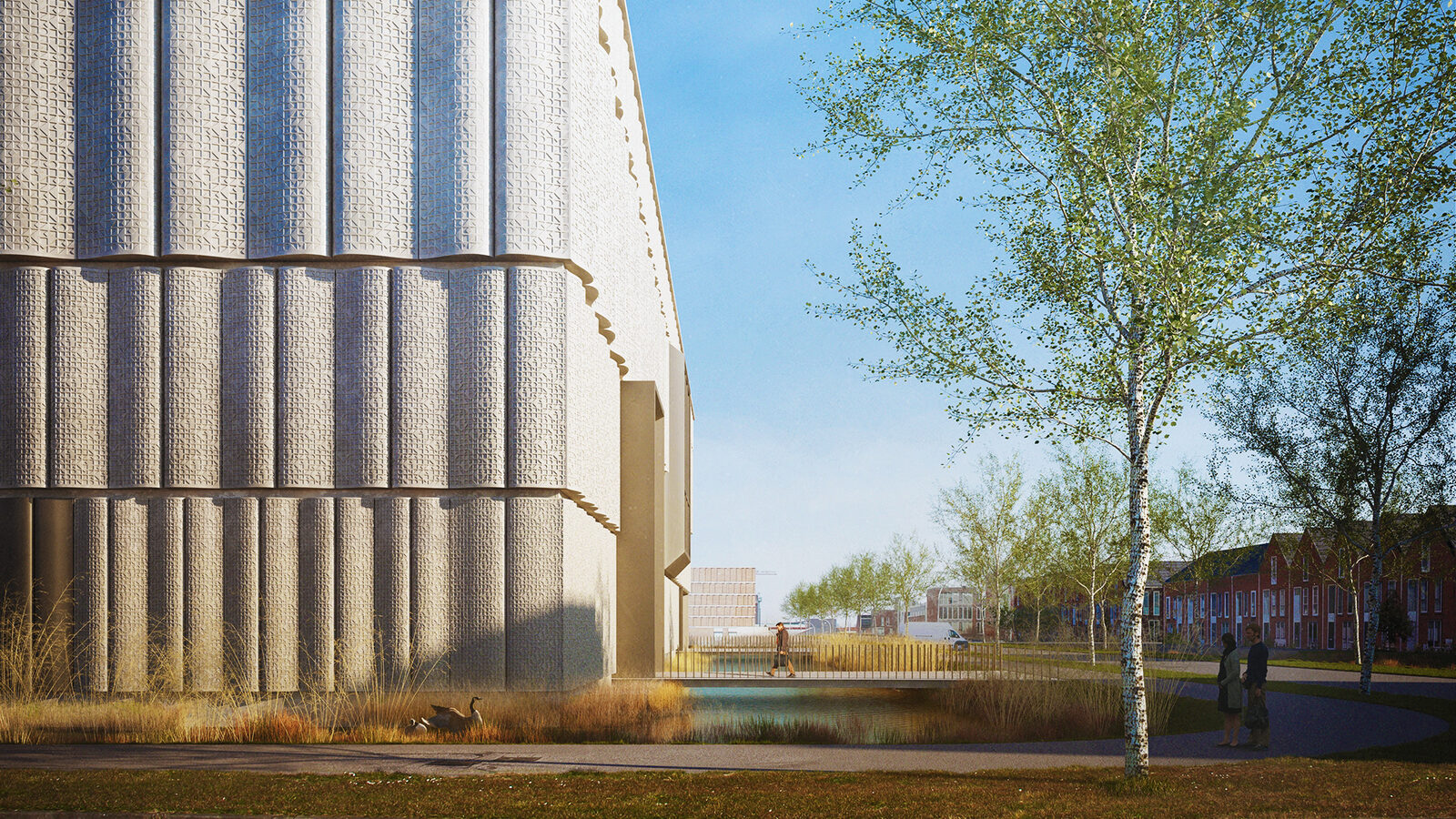
But the solution was anything but traditional. “We’re building a structure that will last a hundred years. Architecturally, that’s quite feasible, but from a mechanical and electrical engineering perspective, it becomes a lot more complicated,” Van Zeijl notes. That’s why they sought a concept that relies as little as possible on mechanical and electrical systems. “Old churches, pyramids, and other massive structures served as an important source of inspiration. They follow the principle of ‘high mass’ so that the indoor climate does not react immediately to every change in the outside temperature. Just like these centuries-old buildings, the indoor climate of the new book repository must gently adapt to the seasons, without major fluctuations.”
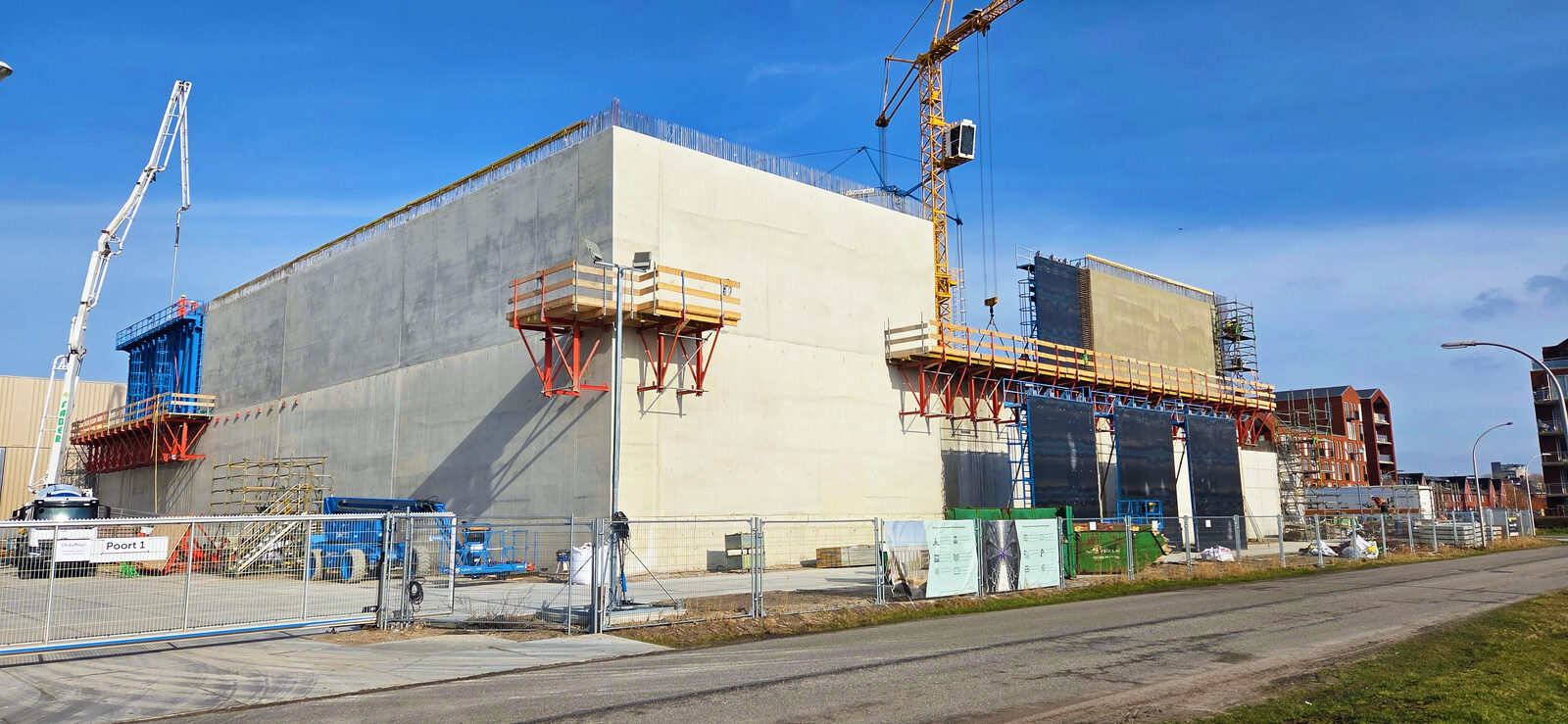
During the preliminary phase, a comprehensive study was conducted to determine the optimal indoor climate for the collection. “In addition to a large mass, optimal airtightness is also a key consideration,” says Van Zeijl. “We also knew that it’s possible to build without climate control systems, because a similar book storage facility has been built in Switzerland to house university books, among other things. There, the mass of paper acts as a natural buffer against heat and moisture. In Delft, we are building the 2.0 version, which incorporates the knowledge and expertise from the Speicherbibliothek in Switzerland. The building will feature concrete walls no less than 21 meters high and 35 centimeters thick. Behind these will be an 18-centimeter insulation layer, followed by a frame, gypsum board and gypsum fiberboard, and a unique facade finish made of fiberglass-reinforced concrete that depicts an open book with hieroglyphs.”
Fire safety represents a second technical feat. The new warehouse will eventually consist of a single large fire compartment. “That’s quite remarkable when you consider how much paper is stored there,” Van Zeijl acknowledges. “This was preceded by quite a bit of consultation with the authorities, especially the fire department. Still, it’s possible thanks to oxygen reduction. The oxygen level is kept below 13.5 percent, which prevents combustion. You can’t even light a match there. If the oxygen level rises, nitrogen is pumped into the space to bring it back down to the required level.”
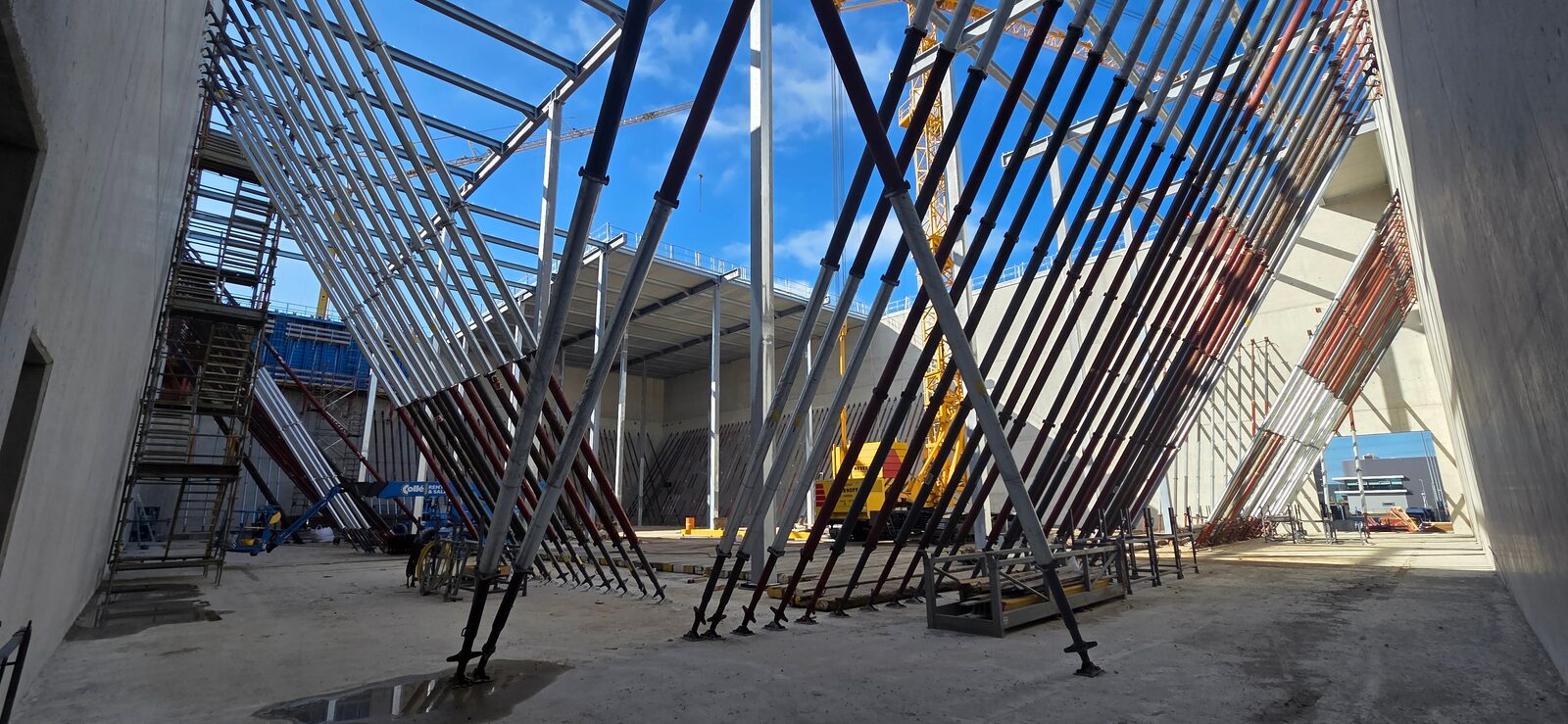
Even employees of the KB National Library will soon no longer have access to the storage area. “The collections will be stored in a fully automated storage system. The storage area will feature racks with containers that are automatically retrieved and returned. The system is based on technology also used in distribution centers, but it is unique for a library storage area,” Van Zeijl explains. “Containers holding items that are checked out are retrieved from the storage facility fully automatically and transported to the front building. This is also where the only window offering a view of the storage facility is located. Furthermore, the storage facility is constructed entirely of solid concrete, with walls poured in three sections, and even the bracing was imported from abroad.”
The structural completion of the new book storage facility is scheduled for the third quarter of 2027. At that time, the storage system will be integrated, and the KB National Library will face the daunting task of moving those millions of books, newspapers, and magazines and placing them in more than 235,000 containers in the new book repository.