Platform on concrete and steel in construction
In the Dutch rebar industry, few companies have been at the forefront for as long as BetonijzerBuigCentrale (BBC). Since 1953, this family-owned business has been supplying cut and bent reinforcing steel to the construction sector. Today, BBC has a team of fifty permanent employees and works with approximately twenty temporary workers, spread across its two production sites in Hardinxveld and Giessen.
But what truly sets the BBC apart is not just what comes off the production line, but also the software that ensures everything works together seamlessly. For more than thirty years, software provider LIC has played a crucial role in this.
In the 1950s and 1960s, BBC was one of the first companies in the Netherlands to start cutting and bending reinforcing steel in advance at the factory rather than on the construction site. This was a revolutionary step at a time when the Netherlands was in the midst of post-war reconstruction. “We were actually a kind of startup of that era,” says Mees van Wijngaarden, CEO of BBC. “We were on the market with the right product at exactly the right time.”
This industrial mindset and forward-thinking approach have always been at the heart of the company. As early as the 1970s, BBC was investing in large-scale production machinery, and in the years that followed, it was one of the first companies to achieve ISO certification. “We’ve always focused on automating processes—not just with the machines, but with the software as well,” says Van Wijngaarden. “That’s actually been part of our DNA our entire existence, starting in the 1970s.” This forward-thinking mindset also led BBC to turn to LIC very early on—as one of its very first customers.
“Our collaboration with software provider LIC began in the 1990s and has now grown into a partnership spanning more than thirty years,” explains Van Wijngaarden. “As companies, we’ve really grown together.” What began with basic connections between software and machines has evolved into an advanced system in which production planning, machine control, and logistics are closely intertwined.
Production planning is at the heart of BBC’s operations. “That’s the hub where everything comes together,” explains Van Wijngaarden. All departments—from work planning to production to logistics—refer to the same real-time schedule. This central software shows how busy production will be and how machines are being utilized. All other modules, such as invoicing, packing slips, and management reports, are linked to this. The result is complete transparency and efficient coordination from start to finish.
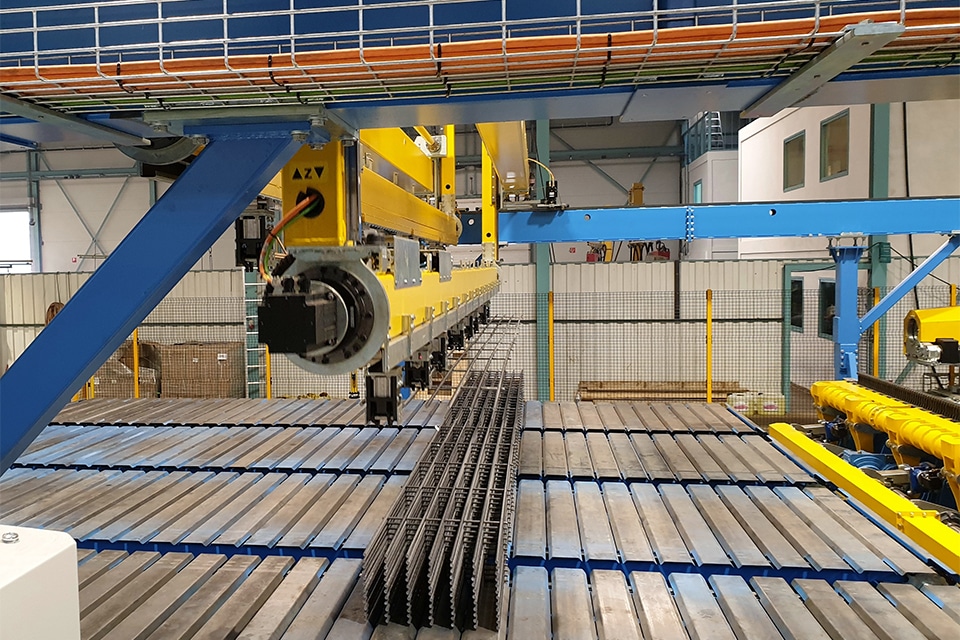
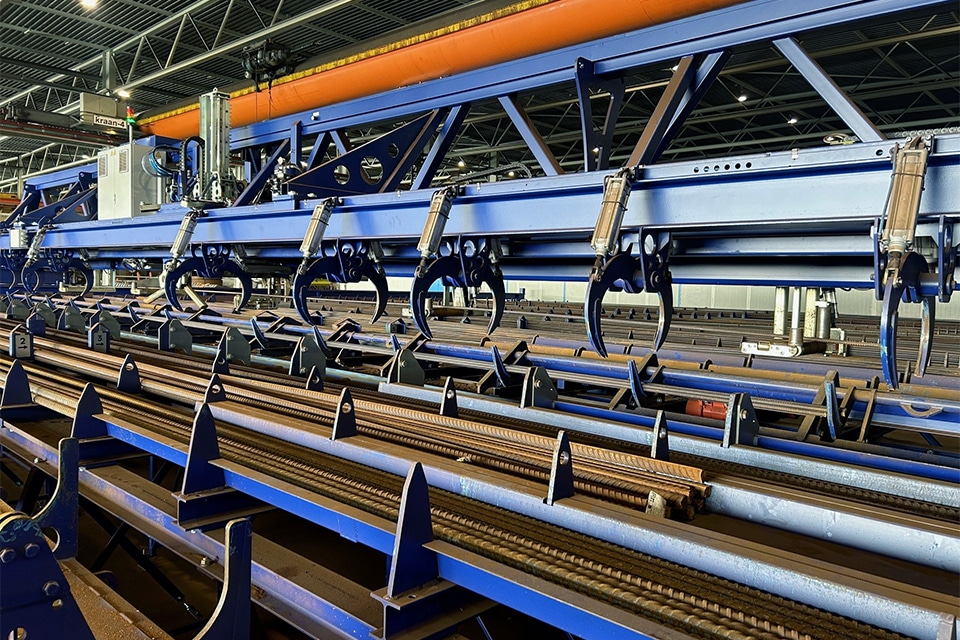
At BBC, approximately 25 employees use the LIC software. Two machines—the Progress M-System mesh welding system and the Schilt production line for processing rebar from rods, complete with associated double benders—are fully controlled by the software. This integration has yielded unprecedented benefits in terms of efficiency and accuracy. The cutting optimization feature in the software also offers significant advantages. The system provides accurate predictions of when a job will be completed and offers insight into production times, scrap rates, and material consumption. This means that BBC can provide its customers with much better information and plan much more effectively internally. “You gain insight into things that were previously invisible,” says Van Wijngaarden.
The BBC could have chosen large, international software providers. But LIC was a better fit because they work with us to find solutions, according to Van Wijngaarden. “And when we said, ‘We’d like to go in this direction,’ they listened. That’s not a given in the software industry.” And that collaborative mindset is worth its weight in gold. “LIC doesn’t respond with standard answers but offers solutions and flexibility. Plus, LIC is Dutch and therefore close to home. That makes collaboration practical and personal. And even more importantly: they speak the same language when it comes to what’s happening on the shop floor.”
Another advantage that BBC takes for granted is reliability. “The software just runs all the time,” Van Wijngaarden states firmly. “Operating for years without downtime and without data loss—that’s impressive,” he acknowledges. Moreover, support in the event of incidents is prompt. This means that BBC can focus on its core business—not on software issues.
After more than thirty years, the relationship between BBC and LIC has grown into a close partnership. “Small steps, big steps: LIC has evolved alongside us every step of the way,” says Van Wijngaarden. “From the integration of the Progress M-System mesh welding system in 2019 to the recently integrated cutting optimization for the Schilt machine.” This pragmatic partnership is valuable because BBC invests in long-term relationships. “We’ve had some customers for fifty years. Everything we do, we do for the long term—including our relationships with suppliers. And with LIC, we have a partner that shares the same dedication and, just like us, constantly strives for improvement and growth.”