BIM as the digital link for the IJburg bridges
The IJburg bridges project comprises two road bridges with steel and concrete structures, linking the new residential district of Strandeiland with Haveneiland and Centrumeiland in Amsterdam. Belgian company Iemants, part of multidisciplinary construction company Smulders, used effective collaboration through BIM to bring these distinctive steel structures to life.
Grimshaw Architects designed both bridges in collaboration with architecture and engineering consultancy Sweco. Their complex forms and structures make the bridges a fine example of craftsmanship.
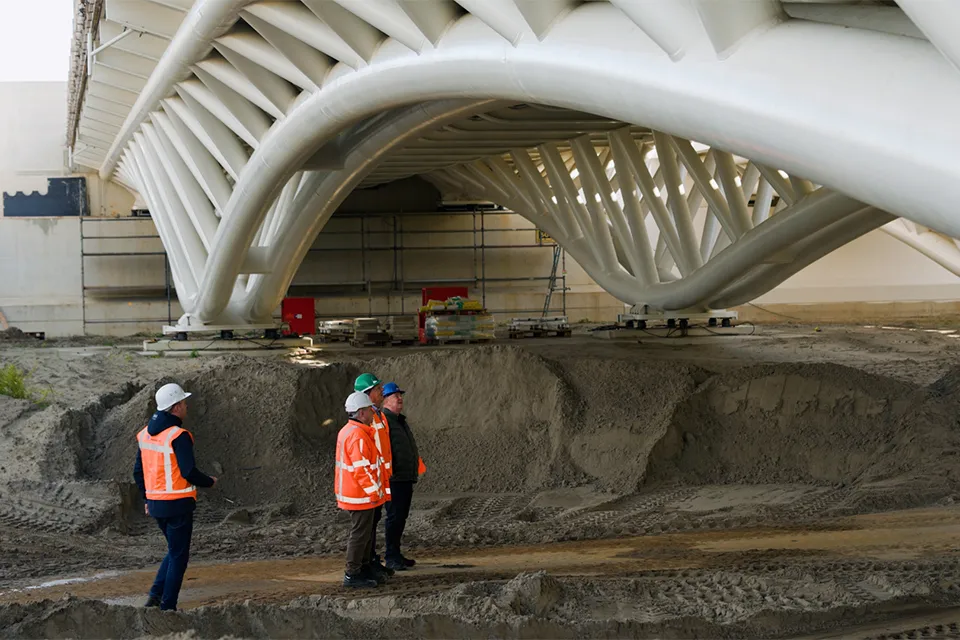
Where craftsmanship meets digital tools
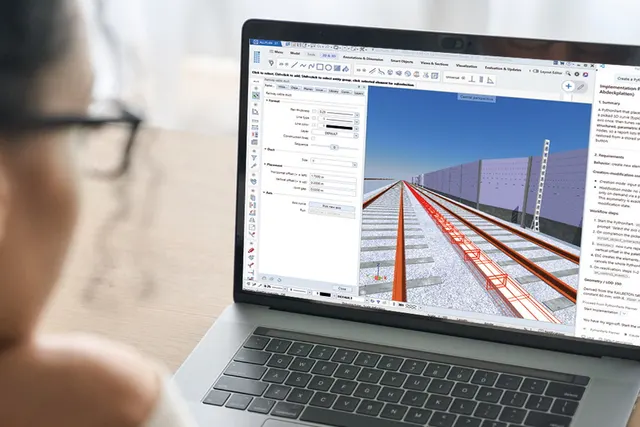
Rhino and Grasshopper were used effectively for parametric design. This software enabled the complex forms to be modelled efficiently. The model was then transferred directly to Tekla Structures using Tekla Live Link. Steven Geerinckx, project engineer at Iemants: “The challenge on this project was to get all the parties involved on the same page. We developed the model in Tekla Structures 3D design software, where we were also able to model the most complex forms. Our BIM platform, Trimble Connect, made it easy to communicate and share information. Because the two systems are directly connected, we could export the data while retaining all relevant information.” This gave all parties access to up-to-date 3D models, enabling close collaboration between engineering, production and assembly.
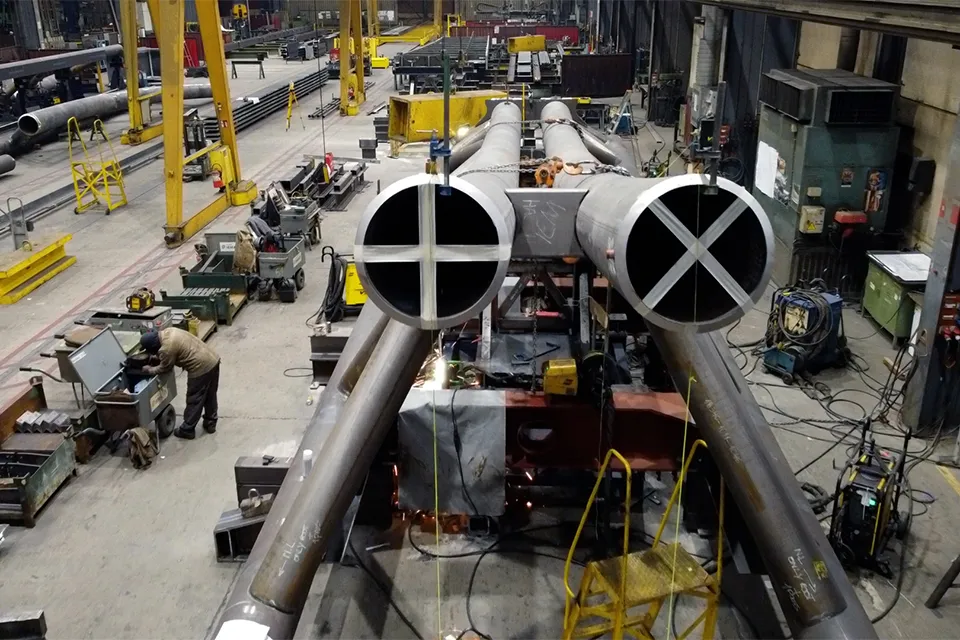
Working together in 3D
All Iemants employees can easily log into the 3D model using Trimble Connect. Geerinckx: “I’m sometimes surprised by how many colleagues use the BIM model. For example, it gives them a better understanding than the 2D drawings they receive. Welders and fitters can measure missing dimensions and prepare work plans using images from the 3D model. That way, everyone knows exactly what needs to be done.” The benefits of this digital approach are clear: better visibility, closer collaboration and fewer errors during construction.
Steel showstoppers
The bridges are real eye-catchers, with their large steel tubes. They have a diameter of 610 mm and a wall thickness of 40 mm. More than 2.3 km of tubing was used in total. The tubes were supplied by Kersten, a market leader in bending and manufacturing curved steel and aluminium components. Martijn Rozemeijer, category sales manager at Kersten, explains: “Bending these tubes was an interesting challenge for us. One key requirement was to achieve a smooth, flowing curve without indentation marks. Induction bending enabled us to deliver this high-quality finish.”
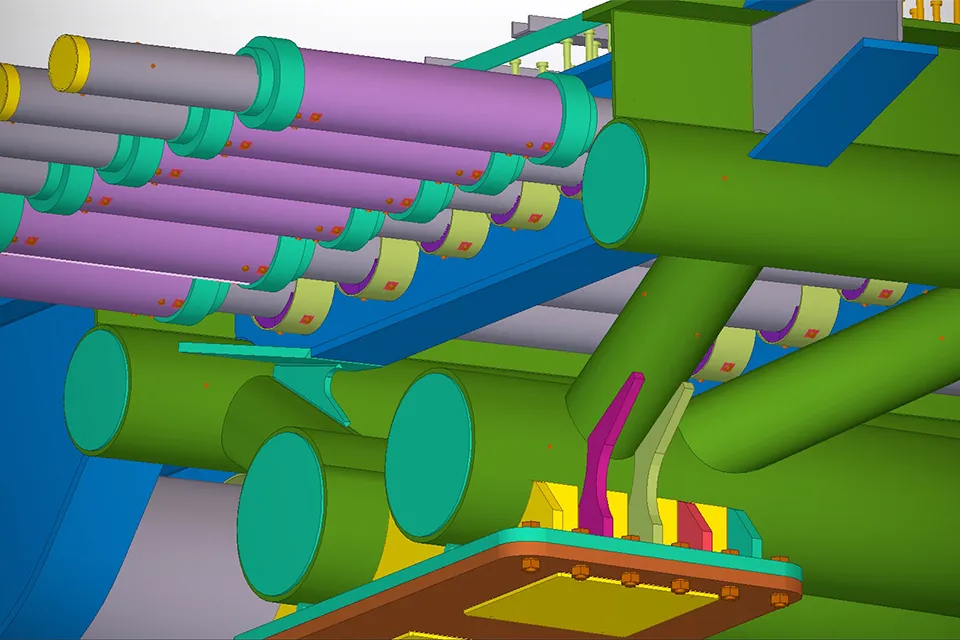
Iemants used the NC files to create the diagonal connections, each with different dimensions and angles. Every tube could be produced using the precise cutting instructions from the BIM model. This made assembly straightforward and resulted in a strong end product.
Building on dry land: efficient and sustainable
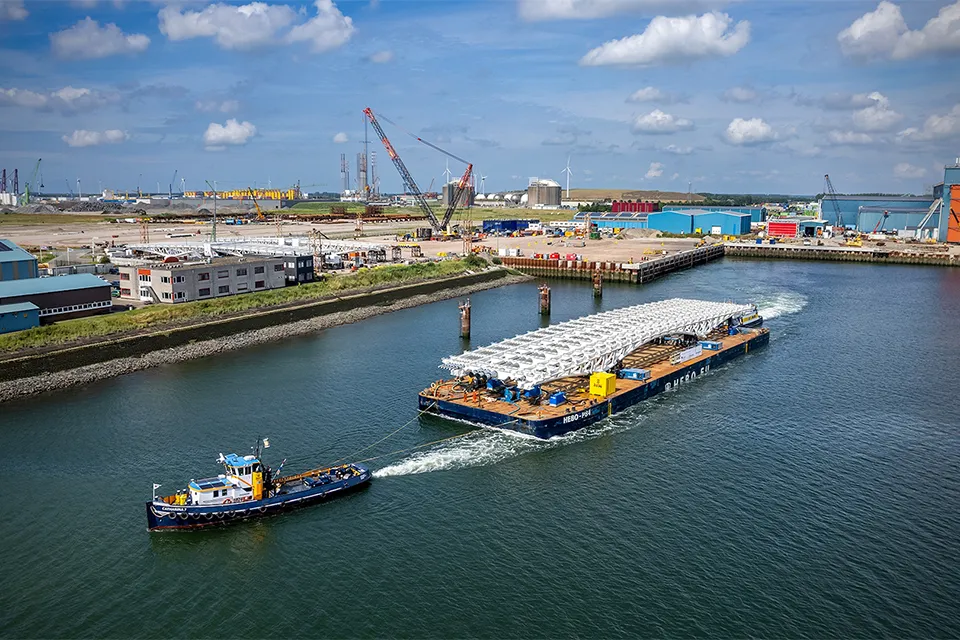
In an unusual approach, the bridges were built on dry land rather than over the water. Geerinckx: “That was only possible because this was newly reclaimed land when the bridges were being built, and there was no shipping route yet.” The bridges were manufactured partly in Arendonk (Belgium) and partly in Vlissingen. In Vlissingen, all the sections were assembled and prepared for transport to Amsterdam on a floating platform. SPMTs, self-propelled modular transporters used to move heavy and large objects, then carried the bridges into position. This reduced the need for heavy equipment such as cranes. The bridges were also easier to access from solid ground during the subsequent assembly work. All this made the work more efficient, lowered costs, reduced CO2 emissions and therefore lessened the environmental impact.
Kersten also worked sustainably, thanks to induction bending. Rozemeijer explains: “Cold-forming steel normally requires extra material allowance. This time, we were able to use much less excess material, which significantly reduced waste and made the project more sustainable.”
Construsoft BIM Award 2025
The collaboration and innovative approach resulted in an aesthetic and technical tour de force, with refined lines. Geerinckx: “The IJburg bridges are a great project that captures people’s imagination. We submitted it for the Construsoft BIM Awards to show what we do every day and what can be achieved with Tekla Structures and Trimble Connect.” Taking part is certainly worthwhile: Iemants won the award in the Infrastructure Projects category in 2025 with this entry. The jury noted: ‘An absolute winner: a technical and aesthetic masterpiece in which parametric design, digital craftsmanship and perfect collaboration come together in an impressive bridge project’.
Have a business enquiry for Construsoft? Get in touch
Who worked on it
IJburg bridges in Amsterdam
- steel structuresIemants
- architectGrimshaw Architects
- engineering consultancySweco
- pipesKersten
Keep following this
Get an email when a new story is published. No account needed.
- ProjectIJburg bridges
- ThemeDigital from design to installation
- SubjectSoftware & automation
- CompanyIemants
- CompanyGrimshaw Architects
- CompanySweco
- CompanyKersten
- CompanyConstrusoft