Platform on concrete and steel in construction
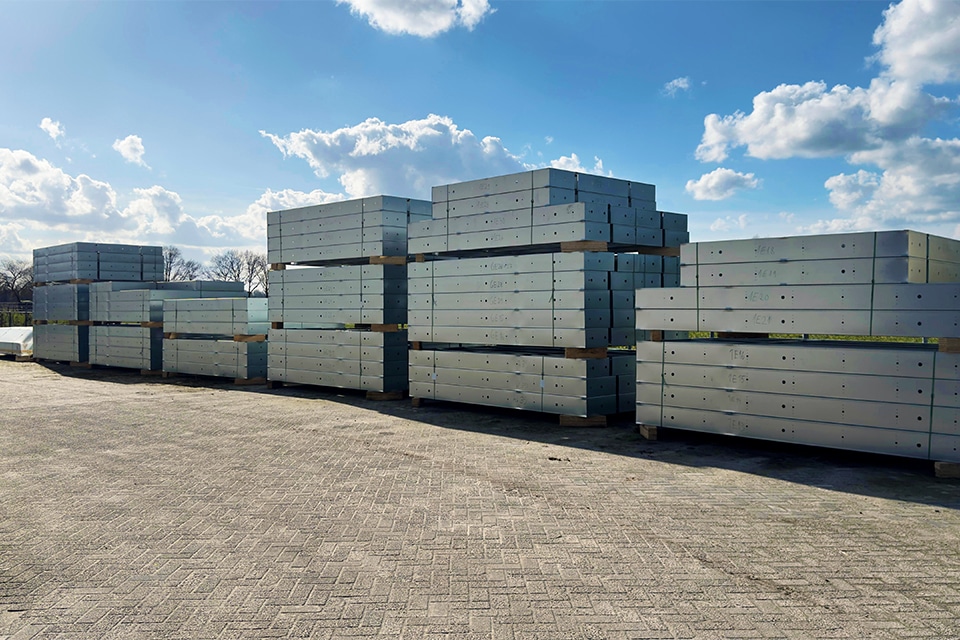
The construction industry requires systems that can be implemented faster, more affordably, and with fewer people, without compromising on quality. Prefabrication and industrialization are therefore becoming increasingly important. As a lightweight construction method, timber-frame construction has now established a solid position in the market. Steel-frame construction addresses many of the same construction challenges but offers its own unique possibilities based on the properties of cold-formed steel. C3 Steel-Frame Construction has fully specialized in this technique.
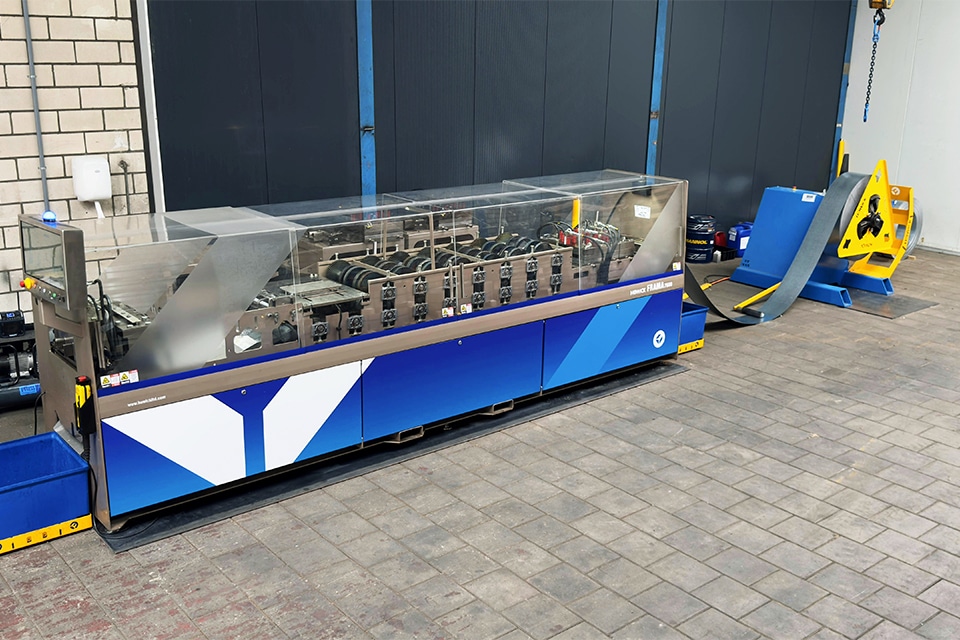
Steel-frame construction consists of cold-rolled steel C-channels that are fabricated into prefabricated elements. “The system combines low weight with high strength and dimensional stability,” explains Frank van Herk, director of C3 Staalframebouw. “That makes it suitable for a wide range of applications, from homes and apartments to facade elements and complex structures. Moreover, the slender sections can deliver high structural performance, while the lightweight construction offers advantages for transportation, hoisting, and the load on foundations and existing buildings.”
From an environmental perspective as well, the picture is more nuanced than the traditional contrast between steel and wood would suggest. According to calculations developed by the industry, the environmental cost indicator (MKI) for steel-frame construction is around 16 cents per kilogram, compared to approximately 60 cents for wood-frame construction. “The low weight of the structure plays an important role in this,” Van Herk emphasizes. “Less mass also means less stress on foundations and existing structures and can offer advantages for transportation and lifting equipment.”
For C3 Staalframebouw, however, the added value of steel framing goes beyond the material itself. The company now controls virtually the entire supply chain: from engineering and structural consulting to the production of cold-rolled sections and the assembly of prefabricated elements. “If desired, we can also handle the installation.”

This development is the result of a deliberate change in direction. “When we started with steel-frame construction in 2010, we initially worked with suppliers for profiles and production. However, we did largely manage the engineering in-house. Starting in 2020, we made significant investments in our own engineering, software, training, and production. At the same time, the focus shifted decisively toward the commercial construction market.” According to Van Herk, this is precisely where C3 Staalframebouw’s strength lies: not just supplying a construction system, but adding expertise to the entire process. “Structural decisions, fire resistance, sound insulation, detailing, and manufacturability are all factored into the engineering phase. We want to be in the driver’s seat so we can deliver quality.”
C3 Steel Frame Construction manufactures components in-house—ranging from relatively simple to highly complex—and uses steel frame construction in residential homes, apartments, facade elements, and special structures, among other applications. “And when the weight of a structure becomes a truly decisive factor, one of the most interesting applications of steel-frame construction comes into play: building on top of what’s already there,” Van Herk emphasizes. The next installment of this series will focus on one of the fastest-growing applications: adding stories and transforming existing structures.
Neem dan rechtstreeks contact op met C3 Steel Frame Construction.
 Contact opnemen
We are C3 Steel Frame Construction, specialists in steel frame construction since 2010. With our structural total solutions we facilitate the entire process of frame construction -from engineering to realization. Leader in steel frame construction, because we develop continuously. We offer the answer to current issues in the construction world. Now and in the future. That's what we call pioneering construction. From engineering [...]
Bekijk Bedrijfsprofiel