Safety Culture Ladder higher on the agenda in concrete and steel construction
Tekst Jerry HelmersBeeld NEN en Jerry Helmers
Congress in Amersfoort on 4 June
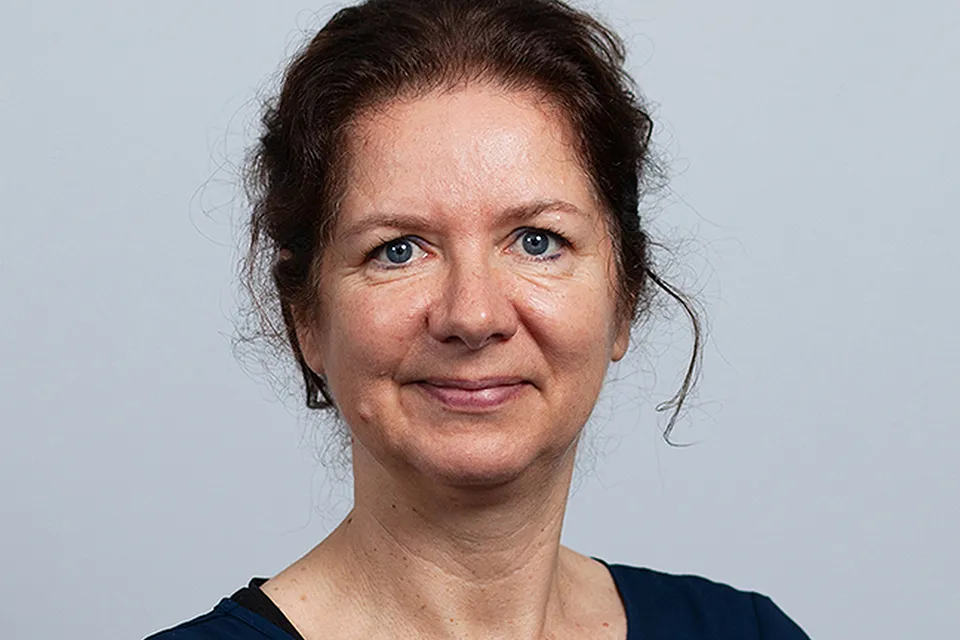
The Safety Culture Ladder (SCL) Congress takes place in Amersfoort on 4 June. An interesting event, above all for gaining knowledge that ultimately leads to one important outcome: greater safety in the workplace and therefore fewer accidents. Kaat van der Haar, consultant at the Netherlands Standardization Institute (NEN) and Project Manager Safety Culture Ladder, has the floor. “Every company, including those in concrete and steel construction, says it works on workplace safety, but do employees feel that too?” she asks. “We are making progress, though. A new version of the SCL was published earlier this year.”
“Everything to do with safety within an organisation hinges on attitudes and awareness,” Van der Haar explains. “Do people dare to challenge one another about undesirable behaviour that could cause accidents? For example, would an employee on the scaffolding dare to challenge their supervisor if they came onto the site without a hard hat? Or are employees alert enough to spot situations on site that give them cause for concern? Do they dare to ask questions? Are they sufficiently critical?”
Van der Haar explains that the Safety Culture Ladder, a five-level roadmap for safety awareness, was originally an initiative by ProRail. “They noticed that, despite the existence of good warning systems, there were still too many accidents. ProRail developed the ladder together with other parties. In 2016, it handed it over to us, enabling us to adapt it for other sectors. A new version was published earlier this year. It still contained some railway-specific terminology. We were also convinced that the Safety Culture Ladder needed less text and simpler language. After all, everyone needs to be able to understand it. It is also written in a more progressive way, making the ‘ladder’ concept more tangible.”
Adapting it for other sectors
The Safety Culture Ladder sets out the conditions that organisations must meet. “So you are talking about psychosocial safety almost straight away: does even the most junior employee dare to speak up when they notice something?”
Van der Haar says that everyone is welcome at the congress in Amersfoort. “I do think, though, that it will mainly be company quality managers who attend. They are the ones within organisations who translate the requirements for employees.”
She admits that she does not know how widely the Safety Culture Ladder is already being used in concrete and steel construction. “Large companies are represented in the VIA. The signatories have said they will put ‘Safety’ higher on the agenda and implement it.” Van der Haar also understands why companies might initially dig in their heels. “It is seen as a box-ticking exercise, something extra to do. But our experience is that once companies have implemented it, they do not let it go. The annual audit is also a useful prompt to keep a safe culture high on the agenda. The conversation must continue unabated. Every accident is one too many.”
Vraag over dit verhaal? Stel je vraag
Blijf dit volgen
Bij een nieuw verhaal krijg je een e-mail. Geen account nodig.
- ThemaVeilig werken
- OnderwerpGeneral