Platform on concrete and steel in construction
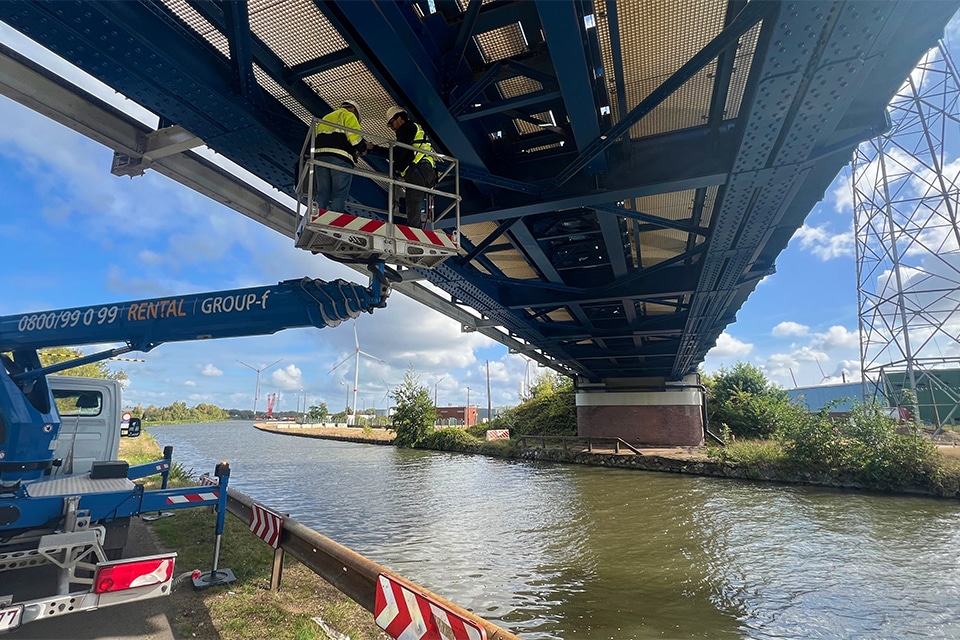
The steel construction industry operates with a focus on safety. Specifications, standards, inspections, and maintenance plans give the impression of control, but beneath that facade of control, something else is happening. Coatings often fail not visually, but functionally. Their barrier effect diminishes long before rust becomes visible. And that is precisely where the industry’s blind spot lies: we look, but we don’t see what’s really happening.
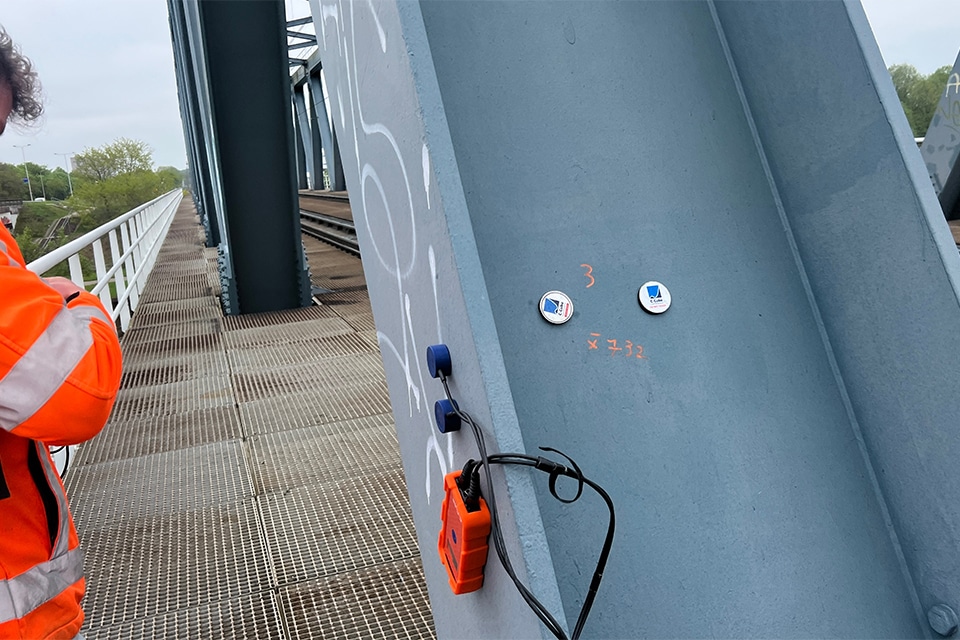
Maintenance of steel structures is still largely guided today by visual inspections in accordance with ISO 4628, fixed maintenance intervals, and budget cycles. That system works, but only in hindsight. By the time the damage becomes visible, the coating has often already undergone structural degradation, corrosion has begun, and preventive repairs are no longer sufficient. What we see, therefore, is not the beginning of the problem, but its consequence.
The deterioration of coatings begins long before it becomes visually apparent. This process occurs gradually: microporosity increases, allowing water and ions to penetrate more easily. At the same time, adhesion changes locally, internal stresses build up due to temperature fluctuations, and the coating material degrades (becoming brittle and developing microcracks). These changes remain invisible for a long time. There is no blistering or rust, but the coating’s protective effect is already significantly reduced. It is precisely this phase—in which the coating still looks good but no longer functions optimally—that often goes unnoticed today.
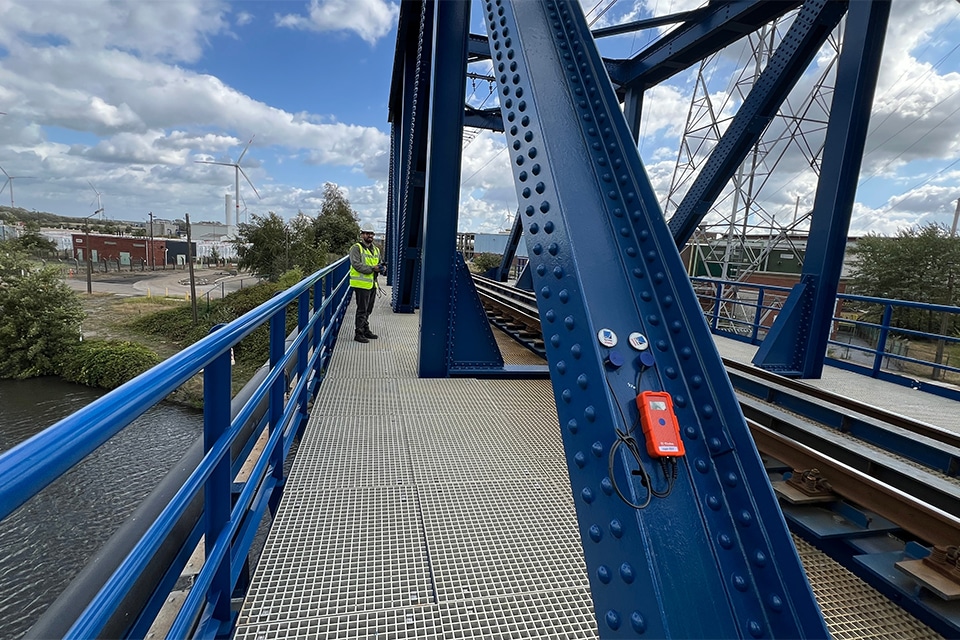
Electrochemical Impedance Spectroscopy (EIS) does make hidden degradation visible. By measuring the electrical impedance (resistance to alternating current) of the coating system, EIS provides insight into the degree of barrier performance and ion transport. This makes it possible to objectively determine how well a coating is still functioning and how quickly it will continue to degrade. This marks a shift from assumptions to measurable performance. This technique is already widely used internationally; only Flanders and the Netherlands still have some catching up to do in this area.
The ability to measure coating performance is fundamentally changing maintenance. It is no longer periodic, generic, and based on assumptions, but rather targeted, localized, and data-driven. The combination with selective techniques such as laser cleaning is what drives the real breakthrough. Whereas traditionally entire systems are removed and rebuilt, a data-driven approach makes it possible to identify precisely those areas where the coating is already failing—or will fail in the foreseeable future. In addition, the condition and degree of curing of a newly applied coating can also be accurately determined on-site and non-destructively.
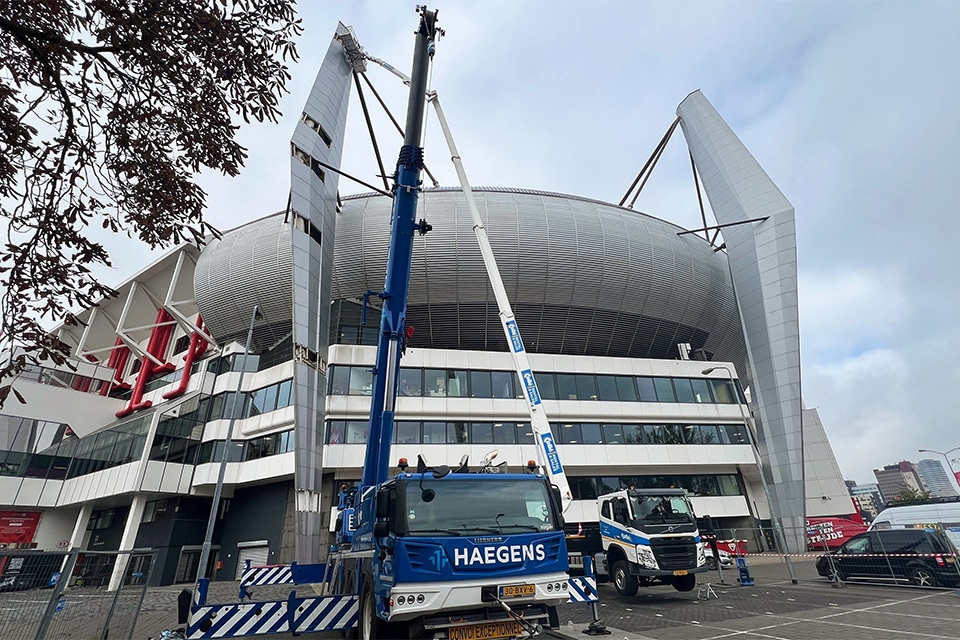
This approach leads to more efficient maintenance. Only the areas where degradation is actually occurring are treated, while intact sections are preserved. New coating systems can be applied in a targeted manner and then objectively re-evaluated. This challenges traditional assumptions: complete removal is not always necessary, the need for maintenance is not necessarily visible, and a thicker coating does not automatically mean better protection.
The benefits are clear: less downtime, lower costs, reduced material consumption, and a smaller environmental impact, combined with higher and demonstrable quality. What’s important is the shift in mindset. Maintenance becomes predictive rather than reactive. The focus shifts from specifications to guaranteed performance over time.
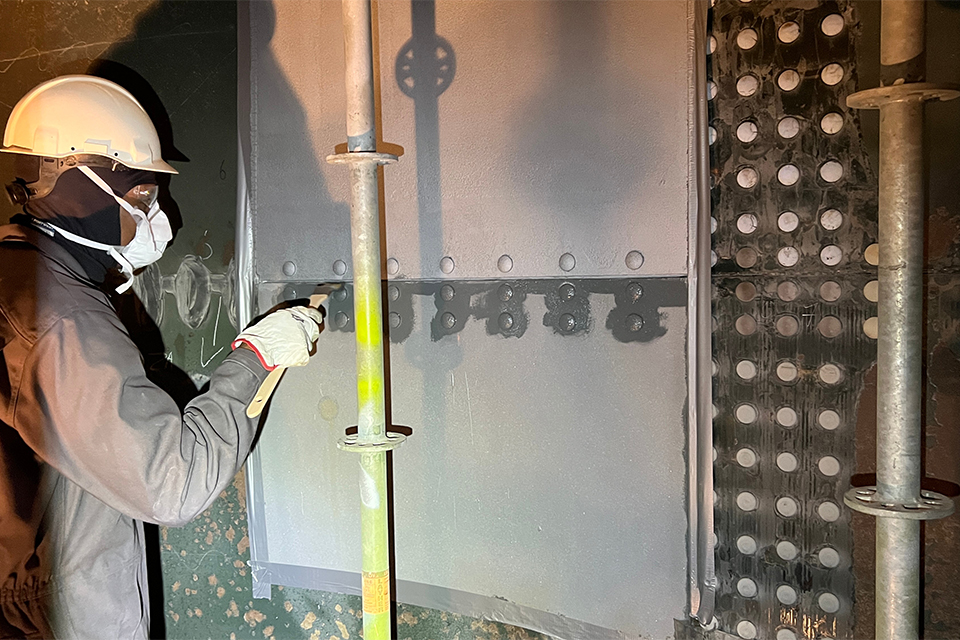
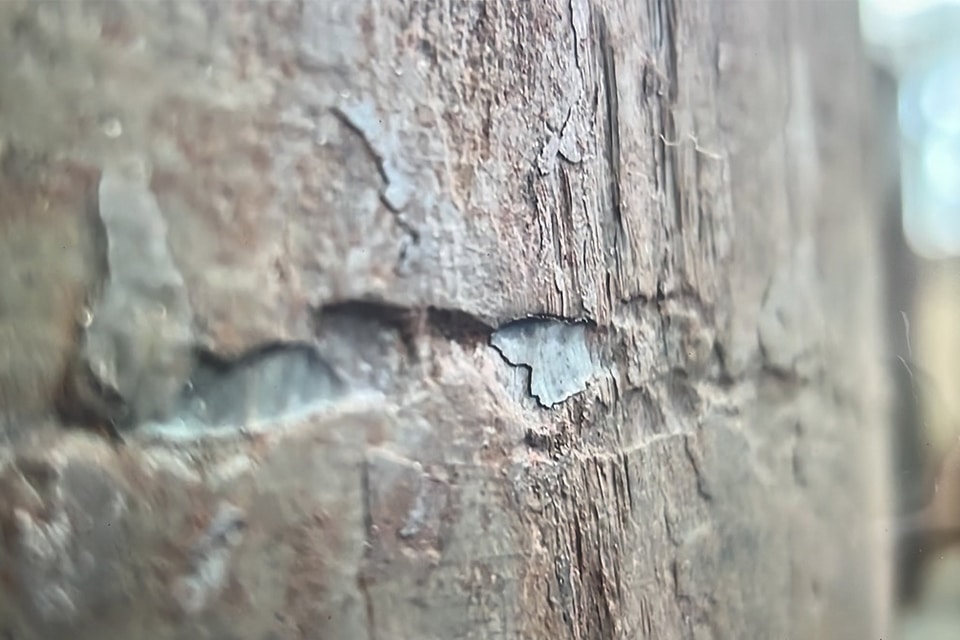
Although the technology and knowledge are available to remotely monitor the condition of a coating using sensor technology, the industry continues to operate largely according to traditional models based on application and visual inspection. The real change, therefore, lies not only in technology, but in mindset. As long as we rely on what is visible, we will continue to react to damage after the fact. Only by measuring what is actually happening today can we act proactively and with an eye toward the future. That is the true power of customized maintenance. Nothing more, nothing less.
Neem dan rechtstreeks contact op met BJOND INNOVATION.
 Contact opnemen
Just looking is not enough - and often you are already too late. Most coating systems fail not visibly, but functionally.By the time damage becomes visible according to ISO 4628, the barrier effect is often already structurally lost and local repair is no longer sufficient. Bjond Innovation takes a fundamentally different approach to this. With nearly 40 years of experience [...]
Bekijk Bedrijfsprofiel