Platform on concrete and steel in construction
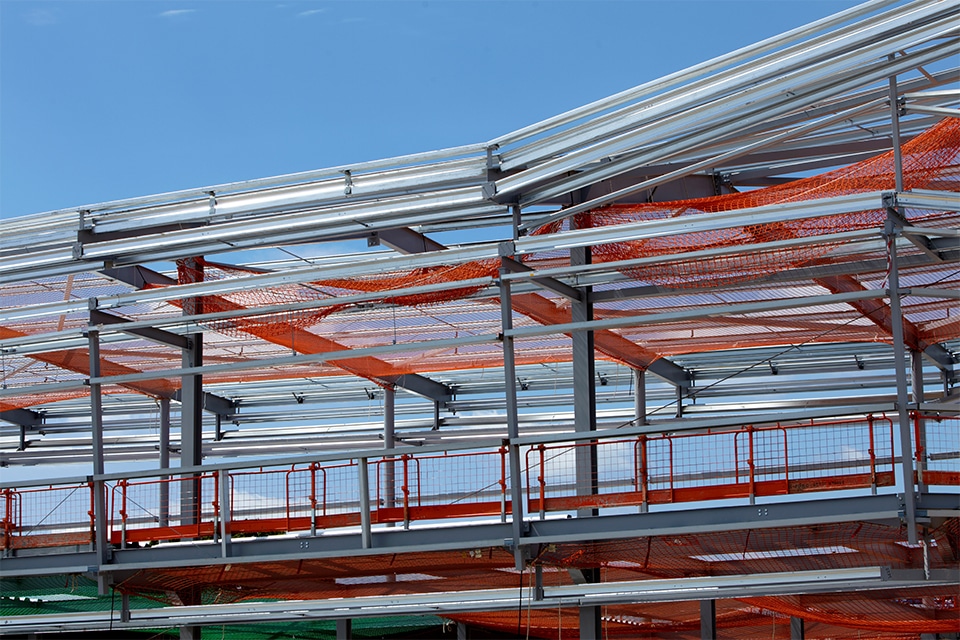
Although attention in the construction industry often focuses on the main structural framework, a significant part of the efficiency of modern buildings lies in a less visible component: the secondary steel structure. According to Frans Romijn, Area Sales Manager for Benelux at Kingspan Structural Products, it is precisely these structures that are playing an increasingly important role in the realization of sustainable and circular construction projects.
Secondary steel structures serve as the connecting element between the main load-bearing structure and the building envelope. These are structural components such as purlins and wall studs to which roof and facade systems are attached. “They may be less visible than the main structure, but without secondary steel structures, a building cannot function as intended,” says Romijn. “They provide support for facades, roofs, building systems, and other structural components.”
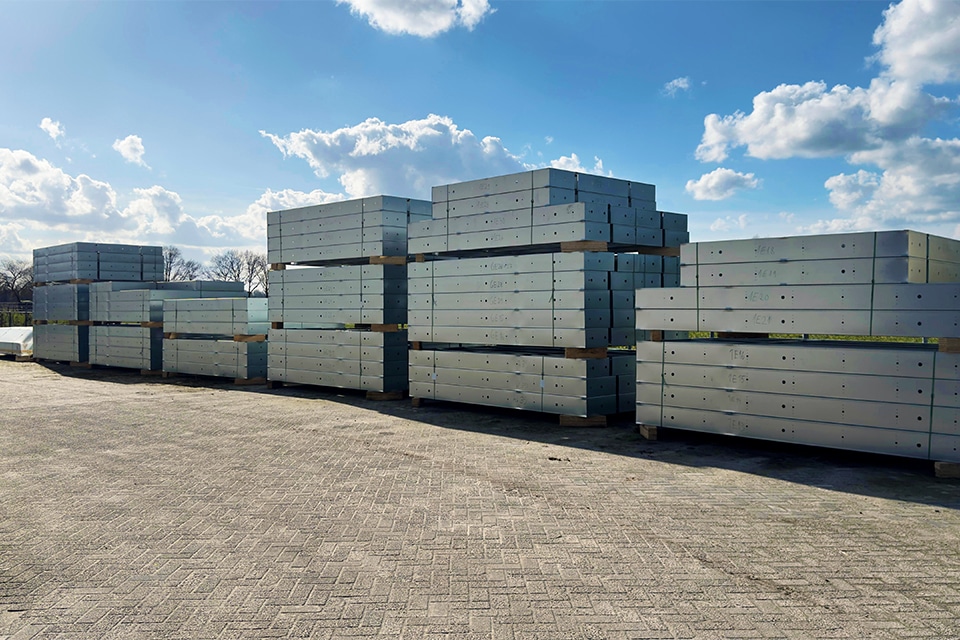
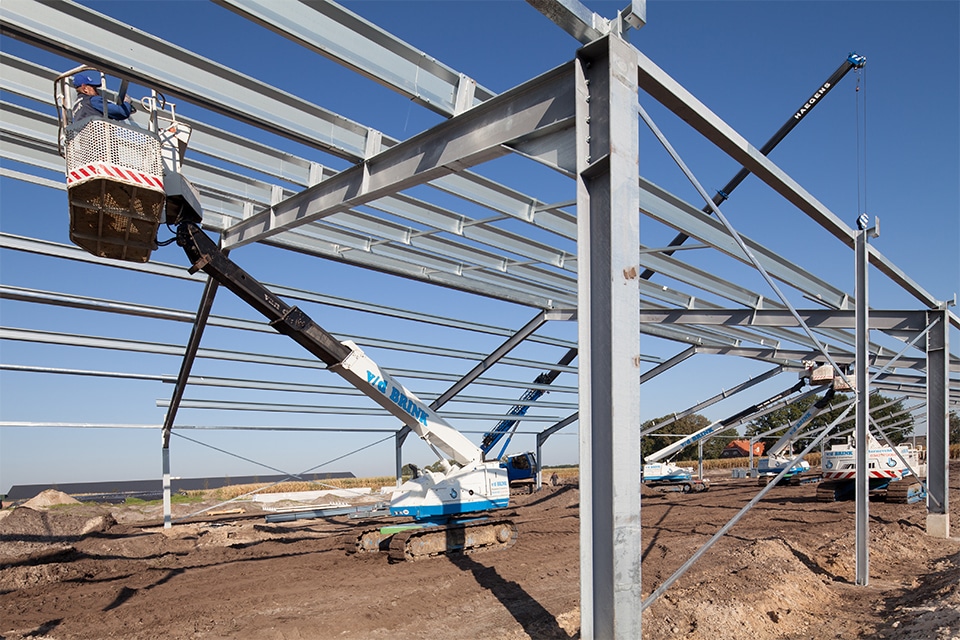
For this purpose, Kingspan supplies, among other products, its cold-formed Multibeam and Multichannel profiles. These profiles are used as roof purlins, wall studs, and support structures in a wide variety of buildings, ranging from industrial facilities to data centers and logistics centers.
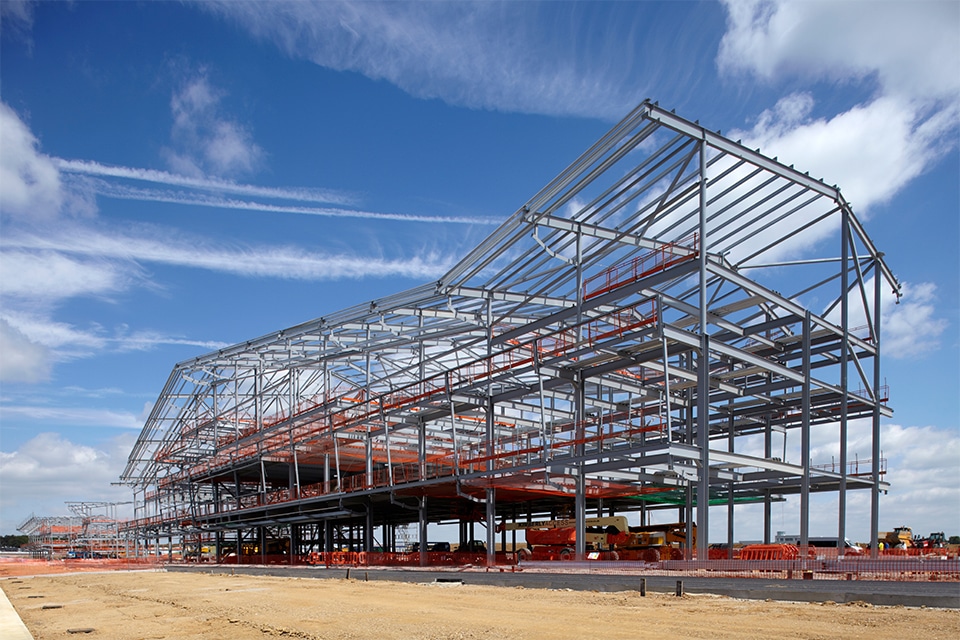
The demand for more efficient construction methods has significantly transformed the market for secondary steel structures in recent years. Whereas in the past many buildings were constructed almost entirely from hot-rolled steel sections, clients are increasingly opting for cold-formed alternatives. According to Romijn, this trend is primarily driven by changing market demands. “Project developers and contractors are increasingly looking for systems that require less material, can be assembled more quickly, and contribute to sustainability goals.”
Cold-formed steel sections meet that need perfectly. According to Romijn, their strength lies in their high strength-to-weight ratio. Thanks to their optimized geometry, steel is used only where it is structurally necessary. “With cold-formed sections, you can achieve the same structural performance using significantly less material. This not only results in direct savings in steel consumption but also reduces transportation costs and the environmental impact of a project.”
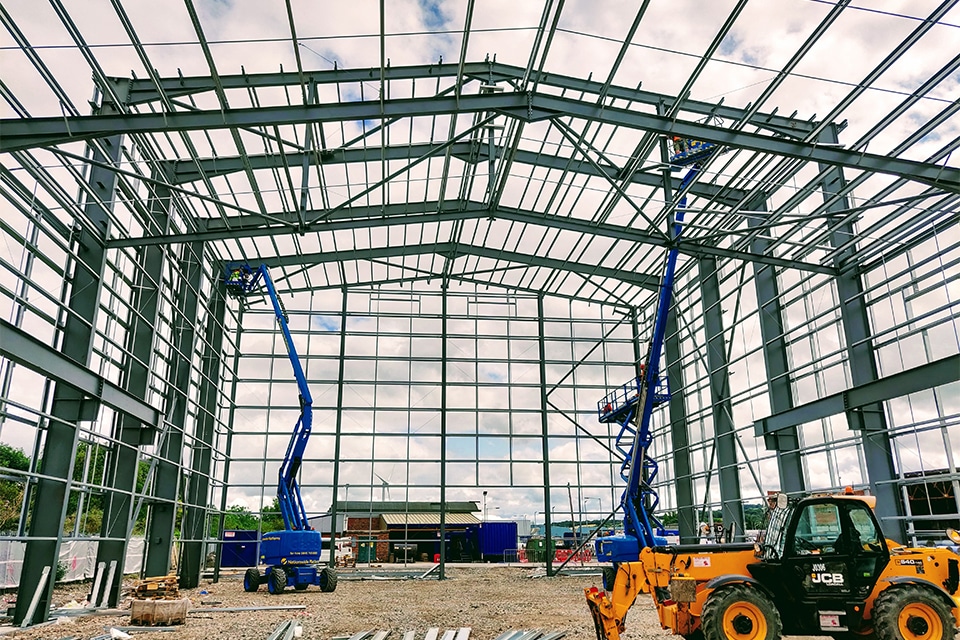
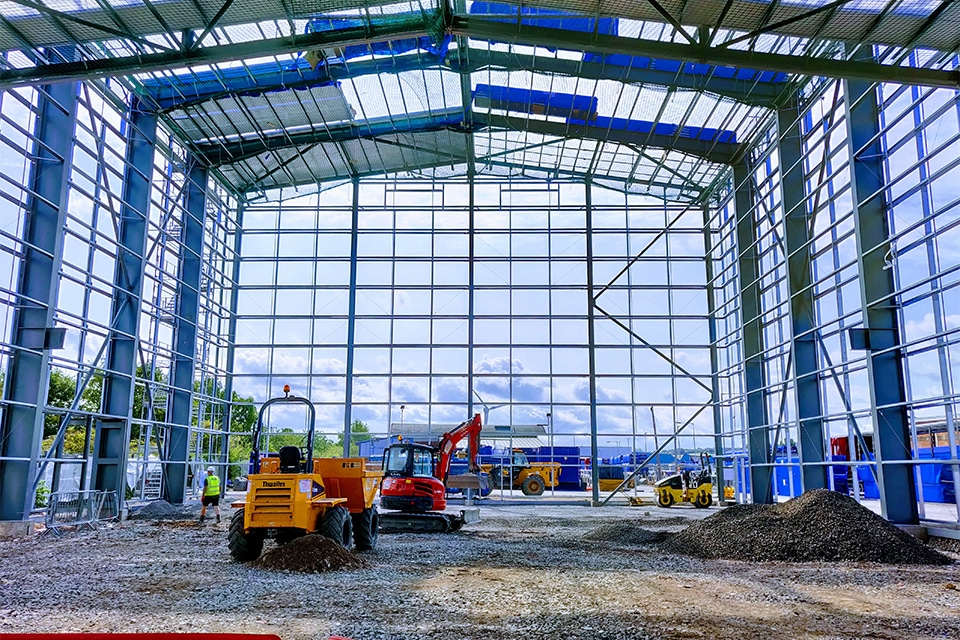
The construction industry is under increasing pressure to reduce the CO2 emissions of buildings. According to Romijn, this shift toward sustainability begins as early as the design phase. “The greatest sustainability gains are achieved when you use less steel and ensure that the steel you use has the lowest possible CO2 impact. With our Multibeam and Multichannel profiles, we combine both advantages into a single solution.”
In addition to the reduced use of materials, the production method also plays a role. Cold-formed steel profiles have a lower carbon footprint than many traditional hot-rolled alternatives. Furthermore, the sections are fully recyclable. Kingspan also offers the same sections in what is known as LEC (Lower Embodied Carbon) steel. Thanks to the lower embodied CO2 emissions of this steel, clients can reduce the environmental impact of their projects. This can help achieve sustainability goals within certification systems such as BREEAM. As a result, these solutions support a more sustainable construction process.
Whereas sustainability used to focus primarily on a building’s energy performance during its operational life, the focus is increasingly shifting to the entire life cycle. Circularity plays a central role in this. According to Romijn, secondary steel structures are ideally suited for demountable construction. Virtually all connections are made with bolted joints, allowing components to be easily removed and reused. “Interest in reuse is growing rapidly. Buildings increasingly need to be adaptable, and materials must be able to be given a second life. Our profiles align perfectly with this trend.”
The advantages of secondary steel structures are particularly evident in buildings with large roof and facade areas, such as logistics distribution centers and data centers. There, the lightweight profiles enable long spans without placing unnecessary stress on the main load-bearing structure. “But the range of applications is broader than many people realize,” Romijn emphasizes. “For example, our profiles are also used as support structures for solar canopies over parking lots and as beams in mezzanine floors.”
Romijn expects further developments in the coming years in the areas of material optimization, digitization, and circularity. Using BIM models and advanced design software, profiles can be tailored with ever-greater precision to project-specific loads. Combined with prefabrication, automation, and robotics, he believes this will create a construction process that is faster, more efficient, and more sustainable than ever before. “The focus is shifting more and more toward a building’s overall environmental impact. That is precisely why cold-formed steel sections will play an increasingly important role in future-proof construction projects.”