Platform on concrete and steel in construction
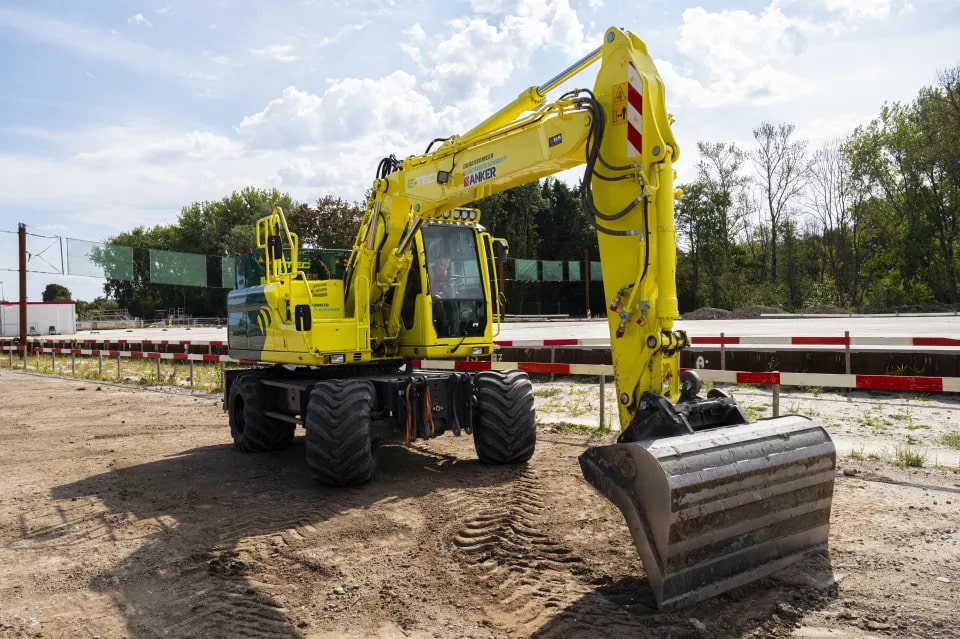
The Clean and Zero-Emission Construction Equipment Subsidy Program (SSEB) encourages the use of zero-emission equipment in the construction industry. Goals for a cleaner living environment and reducing nitrogen emissions are becoming more attainable, in part thanks to this subsidy. This is evident from the latest SSEB report containing implementation data.
This report presents the figures and trends for the SSEB and covers all applications submitted by business owners in 2025. The 2025 applications are estimated to result in a reduction of 1.2 million kilograms of nitrogen oxides through 2032. In addition, they will also result in a reduction of more than 300,000 metric tons of CO2. Where relevant, the report compares the new results with those from 2022 onward. That was the year entrepreneurs first applied for SSEB subsidies.
In 2026, entrepreneurs can still submit applications until October 30. However, the number of applications received so far exceeds the available budget. The Netherlands Enterprise Agency (RVO) administers the program on behalf of the Ministry of Infrastructure and Water Management. Entrepreneurs can still apply for SSEB grants for charging infrastructure and feasibility studies.
Applications for the purchase subsidy (SSEB Purchase) reveal a growing interest in making the construction sector more sustainable. It is notable that:
The SSEB does not only provide grants for the purchase of new zero-emission construction equipment. There is also funding available to make existing construction equipment zero-emission or low-emission through retrofitting. In addition, there is funding for innovation in zero-emission construction.
“Among the innovation projects, it’s striking that four of them focus on charging solutions and six on machinery. Examples include tower cranes, a wheel loader, and a tractor. One project aims for lower-cost production,’ says Ana-Rosa Schröder. She is an advisor for the innovation program at RVO. “This aligns with the general trend: making heavy equipment and corresponding charging solutions more sustainable, and scaling up more cost-effective production of construction machinery.”
Battery packs are typically portable containers. They come in handy in regions with grid congestion or in locations without a power connection, such as Natura 2000 areas. Making construction equipment and logistics more sustainable is also essential for a future-proof sector with lower nitrogen and CO2 emissions. Since the SSEB was established, the use of zero-emission construction equipment has led to a reduction in these emissions every year.
Want to know more?